How to Remove a Dresser Drawer with No Visible Release Lever
Check the slide type first: if you see side-mounted metal runners, pull the drawer fully out and press the release tabs; if there are no tabs, tilt the front up and lift to clear the stops. Using the wrong motion bends slides, snaps plastic stops, or jams the cabinet. This guide helps you identify hidden-release, bottom-mount, center-mount, and wood-slide drawers fast, then remove each without damage.
What you’ll need
- Flashlight
- Screwdriver or drill
- Pliers
- Protective gloves
Drawer removal decision table
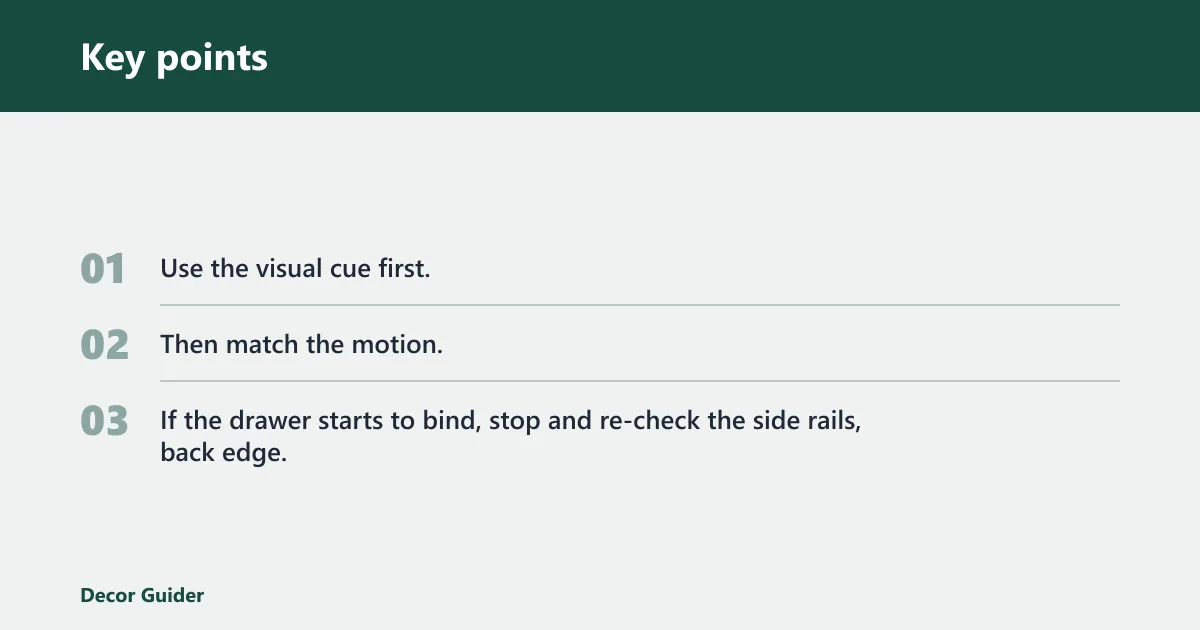
Use the visual cue first. Then match the motion. If the drawer starts to bind, stop and re-check the side rails, back edge, and underside before you pull harder.
| Visual cue | Likely slide type | Safe release motion | Red-flag failure mode |
|---|---|---|---|
| Metal runners on both sides; drawer stops near full extension | Side-mount drawer slides | Pull fully out, then press the release tabs or levers on both sides together | One side drops while the other stays locked |
| No visible side rail; hardware is hidden below the drawer box | Undermount drawer slides | Extend the drawer, then lift or depress the hidden release depending on the model | Front lifts but the rear still hangs on a bracket |
| Single metal runner in the center under the drawer bottom | Center-mount single runner | Pull straight out, then lift the front 15 to 30 degrees | Drawer scrapes the center track or tips unevenly |
| Drawer moves on rollers and hits a hard stop before coming free | Roller or friction-detent slide | Pull until it stops, then tilt up slightly and continue | Forcing past the stop can crack a plastic retainer |
| Small tab near the back or side, often plastic | Plastic-stop glide | Gently bend, rotate, or unscrew the stop before removing the drawer | Over-bending breaks the stop or the mounting ear |
| Drawer is broad and the bottom looks supported in the center | Center-mount slide with rear bracket | Lift the front and guide the rear free of the bracket | Rear bracket catches and twists the drawer box |
| Side rail has a visible lever but no button in front | Full-extension side-mount slide | Use both hands on each side and move the levers at the same time | Only one side disconnects, then the drawer binds |
| Older wood runners with little visible metal hardware | Wood runner or single track | Pull straight, then lift the front and clear the rear stop | Prizing the front splits the drawer face or rail |
How do you tell what slide type you have?
Look for where the hardware sits, not just for a lever. Side-mount slides sit on the drawer sides and often use a lever disconnect. Bottom slides are under the drawer and can be identified because you will not see them. Center slides run down the center of broad dresser drawers, and wider drawers may have two bottom slides or a rear bracket.
Side-mount drawer slides
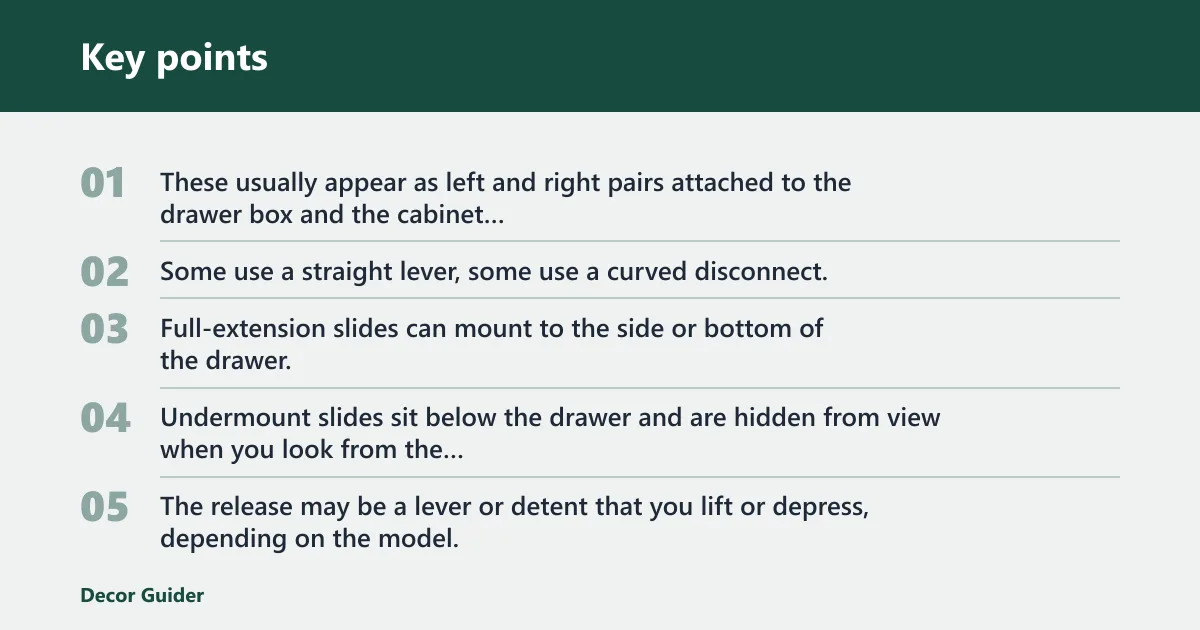
These usually appear as left and right pairs attached to the drawer box and the cabinet wall. Some use a straight lever, some use a curved disconnect, and some use a push tab instead of a lever. Full-extension slides can mount to the side or bottom of the drawer.
Undermount drawer slides
Undermount slides sit below the drawer and are hidden from view when you look from the side. The release may be a lever or detent that you lift or depress, depending on the model. If the drawer has soft-close action, expect a hidden release point rather than an obvious front tab.
Center-mount drawer slides and single runners
Center slides are a metal slide in the center of broad dresser drawers. A single runner can be metal or wood and often needs a lift-front motion. A common rule for these drawers is a 15 to 30 degrees front lift before the box clears the track.
Metal glides, plastic stops, and friction detents
Metal glides may use plastic stops, hidden tabs, or friction detents. Roller slides may require pulling the drawer until it stops and then tilting it up slightly. If there is no visible lever and the drawer resists sharply at the end of travel, friction detent is a common possibility.
How do I remove a dresser drawer with no visible release lever?
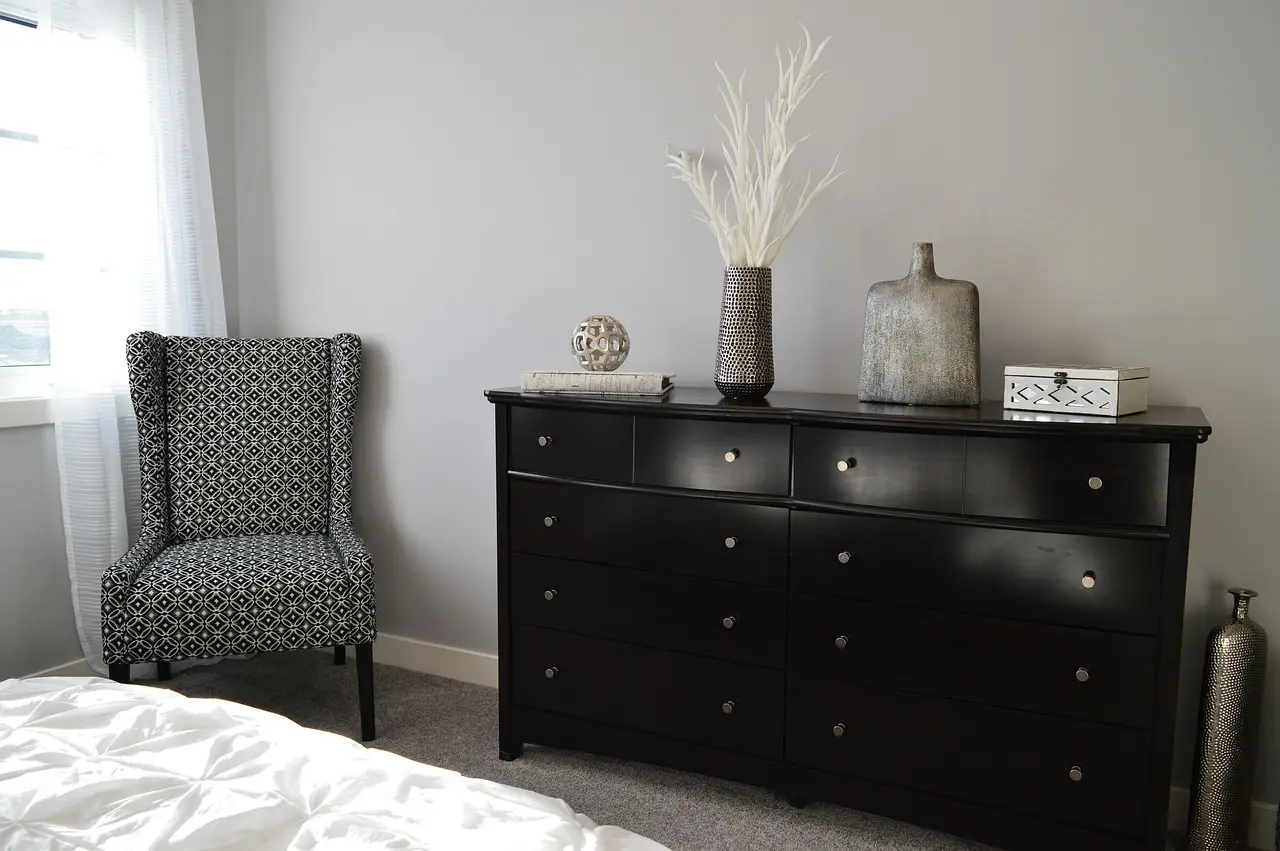
Start with the simplest check: empty the drawer, open it fully, and inspect both sides with a flashlight. Look along the side rails for a hidden tab near the back, check the underside for a lever or detent, and trace the center track if the drawer has one runner. If the hardware is underneath, lift or depress the hidden release point. If you only see a center track, plan on a lift-and-tilt removal.
- Empty the drawer and pull it fully open.
- Inspect both sides, the underside, and the rear corners with a flashlight.
- Match the hardware to the table before you touch the rails.
- For side-mount slides, press or lift the left and right release points together.
- For center runners, raise the front edge 15 to 30 degrees and slide the drawer free.
- If the drawer has a stop, release the stop before forcing the box forward.
- Keep the drawer slide screws in a cup for reinstallation if the slide comes off with the drawer.
What to do if only one side releases
Stop immediately. One side moving and the other side binding usually means you have a mismatched release, a bent rail, or a hidden stop on the locked side. Push the loose side back in slightly, re-seat the drawer, and try both release points again at the same time. Do not pry the drawer face.
What should you do if the drawer still will not budge?
Check for a plastic stop, hidden screw, or rear bracket before you force anything. A drawer that stops about three-quarters of the way out often meets a stop tab or a slide disconnect that has not been fully released. If the drawer drops on one side, support the sagging rail with one hand before trying again.
When a sharp pull is the wrong fix
Some no-detent drawers require a sharp pull to pass a friction detent, but that is only useful after you have identified the slide family. If the drawer is on metal glides with a hidden tab, a hard yank can bend the track. If it is on wood runners, the same move can scar the rail.
What not to do
Do not pry on the drawer front. Do not keep pulling after the drawer binds. Do not over-bend plastic stops. If a rail is stuck, back the drawer up a few inches, inspect the release point again, and remove any visible screws only after the drawer is free.
Common mistakes
A common first-timer mistake is assuming every drawer uses the same release point. That leads to broken tabs and twisted slides. Another is removing the drawer face from the cabinet with brute force, which usually damages the runners before the real stop is found.
Say your 30-inch dresser drawer stops at three-quarters extension and the left side drops while the right side stays locked. That usually points to a side-mount slide with a missed release on one side, not a universal jam. Re-seat it, then work both sides together.
Suppose a broad dresser drawer has a center runner and a rear bracket. The front may feel free, but the rear can still hook the track. Lift the front 15 to 30 degrees, then guide the back straight out so the bracket clears without twisting the box.
How do I remove a Pottery Barn dresser drawer with no lever?
Some Pottery Barn drawers use a white half-moon stop, and some use a white plastic lever under the bottom edge. Open the drawer fully and check the underside near the front corners and the back edge. If you find the half-moon stop, release that piece first; if you find the lever, move it in sync with the opposite side.
Soft-close drawers
Soft-close slides often hide the release under the drawer or behind the rail. Pull the drawer straight out until the motion stops, then look for a hidden lever, tab, or detent before you tilt. If it still resists, keep the drawer level and inspect the underside rather than yanking harder.
Older dressers with wood runners
Wood runners and single runner tracks usually come out with a lift-front motion, not a lever press. Pull the drawer forward, raise the front edge, and angle it free. If the runner has a rear stop, clear that stop before lowering the drawer again.
Frequently asked questions
Do I need to lift or tilt the drawer to get it out?
Yes, in some cases. Center-mount drawers and wood runners often need the front lifted about 15 to 30 degrees. Roller slides may need a slight tilt after the drawer hits its stop. If the drawer is on side-mount slides with a release lever, lift only after the tabs are released.
What should I do if the drawer stops about three-quarters of the way out?
That usually points to a stop tab, hidden disconnect, or rear bracket. Stop pulling, shine a light along both rails, and look for a release point near the back. If you see a stop, remove or disengage it before trying again. Do not force the drawer past the stop.
Can I remove a drawer with plastic stops or hidden tabs?
Yes, but you need the right motion for the stop type. Some plastic stops bend slightly, some rotate, and some unscrew. Hidden tabs on metal glides often move up or down. If the stop flexes sharply, back off and inspect the opposite side before you try again.
Why does my drawer only come out if I pull hard?
A hard pull can mean a friction detent, but it can also mean a stop has not been released. Check for a hidden tab, lever, or rear catch first. If the drawer is on wood runners, a sharp pull may free the front, but only after the front edge is lifted clear of the track.
What tools do I need to remove a drawer with metal glides?
Use a flashlight to see the release point, then use a screwdriver or drill if screws must come off after release. Pliers help with a bent tab or stubborn stop. Protective gloves reduce cuts from sharp rails. Keep the slide screws together so you can reinstall the hardware in the same holes later.
Products related to this article
Sponsored / affiliate links. As an Amazon Associate I earn from qualifying purchases. I may earn additional commission from eligible campaigns.