How to Replace Wood Drawer Runners on an Old Dresser
Replace wood drawer runners by checking wear first: if the drawer only sticks, shim or rebuild the runner; if the wood is split, missing, or badly worn, replace it. Bad fit causes rubbing, sagging drawers, and scraped drawer sides. This guide shows how to inspect the wear pattern, measure clearance, and choose rebuild, shim, or full replacement for an old dresser.
How old wooden runners work

- Made for worn or broken wooden drawer slides
- Solid beech wood construction
- Can be trimmed to fit different drawers
A wood drawer runner is a solid-wood slide strip attached to the dresser frame. The matching drawer guide on the drawer controls travel, and a stop keeps the drawer from coming out too far. Check both sides for symmetry before you cut anything, because a small height mismatch can rack the drawer and make it bind even when the wood looks sound.
Wear shows up in a few ways: the drawer rubs near the front, drags only on one side, or falls out because the stop is gone. If one runner sits higher than the other, the drawer can rack and bind only when loaded. A drawer that feels fine empty but sticks with clothes inside usually points to sag or uneven support.
Some very old dressers do not have a track system at all, while others use metal stops in an upside V shape or a T shape. If the original wood is still sound, preserve it; that keeps more of the dresser’s original material and usually preserves the fit better than a full replacement. If it is split, missing, or too thin to rebuild cleanly, replacement hardwood board is the better choice. For restoration best practice, conserve original parts whenever they remain structurally usable and replace only what has failed, a common principle in furniture repair guidance from the Canadian Conservation Institute and the Woodsmith/WOOD magazine repair approach.
What you’ll need
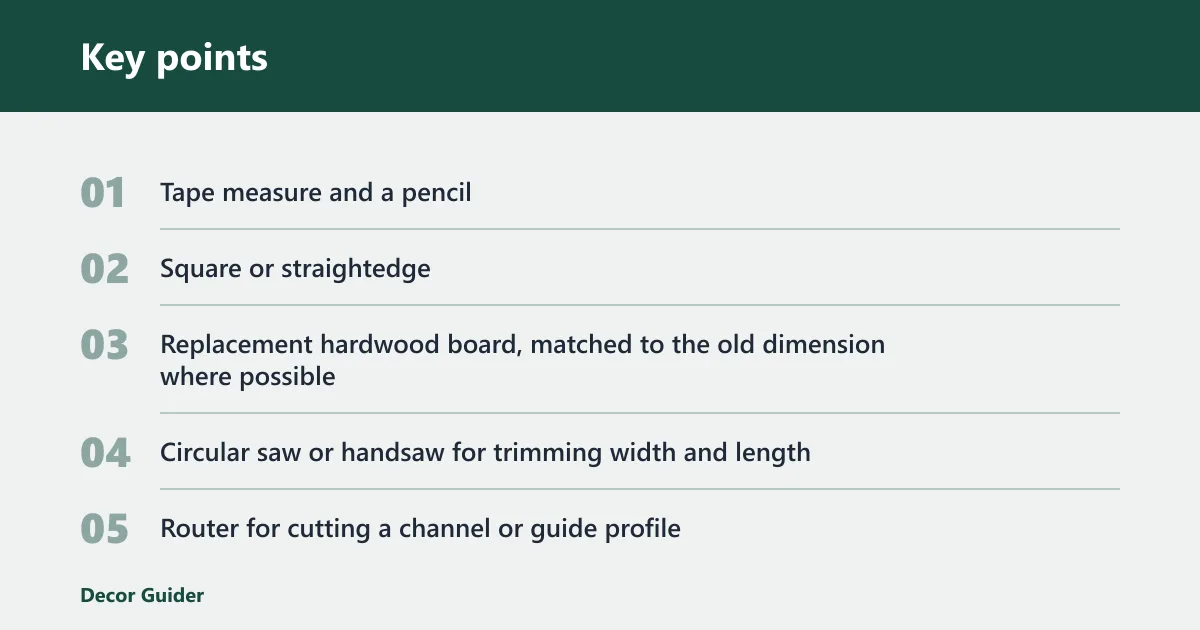
- Tape measure and a pencil
- Square or straightedge
- Replacement hardwood board, matched to the old dimension where possible
- Circular saw or handsaw for trimming width and length
- Router for cutting a channel or guide profile
- Wood glue
- Screws for fastening and for a simple stop if needed
- Clamps
- Wood lubricant for the sliding surface
- Felt pads for minor leveling adjustments
- Sandpaper
| Symptom | Likely cause | Measurement to verify | Repair option | Reversible? |
|---|---|---|---|---|
| Drawer sticks only near the front | Worn runner surface or a high spot on one side | Runner width and drawer-side clearance | Shim the low side or rebuild the worn face | Yes, if you use shims |
| Drawer binds when loaded | Runner sag or mismatched height | Runner height relative to the cabinet opening | Rebuild both runners or reset the higher side | Sometimes |
| Drawer falls out | Missing or failed stop | Stop position and pull-out travel | Add a screw, tab, or wood stop | Yes |
| Drawer opens crooked | Guide missing or misaligned on one side | Thickness, length, and symmetry on both sides | Replace one guide or rebuild both sides | Only if you avoid glued-in changes |
| Wood is split or missing | Runner is beyond repair | Length and profile of the original runner | Full replacement with hardwood board | No, not fully |
How do you measure the old runner?
Measure first, then cut. Record the runner width, thickness, length, drawer-side clearance, runner height relative to the cabinet opening, and stop position before you remove anything. That keeps the new part aligned with the existing drawer guide and opening. For wood furniture measurements, use a ruler or tape that reads clearly in either inches or millimeters and stay consistent across both sides, as recommended in woodworking measurement basics from WOOD magazine and Fine Woodworking.
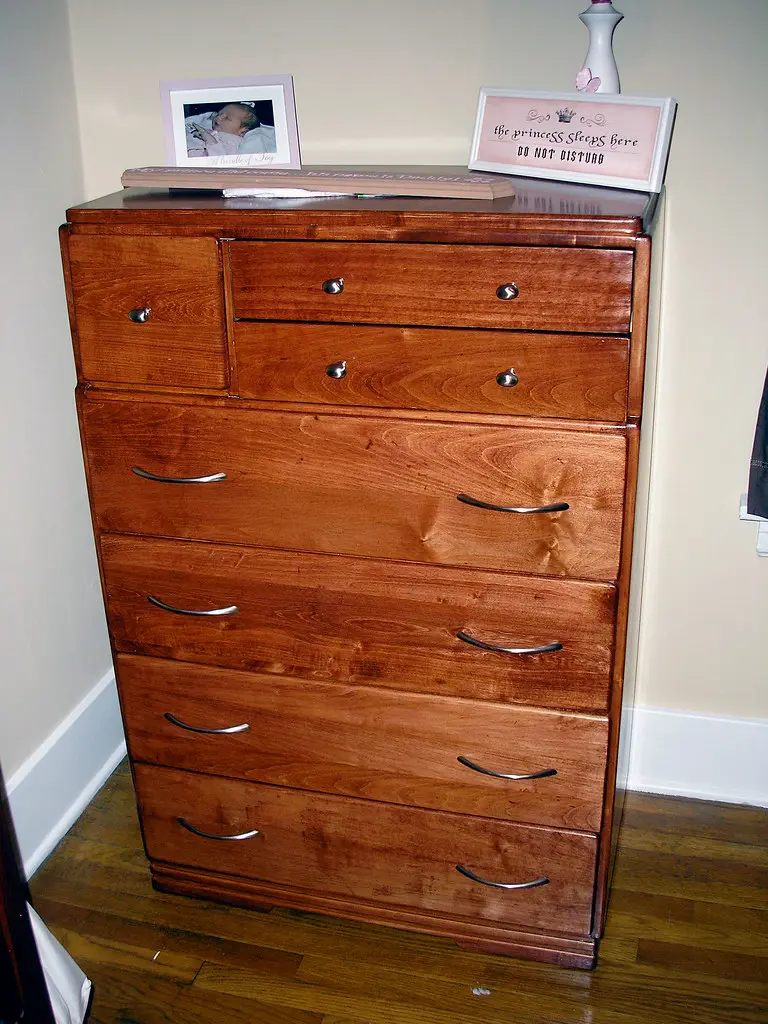
Picture a dresser drawer that measures 18 inches long but rubs only on the left front corner. If you replace the runner without checking the left-right height, the new part can copy the same twist and still bind. Measuring both sides tells you whether the problem is wear or mismatch.
Use a square or straightedge to verify the runner is not bowed and to check that the cabinet opening itself is square. If the opening is out of square, a perfectly cut replacement can still drag, so compare both diagonals and confirm the drawer side remains parallel to the runner before fastening.
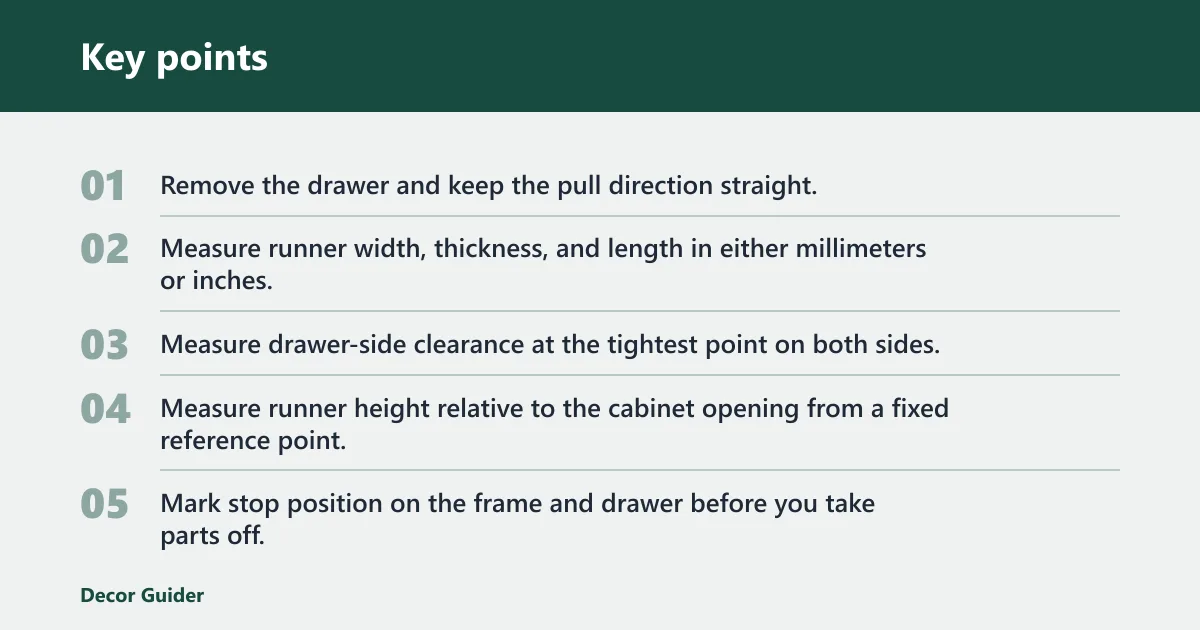
- Remove the drawer and keep the pull direction straight.
- Measure runner width, thickness, and length in either millimeters or inches, and keep the units consistent.
- Measure drawer-side clearance at the tightest point on both sides.
- Measure runner height relative to the cabinet opening from a fixed reference point.
- Mark stop position on the frame and drawer before you take parts off.
- Compare both sides and note any difference in height or setback.
How do you replace the drawer runner?
Replace the runner by removing the drawer, checking the track for wear, trimming matched hardwood to size, and test-fitting before fastening. If the drawer guide profile includes a groove, use a router to recreate it. Then add lubricant and verify smooth travel with the drawer empty and loaded. When choosing replacement wood, a stable hardwood such as maple, oak, ash, or poplar is usually easier to keep straight than softwood, especially on long runners that carry weight.
The most reliable approach is to copy the original dimensions, then dry-fit the replacement before any permanent fastening. That preserves the original geometry when possible and avoids overcorrecting a drawer that only needs a minor rebuild, not a full redesign.
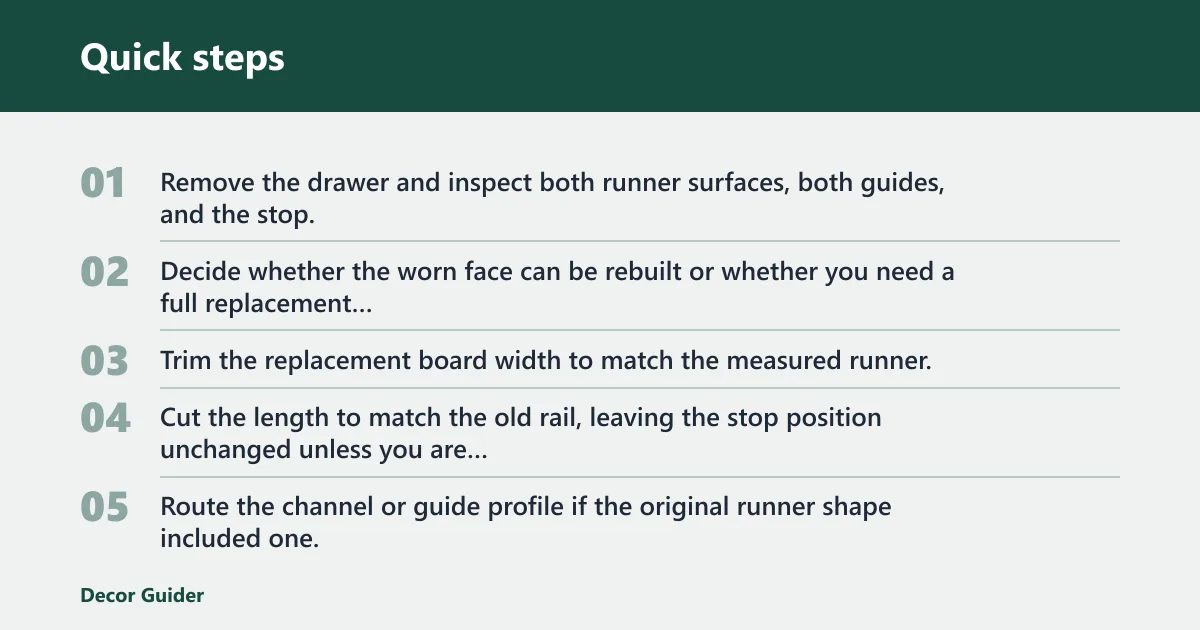
- Remove the drawer and inspect both runner surfaces, both guides, and the stop.
- Decide whether the worn face can be rebuilt or whether you need a full replacement hardwood board.
- Trim the replacement board width to match the measured runner.
- Cut the length to match the old rail, leaving the stop position unchanged unless you are redesigning it.
- Route the channel or guide profile if the original runner shape included one.
- Dry-fit the drawer, then fasten with glue and screws where the original construction allows it.
- Apply wood lubricant after the repair, then slide the drawer in and out several times.
- Test again with light contents, then with normal load if the empty drawer slides cleanly.
Runner replacement decision path
Use the symptom, the measurement, and the reversibility you need to pick the least invasive fix that will still hold alignment. If the drawer is only slightly tight, start with a shim or alignment correction. If the wood is split or the profile is gone, replace the runner. Dry-fit first, then confirm the drawer runs straight, centered, and without rubbing at both the front and back before you commit to glue or screws.
- Light sticking, no split: Shim the low side by about 1 mm, then recheck travel. Use the shim as a starting point, not a final assumption, and confirm the drawer still clears the opening evenly.
- One side high, drawer racks: Re-level that side first; add a felt pad only if the drawer sits high at the opening.
- Surface wear but original wood intact: Rebuild the runner face so you preserve the antique piece.
- Runner missing or badly broken: Install a replacement hardwood board and match the old profile.
- Drawer falls out: Add a reversible stop, such as a screw, tab, or small wood piece.
How do you stop old dresser drawers from falling out?
Add a stop when the drawer can pull all the way out. One fix is to add a screw on each side to stop the drawer from coming out. A stop can also be a tab or a small wood piece, and it can sit on each side or at the back depending on the dresser design. For general furniture hardware guidance on drawer stops and restraining travel, see Rockler’s drawer hardware guidance and Lee Valley’s drawer slide installation notes.
The stop should still allow drawer removal when needed for servicing. If the drawer needs to come out for cleaning or repair, keep the stop removable. A screw works well when you need a simple, reversible limit on travel. When originality matters, prefer the least visible stop that still protects the cabinet and keeps the drawer from overextending.
Common mistakes
Replacing only one side is the most common error. If both runners are worn, the new side will not solve the rack or the sag.
Ignoring load is another problem. A drawer that slides fine empty can bind when filled because the runner sags or the guide sits high on one side. Check travel with weight inside before you call the job done.
Stop placement matters too. Set it too deep and the drawer still falls out. Set it too tight and the drawer will not remove for future servicing.
Lubricant can be overused. Avoid thick waxy buildup or silicone-heavy products on repairs where finish compatibility matters, and never treat lubricant as a substitute for correcting alignment. For caution on lubricants and surface contamination in furniture work, see Canadian Conservation Institute notes and Fine Woodworking’s finish-repair guidance.
Felt pads are not a universal fix. They can help a drawer that is only slightly low or needs a small leveling correction, but they are inappropriate when the runner is split, the opening is out of square, or the drawer is dragging because the geometry itself is wrong.
How do you make old dresser drawers slide better?
Start with alignment, then use lubricant only after the fit is correct. A wood lubricant on the sliding surface can reduce friction on wood-on-wood movement, but it will not fix a warped runner or a broken guide. If the drawer sits unevenly, add felt pads only as a small leveling tweak.
Suppose a drawer slides smoothly until books are added, then starts to scrape the right front corner. That usually means the load is exposing a height difference, not a bad finish. Recheck the right runner height before adding more lubricant. If the drawer still drags after the square-and-fit checks, inspect the runner for cup, twist, or a proud fastener head before you assume the slide surface is the problem.
- Check both runners for symmetry.
- Confirm the guide is present and aligned on both sides.
- Add a felt pad only if the drawer is slightly low or tilting at the opening.
- Apply wood lubricant after the fit is corrected.
- Re-test with the drawer empty, then with normal weight.
Frequently asked questions
How do I replace drawer runners on an old dresser?
Remove the drawer, measure the old runner, and decide whether to rebuild, shim, or replace. If the wood is only worn, a rebuild may be enough. If it is split or missing, cut a replacement hardwood board to the same width, thickness, and length, then fasten and lubricate it.
How do I fit replacement drawer runners?
Fit them by matching the old measurements first, then dry-fitting before any final fastening. Keep the runner height even with the opposite side, and confirm the drawer guide contacts both sides evenly. If the original profile needs a groove, cut it with a router before installation. Check the drawer in the cabinet opening with the weight it will normally carry so a dry fit does not hide sag or rubbing under load.
How do I fix old wooden dresser drawers?
Check the runners, guides, and stop in that order. A worn runner calls for rebuild or replacement, a missing guide calls for alignment or part replacement, and a missing stop needs a reversible add-on. Finish with wood lubricant only after the drawer tracks straight without rubbing.
How do I repair worn drawer runners?
Rebuild the worn face if the original wood is still solid. Add a shim where the drawer sits low, or replace the full runner when the surface is split or too thin to hold a screw. Keep the original profile and stop position whenever the dresser should stay visually original.
How do I measure old drawer runners before replacing them?
Record runner width, thickness, length, drawer-side clearance, runner height relative to the cabinet opening, and stop position. Measure both sides, because a drawer that is higher on one side will keep binding even if the replacement board is cut correctly. Verify the opening is square and the drawer sides are parallel before you cut the new part.
Products related to this article
Sponsored / affiliate links. As an Amazon Associate I earn from qualifying purchases. I may earn additional commission from eligible campaigns.