Why Does My Drawer Fall Off the Track When I Pull It Out?
Usually one of four parts is loose, bent, or out of square: the cabinet mount, slide, runner, or drawer box. Check for missing screws and side-to-side play. If you ignore it, the drawer can jam, scrape the cabinet, or drop load onto the floor. This guide shows how to find the failed part and fix it without replacing good hardware.
Why the drawer comes off the track?


“Off the track” usually means the drawer loses support at one point in its travel, not that every part is broken. In a dresser, that often points to a worn wood runner or a racked drawer box. In a kitchen cabinet, it usually means a loose mount, bent metal, or a release mechanism that is out of sync.
Start with the symptom, not the part. If the drawer falls only at full pull-out, the issue often involves extension length, a stop, or a release lever. If it drops on one side, look for screw looseness, a bent member, or twist in the drawer box.
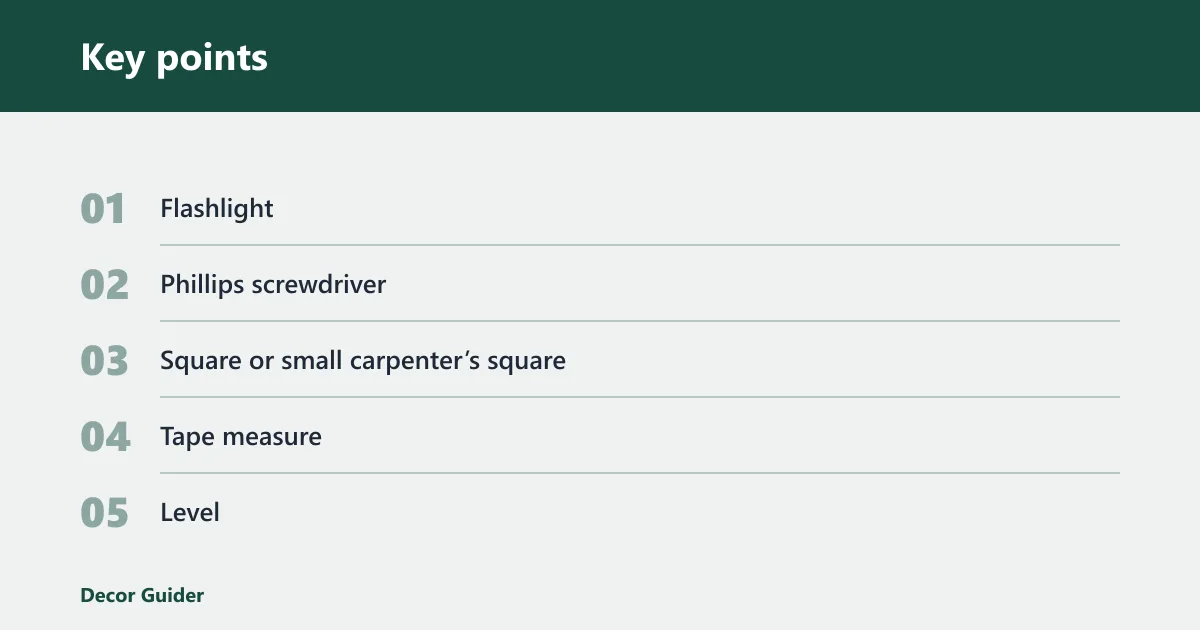
What you’ll need
- Flashlight
- Phillips screwdriver
- Square or small carpenter’s square
- Tape measure
- Level
- Wood glue and clamps for minor box repair
- Replacement screws sized for the existing holes
- Wood filler or toothpicks for stripped holes
- Replacement slides or runners, matched by length and type
Diagnose the failure point
Pull the drawer fully and watch which side shifts first. Then test it empty, then lightly loaded. That sequence separates a weight problem from a geometry problem, which saves you from replacing good hardware.
- Open the drawer slowly and watch the gap on both sides.
- Check whether one side drops before the other.
- Pull it out empty, then with a light load.
- Inspect the mount screws, stops, and any bent metal.
- Measure slide length, travel, and cabinet depth before buying parts.
Say your kitchen drawer stays smooth with five plates inside, but slips off only when pulled all the way out. That points away from overload and toward a stop, release lever, or slide length mismatch. A dresser drawer that tilts after two inches of pull-out points more toward runner wear or a loose front-to-back fit.
Drawer track matrix
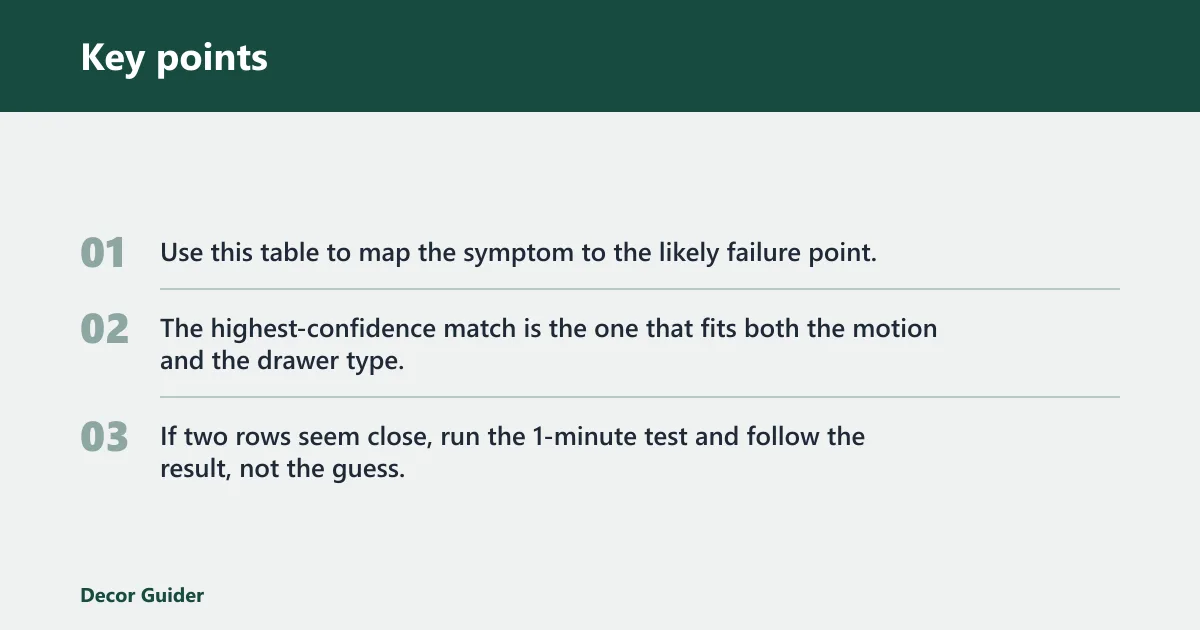
Use this table to map the symptom to the likely failure point. The highest-confidence match is the one that fits both the motion and the drawer type. If two rows seem close, run the 1-minute test and follow the result, not the guess.
| Drawer type | Symptom | Likely cause | 1-minute test | Confidence | Fix vs replace |
|---|---|---|---|---|---|
| Side-mount metal slide | Falls off only at full extension | Release lever, rail stop, or slide too short for the cabinet depth | Extend fully and watch for a lever release or stop interference | High | Fix if aligned and undamaged; replace if travel is wrong |
| Side-mount metal slide | Drops on one side | Loose mounting screws, bent member, or racked drawer box | Lift the low side by hand and check for side play | High | Fix loose mounts first; replace if bent or cracked |
| Undermount slide | Drawer binds, then pops free | Misalignment or release parts not seated on both sides | Remove and reinstall the drawer, watching both release levers | Medium | Fix if the front lock is not engaged; replace if hardware is damaged |
| Wood runner dresser | Scrapes, sticks, then slips out | Runner wear, track misalignment, or binding points | Look for shiny wear spots and uneven rubbing marks | High | Repair if the wood is sound; replace if wear is deep |
| Any drawer | Comes off when loaded | Weight rating exceeded or drawer-front fasteners are pulling out | Remove the contents and retest the empty drawer | High | Fix load or mounting; replace if rating is too low |
Can a drawer fall off because it is overloaded?
Yes. Load matters because slide ratings assume proper mounting, level alignment, and a centered load. If the drawer carries more than the hardware can support, the side with the weakest fasteners or the most wear usually fails first. That is especially common on drawers with a heavy front and dense contents.
Check the contents against the slide rating. For heavy drawers, full-extension drawer slides with a good weight rating are the safer choice. A 100 lbs class slide gives more margin than a light-duty slide, but only if the cabinet depth matches the travel and the mount stays square.
How much weight can drawer slides hold?
The answer is the rating stamped or listed for that slide, and the rating only applies to proper installation. A 100 lbs class slide is often cited as a heavy-duty example. For a loaded drawer, keep practical use below the top limit so the drawer front, fasteners, and slide all keep their margin.
Picture a tall kitchen drawer with pans, lids, and a thick front panel. If the load is near the rating, any looseness in the mount can turn a small shift into a full drop. A wider safety margin is better for drawers that are opened often or pulled hard.
Fix the slide, runner, or drawer box
Choose the repair based on the part that failed. A loose mount needs tightening and fresh wood support. A worn runner needs wood repair or replacement. A twisted box needs squaring before the drawer will stay on the track.
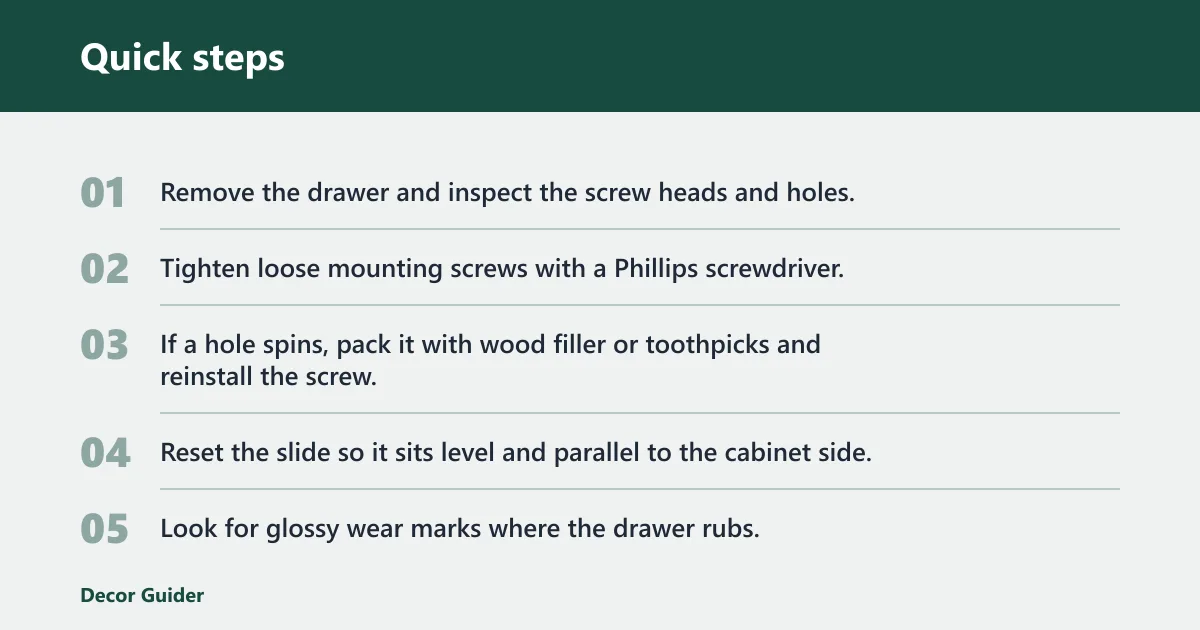
Loose mounts and stripped holes
- Remove the drawer and inspect the screw heads and holes.
- Tighten loose mounting screws with a Phillips screwdriver.
- If a hole spins, pack it with wood filler or toothpicks and reinstall the screw.
- Reset the slide so it sits level and parallel to the cabinet side.
Loose screws are a common pull-out risk in wood cabinets. If the fastener cannot bite, the slide shifts under load and the drawer drops on that side. Recheck after every tightening pass so you do not overtighten and enlarge the hole.
Older wood runners and binding points
- Look for glossy wear marks where the drawer rubs.
- Check the front edge and rear runner for misalignment.
- Sand only the high spots that bind, then test again.
- Replace the runner if the wear is deep or the wood is split.
Older dressers often fail at the runner, not the drawer front. Binding points create side load, and side load pushes the drawer off the track. If the carcass is warped, fix the mount and runner together or the drawer will keep drifting out.
Release levers and square fit
- Extend the drawer fully and locate the left and right release levers.
- Press both levers in the same direction to remove the drawer.
- Reseat the drawer until both slides click into place.
- Check that the drawer box sits square in the opening before reloading.
Ball-bearing slides often use a release mechanism on both sides. If one side is not fully seated, the drawer can come off as soon as the travel reaches the lever point. The drawer box must stay square to the cabinet opening, or the slide faces fight each other.
A common first-timer mistake is reinstalling the drawer and loading it right away. That hides a bad mount. Leave it empty, open and close it several times, and then add weight in about 5-pound increments, checking after each step.
Do I need full-extension slides for a heavy drawer?
Often yes, if you need access to the whole drawer and the contents are heavy. Full-extension slides let the drawer travel far enough to reach the back without prying on the front. For a deep drawer with dense contents, that extra travel reduces binding and helps the load stay supported.
Full-extension and partial-extension are not the same thing. Partial-extension leaves part of the drawer inside the cabinet, which can hide problems during testing. If the travel does not match cabinet depth, the drawer may hit the stop early or release at the wrong point.
Slide length and depth matching
The slide length must match the cabinet depth closely enough for full travel without overrun. In one hardware example, the cutting board dimensions were 22 3/4 inches wide, with the hardware it measured 23 3/8 inches, fully extended the hardware measured 20 3/4 inches, and including the attached door front, the depth was 21 1/2 inches. Those figures show how tight the fit can be.
The cutting board itself was made from maple and was 1 3/4 inches thick. A special drawer below was 3 3/4 inches tall. Those dimensions matter because a thicker or taller drawer can crowd the slide path and change how the drawer sits under load.
How do I stop a drawer from coming off the slide?
Stop the failure point first, then verify the drawer is centered and level. If the problem is one-sided, fix that side before you touch the other. If the problem appears only at full extension, check the release lever, stop, and slide length before replacing parts.
Common mistakes
- Buying the wrong slide length or extension type.
- Ignoring a bent rail or cracked drawer box.
- Reloading the drawer before it passes an empty test.
- Mixing left and right slide hardware.
- Using a slide with a rating below the actual load.
Can a drawer fall off because the slide is too short or under-rated? Yes. A short slide may release too early or leave too little support at full pull-out. An under-rated slide may flex enough that the release mechanism or mounting screws lose alignment under load.
When should you replace the slides?
Replace the slides when the hardware is bent, the stops are broken, the rating is too low, or the length and extension do not match the cabinet. Repair makes sense for loose screws, minor misalignment, and usable runners. Once the metal is deformed or the wood is too worn, repair usually will not hold.
If that didn’t work, try this next
- Swap in a matching slide set only if the cabinet depth and travel match.
- Choose side-mount or undermount hardware that matches the existing drawer style.
- Use full-extension slides for heavy drawers and confirm the weight rating in pounds.
- Recheck left and right release levers after installation.
Suppose a kitchen drawer keeps slipping out on the right side only, even after the screws are tight. That usually means the right slide is bent, the release is not engaged, or the drawer box is racked. Replace the damaged side only if the other side is straight and the slide pair still matches.
Frequently asked questions
Why does my drawer fall off the track when I pull it out?
That usually means one side loses support at the end of travel. Check the mount screws first, then inspect the release lever, stop, and slide length. If the drawer only fails when fully open, the hardware may be too short or the stop may not be holding.
How do I fix a drawer that keeps slipping out on one side?
Remove the drawer, tighten the loose side, and inspect that rail for bends or worn holes. Reinstall it with both sides seated at the same depth. If the box is racked, square it before reloading, or the same side will keep dropping again.
Is the drawer, the runner, or the slide hardware the problem?
Test each in order: hardware, runner, then drawer box. Metal slides point to levers, stops, and screw holes. Wood runners point to wear and binding. If both sides move independently but the drawer tilts, the box geometry is likely out of square.
Can a drawer fall off because the slide is too short or under-rated?
Yes. A short slide can leave too little support near the end of travel, and an under-rated slide can flex under load. Match the slide length to cabinet depth, and use a rating that leaves margin after you count the drawer front and contents.
When should you replace the slides instead of repairing them?
Replace them when the metal is bent, the stops are broken, the release parts no longer seat, or the rating is clearly too low. If the holes are stripped but the slide is straight, repair the wood first. If the slide keeps loosening, replacement is the cleaner fix.
Products related to this article
Sponsored / affiliate links. As an Amazon Associate I earn from qualifying purchases. I may earn additional commission from eligible campaigns.