How to Fix a Dresser Drawer That Opens by Itself
Fix a dresser drawer that opens by itself by checking for a forward tilt first: if the dresser slopes even slightly toward the front, level it; if the drawer still creeps, inspect the slide rails for wear, bent metal, or loose mounting screws. Ignoring it can lead to broken slides, scuffed floors, and drawers that jam or fall out. This guide shows how to diagnose the cause, identify the drawer type, and choose the right repair from leveling and shimming to hardware replacement.
Drawer creep usually comes from a small forward tilt, worn or warped slides, loose hardware, interior obstructions, or a box that is out of square. Dresser drawers can be less forgiving than kitchen drawers because folded clothing adds weight, and many bedroom dressers have shallower boxes that show alignment problems fast.
Why does the drawer keep opening?
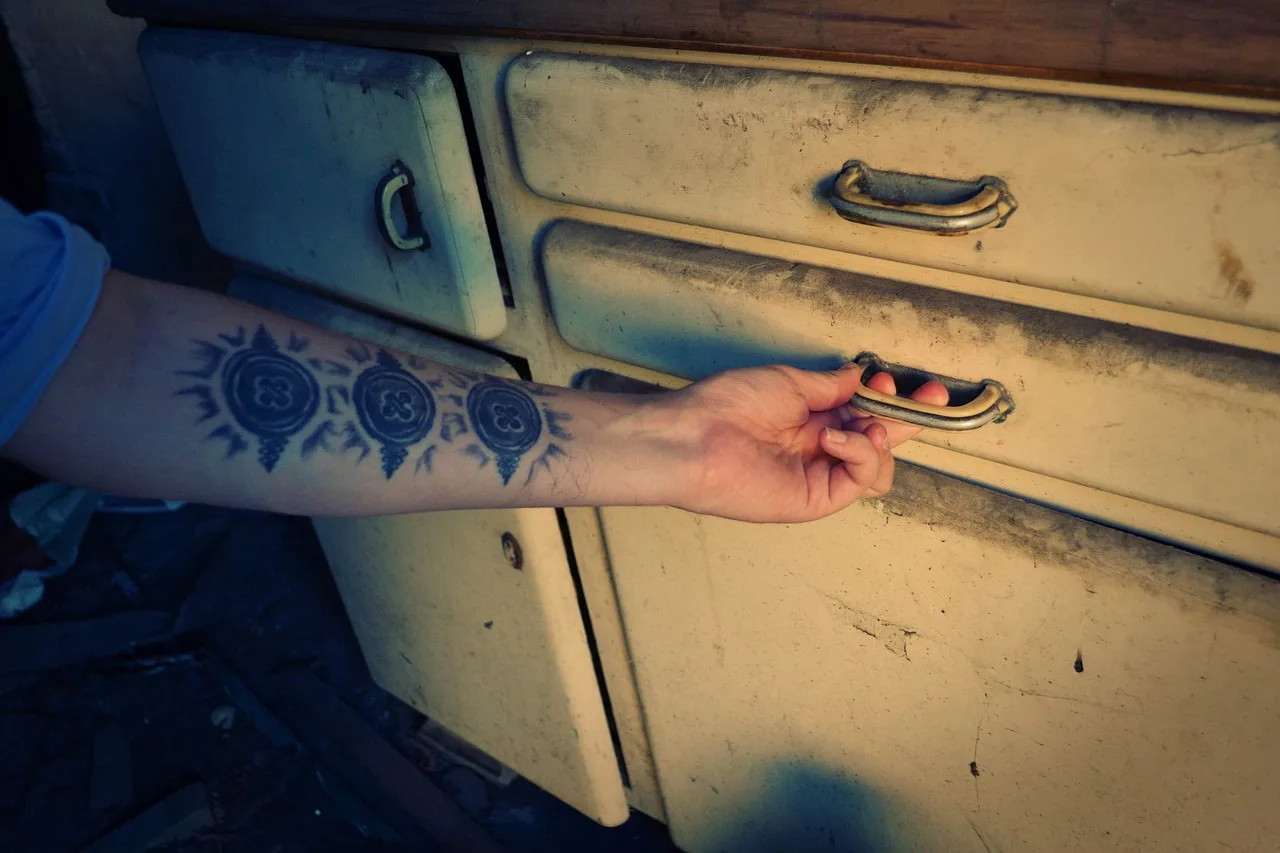


Start by deciding whether the problem is one drawer or every drawer. That simple split points you toward a local hardware fault, a cabinet-level issue, or a structural problem in the drawer box itself.
Fastest way to sort the cause
- Check whether one drawer or all drawers creep open.
- Look at the front edge of the drawer. If it sits proud, the box may be racked or the back may be out of square.
- Inspect the slides for warp, bend, rough movement, or missing parts.
- Check the dresser level from side to side and front to back.
- Clear the drawer and clean the slides before you retest.
That order matters. It keeps you from replacing hardware that only needs adjustment, and it avoids missing a level problem that can make a good slide behave badly.
Dresser drawer troubleshooting matrix
Use this matrix to match the symptom to the most likely cause and the most durable fix. The same drawer can have more than one issue, but the table helps you choose the first repair instead of guessing.
| Symptom pattern | Likely cause | Best fix |
|---|---|---|
| One drawer creeps open after being closed | That drawer’s slides are worn, warped, or out of alignment | Inspect the slides, tighten hardware, then replace the slide rails if they bind, drag, or fail to close evenly |
| All drawers creep open a little | The dresser is tilted forward or not level | Check with a level tool, then adjust feet or add shims |
| Drawer front sits proud even when pushed shut | The box is racked, the back is out of square, or the slides are mounted unevenly | Square the box and reset the slides; replace damaged runners if the frame will not hold alignment |
| Drawer opens again right after closing | Loose screws, loose brackets, or a weak stop/catch | Tighten screws and bolts, inspect handles and brackets, then add a stop or magnetic catch if needed |
| Drawer opens only when the dresser is moved | Cabinet level is off or the drawer has low friction on smooth slides | Level the dresser and add anti-slip pads if the slide action is otherwise sound |
| Drawer stops short and then creeps back open | Obstruction inside the drawer, dirty track, or a weak closure mechanism | Empty the drawer, remove debris, clean the slides and interior, then retest |
| Drawer opens farther than it should | Missing or damaged drawer stop | Install a plastic or metal stop inside the cabinet or on the slides |
| Soft-close drawer will not stay shut | Misaligned soft-close mechanism, worn slide, or cabinet tilt | Check level, realign the slide, and replace the mechanism if it no longer holds closure |
When the matrix points to a bent slide or a drawer that will not square up, replacement becomes the durable fix. When it points to tilt, loose fasteners, or friction loss, adjustment is usually the better first move.
Check the drawer slides
Drawer slides carry the load, so any warp, bend, wear, or rough movement can let a drawer drift open. Replace them if they stick, grind, or fail to close evenly. That is especially true when the drawer closes, then rolls back a little without any tilt issue.
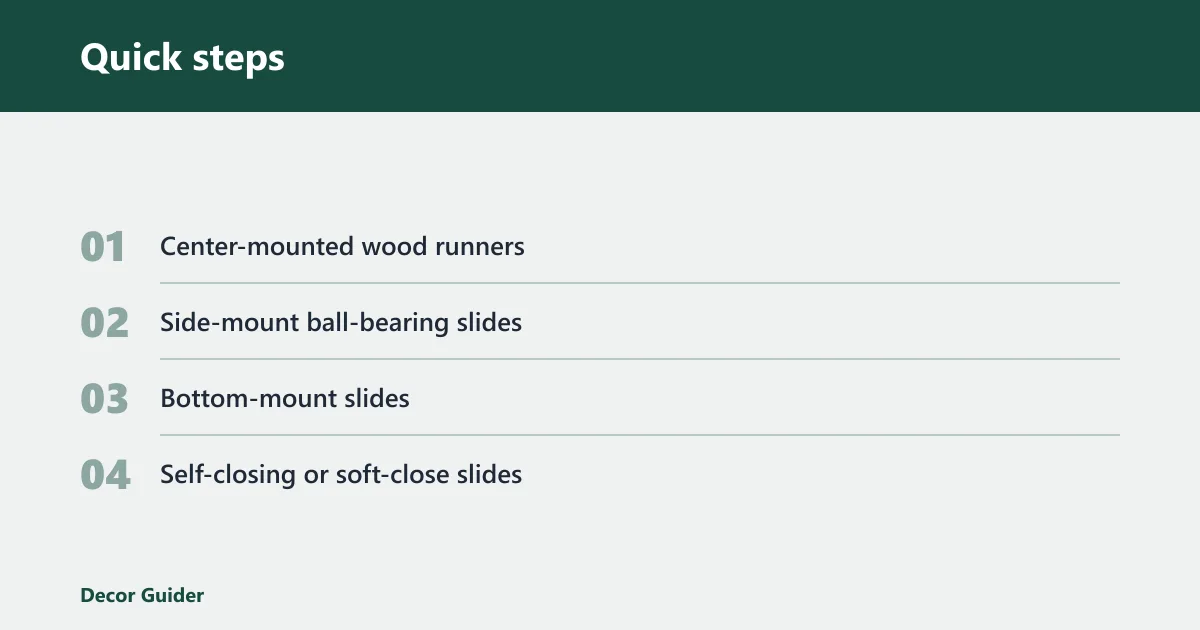
Match the repair to the slide type. Side-mount ball-bearing slides are commonly expected to travel evenly and close without sticking; if one side binds, the pair may be mismatched or bent. Bottom-mount slides need secure contact along the underside, so a loose bracket or damaged track can affect closure. Center-mounted wood runners depend on clean, even bearing surfaces; if the runner is grooved, swollen, or twisted, the drawer may never seat fully.
What to look for on each slide type
- Center-mounted wood runners: check for swelling, gouges, or a runner that has worn unevenly.
- Side-mount ball-bearing slides: check both rails for straightness, smooth travel, and missing balls or bent members.
- Bottom-mount slides: check the underside for loosened clips, damaged brackets, or tracks that sit unevenly.
- Self-closing or soft-close slides: check whether the closing mechanism engages at the end of travel and whether the drawer finishes flush.
If the hardware is old or broken, a replacement slide may be the only fix that lasts. If the slide is sound but the drawer still creeps, move on to level and fastener checks before buying parts.
Say your dresser has a single top drawer that keeps opening while the lower drawers stay shut. That pattern usually points to one worn slide or one loose bracket, not a whole-cabinet problem. A full set of replacements is unnecessary if the other drawers move and close normally.
Is the dresser level?
Yes, a dresser can open a drawer by itself if it is unlevel. A small tilt can make a drawer creep open on its own, and one expert says even 1/8 inch over cabinet depth can be enough to move a drawer. Check with a level tool before you change hardware.
Test front to back and side to side. If the dresser leans forward, the drawer will want to roll open. If it leans to one side, one slide can carry more load than the other, which can make the front sit proud or the closure feel uneven.
How to correct level problems
- Set a level tool on the top surface.
- Check the dresser from left to right and from front to back.
- Adjust the feet if the dresser has them.
- Add shims under the low side if the cabinet sits on a flat base.
- Secure the dresser to the wall if movement or tip-over risk is a concern.
Wall anchoring matters for tall or top-heavy dressers, especially when the drawers are loaded. IKEA says the STORKLINTA dresser has an Anchor and Unlock safety feature that requires wall anchoring to open more than one drawer at a time. That design reduces tip-over risk and changes how the drawers behave when the unit is not anchored.
Tighten hardware and clear obstructions
Loose screws or brackets can make a drawer unstable and prone to opening. Tighten screws and bolts first, then inspect handles and brackets for damage or missing fasteners. A loose pull or a shifted bracket can throw the drawer out of line enough to stop it from staying shut.
Obstructions inside the drawer can do the same thing. Clothes, debris, or a small object can keep the drawer from closing all the way, which leaves the front slightly proud and easy to bump open later.
Clean before you retest
- Remove the contents and inspect the drawer bottom.
- Clear crumbs, fabric lint, and small objects from the tracks.
- Wipe the slides and interior contact points.
- Check that nothing inside the drawer catches the back edge or side walls.
Picture a shallow bedroom dresser with folded jeans stacked too high in one drawer. The front can look shut while the contents press the back edge outward. Remove the load, clean the track, and close it again before you assume the slide has failed.
Use friction or stop fixes
Anti-slip pads are a quick way to add friction when the drawer hardware is basically sound. Place rubber or felt pads on the sides, back, or bottom where they can create more resistance at the point of closure. This is a good renter-safe option when you want a no-drill fix.
Drawer stops are another useful option. They limit how far the drawer travels and can be plastic or metal. Install them inside the cabinet or on the slides, depending on the hardware layout and how much room you have for added parts.
When a magnetic catch makes sense
If friction fixes do not hold and the hardware is already aligned, a magnetic catch can be a more permanent closure aid. It works best when the drawer front and cabinet opening line up well, because the magnet can only hold what the alignment allows.
For a dresser that keeps drifting open after level corrections and hardware tightening, a catch is often the final step before slide replacement. It is a better choice than piling on more pads when the slide action is already clean and even.
Fix options by effort and permanence
Choose the least invasive fix that matches the cause. Renters usually start with friction and cleaning. Homeowners who can drill or anchor may prefer a permanent hardware fix if the drawer keeps drifting open after alignment work.
| Fix type | Renter-safe or permanent | Tools required | Expected time |
|---|---|---|---|
| Anti-slip pads | Renter-safe | None or scissors, depending on pad shape | 10-15 minutes |
| Cleaning and tightening hardware | Renter-safe | Screwdriver | 15-30 minutes |
| Shims or foot adjustment | Usually renter-safe if no drilling is needed | Level tool, shims | 15-30 minutes |
| Drawer stops | Permanent | Screwdriver or drill, depending on stop type | 20-40 minutes |
| Magnetic catch | Permanent | Drill, screws, measuring tool | 20-45 minutes |
| Replace drawer slides | Permanent | Screwdriver, replacement slides, possibly drill | 30-90 minutes |
Do not jump to replacement if the dresser is simply out of level or the hardware is loose. Do replace slides when they are old, bent, or broken, or when the drawer still will not close fully after leveling and cleaning.
Frequently asked questions
How to fix a dresser drawer that keeps opening on its own
Start with level, then hardware. If the dresser tilts forward, correct that first with feet, shims, or wall anchoring. If the drawer still opens, tighten loose screws and brackets, clean the slides, and check for warped or damaged hardware before adding a stop or replacing the slides.
How to fix a dresser drawer that won’t stay closed
If a dresser drawer will not stay closed, check for a forward tilt, loose fasteners, and mismatched or damaged slides. A magnetic catch can help when alignment is good but the drawer still drifts. If the slide is warped or binding, replacement is usually the better long-term fix.
Why does my dresser drawer open by itself?
The most common reasons are tilt, worn slides, loose hardware, or a drawer box that is out of square. A small forward slope can be enough to make the drawer move. That is why level checking should happen before you assume the slide has failed.
Can a drawer open by itself because the dresser is unlevel?
Yes. A small tilt can make a drawer creep open on its own, and even 1/8 inch over cabinet depth can be enough to move a drawer. Use a level tool, then adjust feet or add shims. If the unit is tall or unstable, secure it to the wall as well.
Do I need to replace drawer slides if the drawer creeps open?
Not always. Replace the slides when they are old, bent, warped, or no longer moving smoothly. If the dresser is unlevel, the fasteners are loose, or the drawer is packed with an obstruction, those issues can cause the same symptom without requiring new hardware.
What can I use to stop a dresser drawer from sliding open?
Use anti-slip pads, a drawer stop, or a magnetic catch depending on the cause and how permanent you want the fix to be. Pads add friction. Stops limit travel. A magnetic catch works best when the drawer and cabinet already line up well and friction fixes are not enough.
Products related to this article
Sponsored / affiliate links. As an Amazon Associate I earn from qualifying purchases. I may earn additional commission from eligible campaigns.