How to Remove Sticky Residue From a Dresser Drawer
Start with warm soapy water on sealed wood. If residue remains, use a tested white-vinegar-and-water wipe only on finishes that stay unchanged, and stop if the surface softens or clouds. Harsh cleaners can strip lacquer, dull varnish, or leave the drawer sticky again. This guide covers residue removal by drawer material, plus how to recover a dulled or cloudy finish.
Match cleaner to drawer surface and test it


Sticky buildup on dresser drawers is usually sticker glue, tape residue, old adhesive, spill residue, or dust mixed with adhesive. The fix depends on where it sits: a drawer front, an inside panel, or a slide area. Those surfaces react differently to moisture, solvent, and heat, so the safest cleaner for one spot can damage another.
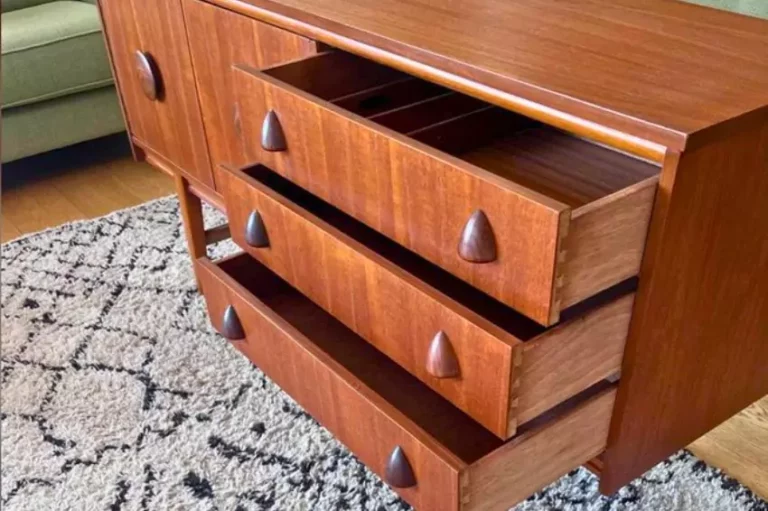
First, identify the drawer material, then do a hidden-spot test on wood before you commit to a full pass. That matters most on glossy, painted, veneered, or antique-looking finishes, where the wrong cleaner can leave dull patches or a stripped spot. For related help, see drawer removal, wood furniture cleaning, veneer care, and fixing sticking drawers.
What you’ll need
- Microfiber cloths
- Warm water and mild soap
- White vinegar
- Rubbing alcohol
- Vegetable oil, mineral oil, or baby oil
- Hair dryer or steam
- Plastic scraper
- Dry towel for final wiping
Drawer residue decision table
| Finish type | Safest first cleaner | What to avoid | Dwell time | Wipe method | Red-flag damage signs |
|---|---|---|---|---|---|
| Sealed wood | Warm soapy water first; then a vinegar-and-water wipe only if the finish stays unchanged | Abrasive pads, steel wool, flooding the edge, aggressive solvent passes | Brief contact only; keep wetting short and controlled | Wipe with a microfiber cloth, then dry immediately with a clean towel | Dull spot, softened sheen, cloudy patch, finish that feels tacky after drying |
| Painted MDF | Lightly damp microfiber cloth with mild soap | Rubbing alcohol, steam held too close, heavy soaking, scraping through the paint | Under 1 minute per pass | Blot and wipe lightly; do not scrub or linger on one area | Paint lift, tacky paint, edge swelling, white haze, soft corner swelling |
| Laminate | Warm soapy water; then a tested vinegar wipe for tape marks if the seam stays intact | Sharp blades, abrasive scrubbers, excess heat, soaking the edges | 1 to 3 minutes | Wipe straight across, then dry so liquid does not sit at seams | Edge lifting, cloudy film, soft seams, lifted corner, swollen particleboard edge |
| Veneer | Warm soapy water first; oil-based cleaner if adhesive remains after a safe test | Soaking, steel wool, repeated solvent passes, heat that softens glue lines | 5 to 10 minutes for oil, with a short test only | Wipe gently with a microfiber cloth; follow with a light soap wipe | Raised grain, bubbling, loose veneer edge, open seam, veneer that shifts when pressed |
| Unfinished wood | Very light soap solution, then dry thoroughly right away | Vinegar on a large area, alcohol, heavy oiling, soaking that darkens the grain | Brief contact only | Wipe and dry at once; do not saturate or let liquid pool | Dark blotches, fuzzing, uneven absorption, rough raised fibers, water ring |
How do you remove sticky residue safely?
Wipe away loose dust first, then start with warm soapy water. Test the cleaner on a hidden spot before full cleaning, especially on sealed wood, veneer, painted MDF, or laminate. If the finish reacts, stop and switch to a gentler option. A microfiber cloth is the safest wiping tool for most drawer fronts.
- Remove loose dust and grit with a dry microfiber cloth.
- Dampen a second cloth with warm soapy water and wipe the residue.
- Test the spot behind the drawer or along the bottom edge before repeating.
- Dry the area fully and inspect for dulling, clouding, or tackiness.
Say your drawer front has a 2-inch tape mark near the knob and the finish is intact. A light soap pass may lift the glue without changing the sheen, while the same method on unfinished wood can leave a darkened patch if you over-wet the surface. Furniture-care guidance from extension services and finish manufacturers consistently warns against soaking wood and against using stronger solvents unless the finish is known to tolerate them.
Should you use heat first?
Use low heat first only when the adhesive is stubborn and the finish looks stable. A hair dryer on low heat can soften adhesive before wiping, but keep the tool moving and stop if the surface softens, clouds, or starts to smell hot. If the finish is thin or uncertain, skip heat and test a safer cleaner first.
- Set the hair dryer to low heat.
- Hold it far enough away to warm the spot without concentrating heat in one place.
- Lift softened glue with a plastic scraper on harder finished areas only.
- Wipe residue with a microfiber cloth before it cools and resets.
Steam can work on some hard finished surfaces, but it carries more moisture risk. Avoid it on veneer, painted MDF, and unfinished wood unless the area is very small and it can be dried immediately. Heat should soften residue, not warm the whole drawer panel. For finish-safe care, manufacturers of household wood products and conservation references generally favor the least aggressive method that works first.
Can rubbing alcohol damage drawer finishes?
Yes. Rubbing alcohol is a common solvent for adhesive, but it can dull or remove finish if used too aggressively. It is safest only after a patch test, and it should be applied to the cloth rather than flooded on the surface. Repeated passes on painted or glossy drawers increase the risk of haze and finish loss.
- Test a small hidden spot before using alcohol on the visible area.
- Apply it to the cloth, not directly to the drawer.
- Wipe once, then check for haze, color loss, or stickiness.
- Switch to vinegar or oil if the finish reacts.
Suppose the residue is old tape glue on a glossy drawer front. Alcohol may clear the glue quickly, but the same pass can leave a cloudy trail if the finish is thin. One light wipe is safer than repeated scrubbing. Finish manufacturers commonly caution that strong solvents can soften or cloud certain coatings, especially shellac and lacquer.
What household product removes sticky residue from wood furniture?
White vinegar solution, oil-based cleaner, and warm soapy water are the most useful household options. A vinegar solution can be mixed with equal parts vinegar and warm water, and that mild mix suits tape marks and sticker glue on intact finishes. Oil-based cleaners, including cooking oil, mineral oil, and baby oil, help loosen adhesive that water does not move.
- Try warm soapy water first on the visible area.
- If residue stays, apply a 1:1 vinegar-and-water mix to intact finishes.
- For thick adhesive, apply oil and let it sit for 5 to 10 minutes.
- Wipe the oil away, then follow with a soap wipe so the surface is not slick.
Popular Mechanics notes that oily substances can dissolve many sticker adhesives, and it lists rubbing alcohol, WD-40, and vodka as softeners. For dresser drawers, the finish matters more than the label on the bottle, so patch-test before you go further. Extension and furniture-care references also favor mild soap, careful drying, and avoidance of harsh all-purpose cleaners on finished wood.
How do you remove a dresser drawer before cleaning the tracks?
Remove the drawer slowly and match the lift or release method to the stop type. Many dressers use wood runners, side-mount slides, center-mount slides, or anti-tip catches, and each one releases differently. If the drawer binds, do not force it; identify the stop first so you do not bend hardware or split a runner.
Wood runners
Wood runners usually have no metal release. Pull the drawer straight out until it stops, then tilt the front slightly upward if the runner shape allows it. If paint, wax, or grime is binding the sides, wiggle gently while lifting just enough to clear the stop.
Side-mount slides
Side-mount slides often have a latch or release tab on each rail. Pull the drawer all the way open, look for levers near the front or middle of the slide, and press them in the direction that frees the inner rail. Once released, lift the front slightly and slide the drawer out evenly.
Center-mount slides
Center-mount slides commonly have a single track under the center of the drawer. Pull straight out until the track stops the drawer, then lift the front while keeping the drawer level. If a retaining clip is present, release it before sliding the box free so the center rail does not snag.
Anti-tip catches
Anti-tip systems keep one drawer from opening too far or one at a time. Open the drawer only until the catch engages, then look for the release point under the front edge or along the rail. If the dresser uses a keyed or tabbed stop, release that catch before pulling the drawer free.
How to clean drawer tracks and fix sticky dresser drawers
Clean the tracks after the drawer is out, because residue on the front does not always cause the sticking. Dust, hardened wax, and misaligned runners are the usual culprits. Use a dry cloth first, then a lightly damp cloth only where the track material can tolerate moisture. Dry everything before reassembly.
Wood runners: wipe wood runners dry
Wipe wood runners dry, then remove built-up dust and old wax. If the drawer still drags, check for swollen spots, raised grain, or a worn edge that catches the sidewall. A small amount of furniture wax can help a dry wood-on-wood runner, but avoid heavy buildup that turns gummy.
Side-mount slides: for side-mount slides, clear dirt
For side-mount slides, clear dirt from the ball-bearing channel and check for bent metal or a missing screw. Wipe the rails dry, then open and close the slide to see whether one side lags. If the slide feels gritty or uneven after cleaning, the track may need adjustment or replacement.
Center-mount slides: center-mount slides need careful alignment
Center-mount slides need careful alignment because a small twist can cause binding. Clean the center rail, inspect for sag at the back, and make sure the drawer box sits evenly on the track. If the drawer drops when it closes, the mount may be loose rather than dirty.
Anti-tip catches: anti-tip catches should move freely
Anti-tip catches should move freely after dust is removed. Check that the stop engages and releases without rubbing hard against the drawer face or rail. If the catch sticks after cleaning, look for misalignment, a bent bracket, or swelling around the cabinet opening before adding lubricant.
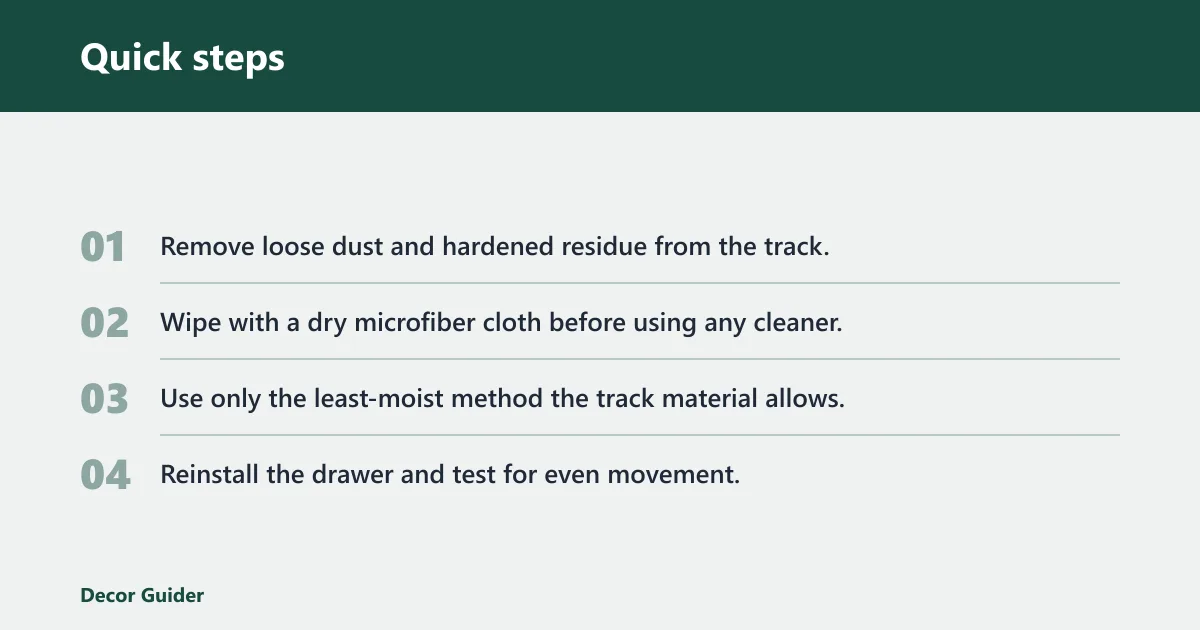
- Remove loose dust and hardened residue from the track.
- Wipe with a dry microfiber cloth before using any cleaner.
- Use only the least-moist method the track material allows.
- Reinstall the drawer and test for even movement.
When does cloudy or dulled finish need more than cleaning?
If the finish turns cloudy, dull, tacky, soft, or blotchy after residue removal, stop cleaning immediately. A simple wipe-down can recover surface film from soap or oil, but finish damage shows up as lasting haze, color loss, or exposed wood. At that point, more rubbing usually makes the problem worse rather than better.
Immediate stop steps
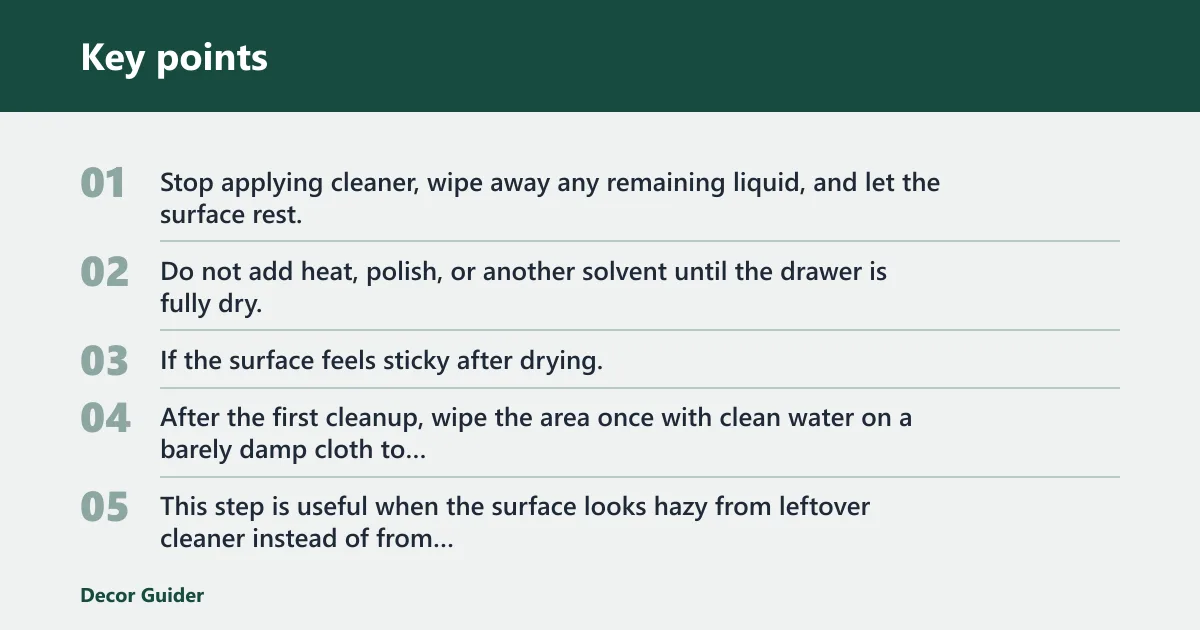
Stop applying cleaner, wipe away any remaining liquid, and let the surface rest. Do not add heat, polish, or another solvent until the drawer is fully dry. If the surface feels sticky after drying, the finish itself may be reacting rather than the residue alone.
Clean-water wipe
After the first cleanup, wipe the area once with clean water on a barely damp cloth to remove soap, vinegar, or oil residue. Follow with a dry cloth right away. This step is useful when the surface looks hazy from leftover cleaner instead of from finish loss.
Dry time
Allow enough dry time before judging the finish. Moisture trapped in edges, seams, or veneer lines can make the surface look cloudy even when the finish is intact. If the dullness disappears only after full drying, the problem was cleanup residue, not coating damage.
When to use paste wax or furniture polish
Use paste wax or a furniture polish only when the finish is intact and the dulling is mild. A small amount can restore luster after residue is removed and the surface is fully dry. Avoid wax or polish on sticky, uncured, cracked, or solvent-softened finishes because it can trap the problem underneath.
When to avoid it
Avoid wax or polish if the drawer still feels tacky, if the surface is cloudy from moisture, or if the finish has softened from alcohol, heat, or strong cleaner. Adding a coating over a compromised finish can lock in haze and make later repair harder.
Clear red flags for refinishing
Refinishing is more likely when the surface shows persistent clouding, bare spots, lifted finish, cracking, color loss, swollen veneer, or rough exposed wood. If the sheen changed in one patch and stays changed after drying, the finish itself has likely been damaged rather than merely soiled.
Common mistakes
- Scrubbing with abrasive pads or steel wool, which can scratch or dull the finish.
- Soaking veneer, painted edges, or MDF, which can swell or soften the surface.
- Skipping the patch test, especially on glossy or antique-looking finishes.
- Leaving oil or solvent residue behind, which can make the drawer tacky again.
- Cleaning slides with too much liquid, which can attract dust and worsen sticking.
- Using metal scrapers on wood; metal scrapers are for hard surfaces only.
Frequently asked questions
How do you remove sticky residue from a dresser drawer without damaging the finish?
Start with warm soapy water, a microfiber cloth, and a hidden-spot test. If that fails on an intact finish, move to a tested vinegar-and-water wipe, then dry the area immediately. Stop if the finish clouds, softens, or feels tacky after wiping.
What is the safest way to clean sticky glue off wooden drawers?
The safest method is warm soapy water first, then a tested vinegar solution if residue remains. Use a microfiber cloth and avoid abrasive pads, steel wool, and metal tools. On harder finished areas, a plastic scraper can lift softened adhesive more safely than a knife.
Can rubbing alcohol damage a dresser drawer finish?
Yes. Rubbing alcohol can dull or remove some finishes, especially if you flood the surface or make repeated passes. Use it with a patch test, apply it to the cloth, and stop after one test wipe if the sheen changes. Switch to vinegar or oil if the finish reacts.
Should I use heat to remove sticker residue from wood?
Heat can help, but only on low setting and only as a softening step. Keep the dryer moving and stop if the finish clouds, smells hot, or feels soft. If the finish is uncertain or already delicate, skip heat and start with the mildest cleaner first.
How do you stop dresser drawers from sticking again after cleaning?
Let the drawer dry completely, then inspect the runners for wax buildup, humidity effects, or misalignment. Clean the tracks separately from the drawer front, because the moisture and lubricant risks differ. If the drawer still binds, adjust the slides before adding more cleaner.
How do you clean drawer tracks and fix sticky dresser drawers?
Remove dust, old wax, and grit from the track, then dry it completely before reassembly. For wood runners, a dry wipe and a small amount of furniture wax may help. For side-mount or center-mount slides, inspect for bent hardware, loose screws, or misalignment after cleaning.
Products related to this article
Sponsored / affiliate links. As an Amazon Associate I earn from qualifying purchases. I may earn additional commission from eligible campaigns.