5 Best Dresser Drawer Liners for Odor Control (2026): we compared
For musty odor and humidity, activated-charcoal felt is the best dresser drawer liner; pick desiccant-backed or silica-infused liners if moisture is the bigger problem, and use cedar only for light odor control. Choose the wrong liner and clothes can stay stale, pull in dampness, or even grow mildew in a closed drawer. This guide compares liner materials by odor control, moisture control, safety, and upkeep so you can match the liner to your room.
This guide is part of our Dresser care and maintenance guide series.
Quick comparison
| Product | Badge | Best for | Price | ||
|---|---|---|---|---|---|
 |
Gersoniel 10 Sheets Scented Drawer Liners, Cedar, Red CedarGersoniel | Our pick | 10 sheets · Cedar scented · 19.5×14 in | $11.99
Price as of 26 Sep 2026
|
View |
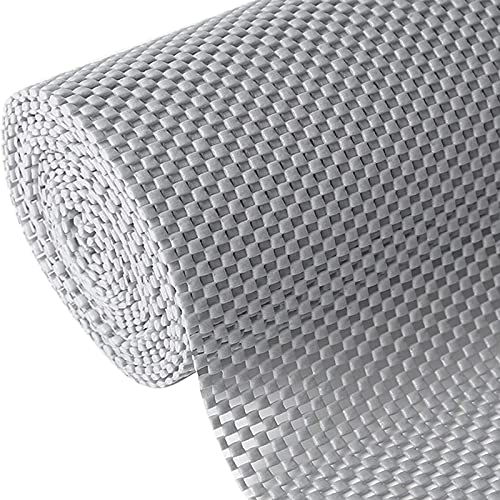 |
Shelf Liner, Non-Adhesive Roll Drawer Liners 12 Inches x 20Iwtmm | Budget pick | 12 in x 20 ft · Non-slip · Gray | $14.99
Price as of 26 Sep 2026
|
View |
 |
Ever Bamboo Drawer Deodorizer & Dehumidifier – NaturalEver Bamboo | Pair with it | Bamboo charcoal · 8x10g · Unscented | $9.99
Price as of 26 Sep 2026
|
View |
 |
Vivenzia Cedar Blocks for Clothes Storage, 40 Cedar Planks,VIVENZIA | Also great | 40 cedar planks · Natural scent · Safe | $19.99
Price as of 26 Sep 2026
|
View |
 |
Cooyes Felt Shelf Liners for Drawer & Kitchen Cabinet, 12Cooyes | Upgrade pick | Felt material · 12×24 in · 12 Pack | $29.99
Price as of 26 Sep 2026
|
View |
This table splits odor control from moisture control because those jobs differ. A liner that masks smell may do little against humidity, while a moisture guard can fail at odor absorption if the drawer already smells stale.
Use it to match the liner to the drawer condition first, then check fabric sensitivity and upkeep second.
How we chose
The comparison favors four things: odor control, moisture control, fabric safety, and real upkeep cost. That keeps the list focused on drawer conditions, not on marketing claims.
We also weighed scent transfer, low-VOC and PVC-free options, cleaning burden, and how often each material actually needs to be replaced or reactivated.
Finally, we separated sheet liners from absorbers. A liner that covers the drawer bottom is useful for protection and cleanup. An absorber is useful for odor or humidity. Those are different tools.
| Drawer condition | Best liner type | Odor strength | Humidity level | Fabric sensitivity | Cleaning burden | Replacement frequency | Estimated annual cost |
|---|---|---|---|---|---|---|---|
| Musty smell, normal room humidity | Cedar drawer liner | Moderate masking | Low | Medium; avoid if scent-sensitive | Low | Sand or refresh every 3-6 months | $10-25 |
| Closed drawer, strong odor | Activated charcoal liner or pouch | High adsorption | Low to medium | Low if unscented | Low to medium | Replace every 2-4 months | $30-60 |
| Humid bedroom or basement | Silica gel or desiccant pack plus dry sheet liner | Low to medium | High | Low if kept away from fabrics | Medium | Dry or replace every 1-3 months | $15-40 |
| Drawer needs grip and easy wipe-down | Non-adhesive shelf liner | Low | Low | Low if PVC-free | Low | 1-3 years | $10-30 |
| Spills, condensation, or damp drawer bottom | Waterproof vinyl liner plus ventilation | Low | Medium if ventilated | Low if fabric-safe | Medium | 1-2 years | $10-25 |
| Low cost, light freshness, dry room | Absorbent paper liner | Light | Low | Low | Low | 3-6 months | $8-20 |
Cedar drawer liners: best for musty odor masking
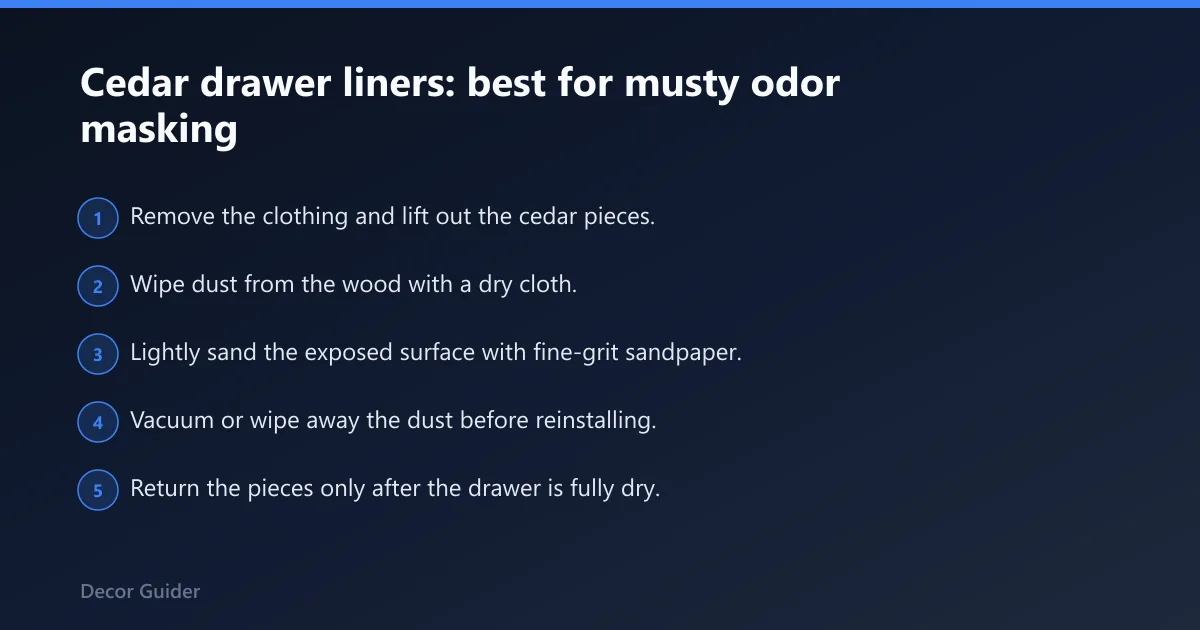
Cedar fits best when the drawer smells stale but the room is not very humid. Its natural aroma can cover mild mustiness, and sanding the surface can renew the scent. It is less useful when the real issue is moisture, and it may bother scent-sensitive users or people with fragrance allergies.
Where cedar works well
Cedar works best in dry to moderately humid closets, guest dressers, and storage drawers that need a fresh wood scent more than active odor removal. It is also useful when the goal is to make a drawer smell cleaner without adding liquid fragrance.
It can help with light odor masking on linens and casual clothing. It is a weaker choice for damp basements, coastal bedrooms, or any drawer that already feels cool and clammy to the touch.
When cedar is the wrong choice
Cedar is the wrong choice when clothes are picking up moisture, when the drawer bottom sweats, or when the user is sensitive to scent. A cedar smell can transfer to fabrics, especially in small enclosed drawers with little air movement.
It can also disappoint buyers who want real deodorizing. Cedar masks odor. It does not remove humidity the way a desiccant does.
How to refresh cedar with sanding
- Remove the clothing and lift out the cedar pieces.
- Wipe dust from the wood with a dry cloth.
- Lightly sand the exposed surface with fine-grit sandpaper.
- Vacuum or wipe away the dust before reinstalling.
- Return the pieces only after the drawer is fully dry.
That light sanding opens the wood surface and brings back the aroma. It is a renewal step, not a fix for moisture.
Activated charcoal liners: best for enclosed odor control
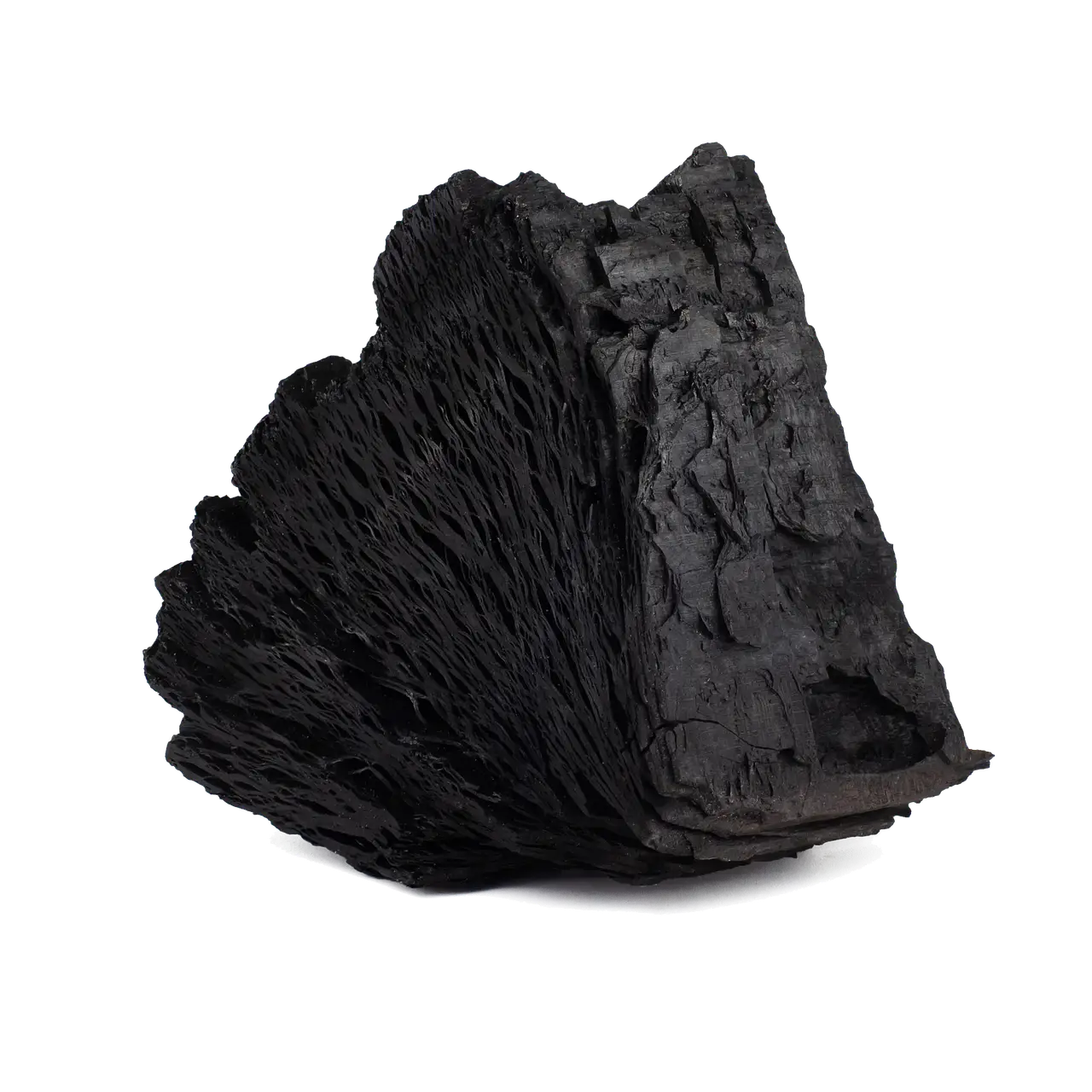
Activated charcoal is the strongest fit when odor control matters more than surface coverage. It adsorbs odor molecules instead of covering them with scent, so it works well in closed drawers, gym clothes storage, and drawers that smell stale even after cleaning.
The tradeoff is upkeep. Thin charcoal sheets and sachets often need more frequent replacement than cedar or plain liners.
Thin profile and odor adsorption
Activated charcoal liners are useful because they stay out of the way. They do not add perfume, and they do not bulk up the drawer the way thick mats can.
That matters in shallow drawers, folded shirts, and delicates. They are especially practical when the drawer needs odor control without scent transfer.
Sheet replacement, sachets, and upkeep
Charcoal sheets usually work on a replacement cycle, while sachets can be placed in corners or along the back wall. Expect more frequent replacement than cedar if the drawer is used daily or exposed to strong odors.
The drawback is simple: once the adsorption capacity is spent, the odor control drops. That makes them a recurring cost rather than a one-time fix.
Best use cases for closed drawers
These work best in closed drawers with little air exchange, where odors build up quickly. They are also a good match for scent-sensitive households because they do not rely on perfume.
They are less useful if the drawer also has a moisture problem. In that case, pair the charcoal with a desiccant rather than assuming the charcoal will do both jobs.
Bamboo charcoal inserts: best for reusable humidity support
Bamboo charcoal inserts are a reasonable pick when the goal is mild deodorizing plus some humidity buffering. They are reusable, and many are reactivated by sun drying. They fit well in drawers that need discreet odor support more than full-surface coverage.
They are not a replacement for a sheet liner on the drawer bottom. Their contact protection is limited because they sit as packs rather than covering the whole surface.
Sun-drying to reactivate
These inserts can be refreshed by placing them in sunlight as directed by the product instructions. That is the main reason people buy them: lower recurring waste than single-use sachets.
Still, the capacity is finite. Once the pack is saturated or physically worn, drying helps only up to a point.
Where inserts fit best
They fit best in corners, near the back of the drawer, or under folded stacks where they can stay in place without crushing clothes. That makes them a tidy option for lingerie drawers, sock drawers, and light storage.
They are useful when a homeowner wants a low-odor solution that can be reused, but they do not solve surface dampness on their own.
Limits compared with sheet liners
Compared with sheet liners, bamboo charcoal packs offer less protection for the drawer bottom and less coverage against spills. They also do not stop items from sliding around.
That means they work better as a supplement than as the only product in a humid drawer.
Non-adhesive shelf liner: best for grip and easy cleaning
Non-adhesive shelf liner is mainly a grip and cleanup tool. It helps keep folded items from shifting, and it makes the drawer easier to wipe out. It is not a strong odor remover unless paired with charcoal or a desiccant.
That makes it a good base layer in drawers that are already dry and mostly need organization.
PVC and EVA options
PVC and EVA are the common material choices here. PVC versions are usually more durable, while EVA options are often chosen for lower odor and easier handling.
Buyers who care about material safety should look for PVC-free and low-VOC claims. A strong plastic smell is a bad sign in a clothing drawer.
Cut-to-fit and wrinkle control
The best install starts with clean dimensions. Measure the drawer width, depth, and height before buying, then leave a small cut-to-fit allowance so the liner sits flat without buckling at the corners.
Wrinkles matter. A liner that bunches will slide, trap lint, and make the drawer harder to keep clean.
When to pair it with an absorber
Pair shelf liner with an absorber when the drawer has odor but the shelf liner is needed for grip or cleanliness. That combination is common in bedroom dressers, craft drawers, and mixed-use storage.
It is not the right answer if the drawer is already damp. In that case, a moisture-focused solution should come first.
Waterproof vinyl drawer liner: best for spill and condensation protection
Waterproof vinyl protects the drawer bottom from spills and light condensation. It wipes clean easily, which is useful for perfume drips, lotion residue, and damp items placed into storage after a wash.
The risk is moisture trapping. If air cannot move, a waterproof layer can hold condensation against the wood and create mildew conditions underneath.
Where it protects the drawer bottom
Vinyl is best where the drawer needs a wipe-clean surface, such as bottom drawers near a bathroom, nursery, or laundry area. It is also useful when the wood finish is fragile and needs a barrier from stains.
It does the physical-protection job well. It does not deodorize the way charcoal or cedar does.
When it can trap moisture
Waterproof liners can backfire in closed, humid drawers. If the drawer bottom is not fully dry before installation, the liner can trap dampness beneath it.
That hidden moisture is a common failure case. The wood may look protected while mildew develops underneath.
Cleanup and ventilation checks
Before installation, dry the drawer fully and check the back corners for old stains or soft spots. Afterward, lift the liner occasionally to confirm the wood beneath stays dry.
If the drawer sits in a humid room, leave a little ventilation space and avoid sealing in damp air. Waterproof is not the same as moisture-safe.
Which one should you buy
For humid bedrooms and basements, choose a moisture absorber first, then add a dry sheet liner if you need surface protection. For scent-sensitive households, choose an unscented charcoal product or a PVC-free shelf liner. For the lowest cost, absorbent paper works in dry rooms. For reuse, bamboo charcoal inserts are the better recurring option.
Best choice for humid bedrooms and basements
Use silica gel or another desiccant pack if the drawer feels cool, damp, or closed-in. If the clothes also smell stale, pair that with a charcoal-based odor absorber. Cedar alone is too weak for this job.
A waterproof vinyl liner can help only when the drawer is being protected from spills or condensation from above, and only if the drawer stays ventilated.
Best choice for scent-sensitive households
Pick unscented activated charcoal or a neutral shelf liner. Avoid cedar and fragranced paper if smell transfer is a concern. Cedar can bother people who react to wood scent, and it can leave clothes smelling like the drawer itself.
For delicates, a low-VOC, fabric-safe finish matters more than decorative scent.
Best low-cost option and best reusable option
The best low-cost option is absorbent paper liner in a dry room where moisture is not the main issue. The best reusable option is bamboo charcoal, provided the user accepts that it must be reactivated and that it offers limited surface coverage.
For a dresser that needs both grip and cleanup, a non-adhesive shelf liner is more practical than a scented product.
Frequently asked questions
What are the best dresser drawer liners for odor and moisture control?
The best choice depends on which problem is stronger. Activated charcoal is best for odor, silica gel or another desiccant is best for moisture, cedar is best for light scent masking, and vinyl is best for spill protection. If both problems exist, use an absorber plus a dry, fabric-safe sheet liner.
Do cedar drawer liners really keep clothes smelling fresh?
Cedar can make clothes smell fresher by adding a wood scent that masks mild mustiness. It does not remove humidity, and it can transfer its aroma to fabric. It is useful in dry closets and less useful in damp rooms or for anyone sensitive to scent.
Which drawer liner absorbs moisture best without damaging wood?
Silica gel or another desiccant pack absorbs moisture best when it is kept away from direct fabric contact. To protect wood, make sure the drawer is fully dry before adding any liner, and avoid sealing damp air under waterproof vinyl or other non-breathable sheets.
Are scented drawer liners safe for clothes and delicates?
Scented liners are not always the safest choice for delicates or sensitive skin. They can leave fragrance on fabric and may bother users with allergies or scent sensitivity. For those cases, unscented charcoal, a neutral shelf liner, or a fabric-safe low-VOC product is the safer route.
Can I use shelf liner in a dresser drawer instead of drawer liner?
Yes, a non-adhesive shelf liner can work in a dresser drawer if it fits flat and does not bunch up. It is mainly for grip and easy cleaning, not for strong odor control. For odor or humidity, pair it with charcoal or a moisture absorber.
How do I stop musty smells in dresser drawers?
Start by emptying the drawer, cleaning it, and letting it dry fully. Then choose the right tool for the problem: cedar for light odor masking, charcoal for stronger odor control, or silica gel if humidity is the cause. Musty smells usually return when moisture is left untreated.
How often should dresser drawer liners be replaced?
Replace liners when they curl, stain, smell stale, or stop lying flat. Cedar can be refreshed with sanding every few months, charcoal sheets often need replacement every few months, and bamboo charcoal inserts need reactivation or replacement as capacity drops. Paper liners usually need the shortest cycle in humid rooms.
What drawer liner is best for humid bedrooms and basements?
For humid bedrooms and basements, use a moisture absorber first. Silica gel or another desiccant is the right core choice, and a dry, low-VOC sheet liner can follow if you need protection under folded items. Cedar and paper are usually too weak for those conditions.
Products related to this article
Sponsored / affiliate links. As an Amazon Associate I earn from qualifying purchases. I may earn additional commission from eligible campaigns.