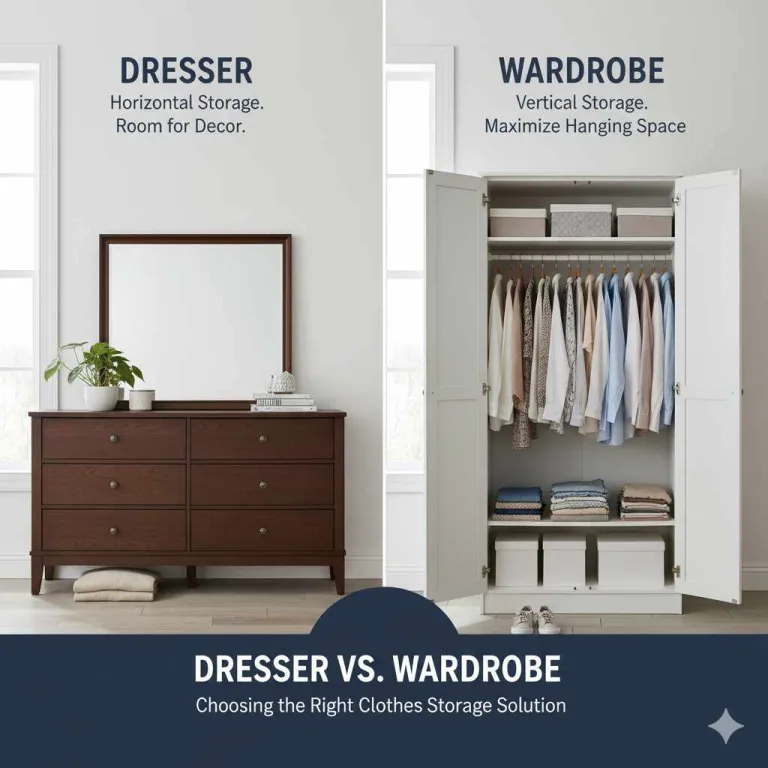
White Dresser Review for Small Bedrooms
For most small bedrooms, a white tall narrow chest is the best buy because it uses less floor area while still giving real drawer storage. Choose a wider dresser only when you need larger drawer cavities or a broad top for a mirror, lamp, or daily-use items.
How to pick the right white dresser size

A white dresser can work very well in a small room, but the best choice is usually the one that stays narrow, not the one that looks smallest online. Footprint, drawer depth, and clearance around the bed matter more than finish alone.
White helps a dresser read lighter in the room, yet visual bulk still depends on width, height, and depth. A tall unit can fit a tighter walkway, while a short wide unit can still feel heavy if it steals wall length or blocks a door swing.
Best overall style for tight rooms
A tall narrow chest is the safest default for tight rooms because it saves floor space and fits where a wider dresser would crowd the bed or closet door. JYSK describes a chest of drawers as taller and narrower, which matches the small-bedroom use case.
That said, tall storage only works if you can open drawers without hitting the bed frame and if the unit is anchored properly. Taller furniture also needs more attention to tipping risk, especially in homes with children or pets.
When a wide dresser makes sense
Choose a shorter wide dresser when you need shallow reach, a larger top surface, or broader drawers for bulky clothing. It can be the better fit for a shared room where the dresser also acts as a landing zone for folded items, a mirror, or a tray.
Wide units are harder to place in rooms with short wall runs. They can also dominate the visual field, even in white, because their mass spreads horizontally across the room.
Quick buying verdict by room size
If your bedroom is tight on walking space, start with a tall chest. If your room is small but not cramped, a compact 3- or 4-drawer dresser may be enough. If you store sweaters, denim, or bulkier items, a wide dresser can be worth the wall space.
Pros and cons of white dressers
White dressers are popular for small rooms because they reflect more light than dark finishes and usually look cleaner against painted walls. The tradeoff is that dust, scuffs, and edge wear can stand out more clearly, especially on glossy surfaces.
Pros
- White finish can make a room feel lighter.
- It pairs easily with most bedding and wall colors.
- It can look less visually heavy than dark wood in a small room.
- Painted, matte, and glossy options give you different looks.
Cons
- Dust and scuffs may show more quickly.
- A white finish does not fix poor dimensions.
- Glossy surfaces can reveal fingerprints and wear.
- Oversized white dressers can still feel bulky.
Best fit by bedroom type
White dressers are a strong fit for guest rooms, rentals, kids’ rooms, and compact primary bedrooms where you want a cleaner look without adding visual weight. They are less useful if you need maximum drawer capacity in a very narrow room and only have one usable wall.
What size white dresser fits a small bedroom?
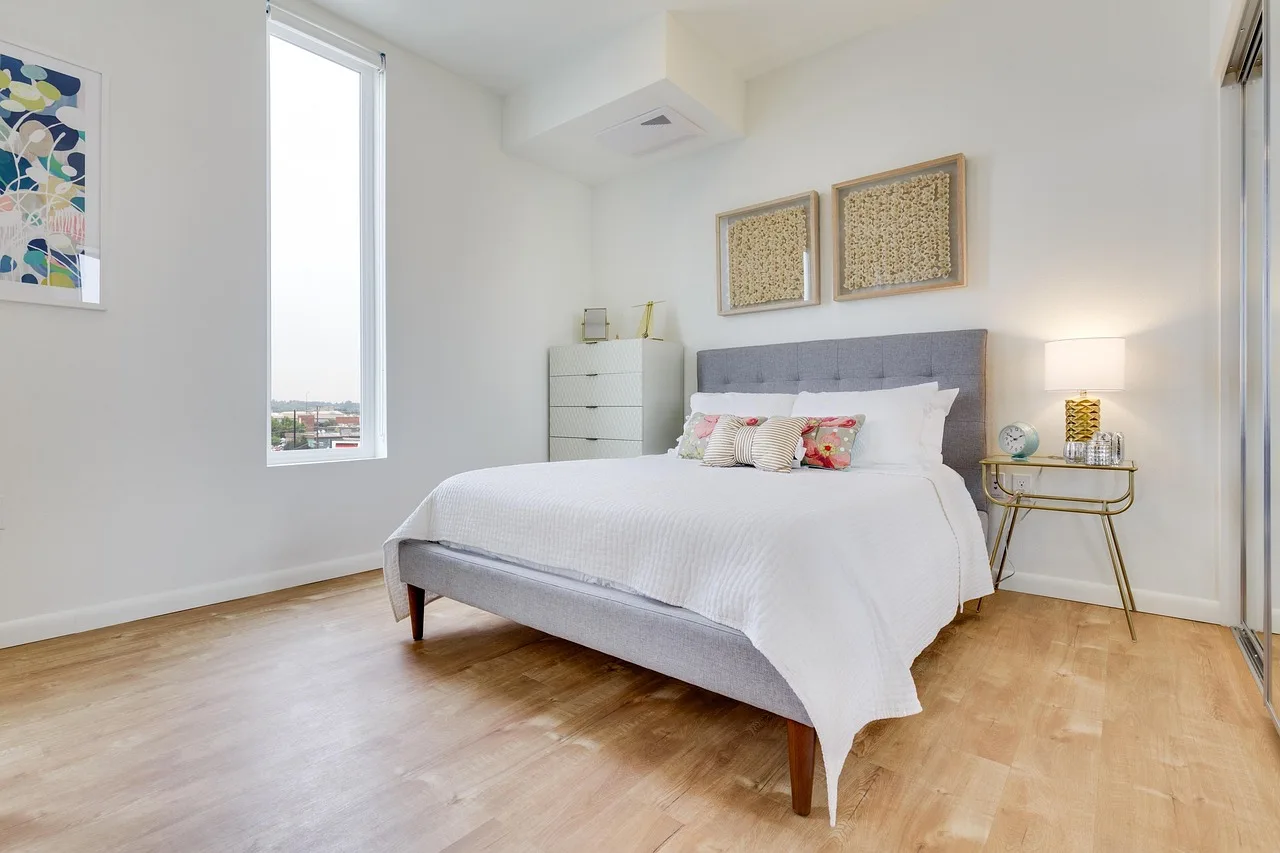
For a small bedroom, a good dresser usually stays moderate in width and depth rather than chasing the lowest possible price or the tallest possible profile. A practical target is a depth around 16 to 18 inches, with width chosen around the bed, closet, and door clearance you actually have.
Width, depth, and height to check
Measure the wall space, the door swing, and the side gap beside the bed before you buy. Width tells you how much wall the dresser consumes. Depth tells you how far it projects into the room. Height matters because a taller unit may fit the footprint, yet still block a window, mirror, or wall art if it sits under a low sightline.
Real product examples show the spread clearly: JYSK lists a 6-drawer chest at 140 x 80 x 40 cm, a 3-drawer chest at 96 x 80 x 40 cm, a 4-drawer chest at 53 x 100 x 40 cm, and a 5-drawer chest at 81 x 99 x 40 cm. Those figures show how drawer count can change size in different directions.
Clearance for doors and walkways
Leave enough room to open the dresser drawers fully without clipping the bed frame, nightstand, or closet door. If the dresser sits beside the bed, the side clearance matters as much as the front clearance because you still need a passable walkway.
For tight bedrooms, the biggest placement mistake is buying by width alone and forgetting depth. A dresser that is too deep can pinch the walkway even when its width seems acceptable.
How much drawer count you actually need
Drawer count should match what you store, not just how many compartments look useful. A dresser with about 5 to 8 drawers can suit people who want to separate tops, sleepwear, and smaller items without using a closet organizer.
Suppose a room only has space for one dresser beside the bed. A 3-drawer unit may be enough if the closet handles seasonal storage. If the closet is already full, a taller chest with more drawers usually gives better storage per square foot.
Tall narrow dresser comparison table
This comparison separates how a white dresser looks from how it functions in a small bedroom. A style can seem compact in a product photo and still waste space if it is too deep, too wide, or hard to open beside a bed.
| Style | Footprint efficiency | Drawer access | Visual bulk | Anti-tip need | Best use case |
|---|---|---|---|---|---|
| Tall narrow chest | High | Good if drawers are not too deep | Low to moderate | High | Tight rooms with limited floor space |
| Compact 3-4 drawer dresser | Moderate | Very easy | Low | Moderate | Minimal storage, guest rooms, wall art above |
| Short wide dresser | Low | Good for bulky items | High | Moderate | Rooms with one open wall and larger storage needs |
| Fabric drawer tower | High | Easy for light clothing | Low | Low to moderate | Renters, temporary setups, very light storage loads |
Footprint efficiency scores
Footprint efficiency is about how much storage you get for the floor area the dresser occupies. Tall narrow chests usually score best because they move storage upward instead of spreading it outward. JYSK’s dimensions show that a 6-drawer chest can keep a narrow profile while still offering more drawers than a shorter unit.
Drawer access and stability scores
Compact dressers are easier to reach into because the top drawers sit lower and the body is less top-heavy. Tall units can be less convenient for shorter users, and they need extra attention to stability. A Walmart listing for a 6-drawer dresser includes anti-tip features, which is a sign that the risk is taken seriously.
Best-use cases by bedroom layout
Use a tall chest near a closet or beside a bed when the room is narrow. Use a compact dresser under a mirror or art when you want the top to stay visually open. Use a wide dresser only when the wall is long enough to carry the visual load.
Which white dresser style should you buy?
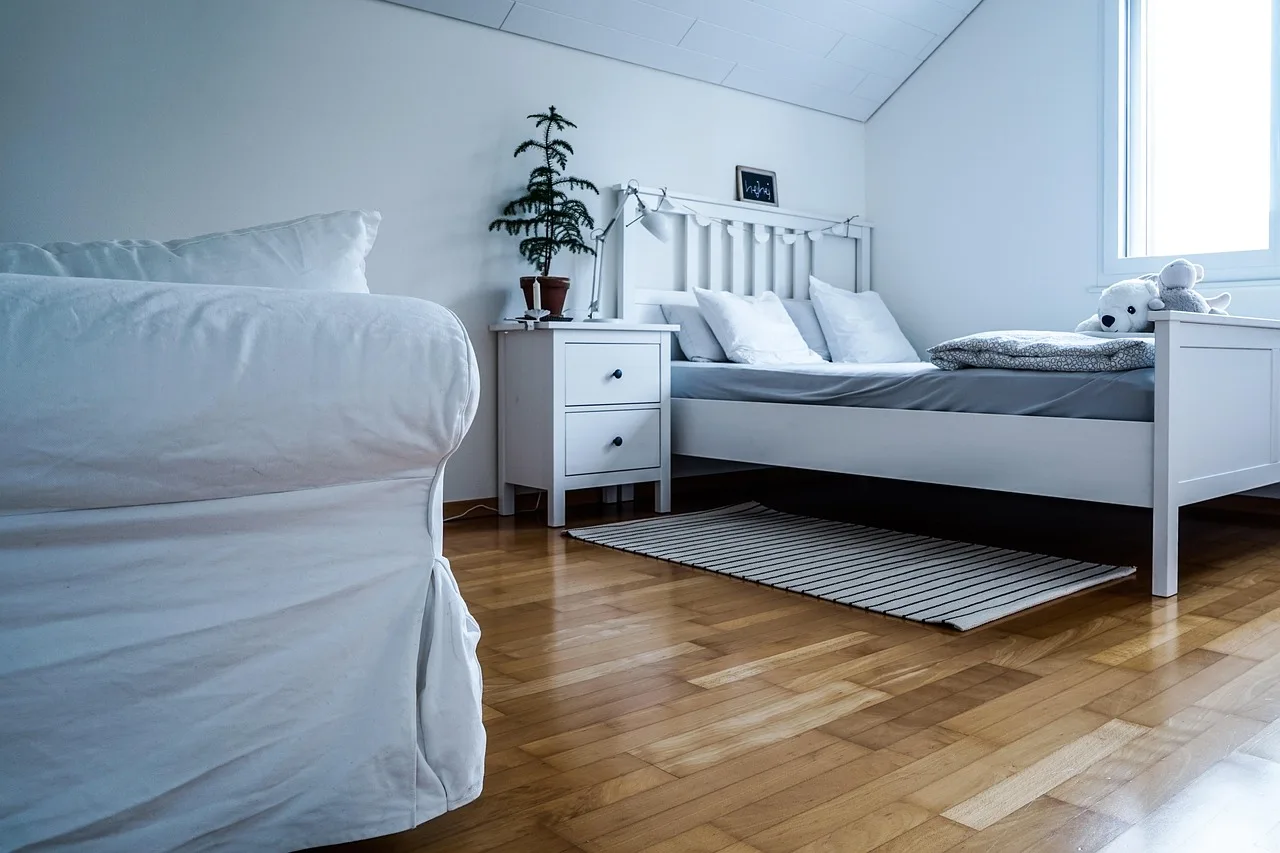
The best style depends on what fails first in your room: floor space, drawer access, or visual crowding. If you need storage in the smallest possible footprint, a tall narrow dresser is usually the right first pick. If you need larger drawers, a wider unit may be worth the tradeoff.
Tall narrow dresser / chest of drawers
This is the strongest choice for most small bedrooms because it uses vertical space and leaves more open floor area. JYSK’s own product examples support the small-room logic: a chest of drawers is taller and narrower, while a dresser is typically shorter and wider.
The drawback is stability. Taller units should have anti-tip hardware, and the drawers should move cleanly so they do not bind or pull unevenly on the frame.
Compact 3-4 drawer dresser
A compact 3- or 4-drawer dresser is best when you do not need a lot of storage and want a cleaner wall under art or a mirror. The same source lists a 3-drawer chest at 96 x 80 x 40 cm and a 4-drawer chest at 53 x 100 x 40 cm, which shows how compact units can still differ a lot in shape.
This style works well in guest rooms and smaller bedrooms where clothing storage is light. It is not the best choice if you want one dresser to absorb a large share of your wardrobe.
Short wide dresser
A short wide dresser gives you a larger top and often deeper drawer cavities, which helps with sweaters, bedding, and bulkier folded items. JYSK’s 5-drawer chest at 81 x 99 x 40 cm and 6-drawer chest at 140 x 80 x 40 cm show how width can climb fast, even when depth stays at 40 cm.
This is the style most likely to feel oversized in a small room. It can still work if you have one long wall and do not need the dresser beside the bed.
Fabric drawer tower
A fabric drawer tower is a lower-cost option for light storage and renter setups. Walmart lists a Mainstays 5-drawer fabric dresser with a 40-inch wide format, which shows that fabric storage can still take a meaningful amount of wall space even when it feels visually lighter.
It is useful for folded tees, loungewear, or temporary storage, but it is not the best pick for heavy loads or a room where drawer alignment and long-term durability matter most.
What materials and hardware matter most?
Material choice affects weight, stability, drawer feel, and price more than finish color does. White MDF, engineered wood, solid wood, and fabric drawer systems can all work in a small bedroom, but they do not behave the same way under daily use.
Solid wood, MDF, and engineered wood
Solid wood is typically the most durable-feeling option, but it can be heavier and more expensive. MDF and engineered wood are common in white dressers because they are easier to finish smoothly and often cost less, though they can be less forgiving of repeated stress or moisture.
For small bedrooms, weight matters during assembly and placement. Heavier pieces are harder to move into place, while lighter pieces may need more attention to anchoring and hardware quality.
Drawer glides and runners
Metal slides usually give a smoother pull and better alignment than basic runners, especially if drawers are opened every day. Basic runners can work on budget models, but they may feel less precise and can shift more if the drawer is loaded unevenly.
Check how far the drawer opens and whether it stays square when pulled. In a narrow room, a drawer that tracks poorly becomes annoying fast because the available standing room is already limited.
Anti-tip hardware
Anti-tip hardware is worth treating as standard on taller units, not as a nice extra. It matters most in kids’ rooms, pet-friendly homes, and any bedroom where someone might grab a drawer for balance. The same source lists anti-tip features on at least one 6-drawer dresser, which is the right direction for a tall unit.
Do small white dressers usually come with it? Sometimes, but not always. Treat it as a buy criterion, not a bonus.
Who is each dresser style best for?
Different small bedrooms fail in different ways. Some need the smallest floor footprint. Some need easy access. Some need storage that can handle heavier clothing. Match the dresser to the room problem first, then to the finish.
Renters
Renters often do best with lighter pieces that are easier to move and easier to replace if the room layout changes. Fabric drawer towers can work here, as can compact engineered-wood dressers, especially if the room is temporary and the storage load is light.
Kids’ rooms
Kids’ rooms should push anti-tip safety higher on the list. A tall narrow chest can still work well, but only if it is anchored. Avoid very top-heavy units unless the room layout clearly supports them and the hardware is installed correctly.
Couples in a small bedroom
Couples usually need a dresser that divides storage cleanly and can handle daily use without wobble. A tall chest can work for one side of the wardrobe, while a short wide dresser can be better if both people need access to similar drawer sizes and there is wall space for it.
People with limited mobility
People who prefer less bending often do better with a dresser that keeps frequently used drawers at a comfortable reach. A shorter unit can be easier to access than a very tall chest, even if the tall chest is more efficient on paper. Drawer glide quality matters more here than the finish.
- Measure the wall, doorway, and bed-side clearance first.
- Decide whether you need vertical storage or wider drawer cavities.
- Check depth before you check drawer count.
- Choose anti-tip hardware for taller units.
- Compare drawer slides, not just the front style.
- Pick the finish last.
Frequently asked questions
What size white dresser works best in a small bedroom?
A white dresser around 16 to 18 inches deep is a strong starting point for small bedrooms, because depth affects walkway clearance as much as width. If the dresser sits beside the bed, keep the width modest enough that drawers can open without blocking the path.
Should I choose a tall white dresser or a wide one for a tight room?
Choose a tall white dresser for a tight room if your main problem is floor space. Choose a wide one only if you need larger drawers or a broad top and you have enough wall length. Tall units save footprint, but they need anti-tip hardware.
How deep should a small-bedroom dresser be?
A small-bedroom dresser is often easiest to place when it stays about 16 to 18 inches deep. That depth leaves more room for bed clearance and walking space, especially in rooms where the dresser sits opposite the bed or near a closet door.
What’s the difference between a dresser and a chest of drawers?
In shopping terms, a chest of drawers is usually taller and narrower, while a dresser is typically shorter and wider. That difference matters in small bedrooms because the taller shape can save floor space, while the wider shape can offer a larger top and broader drawer layout.
Is a white dresser better for making a small bedroom feel bigger?
White can help a room feel lighter because it reflects more light and reads less visually heavy than many dark finishes. But size still matters more than color. A bulky white dresser can still overpower a small room if it is too deep, too wide, or too tall.
What drawer count is best for a small bedroom dresser?
A 3- or 4-drawer dresser works well if your storage needs are modest or your closet handles most clothing. A 5- to 8-drawer chest is better if the dresser must carry a larger share of your wardrobe. The right count depends on storage volume, not appearance alone.
Products related to this article
Sponsored / affiliate links. As an Amazon Associate I earn from qualifying purchases. I may earn additional commission from eligible campaigns.