Mainstays Dresser Review: What to Know Before Buying
Mainstays dressers can be worth buying if you choose the smaller, lighter-duty models with anchoring hardware and skip the widest composite units. A good rule is to favor 3-drawer or fabric styles when budget and safety matter most. Buy the wrong one and you can end up with wobble, poor drawer fit, or a dresser that needs anchoring before use. This review breaks down which Mainstays dressers are worth it, which ones to avoid, and what to check for materials, assembly, room fit, and child safety.
Verdict on Mainstays dressers
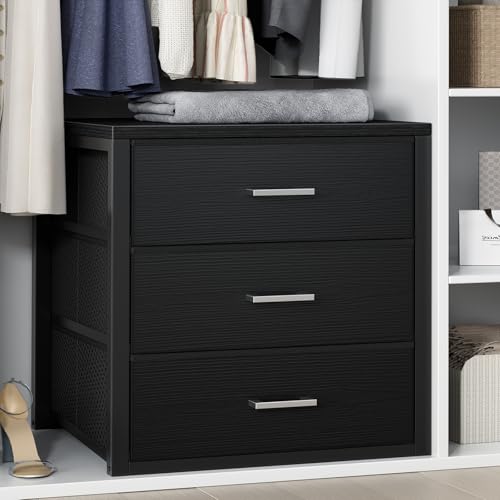

Mainstays is a practical budget pick for basic bedroom storage, not a line to buy on finish alone. The best-value choices are the smaller or lighter-duty models, especially fabric storage units and compact wood-look dressers that include stability hardware.
Skip the line if you want heavy-duty drawers, premium slide action, or a dresser that will take years of rough use without careful assembly. The strongest case for Mainstays is low-cost storage in a small room, dorm, guest room, or kids’ room where you can verify fit and anchor it properly.
Pros and cons
- Pros: low entry cost, multiple drawer counts, and a mix of wood-look and fabric options for different rooms.
- Pros: several models include safety features such as anti-tip hardware or drawer stops.
- Pros: fabric models can be easier to fit into tight spaces and are useful for lighter-duty storage.
- Cons: composite and laminate units are not the same as solid wood, so edge wear and wobble can show up sooner if assembly is loose.
- Cons: some models need careful anchoring and room planning before use, especially in homes with children.
- Cons: drawer feel and stability vary by model, so one Mainstays dresser does not predict the next one.
Mainstays dresser comparison table
This table ranks the main Mainstays dresser types by the details that matter most: drawer count, build, safety features, room fit, and the use case that makes sense for each one. The safest purchase is the one that fits the room size and the weight you plan to store in it.
| Model | Drawer count | Materials / build | Safety features | Space fit | Best use case |
|---|---|---|---|---|---|
| Mainstays 4-Drawer Dresser, canyon walnut | 4 | Wood-look budget dresser | No specific safety feature listed in the sourced facts | Compact-to-medium bedrooms where you want a simple footprint | Basic clothing storage when you want a low-cost dresser and can accept mixed review feedback; BestViewsReviews lists a 7.2 score out of 10, with 98 reviews, around 45% positive and around 52% negative sentiment |
| Mainstays Ardent 4 Drawer Dresser | 4 | Wood composite, MDF, particle board, PU paper foil laminate | Anti-tip hardware; Mainstays lists it as compliant with the U.S. STURDY Act | 40.5H x 27.75W x 16.5D works for smaller rooms that still need a taller profile | Child or family bedrooms where you want a more safety-focused budget dresser and can assemble it carefully |
| Mainstays Dowel 6 Drawer Dresser | 6 | Wood dresser in a natural teak finish | Interlocking safety mechanism; metal runners and safety stops | 18.03 x 56.77 x 37.17 inches, so it needs more wall width | Larger bedrooms that need more drawer count and a unit that can also act as a TV stand, with a listed top capacity for a 60-inch TV weighing 70 pounds or less |
| Mainstays 5 Drawer 40-inch Wide Fabric Storage Dresser | 5 | Steel frame, premium grey non-woven fabric drawers, engineered wood top surface | Adjustable feet | Good for tighter rooms, closets, dorms, and lighter traffic areas | Lightweight storage for folded clothes, accessories, and overflow items |
What kind of Mainstays dresser should you buy?
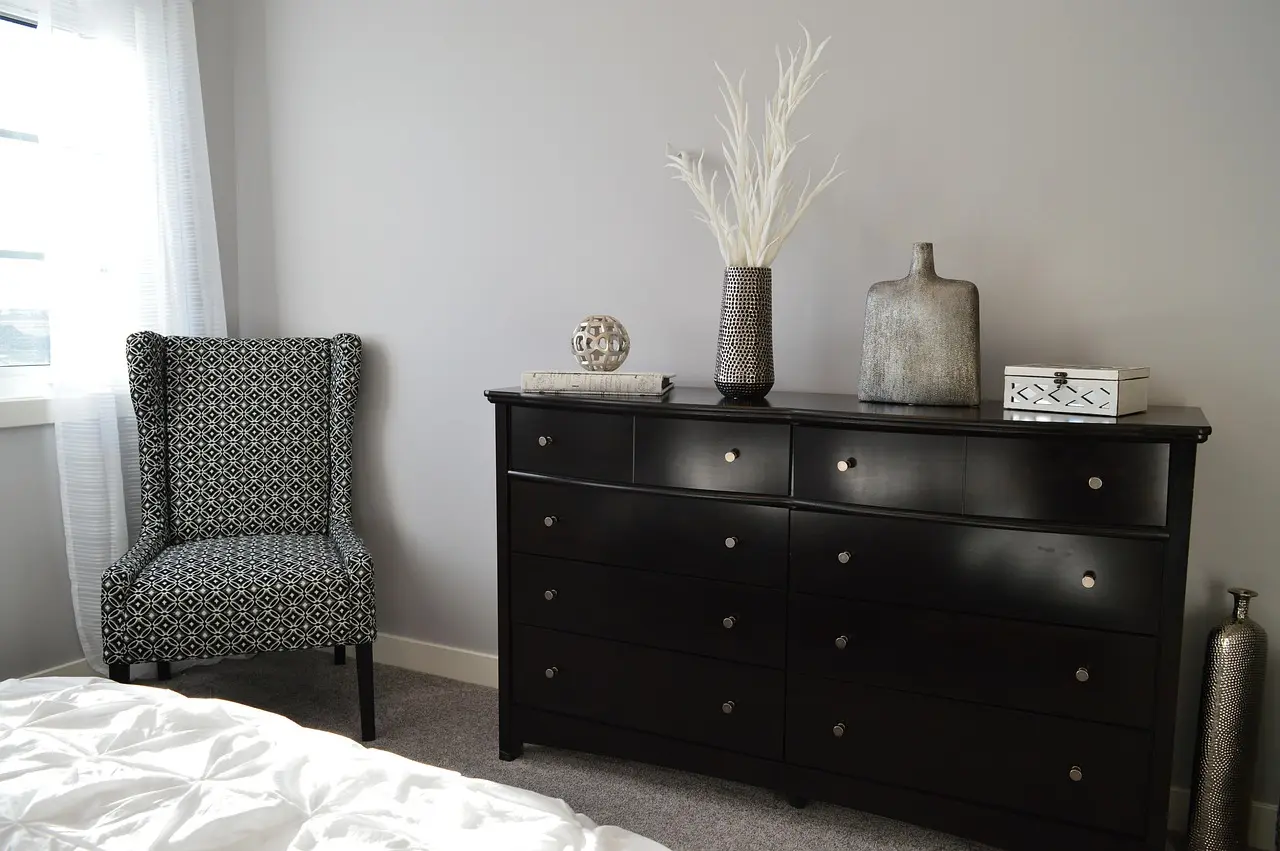
Choose the dresser type first, then the finish. Wood-look composite dressers fit better when you need a more furniture-like appearance and plan to store heavier folded clothing, while fabric dressers make more sense when you want lighter weight and faster setup. The wrong choice usually shows up as sag, wobble, or overstuffed drawers.
Wood-look composite dressers
Wood-look Mainstays models are better when you want a dresser that feels closer to traditional bedroom furniture. Composite board, MDF, particle board, and laminate are common in this tier, which keeps price down but also means edge damage and moisture exposure matter more than they do with solid wood.
Say your bedroom is 9 by 11 feet and you need one dresser plus a bed and a small nightstand. A compact composite model usually fits better than a wider six-drawer unit, especially if the dresser must sit near a closet door or traffic path.
Fabric storage dressers
Fabric dressers fit lighter-duty storage. They are useful for socks, workout clothes, baby items, or seasonal overflow, but they are not the same as a wood-look composite dresser and should not be judged by the same durability standard.
Suppose you need storage in a dorm or guest room where you may move furniture later. The steel-frame fabric model is easier to handle and usually less demanding on floor space, but it is not the first choice for heavy stacks of denim or a room that gets daily hard use.
Small-space vs larger-room fit
Small rooms usually benefit from narrower dressers or fabric units with a shallow footprint. Wider models work best when you have enough clearance to open drawers fully without hitting a bed frame, nightstand, or closet door.
Check width first, then depth, then height. A dresser can fit the wall and still fail the room if the drawers cannot open cleanly.
Mainstays dresser materials and build quality
Mainstays dressers use different materials depending on the model, and that difference matters more than the brand name. Composite, MDF, particle board, and laminate usually keep costs low, while steel-frame fabric units trade cabinet-like durability for lighter weight and simpler assembly.
Composite and laminate models
Composite and laminate dressers are common in budget furniture because they are affordable and easy to mass-produce. They can work well for standard bedroom storage, but their long-term durability depends on screw tightness, drawer alignment, and whether the dresser stays dry and level.
Moisture matters here. In humid rooms, laminate edges and particle-board cores are more likely to show wear if the dresser sits near a damp wall, vent, or window leak.
Steel-frame fabric models
Fabric dressers use a steel frame with removable drawers, so they are built more like a storage organizer than a traditional dresser. That makes them useful for lighter loads and quick room changes, but not ideal if you want a heavy, furniture-like piece that will take years of rough handling.
What durability usually depends
Durability in this line usually comes down to three things: material choice, assembly quality, and whether the dresser is used within its intended load range. A well-assembled budget dresser can be serviceable. A poorly tightened one can wobble even before the drawers are full.
Is a Mainstays dresser safe for kids?
A Mainstays dresser can be kid-safer when it includes anti-tip hardware, is anchored correctly, and stays within its intended load range. That matters because tip-over risk is tied to real use, not just the product photo. For clothing storage units, the STURDY Act is a key safety benchmark, and some Mainstays models specifically list compliance.
Anti-tip hardware and why it matters
Anti-tip hardware helps keep the dresser attached to the wall so it is less likely to tip if a child climbs on an open drawer. It is especially important for taller dressers and for any unit used in a child’s room.
STURDY Act context for clothing storage units
The STURDY Act is relevant because it sets a safety benchmark for clothing storage units that can tip over. For the Ardent 4 Drawer Dresser, Mainstays lists anti-tip hardware and U.S. STURDY Act compliance, which is the kind of documentation a cautious buyer should look for when kids are in the home.
What to check after assembly
- Push gently on the top corners to check for wobble.
- Open each drawer and confirm it slides squarely without scraping.
- Verify that the dresser sits flat on the floor and does not rock.
- Anchor the dresser to wall framing when possible, not just drywall alone.
- Check that the wall type and anchor hardware match the room. Drywall, studs, and rental walls all set different limits.
- Keep the dresser clear of overloading in the top drawers, which can make tip risk worse.
Assembly and setup: what to expect
Assembly is usually manageable, but it is not the part of the purchase to ignore. Budget dressers often arrive with many fasteners and panels that need careful alignment, and small errors show up later as drawer drag or a leaning frame.
Drawer alignment and wobble checks
After assembly, inspect the drawer gaps from top to bottom. Uneven spacing often signals a frame that is slightly out of square or hardware that was tightened before all panels were aligned.
A common first-timer mistake is setting the dresser on a soft rug and assuming the wobble is normal. If the floor is level and the unit still shifts, the issue is usually assembly or hardware fit.
Anchoring limits for drywall and studs
Wall anchoring is helpful, but it is not universal. Stud anchoring is stronger than relying on drywall alone, and rental walls may limit what hardware you can use. If you cannot anchor into a stud, choose a lighter unit and be more conservative about drawer loading.
When a two-person build helps
A second person helps when the dresser is tall, wide, or awkward to square up while fastening the back panel. That may be especially true for the 6-drawer unit, where the larger footprint can make alignment more sensitive.
Who is a Mainstays dresser for?
Mainstays is for shoppers who need basic storage at a low price and are willing to choose the model carefully. It is a reasonable fit for dorms, first apartments, kids’ rooms, and guest rooms, especially when room size and safety hardware matter more than premium finish.
Dorms and first apartments
For a dorm or first apartment, the fabric dresser often makes the most sense because it is lighter, simpler, and easier to place in a tight room. If you want a more furniture-like look, a compact wood-look dresser can work, but only if the room can handle the width and depth.
Kids’ rooms and light-duty storage
In kids’ rooms, the better choice is usually the model with anti-tip hardware and the clearest stability guidance. Fabric units can work for light clothing and accessories, but a kid’s room that gets daily use is a better match for a more stable wood-look dresser with anchoring.
Rooms that need a low-cost stopgap
If you need storage now and plan to upgrade later, Mainstays can fill the gap. That is the right use case for a budget dresser line: short-to-medium term storage that solves a room problem without a large spend.
Is a Mainstays dresser worth the money?
Mainstays is worth the money when the price matches the build type and the drawer count fits your actual storage needs. Fabric units usually give the best value for light storage, while the better wood-look models make sense only when the dimensions, safety features, and drawer count line up with the room.
Value by drawer count
More drawers are not automatically better value. A six-drawer model may cost more but work better if you need to separate clothes, linens, and accessories in one room. A four-drawer unit can be the smarter buy when you only need folded basics and want less floor space taken up.
When fabric beats wood-look composite
Fabric wins when portability, lower weight, and simple setup matter most. It usually loses when you need a more finished look, heavier loading, or a dresser that stays in one place for years.
When to spend more
Spend more if you need stronger drawer action, a heavier frame, or a piece that will handle daily use in a busy household. A budget dresser is a poor trade if the room needs long-term durability and you cannot anchor it properly.
Frequently asked questions
Is mainstays a good brand?
Mainstays is a good brand only if you are shopping in the budget tier and selecting the right model for the room. Its dresser line includes wood-look, fabric, compact, and modern options, but quality varies by product. Treat each dresser as a separate purchase, not as a blanket endorsement.
What is the Mainstays dresser like to assemble?
Assembly is usually straightforward enough for a budget dresser, but alignment matters. Expect to check panels, tighten hardware in stages, and test the drawers before loading clothes. Larger units may be easier with two people, especially if you want less wobble and cleaner drawer gaps afterward.
How much storage does a Mainstays dresser have?
Storage varies by drawer count and design. A four-drawer model offers basic clothing storage, a five-drawer fabric unit gives lighter-duty sorting, and the six-drawer Dowel provides the most separation. The real limit is the drawer count and how well the dresser fits your room and load.
What materials are used in Mainstays dressers
Mainstays uses wood composite, MDF, particle board, PU paper foil laminate, steel frames, and fabric depending on the model. That mix matters because composite and laminate dressers behave differently from steel-frame fabric storage. Moisture, drawer weight, and assembly quality all affect how long each one holds up.
Products related to this article
Sponsored / affiliate links. As an Amazon Associate I earn from qualifying purchases. I may earn additional commission from eligible campaigns.