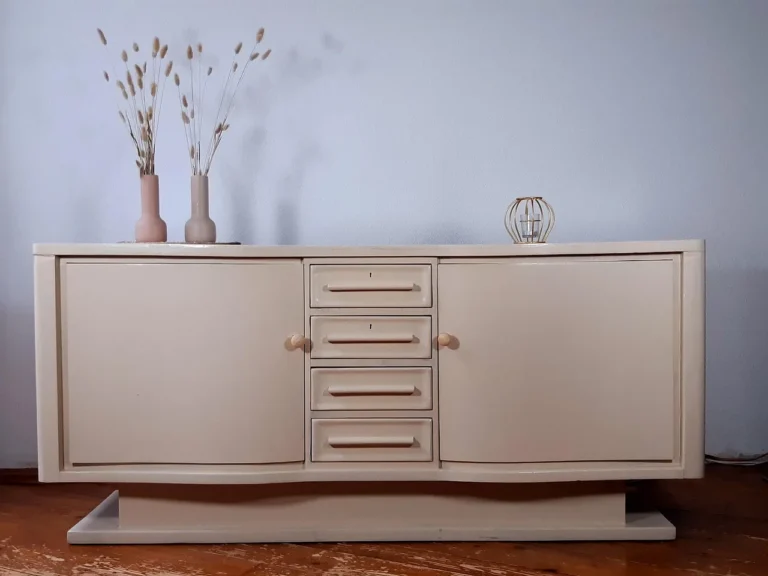
How Much Does a Laminate Dresser Cost?
A laminate dresser usually costs about $80 to $400 new, while shipping, repair, or refinishing can add about $40 to $250 more; the cheapest path depends on size, damage, and whether you already own the piece. Skip the math, and a bargain dresser can cost more than a better one once delivery, labor, and replacement parts are added. This guide breaks down buy, refinish, repair, and shipping costs so you can choose the lowest total.
New and used price bands and how size affects total cost



A new laminate dresser is usually the cheapest dresser material option, but the total still moves with size, drawer count, finish quality, and delivery. Used pieces can cost much less at purchase, yet a chipped top, loose slides, or a missing mirror can erase the savings fast.
New-price bands
For a basic laminate dresser, a low budget often sits around $80 to $150. Mid-range pieces often land around $150 to $300, while larger or better-finished designs can run about $300 to $400 or more. Price rises with thicker panels, better hardware, and more drawers.
Used dresser prices
Used laminate dressers are often the cheapest entry point if the carcass is sound. Expect a wide spread: a small local listing may be very low, while a cleaner piece with intact edge banding and working drawers can cost enough that refinishing no longer makes sense unless you want a specific look.
Why size and finish matter
Size changes both purchase price and the cost to move or redo the piece. More drawers mean more slides, handles, and labor. A glossy finish may look better on the floor, but it usually adds prep time if you plan to paint it later.
Laminate dresser cost matrix
This matrix separates purchase price from the extra cost of making the dresser usable in your space. The best choice depends on whether you are buying, fixing, or transporting a piece you already own.
| Scenario | Low | Mid | High | What it includes | Recommendation |
|---|---|---|---|---|---|
| Buy new | $80 | $220 | $400 | Dresser price only, plus $40 to $120 delivery if needed | Best for a clean finish and the least repair risk. |
| Buy used and refinish | $35 | $125 | $260 | Used dresser, sandpaper, cleaner, bonding primer, paint, topcoat | Cheapest if the core is solid and the surface is only worn. |
| Repair damaged laminate | $25 | $95 | $240 | Edge tape, filler, adhesive, drawer slide or hardware replacement, labor if hired out | Worth it only when the damage is local, not structural. |
| Ship a dresser | $60 | $140 | $300 | Packing, carrier fee, insurance, and possible lift-gate or oversized charges | Compare against local replacement before paying for transport. |
What changes the price?
Three things drive the total: physical size, surface quality, and how far the piece has to travel. A small, plain dresser is easier to price than a tall unit with a mirror, curved trim, or damaged edges. Delivery and labor often matter as much as the dresser itself.
Size, drawer count, and material quality
Larger dressers need more sheet goods, more hardware, and more assembly time. VRR Flooring notes that premium laminate may use thicker planks and better wear layers, and that larger rooms require more material and installation time; for furniture, the same logic applies to larger casework and more complex builds.
Edge banding, core quality, and finish condition
Laminate furniture uses a synthetic printed surface, usually over cheaper wood or MDF, and the finish often feels glossy or slippery. That surface can peel or chip if the prep is poor or the core swells from moisture. Thin core panels, weak edge banding, and soft corners make repair less worthwhile.
Picture a 6-drawer dresser with swollen bottom edges and peeling side panels. If the damage reaches the substrate, paint may hide the color change for a while, but it will not rebuild the missing structure. That is the point where replacement often costs less than repeated patching.
Shipping distance, packed weight, and dimensional weight
Shipping cost depends on packed weight, dimensional weight, route distance, and whether the carrier treats the dresser as parcel or freight. SMKlog says a small dresser is typically 50–110 lb packed. Once the box becomes bulky or awkward, freight pricing often replaces parcel pricing, and the bill can jump quickly.
How much does it cost to paint a laminate dresser?
Painting a laminate dresser usually costs less than replacing it, but glossy laminate needs prep, not just paint. Budget for cleaning, sanding, bonding primer, paint, and often a topcoat. Without that prep, adhesion is weak and peeling can return quickly, especially on slick drawer fronts and edges.
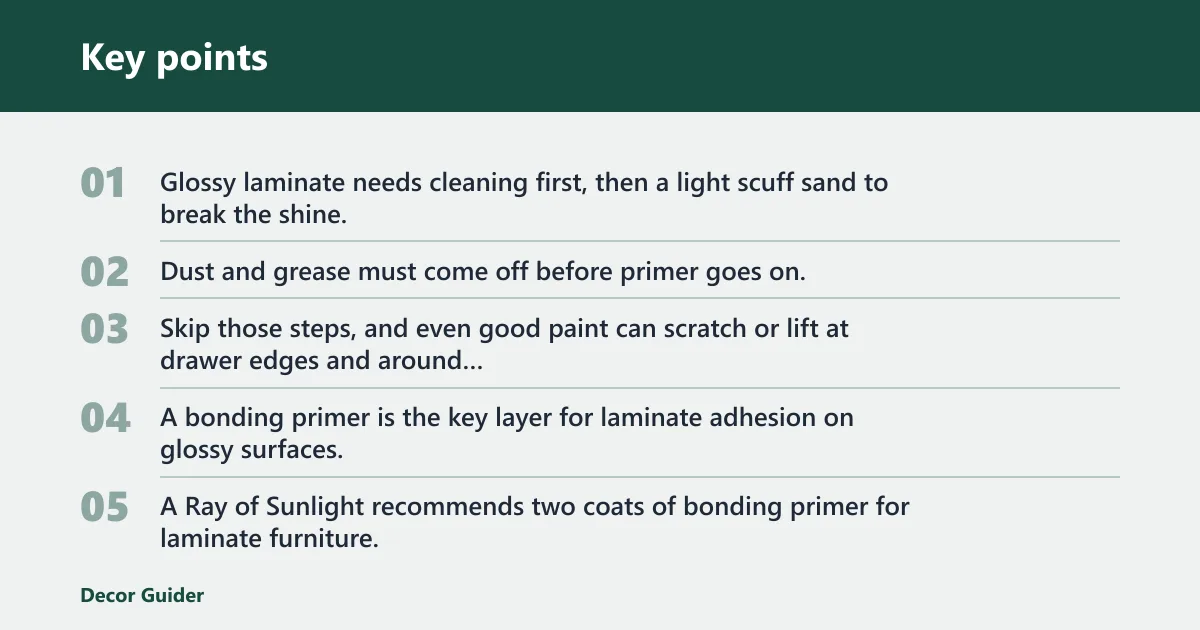
Surface prep for glossy laminate
Glossy laminate needs cleaning first, then a light scuff sand to break the shine. Dust and grease must come off before primer goes on. Skip those steps, and even good paint can scratch or lift at drawer edges and around pulls.
Bonding primer: coats, adhesion, and sanding steps
A bonding primer is the key layer for laminate adhesion on glossy surfaces. A Ray of Sunlight recommends two coats of bonding primer for laminate furniture. That advice matters because the surface resists paint adhesion without a strong primer bridge. Light sanding between coats can improve the final grip and feel.
Paint choices: chalk, latex, acrylic, and enamel
Chalk paint can cover well, but it usually needs sealing for better wear. Latex paint is common and affordable, though it may need a durable topcoat on a dresser that gets daily use. Acrylic paint dries quickly and can work for accents. Enamel paint is harder-wearing, which makes it a better choice for high-touch fronts.
Say your dresser has a glossy white top and six drawers. If you want a matte finish, the cost is not just paint. You still need cleaner, sanding pads, two coats of bonding primer, paint, and a topcoat if you want the finish to hold up to drawer pulls and daily use.
Topcoat costs and when it is worth adding
A topcoat adds cost, but it also adds wear resistance. That matters most for drawer fronts, tops, and corners that get handled often. If you use chalk or latex paint, a topcoat is usually worth the extra spend. With enamel, the need is less urgent, though some projects still benefit from it.
How much does it cost to repair damage?
Minor laminate damage is often repairable for far less than replacing the dresser, but the repair cost climbs fast when the core is swollen, the mirror is broken, or hardware has failed. Small edge repairs are cheap. Structural damage usually is not.
Peeling laminate and edge repair
Loose laminate edges may need adhesive, clamps, filler, and edge banding. Small repairs can stay under $50 in materials. Once peeling spreads across a panel, the repair shifts from patching to refinishing, and the result depends on how much the substrate has survived.
Broken hardware, drawer slides, and handles
Hardware is usually the easiest repair to price. Handles are inexpensive, drawer slides cost more, and replacing warped or stripped mounts can take time. If the drawer box is intact, hardware replacement is often the lowest-cost fix that still makes the dresser usable.
Replacement mirror costs versus repair
How Coster reports dresser mirror replacement cost of $105 to $297, and size changes the total. A small mirror costs less to replace than a large framed one, especially if the backing or frame is damaged too. If the glass is intact but the silvering has failed, repair may still be possible.
When resilvering a mirror makes sense
Resilvering only makes sense when the mirror itself is structurally sound and the damage is limited to the reflective backing. If the glass is cracked, delaminated, or badly warped, replacement is usually the better spend. For decorative furniture mirrors, the quote can easily approach the cost of a full replacement panel.
Laminate vs veneer cost
Laminate and veneer are not priced the same way, and that difference matters if you are shopping by appearance alone. Laminate usually costs less up front and is simpler to finish in a factory. Veneer often starts higher, but it may be easier to repair or refinish when the core is sound.
Purchase price differences
Laminate furniture typically sits in the lower price bracket because it often covers cheaper wood or MDF. Veneer uses a thin wood layer, so the material and finishing cost are usually higher. If the goal is the lowest sticker price, laminate often wins.
Repair and refinishing differences
Laminate resists paint adhesion on glossy surfaces and can fail at the edges if the prep is poor. Veneer can be sanded and refinished more like wood, but sanding through the top layer is a risk. That means laminate is often cheaper to buy, while veneer can be cheaper to refresh if the surface is still healthy.
When veneer can cost more over time
Veneer may cost more over time if it needs careful refinishing or if the damage reaches the substrate. On the other hand, a damaged laminate panel with peeling edges may be more limited in repair. The cheaper purchase is not always the cheaper lifetime choice.
How much does it cost to ship a small dresser?
Shipping a small dresser often costs less than buying a new one, but only if the pack size and route stay manageable. Parcel service can be affordable for compact pieces, while freight becomes more likely as the dresser gets heavier, bulkier, or more fragile.
Parcel pricing versus freight pricing
Parcel pricing works best for compact dressers that stay within carrier limits. Freight pricing usually appears when the dresser is too heavy, too long, or too awkwardly shaped for standard parcel handling. The threshold depends on the carrier, but once a piece is oversized, freight can cost more than the dresser is worth.
Packed weight and dimensional weight
Packed weight is the actual scale weight after boxing and padding. Dimensional weight is based on the box size, and carriers use it when a light piece takes up a lot of space. A wide dresser with a long top surface may cost more to ship than its actual weight suggests.
Route distance and damage risk
Longer routes raise the bill, and more handling raises the damage risk. A local move may stay modest, while cross-country transport can trigger higher fees, insurance, and special handling. If the dresser has a mirror, glass top, or fragile trim, the packing cost often rises too.
How packaging changes the final bill
Professional packing adds protection, but it also adds size and labor cost. Removing drawers, wrapping edges, and immobilizing the top can reduce damage risk. The cheapest shipping quote is not always the cheapest outcome if the dresser arrives split, dented, or missing hardware.
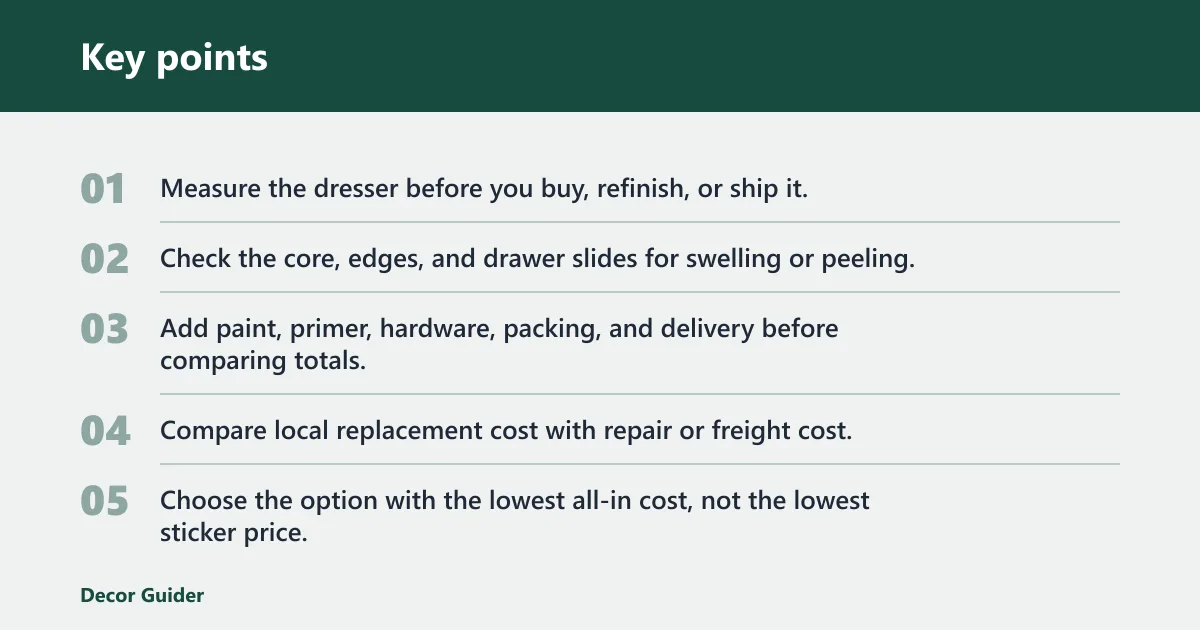
- Measure the dresser before you buy, refinish, or ship it.
- Check the core, edges, and drawer slides for swelling or peeling.
- Add paint, primer, hardware, packing, and delivery before comparing totals.
- Compare local replacement cost with repair or freight cost.
- Choose the option with the lowest all-in cost, not the lowest sticker price.
Frequently asked questions
How much does a laminate dresser cost?
A laminate dresser usually costs $80 to $400 new, depending on size, drawer count, finish quality, and whether delivery is included. Used pieces can cost much less, but worn edge banding, loose drawers, and transport can narrow the savings quickly once you add the full total.
How much does it cost to replace a dresser mirror?
The same source reports dresser mirror replacement cost of $105 to $297. Size, frame condition, and glass type change the total. If the mirror is only losing its reflective backing, resilvering may be an option, but cracked or warped glass usually means full replacement.
What is the difference between laminate and veneer cost?
Laminate usually costs less upfront because it often covers cheaper wood or MDF and uses a printed surface. Veneer usually costs more at purchase, but it can offer better refinishing options if the core is sound. The cheaper option depends on the condition and the finish you want.
How much does laminate cost per square metre?
For flooring-grade material, Tapi lists budget laminate at £10-£20 per m2, mid-range at £20-£35 per m2, and luxury at £35-£60+ per m2. Tapi also says laminate ranges from around £20 to £60 per square metre overall, and prices vary with thickness, design quality, and water resistance.
Products related to this article
Sponsored / affiliate links. As an Amazon Associate I earn from qualifying purchases. I may earn additional commission from eligible campaigns.