How Much Does a New Dresser Cost?
A new dresser usually costs about $150 to $1,200, and many solid, medium-size models are commonly reported around $250 to $700. Delivery, assembly, and better hardware can push the real total higher. Buy on sticker price alone, and you may end up with a dresser that wobbles, stains early, or costs more than it should over time. This guide breaks down price by size, material, construction, and total ownership cost.
At the broadest level, a new dresser typically costs between $100 and $800. Budget dressers can start around $50 and run to $199, while mid-range dressers commonly cost $200 to $800. High-end pieces can reach $4,271.25, and premium hardwood custom dressers can start at $800 and exceed $2,000.
The main drivers behind dresser pricing


Size matters. So does drawer count. A compact 3-drawer piece usually costs less than a wide 6-drawer or 9-drawer model because it uses less material, fewer slides, and less labor. Finish quality, delivery method, and assembly also change the final bill.
Dresser cost matrix
This matrix compares sticker price with delivery, assembly, lifespan, and cost per year of use. The cost per year is a simple division: total landed cost divided by expected years of use. It helps you compare a cheaper dresser that may fail early with a pricier one that lasts longer.
| Tier | Sticker price | Likely delivery | Likely assembly | Expected lifespan | Cost per year of use | Short decision rule |
|---|---|---|---|---|---|---|
| Budget | $50 to $199 | $50 to $150 | $100 to $350 | 3 to 5 years | About $40 to $333 per year | Choose for a short-term room, guest room, or light use. |
| Mid-range | $200 to $800 | $50 to $150 | $0 to $200 | 7 to 12 years | About $29 to $164 per year | Choose for the best balance of cost, durability, and finish. |
| Premium | $800 to $2,000+ | $100 to $300 | $0 to $350 | 15 to 25 years | About $44 to $177 per year | Choose when you want better joinery, wood, and a longer service life. |
| Custom | $800 to exceed $2,000 | $150 to $500 | $0 to $500 | 20 to 30+ years | About $47 to $150 per year | Choose when the room needs a specific width, wood species, or finish. |
The matrix is directional, not exact. A budget dresser with delivery and assembly can land near the price of a stronger mid-range piece. A custom wood dresser can cost more up front, yet it may be the lower-cost option over time if it avoids early replacement.
What makes dressers more expensive?
Material, size, construction, and labor drive most of the price gap. Solid wood costs more than laminate, MDF, or plywood. More drawers, wider bodies, better slides, dovetail joinery, and hand-applied finish work all add cost. White glove delivery and assembly can add more.
Material type and price gap
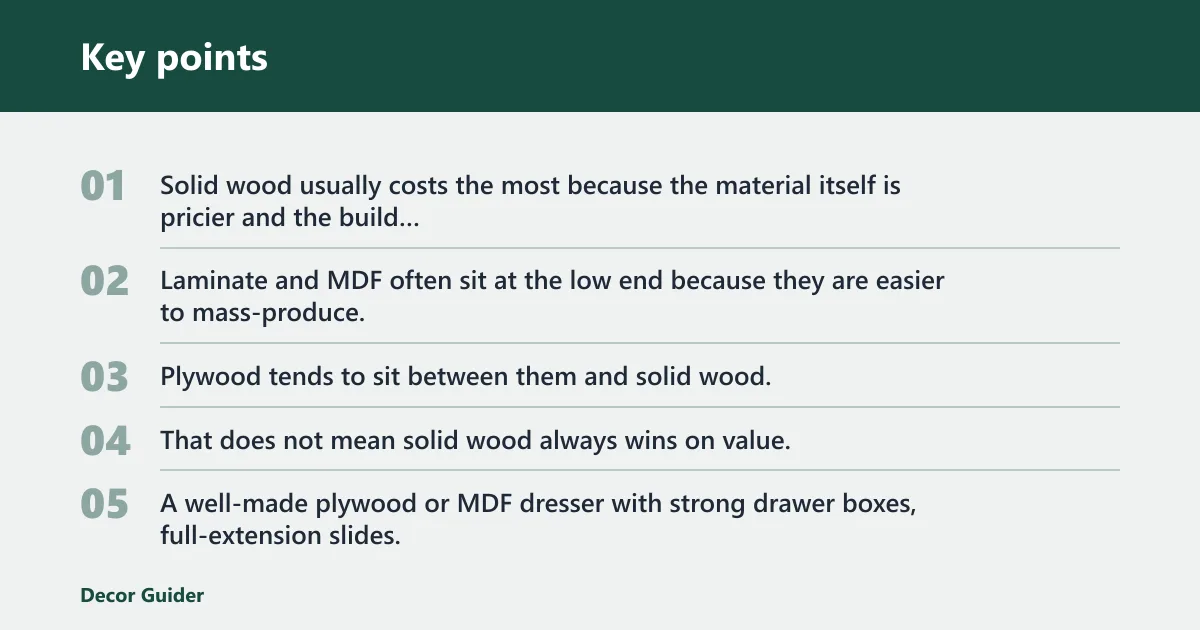
Solid wood usually costs the most because the material itself is pricier and the build takes more care. Laminate and MDF often sit at the low end because they are easier to mass-produce. Plywood tends to sit between them and solid wood, with better strength than many low-cost panels.
That does not mean solid wood always wins on value. A well-made plywood or MDF dresser with strong drawer boxes, full-extension slides, and a stable back panel can outlast a cheap solid-wood piece with weak hardware. The whole build matters more than one label.
Drawer count and width range
Drawer count changes both storage and price. A 3-drawer dresser is usually a smaller, lighter piece with less material and lower labor. A 4-drawer model often adds a little capacity without a large jump in cost. A 6-drawer dresser or 9-drawer dresser uses more hardware and a larger case, so the price rises.
Width also matters. A tall chest uses vertical space and usually fits a smaller room. A wide double dresser spreads storage across a larger footprint and often costs more because it needs a broader top, longer drawer runners, and more material overall.
Construction quality and hardware
Full-extension slides cost more than basic rollers, but they give better access to the drawer. Dovetail joinery usually costs more than stapled or glued corners, and it often holds up better under repeated use. Drawer box material matters too; solid wood or plywood drawer boxes usually cost more than thin panel stock.
Back panel construction is easy to miss, but it affects rigidity. A thin, poorly fixed back can let a dresser rack or wobble. Anti-tip hardware should also be part of the price comparison, especially for tall chests and kids’ dressers.
Finish type and labor
Sprayed factory finishes usually cost less than hand-rubbed or multi-step finishes. A painted dresser can be cheaper than stained hardwood because paint hides grain variation and shortens finishing time. Custom work adds labor hours quickly, especially when the maker matches a species, finish, hardware set, and exact size.
Say your bedroom needs a 60-inch-wide dresser with six drawers and a walnut stain. A stock piece may fit the room, but a custom build lets you match width and storage exactly. That fit can matter if you are paying for the room once and keeping the dresser for decades.
How much does shipping a dresser cost?
Shipping can add a meaningful share of the final bill. Delivery often costs $50 to $150, but the method changes the total. Small boxed dressers may ship by parcel, while larger or heavier ones move by freight. White glove service, stair carry, and crating increase the price fast.
Parcel versus freight pricing
Parcel shipping works best for compact, flat-pack dressers with lower packed weight and manageable dimensional weight. Once a dresser grows too large or heavy for parcel limits, sellers often switch to LTL freight. That threshold is common for wide double dressers, large mirrored pieces, and assembled units.
Freight adds handling, palletizing, and curb-side drop-off. White glove delivery goes further: the crew brings the dresser inside, may place it in the room, and sometimes removes packaging. That convenience can cost much more than standard freight.
Local, interstate, and cross-country delivery
Local delivery often costs less because the route is shorter and the seller may use an in-house truck. Interstate shipping usually adds freight coordination and longer transit time. Cross-country delivery often costs the most because distance raises fuel, labor, and damage risk.
Boxing or crating can also change the bill. A heavier hardwood dresser may need better packing to protect the finish and corners. That protects the piece, but it adds weight, volume, and cost.
White glove, crating, and stair carry fees
White glove delivery can be worth it for a large dresser in a tight stairwell, but the fee should be treated as part of the purchase price. Stair carry often adds labor because the crew has to move a bulky item without damage. Assembly may be included or billed separately.
A common first-timer mistake is buying a low-cost, flat-pack dresser and forgetting the labor to build it. A $129.99 unit can feel affordable until delivery, assembly, and stair carry are added. The final total can look much closer to a better-made mid-range dresser.
What should you pay for each dresser type?
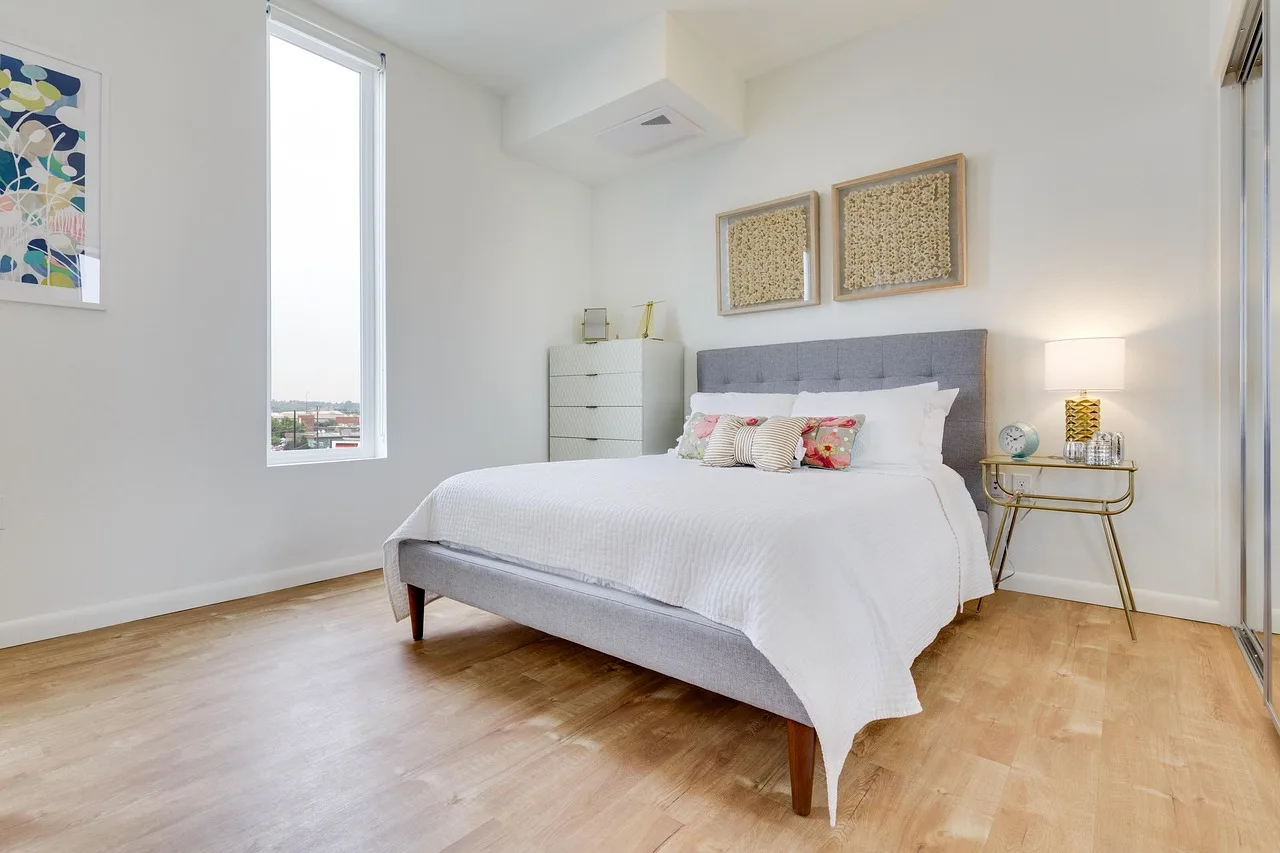
Expect price to move with shape as much as with material. A 3-drawer or 4-drawer piece usually costs less than a 6-drawer or 9-drawer dresser. Tall chests tend to cost less than wide double dressers of similar quality because they use less surface area and often less material.
3-drawer and 4-drawer dressers
For a 3-drawer dresser, a budget model can make sense if the room needs only light storage. IKEA lists the STORKLINTA 3-drawer dresser at $129.99, and Walmart dressers can start at $35.99. Those entry points fit a starter room, but check the slide quality and back panel before buying.
A 4-drawer dresser often lands in a slightly higher range because it adds storage without moving into a large case size. For a short-term solution, that can be enough. For a primary bedroom, it may be too small unless you pair it with a closet system.
6-drawer and 9-drawer dressers
A 6-drawer dresser is often the practical sweet spot for one or two adults. It gives enough storage for folded clothing without taking up the footprint of a larger armoire. A 9-drawer piece usually costs more because of the additional drawers, runners, and larger frame.
More drawers can also raise assembly time. If the dresser ships flat-pack, every drawer box, slide set, and fastener adds labor. If it arrives assembled, size and weight push up freight and delivery costs instead.
Tall chest versus wide double dresser
A tall chest suits smaller rooms because it uses vertical space. A wide double dresser works better when the room can handle a larger footprint and you need broad top storage for lamps, baskets, or a mirror. The wider piece usually costs more because it needs more material and bracing.
If the room is tight, a tall chest may be the cheaper true solution even if the sticker price is similar. If the room is large and storage needs are high, a wide double dresser may cost more up front but reduce the need for a second storage piece.
Kids’ dressers and mirrored dressers
Kids’ dressers often cost less, but anti-tip hardware matters more because safety is part of the value. Mirrored dressers often cost more than plain-front models because of added glass, framing, and packing risk. Mirrored surfaces also increase shipping damage exposure.
These pieces can look similar on a product page while costing very different amounts to own. The mirror, hardware, and delivery method may matter as much as the drawer count.
When is a cheap dresser the wrong buy?
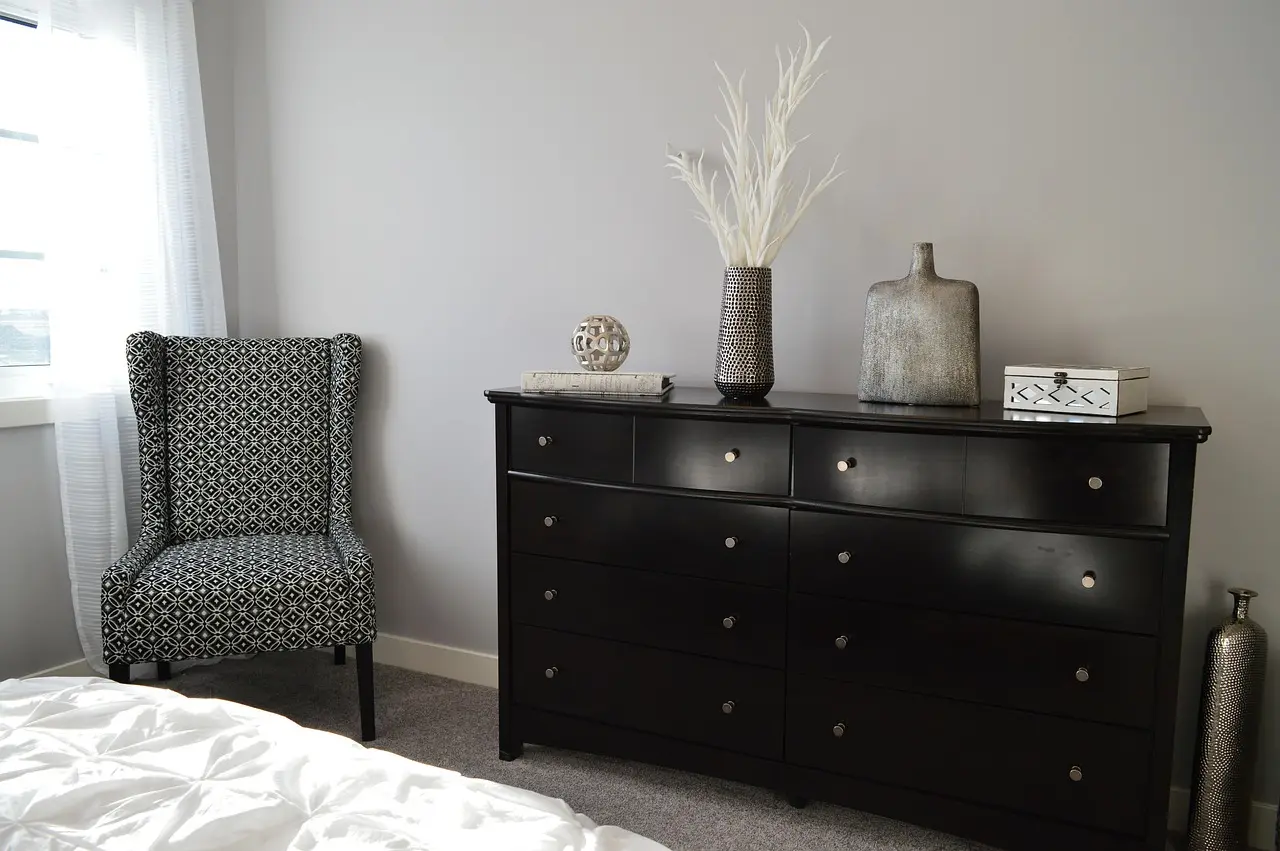
A cheap dresser is the wrong buy when the low sticker price hides early failure, expensive delivery, or poor fit for the room. If the dresser warps, racks, or loses drawer alignment within a few years, the real cost per year can exceed a better-built model.
Early wear and replacement math
A budget basic dresser can total $150 to $450 once delivery and assembly are included. If it lasts only 3 years, the annual cost can be higher than a stronger $500 dresser that lasts 10 years. That is why total landed cost matters more than the shelf tag alone.
Suppose a $179 dresser needs $125 delivery and $150 assembly, then lasts 4 years. The landed total is $454, or about $113.50 per year. A $499 mid-range dresser with $75 delivery, no assembly fee, and an 8-year lifespan lands at $74.25 per year. The cheaper unit is not actually cheaper.
Weak drawer slides and loose joinery
Weak slides can turn into daily frustration fast. Drawers that bind, sag, or pull unevenly wear out sooner and can damage stored items. Loose joinery can make the case wobble, which shortens the life of the dresser and may create safety problems in a tall chest.
These problems are more common in very cheap pieces that cut corners on hardware, drawer box material, and back panel support. A lower price is only worth it if the dresser still meets your storage needs and stays usable long enough.
Room size, storage need, and use case
Match the dresser to the room, not the sale tag. A small guest room may only need a 3-drawer or 4-drawer unit. A primary bedroom often needs a 6-drawer or 9-drawer dresser. If the room is large and the dresser gets daily use, the case for a mid-range or premium piece gets stronger.
Where to get a cheap dresser? Start with mass-market retailers when the goal is short-term use or a tight budget, but check shipping and assembly before you buy. Where to buy a good dresser? Look for mid-range pieces with clear hardware specs, stable construction, and a price that still fits the room’s lifespan target.
Frequently asked questions
How much is a dresser?
A new dresser typically costs between $100 and $800, but the true total can be higher once delivery and assembly are added. High-end and custom pieces sit above that range, especially with solid wood and premium hardware.
How much does a dresser cost?
For most shoppers, a realistic working budget is $250 to $700 for a medium-size dresser that feels durable enough for regular use. That range often covers a better case, stronger slides, and a more stable finish. If you add delivery or assembly, the landed total can move up quickly.
How much does a dresser typically cost?
Most mainstream dressers land between $300 and $1,500, depending on size, materials, and brand positioning. The same source lists the HEMNES 8-drawer dresser at $449.99, while Ashley Furniture dressers start at $229.99. Ethan Allen dressers range from $1,984 to $5,115, which shows how wide the market can be.
How much should a dresser cost?
For most buyers, a mid-range dresser is the best target because it balances price and lifespan. If you want the lowest practical cost, look for a piece that totals under your storage budget after delivery and assembly. For long-term use, paying more for better slides, joinery, and finish is often the smarter spend.
Why are dressers so expensive?
Dressers cost more when they use better wood, more drawers, stronger slides, and more labor. Large pieces also cost more to ship and deliver, especially with stair carry or white glove service. Custom wood dressers add species selection, finishing work, and hand-built labor, which raises the sale price quickly.
Where to buy a dresser?
Choose the seller by the full landed price, not by sticker price alone. For lower-cost options, mass-market stores can be useful. For better construction, compare mid-range and premium sellers that clearly list drawer slides, joinery, and delivery terms. For a custom fit, a woodworker or cabinet shop may be the better route.
Products related to this article
Sponsored / affiliate links. As an Amazon Associate I earn from qualifying purchases. I may earn additional commission from eligible campaigns.