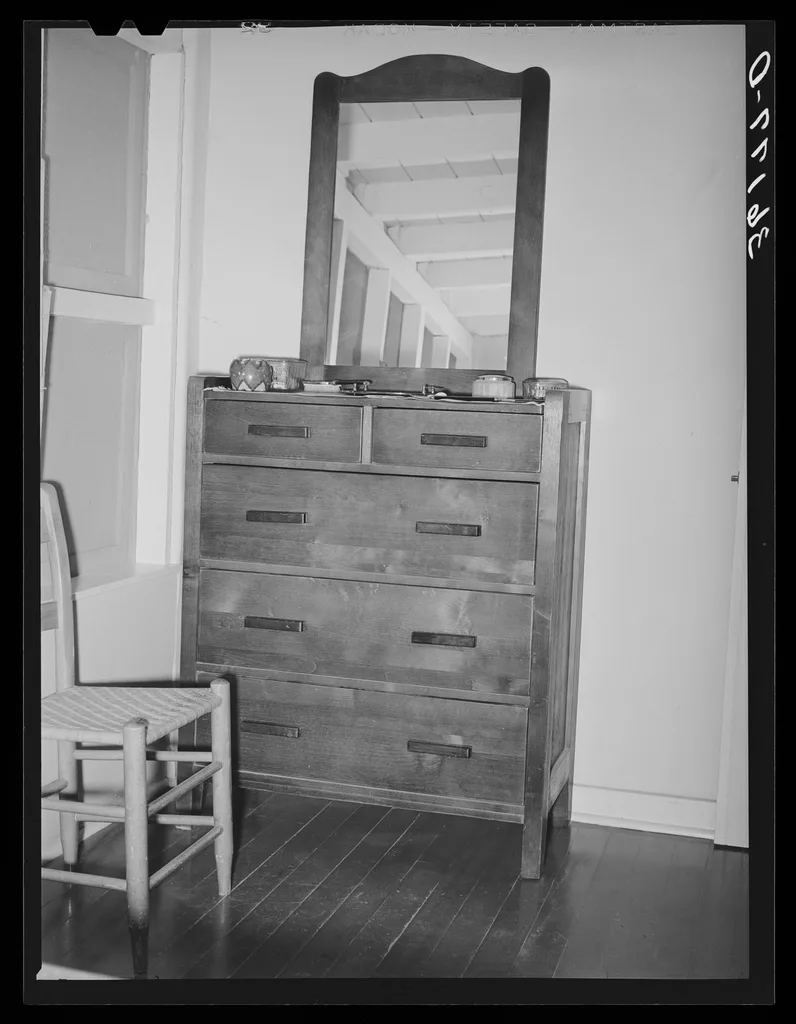
Wide Dresser vs Tall Dresser: How to Choose the Best Fit
Choose a wide dresser when you have 60 inches or more of clear wall space and want easier top access; choose a tall dresser when floor space is tight and you can stack storage upward. Pick the wrong shape, and drawer fronts clash with the bed, a door swing gets cut off, or the walking path shrinks. This guide compares room fit, reach comfort, storage habits, and placement checks for each shape.
This guide is part of our Dresser care and maintenance guide series.
| Decision factor | Wide Dresser | Tall Dresser | Winner |
|---|---|---|---|
| Wall span needed | Often needs 50 to 70 inches or more | Can fit walls as narrow as 30 to 40 inches | Tall Dresser |
| Floor footprint | Uses more horizontal wall space | Takes up less floor width and goes up | Tall Dresser |
| Top-surface usefulness | More usable surface for lamps, mirrors, and catch-all items | Less surface area on top | Wide Dresser |
| Everyday reach | Drawers sit lower and are easier to use without stretching | Upper drawers can sit higher and may need a step stool | Wide Dresser |
| Best fit in narrow rooms | Can crowd walk paths | Usually easier to place near a corner or short wall | Tall Dresser |
Wide dresser vs tall dresser: the real trade-off


Wide dressers are horizontal storage pieces with a lower profile and a larger top, while tall dressers stack storage upward in a smaller footprint. The right pick is the one that fits the wall you have, clears the door swing you use, and keeps the drawers within easy reach.
What each dresser type is called
A tall dresser is often called a chest or chest of drawers. A wide dresser is the long, horizontal version many shoppers think of as a standard dresser. The naming gets messy fast, so I shop by size and layout first, label second.
For this guide, tall dresser means a vertical storage piece with a narrow footprint and multiple smaller drawers. Wide dresser means a horizontal storage piece with larger drawers and more top surface area. Both are dressers in the same family.
According to dimensions.com — The dresser was designed by Ibon Arrizabalaga in 2008.
How tall dressers and wide dressers compare
The main difference is how they use wall space. Wide dressers spread out, so they need more uninterrupted wall span. Tall dressers go up, so they work better when floor space is tight or when a short wall is the only open wall left.
Footprint and wall span
A wide dresser often needs 50 to 70 inches or more of wall width, which can be a problem in rooms with doors, vents, or a bed already taking the best wall. A tall dresser can fit walls as narrow as 30 to 40 inches, so it is easier to tuck into a corner or beside a closet run.
That wall-span difference matters more than raw storage count. A dresser that fits the room without clipping a doorway will work better than a larger piece that technically stores more but blocks daily movement.
Drawer size and storage pattern
Tall dressers usually have more, smaller drawers. That helps with folded shirts, socks, undergarments, and other items that benefit from sorting. Wide dressers usually have fewer, larger drawers, which makes them better for bulkier clothes, linens, and blankets.
If a household stores a mix of small clothing items and heavier bedding, drawer size matters as much as drawer count. Large drawers in a wide dresser can swallow folded sheets more easily. Small drawers in a tall dresser can keep clutter from piling into one deep space.
Top surface area
Wide dressers give more top surface for a lamp, tray, mirror, skincare, or a catch-all bowl. That extra surface is useful in bedrooms where the dresser doubles as a daily landing zone. Tall dressers usually leave less room on top, so they are weaker if the surface needs to do real work.
If the top will hold a mirror and daily items, a wide dresser usually wins. If the top will mostly stay clear, the smaller top on a tall dresser is easier to live with.
Typical size ranges shoppers run into
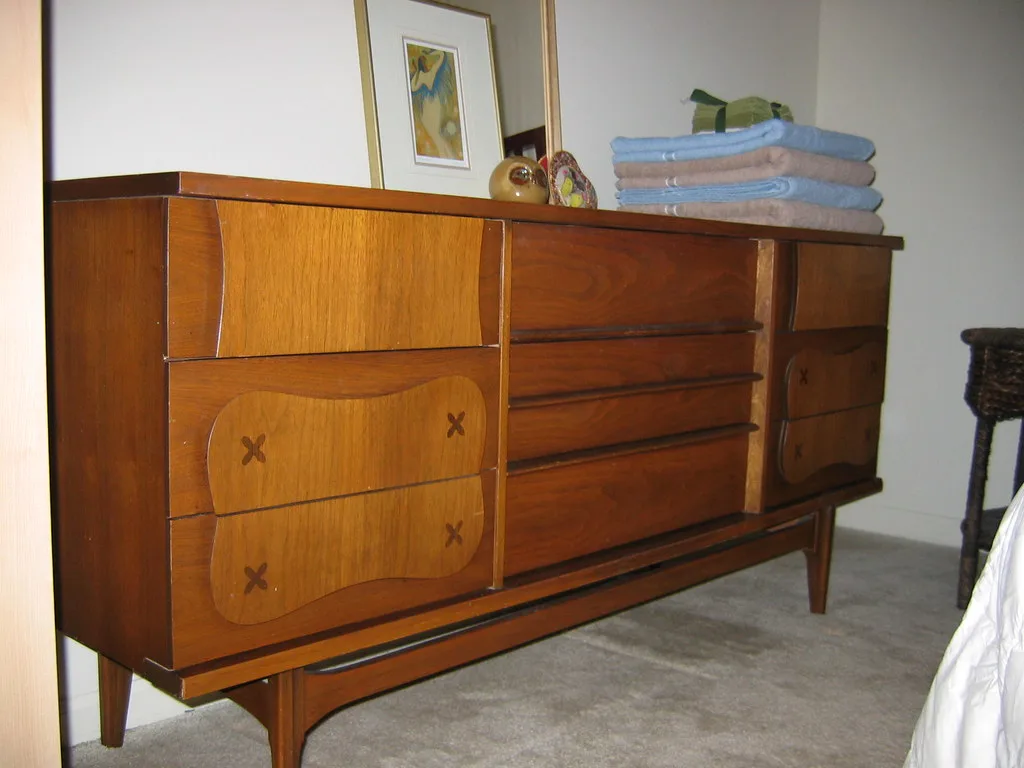
Competitor guidance says tall dressers are typically 50 to 70 inches tall, while wide dressers often need 50 to 70 inches or more of width. Those ranges are useful because they separate the two shapes in a way that matters for planning, not just style.
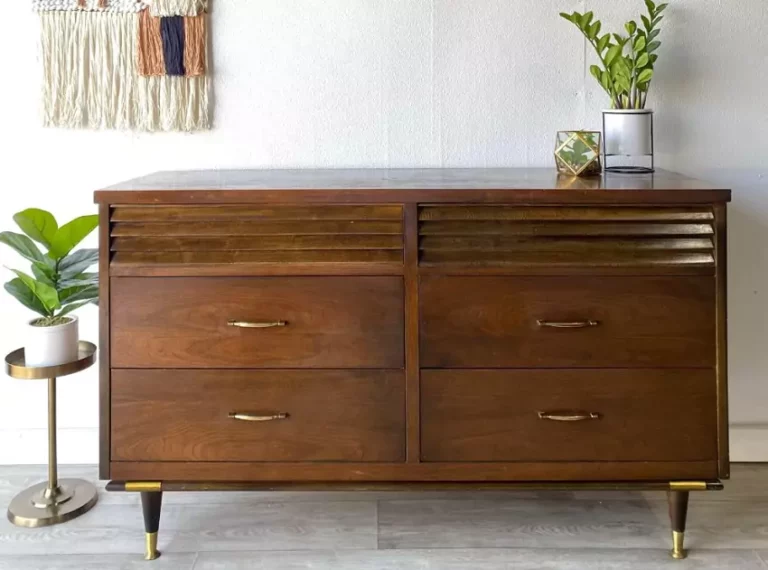
A wide dresser can be a concrete example of the lower, broader format, with proportions like that. It was designed in 2008 by Ibon Arrizabalaga, uses an MDF frame and case, and has a laminate oak or walnut veneer finish.
Which dresser fits your bedroom layout best?
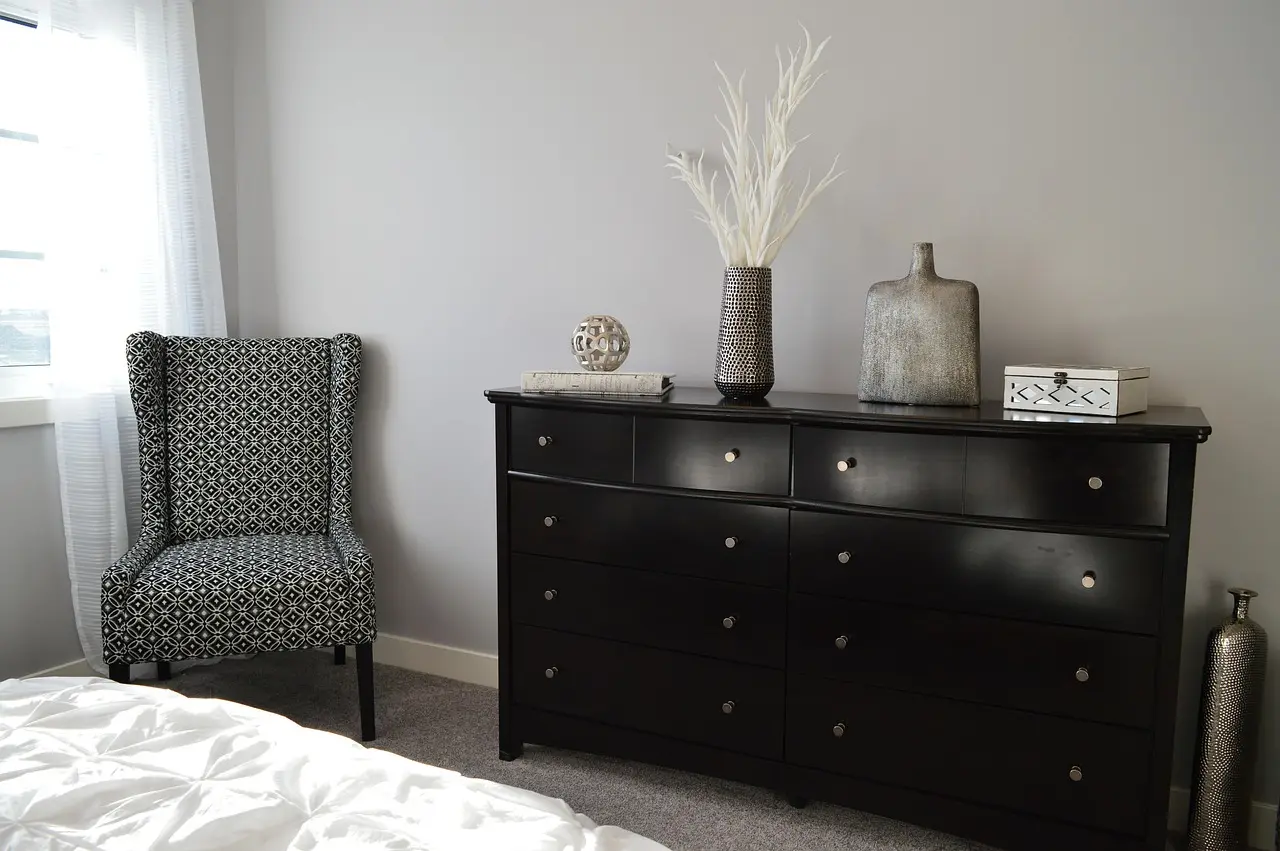
The better dresser is the one that works with the room’s usable wall geometry. A bedroom with a long open wall can handle a wide dresser, while a room with a short wall, a tight corner, or a crowded bed side usually points toward a tall dresser.
Wall placement and bed placement
Place a wide dresser on the longest clear wall you have. Place a tall dresser where wall width is limited but vertical room is open. If the bed already owns the main wall, a tall dresser often becomes the practical choice because it occupies less width.
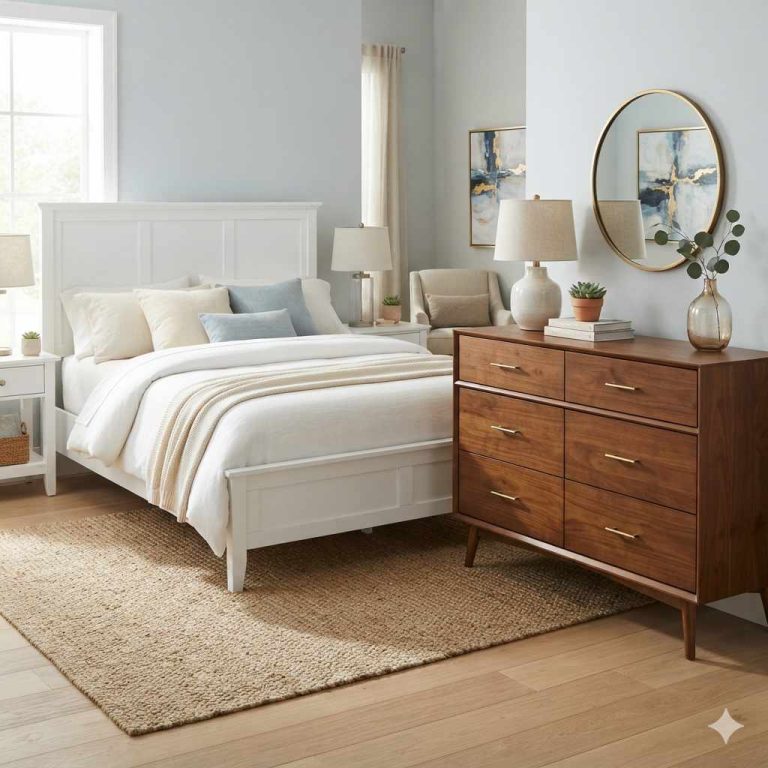
For a queen bed, guidance often points to a 50 to 60 inch dresser width. That can work well if the bed is centered and the side walls still leave enough space for drawers to open and for people to pass.
Window, door, vent, and closet conflicts
This is where many buyers make the wrong call. A dresser can fit the wall on paper and still fail if a door swings into it, a closet door cannot open fully, or a vent sits behind the piece and gets blocked.
Check outlet placement too. A dresser that covers outlets can be annoying if the room needs a lamp, charger, or alarm clock on top. Also check baseboard heat registers and return vents before choosing a lower, wider piece.
Walking clearance in front of the dresser
Room planning should leave 24 to 30 inches of clearance in front of the dresser. That gives enough space for drawers to open and for a person to stand there without turning sideways. Less than that starts to feel cramped fast.
In a tight room, a wide dresser with a deep drawer face can make the walkway feel pinched even if the room is technically large enough. A tall dresser may keep the same storage function while preserving a more usable path.
Corner placement and narrow rooms
Tall dressers are often the easier answer for corners and narrow rooms. They can sit where a wider piece would choke the path between the bed, closet, and door. A long dresser can still work in a narrow room, but only when the wall span is generous and the traffic line is clean.
How much clearance do you need in front of a dresser?
Plan for 24 to 30 inches of clearance in front of a dresser if you want drawers to open fully and traffic to move normally. That range is the difference between a piece that feels easy to use and one that constantly bumps knees, hips, or a bed frame.
Minimum space for drawers to open
At the low end, the drawer face needs room to pull out without hitting the bed, a bench, or a closet door across from it. If the room cannot offer that space, the dresser may still fit physically, but it will be awkward every time it is used.
Full drawer opening matters most with wide dressers, because they often have larger drawers that are heavier when loaded. A narrow path can make those drawers feel harder to pull, even when the piece itself fits.
Extra room for normal traffic
If the dresser sits on a main walkway, aim closer to the upper end of the clearance range. That keeps the room from feeling like you have to edge past furniture every morning. Bedrooms work better when the route from bed to closet stays obvious and open.
When a deeper or wider dresser stops making sense
If adding width forces the dresser to cut into the 24 to 30 inch front clearance, stop adding width. The room will usually feel worse, not better. At that point, a tall dresser or a smaller wide dresser is the better answer.
Which dresser is easier to use every day?
Wide dressers are usually easier to use because drawers sit lower and the top is easier to reach. Tall dressers can still work well, but upper drawers may sit high enough that a shorter user, older adult, or anyone with mobility limits has to stretch or use a step stool.
Top-drawer reach and waist-level access
Waist-level drawers are comfortable because they reduce bending and shoulder lift. On a wide dresser, more of the storage tends to fall into that easy range. On a tall dresser, the top drawers may be less comfortable for daily use, especially if the dresser is near the top of the 50 to 70 inch range.
If the dresser will hold items used every morning, such as socks, undershirts, or skincare, place those items in the easiest drawers first. That usually favors a wide dresser or a shorter tall dresser.
Full drawer opening and drawer depth
Drawers should open fully without catching on a wall, a nightstand, or a bed corner. Larger drawers in a wide dresser are good for linens and blankets, but they need more room in front to feel easy to pull. A tall dresser’s smaller drawers often open with less effort.
When a tall dresser needs a step stool
A step stool becomes a poor fit when the top drawers are used every day. If you have to climb up to reach socks or tee shirts, the dresser is in the wrong category for that user. That is one of the clearest signs to choose a wide dresser instead.
Mobility and reach limits to account for
Reach height matters more than most shoppers think. A dresser should match the user’s comfort range, not just the available wall. If a household includes someone with limited shoulder mobility, back pain, or balance issues, lower drawers are worth more than extra height.
Proof asset: a dresser sizing checklist that leads to a final pick
This worksheet turns room measurements into a practical choice. Use it before shopping, because the best dresser is the one that clears the room, fits the bed, and keeps daily use easy.
Measurement worksheet
- Measure the clear wall width where the dresser may go.
- Measure the bed width, including how far it projects from the wall.
- Leave 24 to 30 inches in front of the dresser for drawer opening and walking.
- Mark door swings, closet swings, vent covers, and outlet locations.
- Check whether the dresser top needs to hold a lamp, mirror, or daily items.
- Compare the planned height to the user’s comfortable reach height.
Convert the measurements into a dresser choice
If your usable wall is around 60 inches or more and the front clearance fits a typical 24 to 30 inch range, a wide dresser is often the stronger choice. If your usable wall is roughly 30 to 40 inches, or the bed and doors break up the wall, a tall dresser is usually the safer choice.
If the dresser will sit under a mirror, plan the mirror first. A large mirror over a wide dresser usually looks and functions well. A tall dresser often works better with a separate standing mirror or a wall mirror placed nearby instead of directly above it.
Choose tall dresser if… / Choose wide dresser if…
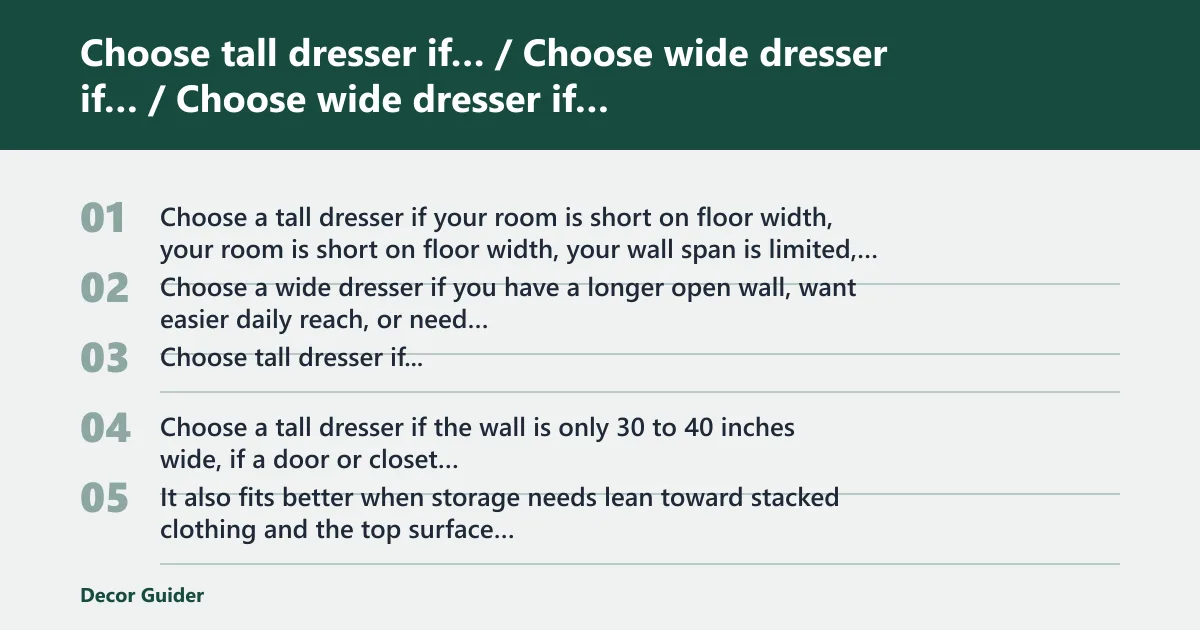
Choose a tall dresser if your room is short on floor width, your wall span is limited, or the dresser must fit a corner or side wall beside a bed. Choose a wide dresser if you have a longer open wall, want easier daily reach, or need more top surface for a mirror and daily items.
Choose tall dresser if…
Choose a tall dresser if the wall is only 30 to 40 inches wide, if a door or closet swing blocks a longer piece, or if you need to keep the walkway open. It also fits better when storage needs lean toward stacked clothing and the top surface will stay secondary.
It is often the better call for a small bedroom, a narrow guest room, or a layout where the bed already dominates the main wall.
Choose wide dresser if…
Choose a wide dresser if you have 50 to 70 inches or more of usable wall space, if the top needs to hold a lamp or mirror, or if you want easier access without reaching upward. It also works well when bulky items, linens, and blankets need larger drawers.
For a queen bed, the 50 to 60 inch dresser width range is often the cleaner fit when the room has enough breathing room on both sides.
When a chest of drawers is the better call
A chest of drawers is usually the better call when storage needs are mostly vertical and the room cannot give up much floor width. It reduces the chance of blocking a doorway or narrowing the path at the foot of the bed.
When a long dresser is the better call
A long dresser is usually the better call when the room can support a broader wall piece and the user wants everyday ease, large drawers, and a usable top. It is the easier format to pair with a mirror and the easier format to live with when reach comfort matters.
Frequently asked questions
tall vs wide dresser
Choose tall vs wide dresser based on wall span, clearance, and reach. Tall dressers fit narrow walls and corners better. Wide dressers give more top surface and easier access. If the dresser will sit on a main wall with a mirror or daily items, the wide format is usually easier to live with.
what is a wide dresser called
A wide dresser is usually just called a dresser or a long dresser. In some product listings, it may be described as a horizontal dresser. The key distinction is that it spreads storage across the wall instead of stacking it upward like a chest or tall dresser.
what is a tall dresser called
A tall dresser is often called a chest or a chest of drawers. The name points to its vertical shape and smaller footprint. It is the version to look at when the room is tight on floor space but can spare height and a narrow wall section.
tall dresser vs long dresser
Tall dresser vs long dresser is really a question of vertical storage versus horizontal storage. The tall version saves floor width and fits narrow walls. The long version gives more top surface, larger drawers, and easier reach, which helps when the dresser is used every day.
how wide are most dressers
Most dressers are about 18 to 22 inches deep, and width varies by shape. Wide dressers often need 50 to 70 inches or more of wall space. Tall dressers can fit walls as narrow as 30 to 40 inches. Always check both width and depth before buying.
which dresser is better for a small bedroom
A tall dresser is usually better for a small bedroom because it uses less floor width and is easier to place beside a bed or in a corner. That said, a small bedroom with a long empty wall can still take a wide dresser if the 24 to 30 inch front clearance stays open.
which dresser gives more top surface space
A wide dresser gives more top surface space. That matters when the dresser needs to hold a lamp, mirror, tray, or daily catch-all items. A tall dresser usually has less top room, so it is a weaker choice if the surface has to do real work.
which dresser is easier to access
A wide dresser is usually easier to access because the drawers sit lower and more of the storage lands near waist height. Tall dressers can put upper drawers out of comfortable reach, especially for shorter users or anyone with limited shoulder mobility.
what size dresser fits a queen bed
A 50 to 60 inch dresser width is often a good fit for a queen bed. That range usually leaves enough presence to balance the bed without overwhelming the room. The final choice still depends on the wall span, door swings, and whether 24 to 30 inches of front clearance remain open.
how much clearance do you need in front of a dresser
Plan for 24 to 30 inches of clearance in front of a dresser. That space lets drawers open fully and gives a person room to stand and move. If the dresser sits in a traffic path, aim toward the higher end so the room stays easy to walk through.
Products related to this article
Sponsored / affiliate links. As an Amazon Associate I earn from qualifying purchases. I may earn additional commission from eligible campaigns.