Painted Dresser vs Stained Dresser: Which to Choose
Paint solid-wood dressers with visible flaws or mixed repairs; stain solid wood with good grain and intact veneer, but skip stain on laminate and most damaged surfaces. The wrong finish can lead to peeling, blotchy grain, or wasted sanding and stripping. This guide gives a simple material-by-condition decision matrix for painted dresser vs stained dresser choices, plus upkeep tradeoffs and common refinishing mistakes.
Painted dresser vs stained dresser: the core trade-off
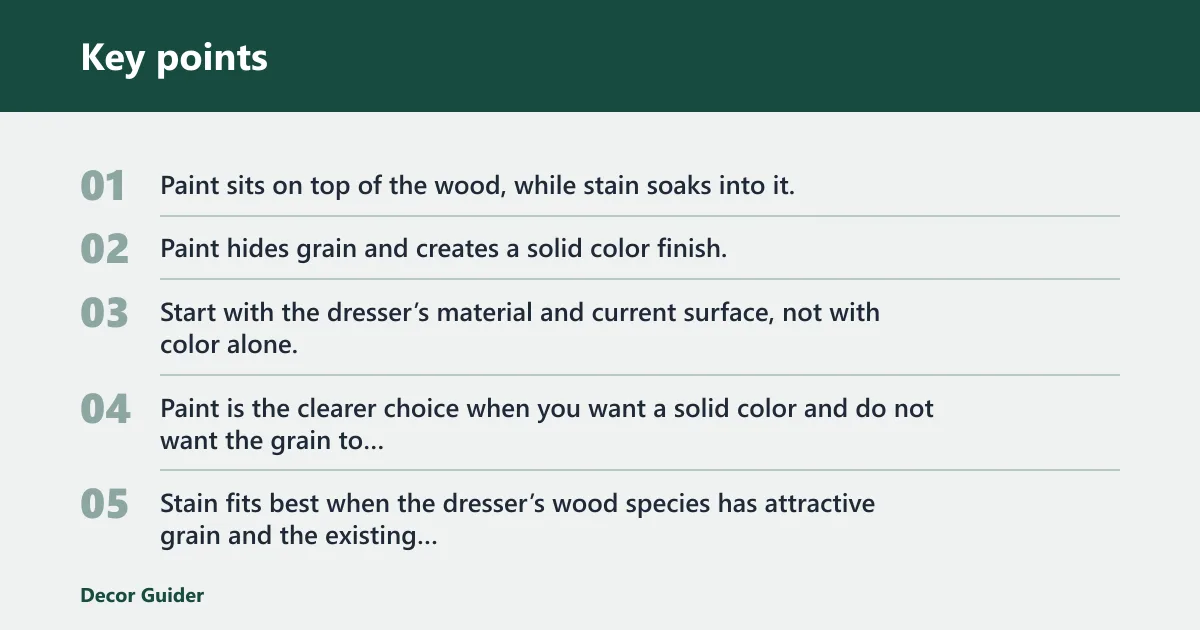

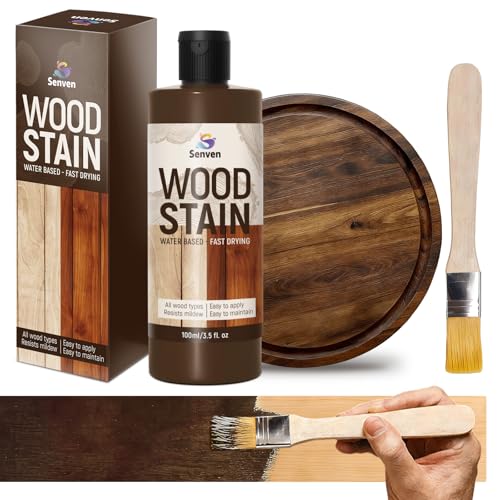

Paint sits on top of the wood, while stain soaks into it. Paint hides grain and creates a solid color finish; stain brings out the natural grain and is often protected with a polyurethane top coat. Start with the dresser’s material and current surface, not with color alone.
| Decision factor | Painted Dresser | Stained Dresser | Winner |
|---|---|---|---|
| Grain visibility | Covers grain and gives a solid color finish | Shows grain and wood figure | Stained Dresser |
| Prep on bare wood | Usually needs primer on unfinished wood; often needs a couple of paint coats | Does not need primer; often described as one coat, then polyurethane if needed | Stained Dresser |
| Maintenance and touch-ups | Can chip at edges and drawer fronts; touch-ups are visible if sheen or color shifts | Wear may fade or scuff, but small touch-ups can blend better on grainy wood | Tie |
| Fit for damaged or mixed surfaces | Better at hiding patches, fillers, and uneven repairs | Poor on patched, blotchy, or mixed-material surfaces | Painted Dresser |
| Compatibility with laminate | Possible with special prep | Not a practical restain option | Painted Dresser |
Appearance and grain visibility
Paint is the clearer choice when you want a solid color and do not want the grain to show through. Stain fits best when the dresser’s wood species has attractive grain and the existing surface is worth keeping. That is why a bare wood surface matters more than a brown-versus-paint preference.
Prep, primer, and sanding needs
Paint on unfinished wood needs a primer, according to the article. Stain does not need a primer, the article says, but it does need a surface that can absorb color evenly. A previous finish, veneer wear, or laminate surface changes the prep burden more than the color choice does.
Durability, chips, cleaning, and touch-ups
Painted drawer fronts often take the most abuse, so chips and edge wear are common problem areas. Stained finishes are usually protected with one or two coats of polyurethane, which adds surface protection while keeping the grain visible. Cleaning is simpler on a well-cured painted finish, but touch-ups on chips can stand out.
Time, drying, and number of coats
Painting furniture often requires a coat of primer and a couple of coats of paint. Staining is described as just one coat, though that is only part of the job because a protective top coat is common. If the dresser has bleed-through risk, shellac or stain-blocking prep can add time to a painted finish.
Which finish fits your dresser material?
The same color goal can lead to different answers on solid wood, veneer, laminate, or antiques. Material condition usually decides the finish faster than style does. Start by identifying what the dresser is made of and whether the current finish is stable.
Solid wood dresser
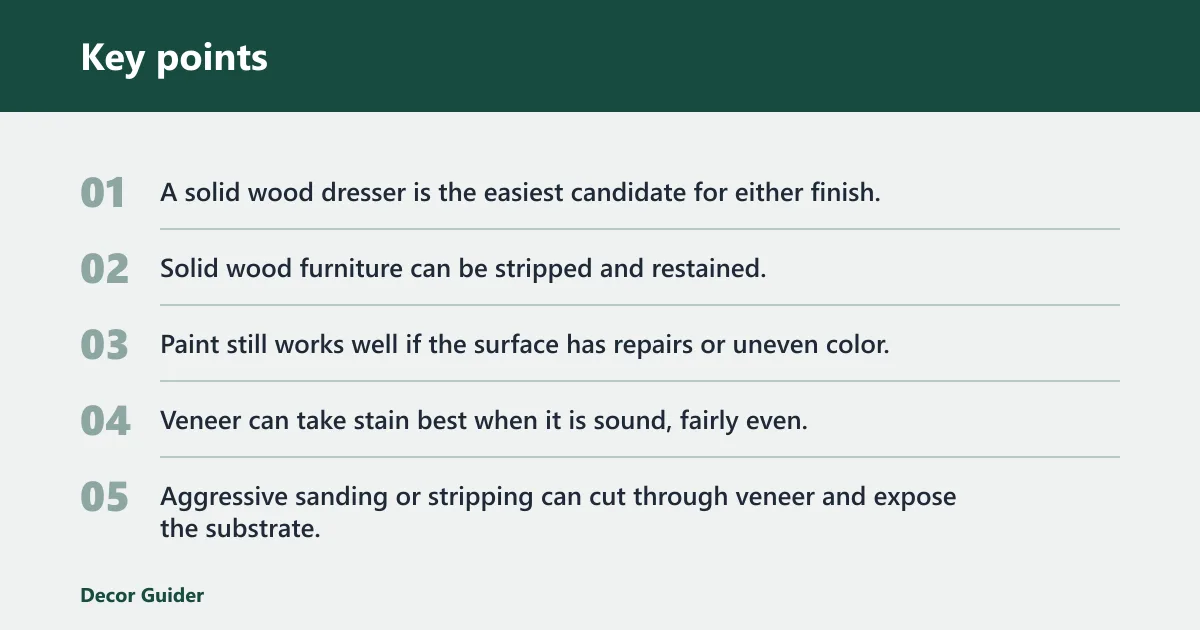
A solid wood dresser is the easiest candidate for either finish, but it is especially stain-friendly. Solid wood furniture can be stripped and restained, and stronger stain results are more likely when the grain is intact and the surface has not been over-sanded. Paint still works well if the surface has repairs or uneven color.
Veneer dresser
Veneer can take stain best when it is sound, fairly even, and thick enough to allow only light sanding. Aggressive sanding or stripping can cut through veneer and expose the substrate, causing damage that is hard to repair. Paint is often safer when the veneer has patching, burn marks, or previous stain blotching.
Laminate dresser
Laminate does not restain easily, so stain is usually the wrong path. If you paint a laminate dresser, it may require special prep so the paint can adhere to the slick surface. That makes paint the practical choice, but only when the piece is worth the extra adhesion work.
Antique dresser
Antique dressers raise a preservation question as much as a finish question. Patina, original finish remnants, and resale value can matter more than color coverage. If the piece is collectible or structurally original, a restrained cleaning or conservation-minded refinish is often better than full paint.
Can you paint a dresser without sanding?
Yes, sometimes light prep is enough, but sanding is still useful when the old finish is glossy, damaged, or dirty. Deglossing products and bonding primers can help paint grip, yet they do not replace repair work on peeling areas or deep scratches. Skipping sanding works best only when the existing coating is stable and the surface is properly cleaned.
When light prep may be enough
A dresser with sound paint or a sound sealed finish may only need cleaning, a light scuff sand, and a bonding primer before repainting. That is more realistic on previously painted furniture than on raw or oily wood. Bare wood surface conditions still decide whether primer is needed and how much leveling you must do.
When sanding is still worth it
Sanding is worth it when the top coat is glossy, the old paint is peeling, or stain bleed-through is likely. It also helps level brush marks and raised grain on older pieces. On drawer fronts and edges, a light sand can reduce later flaking because paint bonds better to a keyed surface.
Where bleed-through and peeling start
Bleed-through often appears on tannin-heavy woods and on old finishes that were not sealed first. Peeling usually starts at corners, pulls, and drawer edges where hands and friction hit the most. If the dresser has wax residue or silicone contamination, even good paint can fail early.
How do you refinish a painted dresser?
If you want stain on a painted dresser, the finish must be stripped to bare wood. Once a furniture piece is painted, it cannot be stained without stripping. If the dresser has layered coatings, repainting is usually simpler than trying to force stain through old paint and filler.
When stripping is needed before staining
Stripping is required when the goal is a true stained finish on a previously painted piece. Paint blocks stain absorption, so stain will not penetrate through a painted surface. A full strip is the only reliable route if you want grain visibility again.
When repainting is the better path
Repainting makes more sense when the dresser has repairs, mismatched boards, or patchy previous finishes. Paint tends to hide those differences rather than blend them. If the old coating is stable and the shape is sound, a cleaned, scuff-sanded repaint is usually less risky than full stripping.
What to do if the dresser has layered coatings
Layered coatings often mean old stain, wax, clear coat, then paint. That stack can cause adhesion failures and slow stripping. Test the finish in a small, hidden area first, and plan for a full bare-wood reset only if the top layers cannot be stabilized cleanly.
Choose painted dresser if… / Choose stained dresser if…
Choose painted dresser if you need color coverage, you are hiding repairs, or the dresser is laminate, heavily patched, or already painted. Choose stained dresser if the wood grain is worth showing, the dresser is solid wood or sound veneer, and the surface can take stain evenly. The material and condition should decide first.
Choose painted dresser if…
- You want a solid color finish that hides grain variation.
- The dresser has filler, burn marks, water rings, or mixed repairs.
- The piece is laminate or has a finish that will not restain well.
- You can accept primer, multiple coats, and possible chip touch-ups later.
Choose stained dresser if…
- The dresser is solid wood with attractive grain.
- The veneer is intact and thick enough for careful prep.
- You want a classic look with visible wood character.
- The surface can accept stain and then a polyurethane top coat for protection.
Quick yes/no checklist for paintability and restainability
- Is the dresser solid wood? Yes favors stain; no pushes you toward paint.
- Is the current finish stable and not peeling? Yes means repainting may be simple.
- Is the dresser laminate? Yes means do not plan on restaining.
- Do you want grain to stay visible? Yes favors stain.
- Is the piece painted already and you want stain later? No unless you strip to bare wood.
Dresser finish decision matrix
Use this matrix before you buy supplies. It ties the finish choice to the dresser material, the current finish, and the biggest risk to avoid. If the risk column looks severe, the project may need more prep than the color choice suggests.
| dresser material | current finish | best finish choice | risk notes |
|---|---|---|---|
| Solid wood | Bare wood surface | Stain, if grain is attractive; paint if repairs are obvious | Tannin issues, blotching, and uneven absorption can affect stain |
| Veneer | Sound clear coat or old stain | Paint if sanding must stay light; stain only if veneer is intact | Aggressive sanding can cut through veneer and expose substrate |
| Laminate | Factory laminate surface | Paint with special prep | Does not restain as easily; adhesion failure is the main risk |
| Antique dresser | Original finish or patina | Conservation-minded cleanup or minimal repaint only if value allows | Finish choice can affect value and preservation; stripping may erase patina |
How to use the matrix before you buy supplies
Identify the substrate first, then decide whether the old finish should stay or go. If the piece is solid wood, a bare wood surface gives the most options. If the dresser is laminate, antique, or heavily repaired, choose the finish that minimizes failure risk, not the one that sounds easiest.
Paint vs stain on a dresser: side-by-side comparison
Paint and stain solve different problems on a dresser. Paint hides flaws, evens out mixed repairs, and gives full color coverage. Stain works best when the wood itself is worth seeing and the surface can absorb color without patchiness.
Appearance and grain visibility
Paint covers the wood grain and creates a solid color look. Stain soaks into the wood and brings out the natural grain, which is why it is often tied to a classic furniture finish. If the dresser has attractive oak, walnut, or maple figure, stain usually keeps more character visible.
Maintenance in bedrooms with kids
In bedrooms with kids, the choice often comes down to how the finish handles bumps and cleaning. Paint can chip on corners and around pulls, but it wipes clean well once cured. Stain with polyurethane tends to wear more gradually, though scratches can still show on high-touch drawer fronts.
Humidity and room conditions
In humid rooms, a stable finish matters more than a trendy color. Paint and stain both need proper prep, but wood movement and poor sealing can create problems under either system. If humidity swings are frequent, a sound top coat and sealed edges matter more than the color layer alone.
Failure cases to watch for
Bleed-through, peeling, brush marks, tannin issues, and stain absorption problems are the common mistakes. Bleed-through usually appears under pale paint. Brush marks show up when paint is applied too thickly or not leveled enough. Stain absorption problems can happen on blotchy wood, worn veneer spots, and nonporous surfaces.
What is the difference between paint and stain on furniture?

Paint sits on top of the wood and usually needs primer on unfinished wood. Stain soaks into the wood, shows grain, and often needs a polyurethane top coat for protection. In practice, paint changes the color layer; stain changes the wood tone while keeping the surface character visible.
What is the best paint for a dresser?
The best paint for a dresser is a durable furniture paint that bonds well to the dresser’s existing surface and can handle drawer-front wear. The exact product type depends on whether you are painting bare wood, previously painted wood, veneer, or laminate. Primer choice matters as much as the top coat on unfinished surfaces.
What is the best stain for a dresser?
The best stain for a dresser is one that matches the wood species and the amount of grain you want to keep visible. Gel stain can help in some challenging situations, but true restaining still depends on bare wood or a properly stripped surface. Finish protection usually comes from a polyurethane top coat, not the stain itself.
Frequently asked questions
Should I paint or stain a dresser?
Choose paint if the dresser has flaws, mixed repairs, laminate, or a finish you want to hide. Choose stain if the piece is solid wood or intact veneer and the grain is worth keeping visible. The safest answer starts with material and surface condition, not with room style.
Can a painted dresser be stained later?
A painted dresser cannot usually be stained later without stripping. Paint blocks stain absorption, so the surface must be taken back to bare wood first. If the goal is only a new color, repainting is often the simpler path.
How do you paint a wood dresser?
Clean the dresser, repair damage, sand or scuff the surface as needed, then apply primer on unfinished wood before paint. Paint usually goes on in a couple of coats. Let each coat cure fully before reinstalling hardware or loading drawers heavily.
How do you stain a dresser?
Prepare a bare wood surface, remove dust, apply stain, and then protect it with one or two coats of polyurethane. Stain does not need primer, the article says, but it does need an even surface to avoid blotches. Sanding quality matters more here than on many paint jobs.
What finish is better for an antique dresser?
An antique dresser often benefits from the least aggressive finish change. If value and patina matter, preserving the existing surface is usually wiser than full stripping. Paint may reduce collector interest, while stain only makes sense when the piece can be restained without losing original character.
Products related to this article
Sponsored / affiliate links. As an Amazon Associate I earn from qualifying purchases. I may earn additional commission from eligible campaigns.
![Furniture Wax - 100% Natural Sealant for Chalk Furniture Paint or Raw Wood, Light Protection, Easy To Apply, No Odor, Eco-Friendly - 7 Color Choices - Antiquing [Brown] (8 oz)](https://m.media-amazon.com/images/I/41ZNmSTmwhL._SL500_.jpg)