Dresser Top Protector vs Tablecloth: Which Wins?
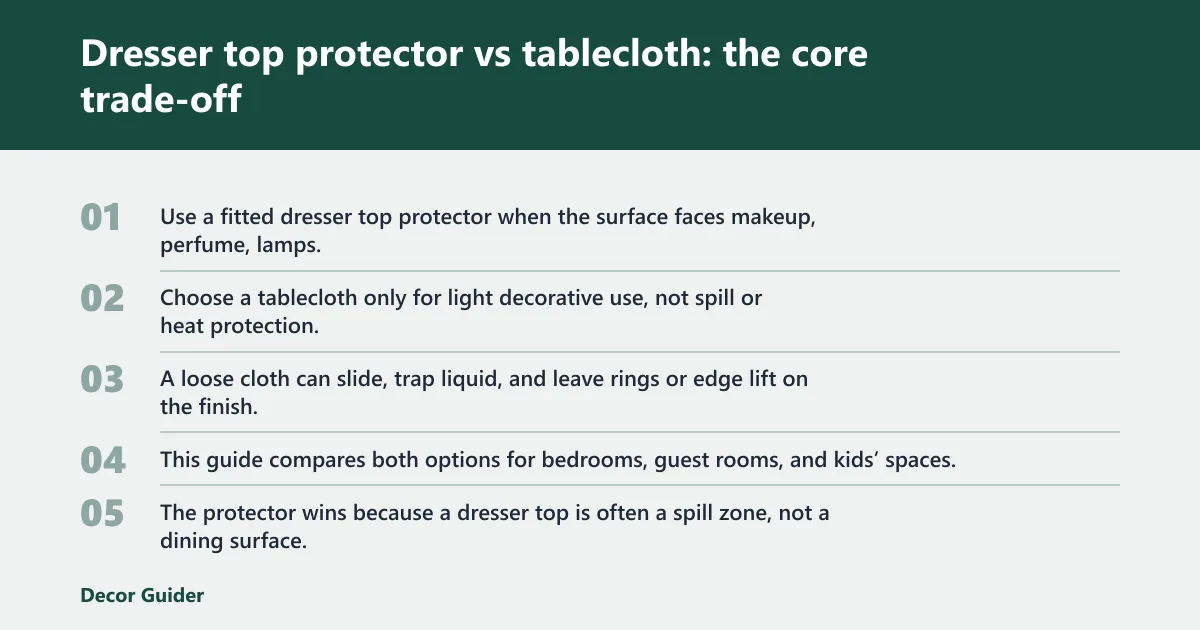
Use a fitted dresser top protector when the surface faces makeup, perfume, lamps, or rental wear. Choose a tablecloth only for light decorative use, not spill or heat protection. A loose cloth can slide, trap liquid, and leave rings or edge lift on the finish. This guide compares both options for bedrooms, guest rooms, and kids’ spaces, and shows which one fits each dresser risk.
Dresser top protector vs tablecloth: the core trade-off
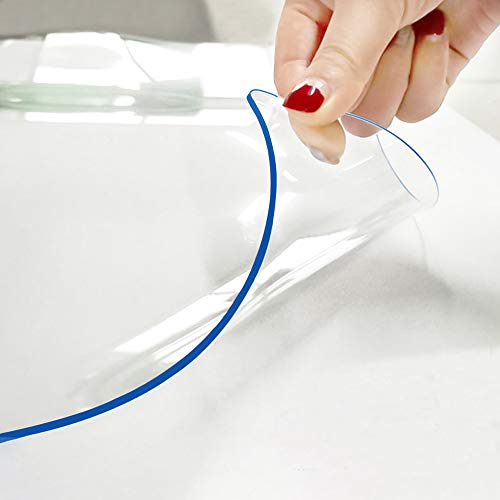

| Decision factor | Dresser Top Protector | Tablecloth | Winner |
|---|---|---|---|
| Spill defense | Built to help resist spills; some clear vinyl versions are described as waterproof and easy to wipe clean. | Fabric can absorb more than it blocks, so liquids may reach the finish if they sit. | Dresser Top Protector |
| Heat and lamp-base contact | Some clear vinyl and padded styles may add heat resistance, though limits vary by product. | Fabric gives little barrier against a warm lamp base or trapped heat. | Dresser Top Protector |
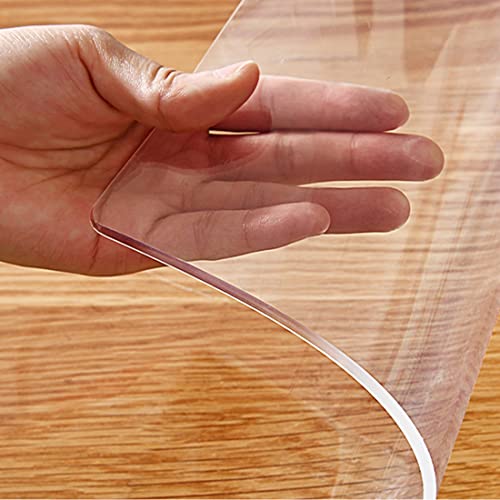
| Wood-grain visibility | Clear versions keep the wood visible. | Fabric hides the surface. | Dresser Top Protector |
| Appearance-first use | Usually chosen for function first, especially when measured to the dresser top. | Often chosen mainly for appearance; some polyester examples are machine washable and decorative. | Tablecloth |
| Fit on dresser corners and edges | Can be cut to size and fitted to width, depth, and overhang more closely. | Loose drape can create edge lift and shifting at the corners. | Dresser Top Protector |
| Cleaning and upkeep | Usually wipe-clean; good for daily use on a wood dresser top. | Common polyester versions are machine washable, but stains and fraying can shorten their life. | Depends on use |
Spill and stain control
The protector wins because a dresser top is often a spill zone, not a dining surface. Makeup, perfume, hand lotion, and spilled water can sit on wood and leave rings, clouding, or finish damage if the cover absorbs instead of blocks.
A tablecloth can catch the mess, but it usually holds liquid in the weave rather than sealing it out. That matters on a wood dresser top, where even a small ring from perfume or water can stay visible for a long time.
Heat, scratches, and daily cleanup
Clear vinyl protector options are built for wipe-clean care, and some are described as resisting cuts and heat. That matters near a lamp base, curling iron, or heated styling tools placed on a bedroom dresser.
Fabric cloths help with dust and scuffs, but they do not create the same barrier against heat transfer. They also mean more upkeep if the top sees daily cosmetic use.
Fit and edge behavior
A dresser protector should be matched to the dresser top dimensions, not just the room style. Width, depth, top overhang, and edge clearance all matter because a cover that is too large can bunch, while one that is too small leaves exposed corners.
That is one place where a decorative cloth can fail in a very ordinary way. If the corners lift or the cloth slides when a drawer is opened, the finish underneath stays exposed to rings and abrasion.
📊 A clear tablecloth is described as 100% waterproof. Source: Kioscr.
What is the difference between a dresser top protector and a tablecloth?
A dresser top protector is made to guard the surface from spills, scratches, and heat, while a tablecloth is mainly a fabric-based decorative cover. On a dresser, that difference decides whether the finish is actually protected or simply hidden.
In plain terms, the protector is a surface defense. The tablecloth is an appearance layer, usually chosen first for look and second for light surface cover.
Protection first vs appearance first
For visible wood preservation, the protector makes more sense because it can be clear or opaque and can be measured to the dresser top dimensions. Vinyl, acrylic, rubber, and padded constructions all fit under that umbrella.
A tablecloth, including common polyester styles, is better when you want to change the look of a bedroom dresser or soften a guest room without much concern about direct spill blocking.
Does a tablecloth protect a dresser from heat and spills?
Only partly. A tablecloth can catch light dust and absorb some liquid, but it does not block spills the way a fitted dresser top protector does, and it is not a reliable heat barrier for a lamp base or warm tool.
That is the key failure point on a dresser: absorption can turn a small spill into a larger stain or ring if the liquid reaches the finish below. A decorative cloth is a surface cover, not a sealed shield.
Where fabric falls short
KitchenGauge describes tablecloths as lightweight and machine-washable, which helps with laundering after spills. But washability does not solve the main problem on furniture: the cloth may still let the liquid sit against the wood before you notice it.
That is why a cloth is the wrong answer when the dresser top holds perfume bottles, makeup brushes, and a lamp all in one place.
When a decorative cloth is enough
If the dresser is used lightly and the goal is mostly to change the room look, a tablecloth can be acceptable. It works best when you do not need the finish preserved in visible wood grain, and when the top is not a daily beauty station.
Which type of dresser top protector works best?
The best type depends on the risk on the dresser top. Clear vinyl suits visible wood grain and light-to-moderate daily protection, while opaque, rubber, or padded constructions make more sense when impact, scratching, or frequent makeup use is the bigger concern.
If the dresser sees perfume, lotion, and water rings, a clear vinyl protector is often the simplest answer. It is waterproof, wipe-clean, keeps wood grain visible, and is typically low-cost compared with replacing stained fabric covers.
Clear vinyl protector for visible wood grain
Clear table-like protectors preserve the wood look while adding a barrier against spills. The material can also resist cuts and heat better than ordinary fabric, which matters near tools and lamp bases.
That makes it useful when the dresser finish is part of the room design. You get the grain, the stain color, and the protection in one layer.
Opaque or padded protector for higher-risk use
Opaque or padded styles are better when the top sees rougher handling, heavier objects, or a need to hide the surface itself. They are less about display and more about reducing direct contact with the finish.
If the dresser is older, already marked, or used by children, full-surface coverage can make more sense than a clear look.
A dresser mat for makeup and toiletries
A dresser mat is a small helper, not full protection. The sourced guidance says it keeps makeup from harming wood, which makes it useful under compacts, brushes, perfume, and other small items that often stain a vanity area.
Use it as a localized layer, especially if only one part of the dresser serves as a beauty station. It does not replace full top coverage when the whole surface is at risk.
How do you measure a dresser for a top protector?
Measure the dresser top width and depth first, then check top overhang and edge clearance. Those numbers tell you whether the protector can sit flat without hanging over drawers, catching on hardware, or leaving bare strips at the corners.
This step matters because IKEA lists dressers in wide, narrow, short, and tall sizes, and the listed top surfaces can vary widely. One example is 55 1/8×18 7/8×29 1/2 inches; another is 63×37 3/4 inches; a third is 27 1/2×18 7/8×47 1/4 inches.
Width and depth
Measure the full top, not just the flat center. A protector that misses the edges leaves the finish exposed where rings and scratches often start.
Top overhang and edge clearance
Check whether the dresser has a raised lip, rounded edge, or hardware that blocks a flat fit. Clearance at the front and sides affects whether the protector can lay cleanly or needs trimming.
When to cut to size
Choose a protector that can be cut to size if the dresser top has unusual corners or a nonstandard outline. Cutting helps the material sit flush, which reduces edge lift and keeps the surface easier to wipe.
A common first-timer mistake is buying a loose cover for a curved or narrow dresser and then wondering why it slides when drawers open. A fitted cut can help avoid that problem.
Decision table: which option fits each dresser scenario?
| Scenario | Best material | Thickness / type | Main failure risk |
|---|---|---|---|
| Makeup station | Clear vinyl protector or dresser mat | Waterproof wipe-clean surface; mat under cosmetics | Foundation stains, powder dust, perfume rings |
| Lamp top | Opaque or clear vinyl protector | Heat-aware surface layer with flat fit | Heat marks, scuffs from the base, dust trapped under the lamp |
| Guest room decor | Polyester tablecloth | 100% polyester woven fabric, machine washable; seam or serged edge in examples | Slip, edge lift, limited spill blocking |
| Kids’ room | Dresser top protector | Rubber, vinyl, or padded construction | Scratches, spills, toy impact, frequent wipe-downs |
| Humid bedroom | Clear vinyl protector | Waterproof, wipe-clean surface | Moisture sitting against wood, trapped condensation |
| Rented furniture | Fitted dresser top protector | Measured to top dimensions; can be cut to size | Finish wear, move-out damage, visible ring marks |
Makeup station
Choose a protector here because makeup and toiletries are high-risk for wood. A dresser mat can sit under bottles and brushes, but full-surface coverage is better if liquid foundation, perfume, or remover is part of the routine.
Lamp top
A lamp base concentrates weight and heat on a small area. A fitted protector helps more than a cloth because it stays in place and gives the top a more predictable barrier.
Guest room decor
A tablecloth can win when the dresser is mostly decorative and not a daily-use surface. Polyester versions are often machine washable, and decorative edging can suit a guest room where appearance matters more than full spill resistance.
Kids’ room
Pick the protector. Kids are more likely to spill, press hard objects onto the finish, and tug at loose cloth corners, so edge lift becomes a real problem instead of a small annoyance.
Humid bedroom
A clear vinyl protector makes more sense when moisture is part of the room issue. The surface stays easy to wipe, and the wood grain remains visible while the finish gets a stronger barrier from humidity and spills.
Rented furniture
Use the option that helps you avoid visible wear at move-out. A measured protector is more reliable than a loose cloth because it stays aligned and does not shift every time the drawers are opened.
Choose dresser top protector if… / Choose tablecloth if…
Choose a dresser top protector if the dresser is used daily, holds makeup or perfume, sits under a lamp, or needs visible wood preservation. Choose a tablecloth if the top is mainly decorative, spills are unlikely, and appearance matters more than blocking rings or heat marks.
That rule is simple because the failure modes are different. A protector answers risk; a cloth answers style.
Choose dresser top protector if…
- You need daily protection from spills, scratches, or lamp-base contact.
- You want the wood grain to stay visible under clear vinyl.
- You need the cover to fit the dresser top dimensions, including edges and corners.
- You want fewer replacements than a fabric cloth that can stain or fray.
Choose tablecloth if…
- The dresser is used lightly and the main goal is a decorative change.
- You are fine hiding the surface rather than preserving the wood look.
- Machine-washable care matters more than spill blocking.
- You are covering a guest-room dresser where the top is not a daily work surface.
Frequently asked questions
What is the difference between a dresser top protector and a tablecloth?
A dresser top protector is made to guard the surface from spills, scratches, and heat, while a tablecloth is mainly a decorative fabric cover. On a dresser, that difference matters because one option helps preserve the finish, and the other mostly changes how the furniture looks.
Does a tablecloth protect a dresser from heat and spills?
Only to a limited degree. Fabric can absorb some liquid, but it does not block spills the way a fitted protector does, and it is not a dependable shield against heat from a lamp base or warm styling tool. That makes it a weak choice for a wood dresser top.
Which is better for wood dressers, vinyl or fabric?
Vinyl is better for active protection because it blocks liquid more directly, wipes clean, and is easier to fit closely to the dresser top. Fabric is better when appearance matters more than protection, but it does not guard the finish as well against rings, drips, and heat.
Can I use a clear tablecloth on a dresser top?
You can, but fit and material limits matter. A clear tablecloth may keep wood grain visible and may be waterproof, yet it still needs the right size and edge control or it can shift, lift at the corners, and leave the top less protected than a fitted protector.
How do I measure a dresser for a top protector?
Measure width and depth first, then check top overhang and edge clearance. If the dresser has rounded corners, a lip, or uneven edges, plan for a protector that can be cut to size so it sits flat and does not expose the finish around the perimeter.
What type of dresser top protector prevents makeup and water rings?
A clear vinyl protector is the strongest match for makeup and water rings because it is waterproof, wipe-clean, and made for daily surface defense. A dresser mat can help under cosmetics or toiletries, but full-surface coverage is better when spills can land anywhere on the top.
Is a dresser mat better than a cloth for daily use?
Yes, if the goal is to protect the wood where daily makeup or toiletries sit. A dresser mat is a small helper that keeps makeup from harming wood, while a cloth mostly changes the look and may still allow liquid to reach the finish underneath.
What should I choose if I want protection without hiding the wood grain?
Choose a clear vinyl dresser top protector. It keeps the wood visible, is described as waterproof and wipe-clean, and gives better day-to-day defense against spills, scratches, and lamp-related wear than a fabric tablecloth. For a wood dresser top, that is the cleaner fit.
Products related to this article
Sponsored / affiliate links. As an Amazon Associate I earn from qualifying purchases. I may earn additional commission from eligible campaigns.