Dresser Drawer Slides vs Rollers: Which Is Better?
A sticky dresser drawer usually needs new rollers if the wheels are cracked, flat-spotted, or missing, new slides if the track is bent, worn, or loose, and a full hardware upgrade if the drawer box is racked or the current system is mismatched. Fixing the wrong part wastes time, keeps the drawer binding, and can damage the box or runners. This guide shows how to identify the hardware, diagnose the fault, and choose the right replacement.
Dresser drawer slides vs rollers: what changes in real use
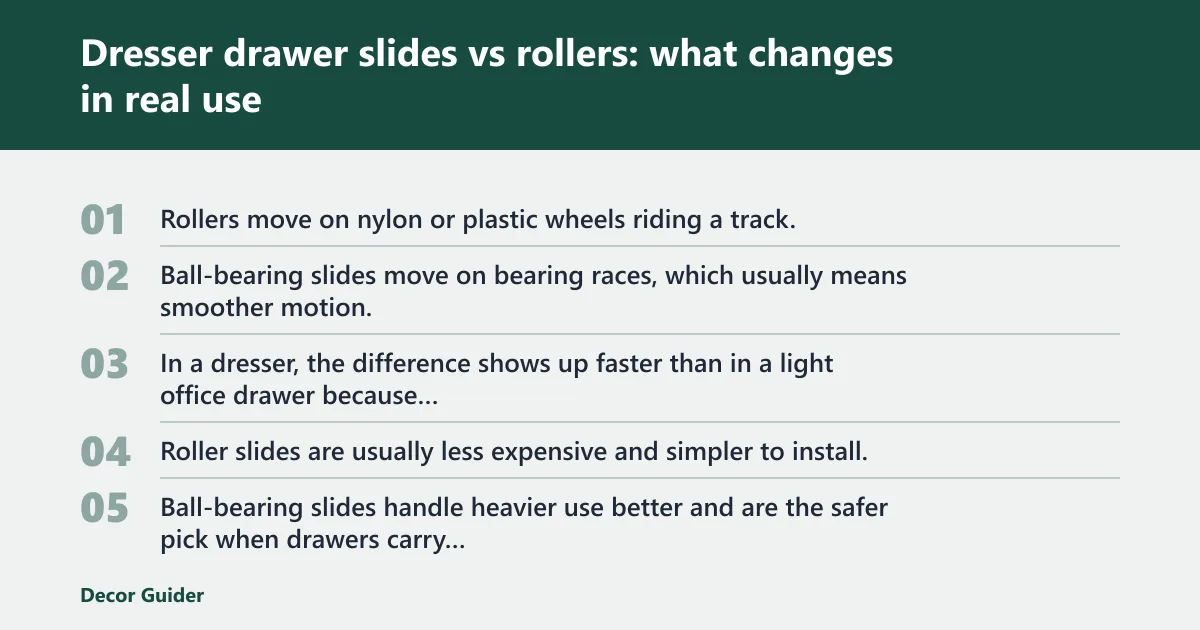

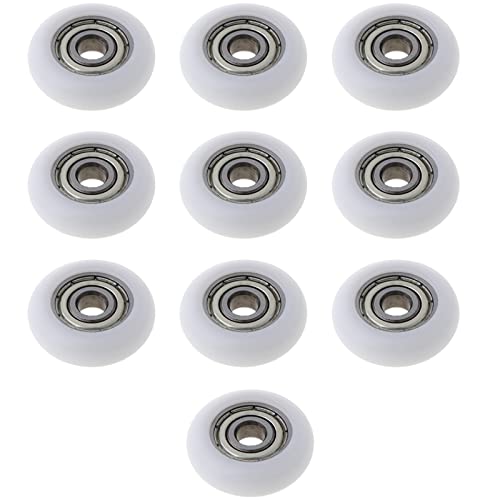

Rollers move on nylon or plastic wheels riding a track. Ball-bearing slides move on bearing races, which usually means smoother motion, better load handling, and longer service life. In a dresser, the difference shows up faster than in a light office drawer because bedroom drawers are often wider, heavier, and more likely to be overfilled with folded clothing.
That matters for noise, weight, and wear. Roller slides are usually less expensive and simpler to install, but they suit lighter-duty drawers. Ball-bearing slides handle heavier use better and are the safer pick when drawers carry bulky sweaters, denim, or hard-to-move contents.
| Decision factor | Dresser Drawer Slides | Rollers | Winner |
|---|---|---|---|
| Load handling | Typically better for heavier drawers | Commonly in the 75-100 lb range | Dresser Drawer Slides |
| Smoothness and wear | Smoother and longer lasting | More friction and faster wear in hard use | Dresser Drawer Slides |
| Cost and simplicity | Usually higher price and more fit checks | Less expensive and simpler to install | Rollers |
| Fit flexibility | More mounting options | Usually more limited | Dresser Drawer Slides |
| Best dresser use | Frequent use, wider drawers, heavier loads | Light-duty dressers and simple replacements | Depends on use case |
Load handling
Rollers can fit light dresser duty, but they are not the best answer for overloaded bedroom drawers. FIRGELLI states roller slides can reach 75-100 lb capacity, while cabinet-grade ball-bearing slides can reach 100-400 lb and heavy-duty versions up to 500 lb. If a drawer is packed full and drags when open, the stronger slide class usually wins.
Smoothness and wear
Ball-bearing slides generally feel more controlled because the moving parts are built for repeated cycling. FIRGELLI states roller slides have a typical cycle life of 5-10 years in light home use, while ball-bearing slides can last 50,000-100,000+ cycles. For a dresser drawer that opens many times a day, that difference matters.
Cost and simplicity
Roller slides are described as less expensive than ball-bearing slides, and they are simpler to install. That makes them useful when you want a basic repair on a light drawer and the cabinet opening already matches the existing layout. Simple does not mean universal, though; fit still has to be checked.
Fit flexibility
Ball-bearing slides tend to offer more mounting flexibility. Side-mount is the most common setup, but ball-bearing hardware is also used in undermount systems when the drawer box dimensions are right. That flexibility helps during a retrofit, especially if you are replacing dated hardware that no longer matches modern drawer openings.
📊 FIRGELLI states roller slides can reach 75-100 lb capacity. Source: Firgelliauto.
How do I know if my dresser has slides or rollers?
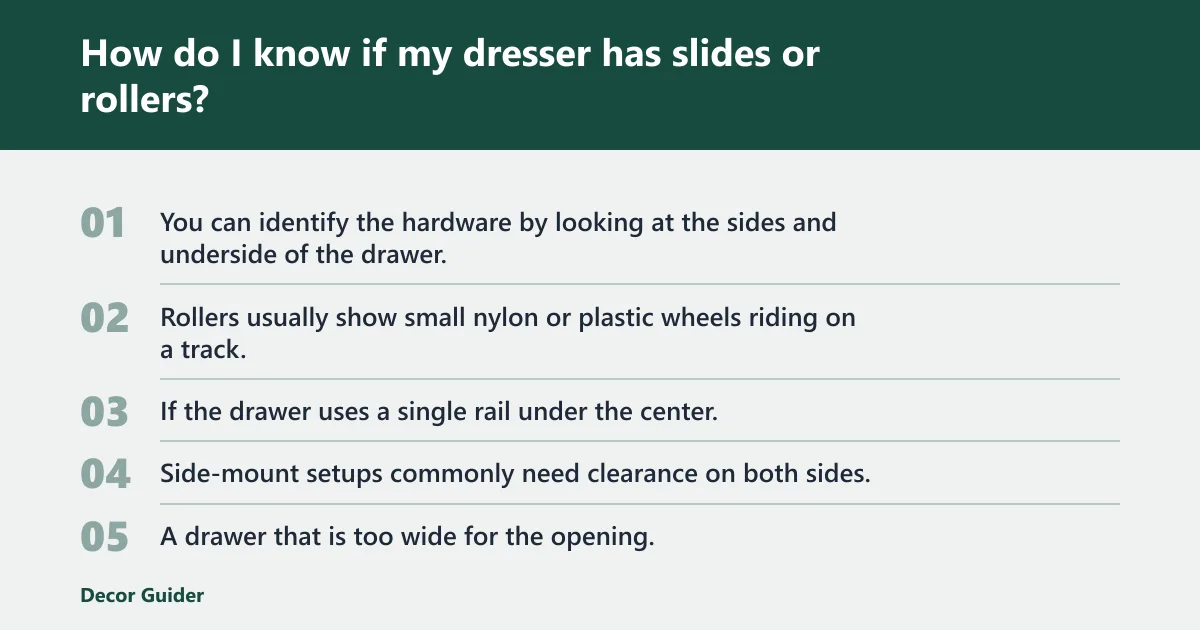
You can identify the hardware by looking at the sides and underside of the drawer. Rollers usually show small nylon or plastic wheels riding on a track, while ball-bearing slides show metal channels with bearing members. If the drawer uses a single rail under the center, that is usually a center-mount style for light-duty use.
Measure before buying anything. Side-mount setups commonly need clearance on both sides, and many ball-bearing installs use about ½ inch per side. A drawer that is too wide for the opening, or a box that is already swollen from humidity, can make good hardware seem bad.
What the main slide types mean for a dresser
Side-mount drawer slides are common in cabinets and storage units, and they also appear in many dressers. Undermount slides hide below the drawer, save side space, and often support soft-close behavior, but they need the right drawer-box dimensions. Center-mount slides are a lighter-duty option, often seen in older furniture.
Friction slides are another category. They use no balls or rollers and can tolerate dust well, which makes them more useful in tool storage or vending trays than in most dressers. For bedroom furniture, they are usually a niche choice rather than the first fix.
Extension length and what it means
Extension changes how far the drawer comes out. Roller slides are often basic or 3/4 extension, and FIRGELLI states they can extend up to 20 inches. Cabinet-grade ball-bearing slides can offer full extension and, in some cases, longer travel, which is useful when you need full access to the back of a deep drawer.
For a dresser, full extension matters when deep drawers hold folded clothes that are easy to lose in the back. If access is not a problem, a shorter extension may be acceptable. If you store small items or heavy stacks, full extension is more practical.
Installation clearance and drawer-box fit
Clearance is often the point where a replacement plan succeeds or fails. JES lists standard ball-bearing slide clearance as ½ inch per side. A common side-mount rule is that the drawer width should be a bit narrower than the opening, leaving room for the slides and easy movement.
Undermount slides are different. They need specific drawer-box dimensions, so you cannot treat them as a casual swap for old side mounts. If the box is already oversized, swollen, or out of square, a slide upgrade may expose the problem instead of fixing it.
What is the difference between dresser drawer slides vs rollers?
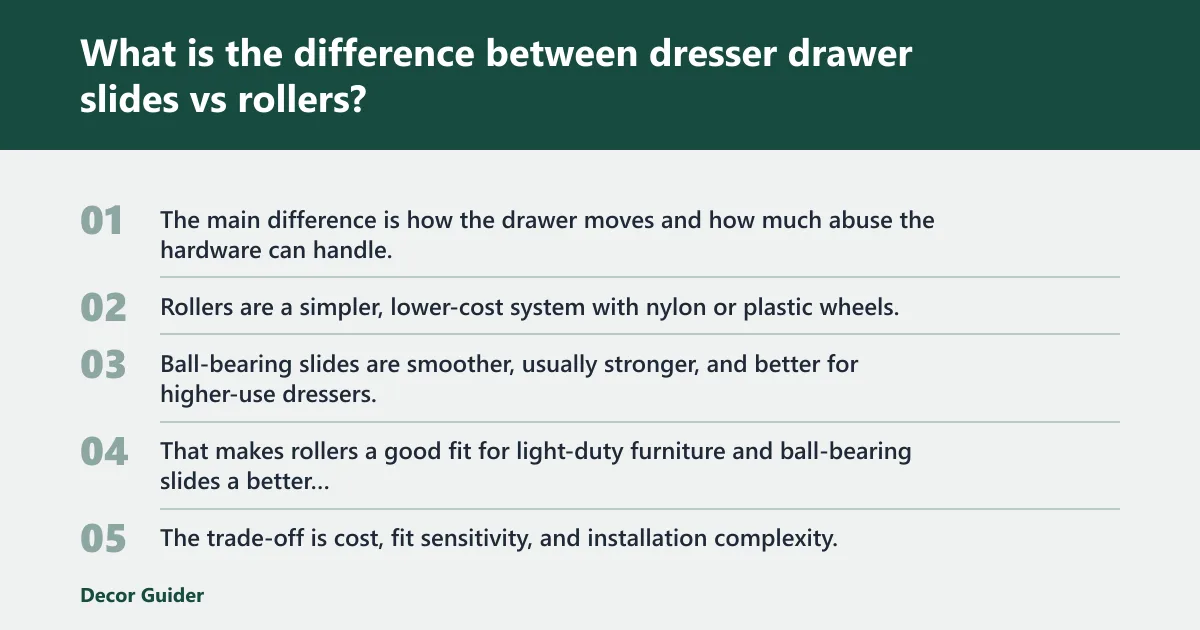
The main difference is how the drawer moves and how much abuse the hardware can handle. Rollers are a simpler, lower-cost system with nylon or plastic wheels. Ball-bearing slides are smoother, usually stronger, and better for higher-use dressers, especially when drawers are wide or heavily loaded.
That makes rollers a good fit for light-duty furniture and ball-bearing slides a better fit for demanding drawers. The trade-off is cost, fit sensitivity, and installation complexity. If the dresser is already racked or the drawer sides are swollen, neither hardware type will work well until the structure is corrected.
Why dresser drawers expose weaknesses faster
A dresser drawer often carries clothing that shifts and compresses unevenly. That can pull the drawer out of square, wear a weak runner faster, and make marginal hardware feel worse than it should. Seasonal swelling adds another layer, especially in solid wood or veneered drawer sides.
Suppose a dresser drawer starts binding every humid summer. The slide may be fine, but the wood may be rubbing because the drawer side expanded enough to reduce clearance. In that case, forcing a replacement slide into place only hides the real issue.
How does a drawer slide work?
A drawer slide guides the drawer along a fixed path so it opens and closes without scraping the cabinet. Roller slides use wheels on a track; ball-bearing slides use bearing races between members. Both need straight alignment, clean contact surfaces, and proper spacing to work well.
The track does not fix a crooked box. If the casework is racked, the drawer front can tilt and bind even when the hardware is intact. A slide can only move well when the drawer and cabinet are square enough to let it do its job.
How to make dresser drawers slide better?
Start with diagnosis, not lubricant. Clear debris from the track, check for loose screws, confirm the drawer is not swollen, and inspect rollers or bearing members for damage. If the drawer still drags after alignment and cleaning, the hardware may be worn past the point where a quick fix helps.
- Remove the drawer and inspect both sides.
- Vacuum dust, lint, and broken fragments from the track.
- Check that screws are tight and the slide is straight.
- Test for cracked wheels, bent channels, or rough movement.
- Decide whether the problem is alignment, swelling, or hardware wear.
Lubrication can help a dry track, but it is temporary if the drawer is warped or the slide is damaged. For wood-on-wood friction, a dry lubricant is usually safer than an oily product that attracts dust.
How to make dresser drawers slide easier?
If you want easier movement, reduce friction at the source. Clean the tracks, replace damaged rollers, and confirm the drawer opening is square. Ball-bearing slides usually feel easier because they are built for smoother travel and higher load capacity, while friction slides are more tolerant of dust but not as smooth.
A common first-timer mistake is to keep adding force when the real issue is a pinched drawer side. That can split a thin side panel or bend a track. If the drawer is constantly hard to open, the safer answer may be a slide upgrade rather than another adjustment.
How to install roller drawer slides?
Roller slides are usually installed as side-mount hardware and are straightforward when the opening already matches the old pattern. You need the slides aligned level, the drawer box square, and enough side clearance for the wheels and track to move without rubbing. They are best when you are replacing similar hardware, not reworking a mismatched dresser.
- Remove the drawer and old hardware.
- Measure the opening and drawer width.
- Mark matching heights on both cabinet sides.
- Install the track straight and level.
- Attach the wheel member to the drawer box.
- Test motion before fully tightening all fasteners.
If the old rollers were damaged because the drawer was overloaded, replacing them with the same style may only repeat the failure. In that case, move to ball-bearing slides if the box and clearance allow it.
How to install dresser drawer slides?
Installing dresser drawer slides usually means checking whether the new hardware is side-mount, undermount, or center-mount before drilling anything. Ball-bearing slides need accurate clearance and parallel mounting. Undermount slides need the drawer-box dimensions to match the manufacturer’s pattern, which is why they are not the easiest retrofit.
For most dressers, the smartest approach is to remove one drawer, measure the opening, and compare those dimensions to the slide requirements before buying a full set. A mismatched upgrade creates more work than it saves.
What makes wood drawers slide easier?
Wood drawers slide easier when the contact surfaces are straight, clean, and lightly finished. Keeping the drawer square in the opening matters more than polishing the wood. If the sides swell with humidity or the runners are worn unevenly, the drawer will still drag.
For older wood drawers, a simple cleaning and a dry lubricant may be enough when the wood is sound. If the drawer is sagging, split, or warped, hardware alone will not correct the movement. The box may need repair first.
How to take out dresser drawers sliders?
Most dresser drawer sliders come out after the drawer is removed and the screws are backed out from the cabinet side and the drawer box. Some systems use release levers or stop tabs on the bearing members. Rollers and older center-mount hardware may need more careful unscrewing because the fasteners can be hidden or worn.
Label the left and right pieces before removal if the hardware is not obviously symmetrical. That makes reinstallation easier and avoids mixing up parts that only fit one side. If the track is bent, do not force it free; remove it gently to avoid tearing the cabinet side.
Which type is better for a dresser: rollers or ball-bearing slides?
Ball-bearing slides are usually the better dresser choice when the drawer is heavy, wide, or opened often. Rollers are better when the drawer is light, the budget is tight, and the existing cabinet already matches a simple side-mount setup. The right answer depends on fit as much as on motion.
Picture a deep top drawer filled with folded jeans and sweaters. If the drawer already sags and sticks, a roller replacement may work for a while, but a ball-bearing upgrade is the safer long-term fix. On a light jewelry or sock drawer, rollers can still be perfectly practical.
Decision checklist: symptom, likely cause, best fix
Use this matrix to separate a hardware failure from a fit problem. It helps you avoid replacing the wrong part, which is the most common mistake in dresser repairs. When in doubt, check the drawer box for square before buying anything.
| Symptom | Likely cause | Best fix | Required tools | Replace rollers or upgrade? |
|---|---|---|---|---|
| Drawer grinds, but track looks straight | Dirty track or debris buildup | Clean and realign | Vacuum, screwdriver, cloth | Keep current hardware if wear is minor |
| Wheels are cracked or flat-spotted | Worn roller hardware | Replace rollers | Screwdriver, tape measure | Replace rollers if load is light |
| Drawer sticks only in humid months | Seasonal swelling | Adjust fit or relieve rubbing points | Square, plane or sanding tool | Upgrade only if repeated swelling keeps returning |
| Drawer sags or binds even after cleaning | Racked casework or loose screws | Square the cabinet and tighten fasteners | Screwdriver, square, shims | Upgrade after structure is corrected |
| Drawer is overloaded and hard to open | Hardware at its limit | Move to higher-capacity slides | Drill, screwdriver, tape measure | Upgrade to ball-bearing slides |
Choose rollers if… / Choose ball-bearing slides if…
Choose rollers if the drawer is light, the opening already fits a side-mount system, and you want the lower-cost, easier replacement path. Choose ball-bearing slides if the drawer is heavy, used often, or already showing repeated wear from binding, sagging, or overloading. The full upgrade is the safer route when the old hardware keeps failing.
If the dresser is an older piece with a single center rail and light contents, a center-mount or roller-style fix can be enough. If the drawer is wide, deep, or packed with clothing, ball-bearing slides are the better long-term repair. The hardware should match the drawer, not just the price tag.
Frequently asked questions
How do I know if my dresser has slides or rollers?
Look for nylon or plastic wheels if you have rollers, or metal channels with bearing parts if you have ball-bearing slides. Side-mount hardware appears along the drawer sides, while center-mount hardware uses one rail in the middle. Measure the opening before buying replacements.
What is the difference between dresser drawer slides vs rollers?
Rollers use wheels on a track and are usually cheaper and easier to install. Ball-bearing slides move on bearing races, which usually gives smoother travel, higher load capacity, and a longer service life. For dressers, the better choice depends on weight and fit.
How does a drawer slide work?
A drawer slide keeps the drawer moving on a controlled path instead of scraping the cabinet. Side-mount and undermount systems guide motion from the sides or below, while center-mount systems guide from the middle. Straight alignment and proper clearance are essential.
How to make dresser drawers slide better?
Clean the track, tighten loose screws, and check for swollen wood or a bent slide. If the wheels are worn or the bearing members are rough, replacement is usually better than repeated lubrication. A square drawer box makes the biggest difference.
How to install drawer slides?
Remove the drawer, measure the opening, and confirm the hardware type before drilling. Mark both sides at the same height, mount the slide level, and test the drawer before final tightening. Undermount styles need exact drawer-box dimensions, so they are less forgiving than side mounts.
Which type is better for a dresser: rollers or ball-bearing slides?
Ball-bearing slides are better for heavier, frequently used dresser drawers because they carry more load and usually last longer. Rollers are better for light-duty drawers and simpler replacements. If the drawer is overloaded or keeps binding, the stronger slide type is the safer choice.
Products related to this article
Sponsored / affiliate links. As an Amazon Associate I earn from qualifying purchases. I may earn additional commission from eligible campaigns.