Wood Dresser Knobs vs Metal Knobs: Which Wins Today?
Choose wood dresser knobs for a warmer touch and easier refinishing. Choose metal knobs for high-use drawers, humid rooms, or pieces touched many times a day. Picking by style alone can leave knobs scuffed, swollen, loose, or corroded. This guide compares feel, durability, moisture response, repair options, and room-fit checks so you can choose the right material.
This guide is part of our Dresser care and maintenance guide series.
Wood dresser knobs vs metal knobs: the core trade-off
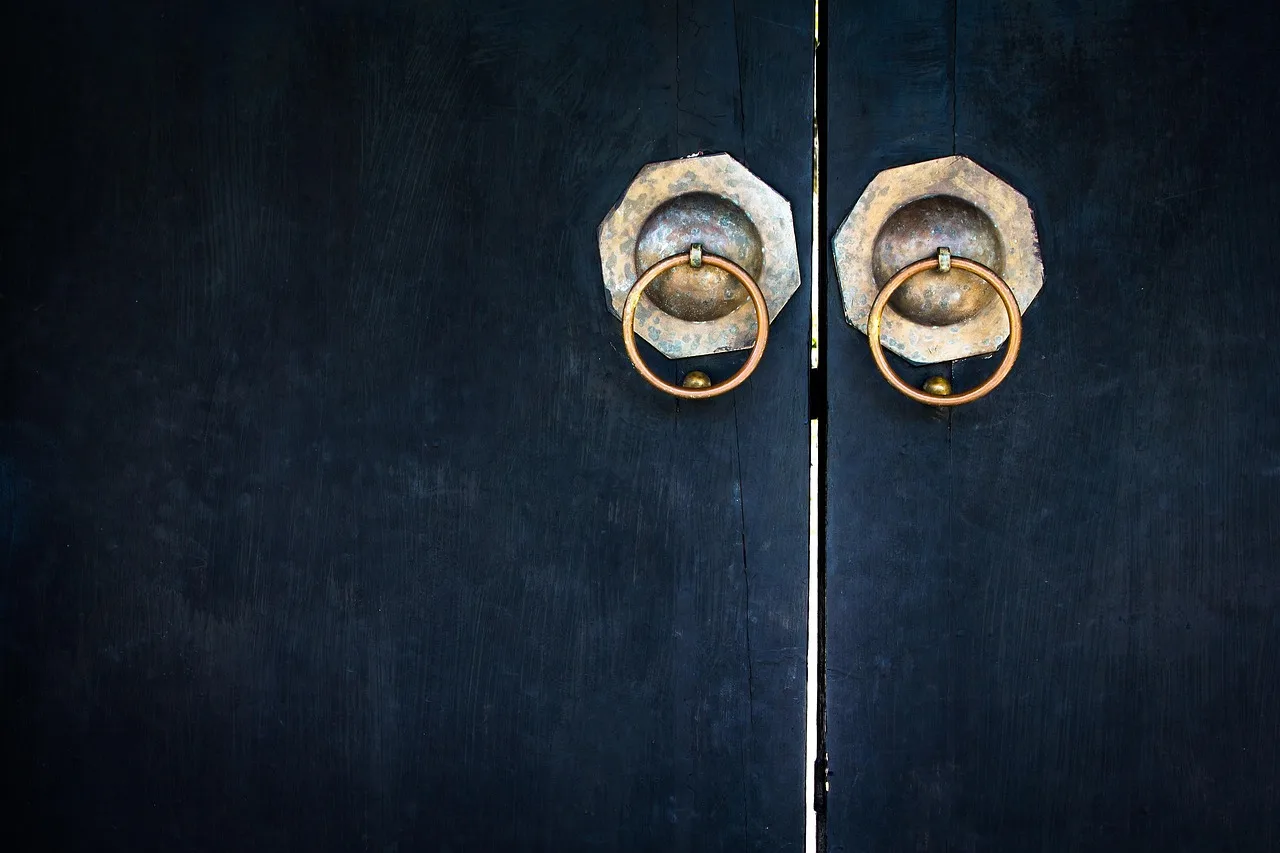


Wood brings warmth, visible grain, and easier touch-up work. Metal usually offers better moisture resistance, simpler cleaning, and stronger day-to-day wear performance on a dresser that gets opened all the time.
Wood is a natural material made from cellulosic fibers embedded in lignin and hemicelluloses, and it has been used by humans since prehistoric times for furniture and other products. That long record does not make every wooden knob equal. Hardwood and softwood behave very differently once they are shaped into small, frequently handled dresser hardware.
Metal knobs come in stainless steel, brass, chrome, brushed nickel, and other finishes such as copper, pewter, or verdigris. The base metal and the surface coating both matter, because corrosion resistance, tarnish resistance, and wear resistance are not the same thing.
What wood gives you: warmth, texture, and easier refinishing
Wood dresser knobs usually feel warmer in the hand and can look more natural on furniture with visible grain, matte paint, or rustic profiles. If a finish wears through, many wood knobs can be sanded, recoated, or refinished more easily than a plated metal piece can be repaired.
What metal gives you: durability, moisture resistance, and simpler cleaning
Metal knobs are generally described as more durable and long-lasting, and they are usually easier to maintain than wooden ones. A damp cloth and mild soap handle most everyday soil, while stainless steel and brass are often cited as resistant to wear and tear.
Comparison table: wood vs metal by dresser use case
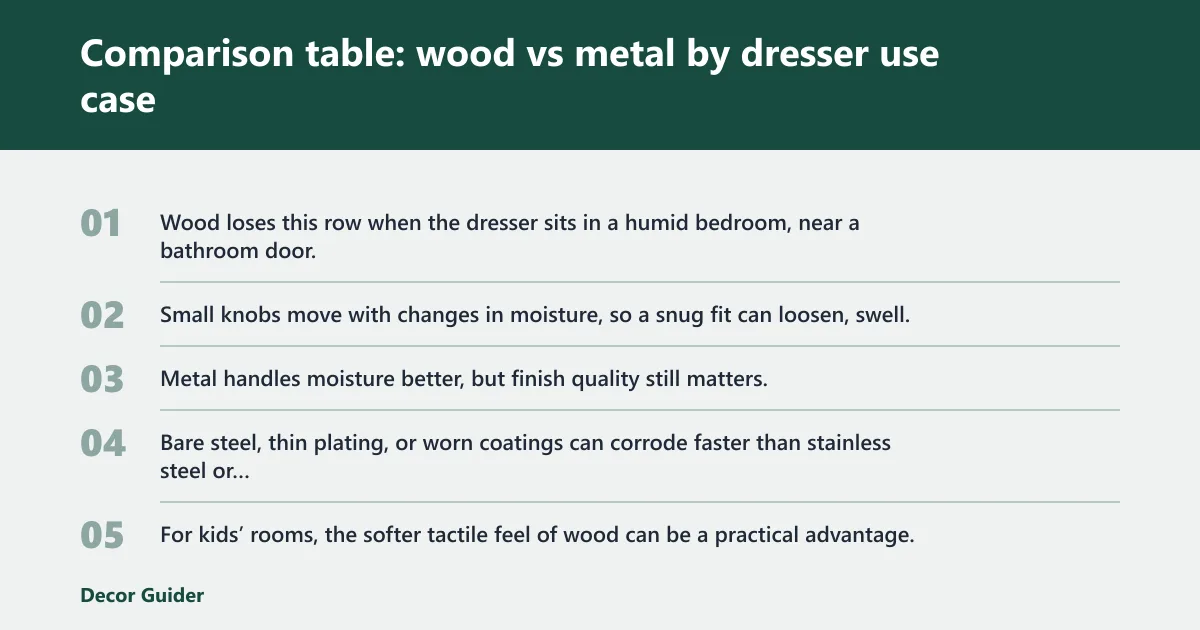
| Decision factor | Wood Dresser Knobs | Metal Knobs | Winner |
|---|---|---|---|
| Humidity exposure and temperature swings | Can warp or crack if the bedroom air swings between damp and dry | Usually more stable in humid rooms, especially with corrosion-resistant finishes | Metal Knobs |
| Child safety and edge feel | Often softer to the touch and less cold against skin | Can feel harder and colder; edges matter more on frequent use | Wood Dresser Knobs |
| Cleaning time and upkeep | Needs gentle cleaning and occasional refinishing or resealing | Usually faster to wipe down; polish or cleaner only when needed | Metal Knobs |
| Repairability and replacement risk | Chipped paint or worn finish can often be refinished, but dents and cracks still happen | Surface wear may mean repainting, replating, or replacing the knob | Wood Dresser Knobs |
| Style match and finish compatibility | Best with rustic, farmhouse, and natural grain looks | Best with modern, industrial, and minimalist dressers | Tie |
Humidity exposure and temperature swings
Wood loses this row when the dresser sits in a humid bedroom, near a bathroom door, or in a room with seasonal temperature shifts. Small knobs move with changes in moisture, so a snug fit can loosen, swell, or crack over time.
Metal handles moisture better, but finish quality still matters. Bare steel, thin plating, or worn coatings can corrode faster than stainless steel or brass with a sound protective surface.
Child safety and edge feel
For kids’ rooms, the softer tactile feel of wood can be a practical advantage. It is less cold, and a round wood knob often feels friendlier on fast, repeated pulls.
That said, a poorly shaped wood knob with sharp turning lines can still feel rough. For any dresser used by children or older adults, grip comfort and edge softness matter as much as the material itself.
Cleaning time and upkeep
Metal wins here because daily care is simple. Most metal knobs can be wiped with a damp cloth and mild soap, then dried so water spots do not linger.
Wood needs a softer approach. A dry or slightly damp cloth is the safe baseline, while refinishing, wax, or resealing may be needed if the surface looks dull or worn.
Repairability and replacement risk
Wood is easier to spot-repair when the finish chips or scratches. That matters on a dresser where one knob takes more abuse than the others, because a quick refinish can keep the set looking consistent.
Metal can last longer in daily use, but when a plated finish wears through, repair is less forgiving. Tarnish, lacquer wear, and chipped paint often mean cleaner-specific care or full replacement.
Style match and finish compatibility
Wood grain adds natural texture, and the look varies by species. Oak reads different from maple, and pine looks softer and more casual than either.
Metal offers a wider finish range for a dresser that needs a specific visual tone. Stainless steel, brushed nickel, chrome, brass, and copper all signal different design cues, but the finish has to fit the dresser surface, not fight it.
Are wood dresser knobs better than metal knobs?
Wood dresser knobs are better when you want a warmer touch, an easier refinish path, or a natural look on a dresser that does not see constant handling. Metal knobs are better when the dresser gets frequent use, sits in a damp room, or needs low maintenance over time.
Best cases for wood knobs
Choose wood if the dresser is in a dry bedroom, a guest room, or a lower-traffic space where visual warmth matters more than hard-wearing surface performance. Wood also fits well when you want a knob that can be sanded, sealed, or repainted to match an older dresser.
Best cases for metal knobs
Choose metal if the dresser is opened many times a day, sits near humidity, or needs straightforward cleaning. Metal is also a practical pick for households that want fewer finish touch-ups and less replacement risk.
How do hardwood and softwood knobs compare?
Hardwood knobs are often a better wood option for dressers because they tend to resist dents better than softwood and hold detail more cleanly. Softwood knobs cost less, but they are more likely to show scratches, dings, and edge wear on high-touch drawers.
Hardwood knobs: oak and maple
Wooden knobs may use hardwoods like oak and maple for strength. That choice matters on a dresser because hardwoods stand up better to repeated pulls, bag straps, and rings that catch the edge of a knob.
Finish and sealing still matter. Even a strong hardwood can fail early if the surface coat is thin, chipped, or left unsealed at the screw hole.
Softwood knobs: pine and similar species
Softwoods like pine are more susceptible to dents and scratches, but they remain a lower-cost option. On a dresser with light use, pine can be acceptable if the owner wants a soft look and understands that the knob may mark sooner.
Softwood is less durable, so it makes the most sense on low-use furniture, painted dressers, or pieces that are likely to be repainted later.
Finish and sealing effects on wood durability
Sealing helps wood resist everyday moisture and surface wear, but it does not make wood immune to movement. If the room is humid, a finish that slows moisture exchange is better than raw or lightly coated wood.
Finish failure can look like chipping paint, dull lacquer, or worn edges around the grip area. On a dresser, those failures show up first where fingers land every day.
Will metal knobs last longer on a dresser?
In many dresser settings, metal knobs may last longer than wood knobs because they tend to resist dents, scratches, and moisture-related movement better. Stainless steel and brushed nickel are strong picks for wet or frequently cleaned rooms, while brass and chrome need finish-specific care to keep their surfaces looking even.
Stainless steel and brushed nickel for wet rooms
Stainless steel is a practical option when the dresser sits in a humid bedroom or near a bathroom-adjacent wall. Brushed nickel also handles routine wear well, and the brushed texture can hide fingerprints better than a mirror finish.
Brass and chrome for finish-specific care
Brass can be durable, but it may change color if the surface is not protected. Chrome can look clean and crisp, yet worn plating is easier to notice on a dresser that gets heavy contact.
How protective coatings affect tarnish and wear
Protective coatings can slow tarnish, reduce corrosion, and help a finish last longer. They do not eliminate maintenance, though, and once a coating wears through, the underlying metal or plate layer may need more careful cleaning.
Which knobs are easier to clean on a dresser?
Metal knobs are easier to clean on a dresser because most of the work is a quick wipe with a damp cloth and mild soap. Wood knobs need gentler cleaning, and they may need wax, polish, or refinishing if the finish starts to dull or dry out.
Soft cloth cleaning for wood
Use a soft cloth on wood and keep moisture low. Too much water can seep into joints, grain ends, or unfinished areas, which is how swelling and cracking problems often start.
Mild soap, polish, wax, and metal cleaner
Metal generally needs less effort, but the right cleaner depends on the finish. A mild soap solution works for many knobs, while metal cleaner, polish, or wax may help brass and other decorative finishes when tarnish appears.
Common finish failure modes: paint chips, lacquer wear, tarnish
Wood knobs often fail cosmetically through paint chips or worn lacquer, especially where fingers grip the same spot every day. Metal knobs more often show tarnish, scratched plating, or finish wear at the high-contact point.
Suppose a dresser in a small bedroom is used several times a day and sits under a window that traps summer humidity. A painted pine knob may start to show dents and edge wear quickly, while a brushed nickel knob is more likely to keep its shape and stay easier to wipe clean.
Choose wood dresser knobs if… / Choose metal dresser knobs if…
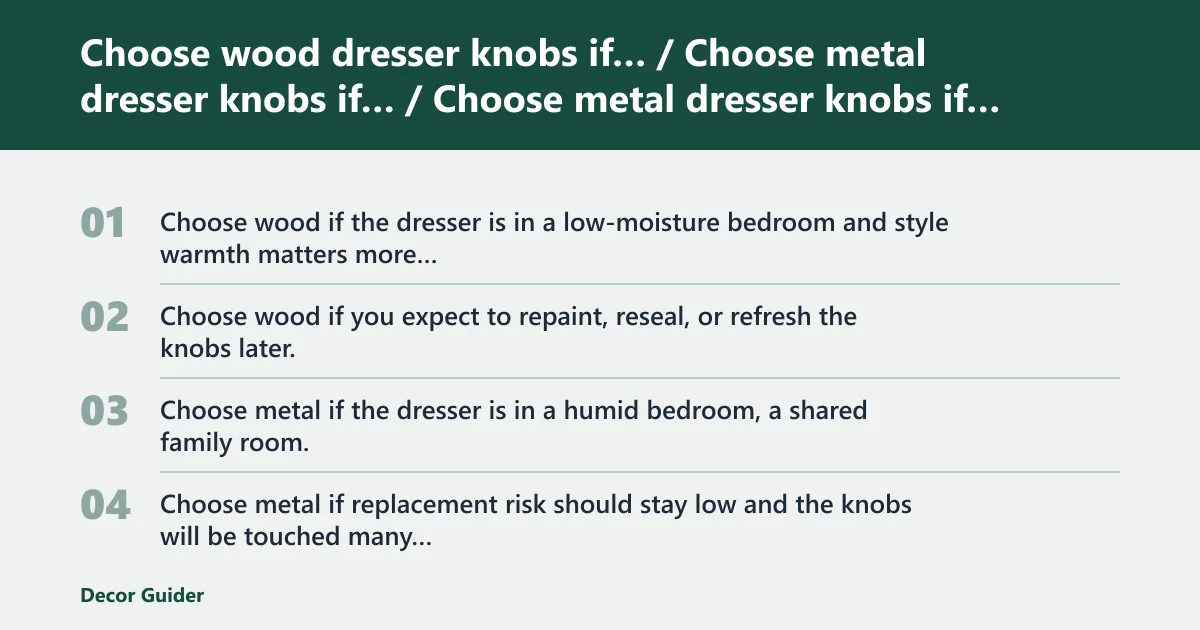
Choose wood dresser knobs if the dresser lives in a dry room, you want a warmer grip, or you want a knob that can be refinished instead of replaced. Choose metal dresser knobs if the drawer sees heavy daily use, the room runs humid, or you want the lowest-maintenance option.
- Choose wood if the dresser is in a low-moisture bedroom and style warmth matters more than wipe-down speed.
- Choose wood if you expect to repaint, reseal, or refresh the knobs later.
- Choose metal if the dresser is in a humid bedroom, a shared family room, or a rental where cleaning has to stay simple.
- Choose metal if replacement risk should stay low and the knobs will be touched many times each day.
Room-condition checklist for a dresser-first choice
| Room condition | Best choice | Why it wins |
|---|---|---|
| Humid bedroom | Metal Knobs | Better stability and lower moisture risk |
| Kids’ room | Wood Dresser Knobs | Warmer feel and softer edge contact |
| Rental furniture | Metal Knobs | Lower upkeep and easier cleaning between tenants |
| Low-use guest dresser | Wood Dresser Knobs | Style flexibility with less daily wear pressure |
Replacement guidance for mixed-material swaps
When you replace old dresser knobs, check the existing hole pattern before you buy. Match the hole size, confirm screw length, and make sure a wood-to-metal swap will sit flat against the drawer front instead of rocking on old finish buildup.
If the old knob left a paint ring or finish impression, test the new base against that footprint before tightening. On laminate dressers, a larger base plate or washer may help cover past holes, but the spacing still has to work with the drawer face.
Simple cost-per-year logic
Raw price alone can mislead. A cheaper softwood knob may need earlier replacement, while a better metal knob may cost more upfront but spread that cost across more years of use.
A common rule of thumb is to compare how often something may need replacing rather than looking at sticker price alone. If a knob is likely to chip, dent, or need refinishing often, its cost per year can end up higher than a sturdier option with a longer service interval.
What knob material looks best on a dresser?
The best-looking knob material depends on the dresser itself, not on a universal style rule. Wood usually looks best on pieces with visible grain, painted farmhouse fronts, or a softer traditional profile, while metal often looks best on clean-lined, modern, or industrial dressers.
Wood grain and finish on dressers
Wood grain adds visible texture and species-to-species variation. Oak reads differently from maple, and pine has a lighter, less formal look that can suit casual or painted furniture.
Metal finish options on dressers
Metal finishes change the whole feel of the dresser. Stainless and brushed nickel read cooler and quieter, chrome feels sharper, and brass brings a more classic note; the wrong finish can look disconnected if the drawer front is soft, matte, or visibly aged.
Sustainability sourcing and material choice
Sourcing matters for both materials. FSC-certified wood, reclaimed wood, and recycled metal are all better signals than a vague sustainability claim, and the carbon footprint depends on where the material came from and how much processing it needed.
As of 2025, worldwide forest growing stock was about 630 billion cubic metres, and in 2023 almost 4 billion cubic meters of wood were harvested. About 80% of lumber comes from softwood, which matters because a low-cost wood knob may be easy to source without automatically being the most durable choice for a dresser. (en.wikipedia.org) (en.wikipedia.org)
Are metal knobs more expensive than wood knobs?
Metal knobs are often priced higher than basic wood knobs, but the comparison changes with finish quality, machining, and coating. A plain pine knob may cost less at checkout, while a well-made brass or stainless knob may cost more but stay in service longer on a dresser that gets frequent use.
How finish and craftsmanship change price
Price varies by material, finish, and craftsmanship. A carved hardwood knob, a plated chrome knob, and a brushed nickel knob can land in very different price bands even if they are all small pieces of dresser hardware.
Why price per use matters more than sticker price
For dressers, replacement frequency matters more than the initial bill. If a cheaper knob needs to be swapped sooner because of dents, tarnish, or finish loss, the lower starting price may not mean lower total cost.
Frequently asked questions
Are wood dresser knobs better than metal knobs?
Wood dresser knobs are better when you want a warmer touch, visible grain, and easier refinishing. Metal knobs are better for drawers that get frequent use, sit in humid rooms, or need less day-to-day upkeep. The better choice depends on how the dresser is used, not just how it looks.
Do metal knobs last longer than wood knobs?
Usually, yes. Metal knobs are generally more durable and long-lasting, especially in high-touch spots and damp rooms. Stainless steel and brass are commonly cited as resistant to wear and tear, while wood can dent, crack, or move with humidity and temperature changes.
Which knobs are easier to clean on a dresser?
Metal knobs are easier to clean because most only need a damp cloth and mild soap. Wood knobs need gentler care, and some finishes may need wax, polish, or resealing over time. If fast cleanup matters, metal is the simpler maintenance choice.
Will wood knobs warp in a humid bedroom?
They can. Wooden knobs can warp or crack with humidity and temperature changes, especially if the room shifts between damp and dry conditions. Hardwood resists dents better than softwood, but neither type is immune to moisture movement, so sealing and room conditions still matter.
What knob material looks best on a dresser?
Wood usually looks best on rustic, farmhouse, or natural-grain dressers, while metal suits modern, industrial, or minimalist pieces. The dresser finish matters too. A warm wood knob can feel out of place on a slick laminate front, and a bright metal knob can look too hard on a soft painted finish.
Which knob material is better for a rustic dresser?
Wood is usually the better choice for a rustic dresser because grain, tone, and texture fit the style naturally. Oak and maple can read more finished and durable, while pine gives a softer, more casual rustic look. Metal can still work as an accent, but wood is the default match.
Products related to this article
Sponsored / affiliate links. As an Amazon Associate I earn from qualifying purchases. I may earn additional commission from eligible campaigns.