How to Protect a Wood Dresser From Sun Fading
Move the dresser out of direct sun. If it gets more than an hour of daily sun, use UV-filtering window film or shades plus a finish-appropriate topcoat. For brief light, rotate it and keep up simple care. Sun exposure causes uneven bleaching, weak finish, and color mismatch that is hard to hide. This guide gives a finish-specific plan for quick rental fixes, permanent room changes, and maintenance based on how much sun your dresser gets.
What causes dresser fading?
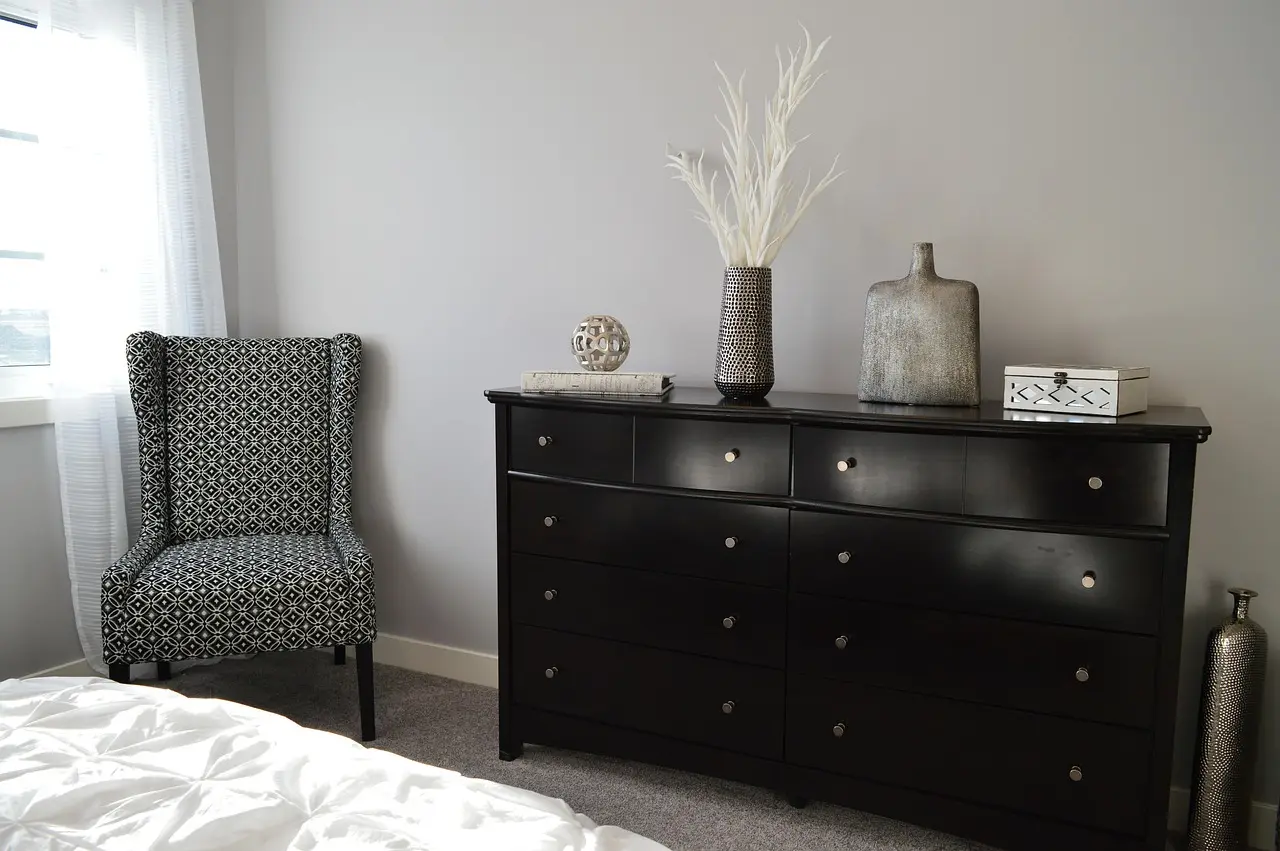


UV light fades finishes and dyes over time, and it passes through windows even when the room does not feel hot. Extension and preservation guidance consistently notes that ordinary window glass blocks some UV but still allows enough through to damage finishes and colorants over time (for example, the Smithsonian and Penn State Extension both warn that light exposure through windows is a major cause of fading). Direct south- and west-facing light is usually hardest on wood dressers during peak daylight hours. Visible light can also shift color, but UV is the main reason finishes age unevenly.
Which parts of a dresser fade first?
The top panel usually gets the strongest exposure, so it often fades first. Drawer fronts can fade too, especially where the sun hits squarely. Hardware contact points may leave darker or lighter outlines because the surrounding finish changes while the covered area stays shaded.
Sealed finishes and raw wood age differently. Lacquer, varnish, polyurethane, shellac, and oil finishes can all change color, but older finishes may amber, chalk, or wear unevenly before they fail. Manufacturers of clear finishes and exterior coatings routinely note that UV exposure can cause yellowing, chalking, or loss of gloss, while wood-finish systems behave differently depending on resin chemistry and film thickness (for example, Minwax and Mohawk technical guidance). Raw wood and bare spots fade faster and look patchy sooner because there is no protective film in place.
Quick rental fixes
For renters, the fastest fix is to reduce the light hitting the dresser without changing the room permanently. Close blinds or curtains during peak sun, then move the piece out of the beam path if you can. If the window is fixed and the exposure is steady, a removable UV film or temporary shade is the next step. Do not rely on wax or polish to block UV; they change sheen, not light exposure.
If you only have a little sun, rotation helps most when the same face gets the same light every day. A loose cotton, felt, or linen runner can also shield the top panel for short periods, but it should not sit tight against the wood. Leave airflow so you do not trap moisture against the finish.
Permanent room-level fixes
Permanent room changes work best when the dresser sits in a predictable sun path. UV-filtering window film is one of the strongest room-level options because it reduces incoming UV before it reaches the furniture. Film is especially useful on windows that blast the same top panel or drawer front every afternoon. Shades and lined curtains help too, especially when you need a stronger block during peak hours.
When choosing a surface product, be careful with compatibility. Adding a new topcoat over shellac, lacquer, or oil depends on what is already there and whether the new coating can bond safely. A finish-appropriate maintenance coat should mean something specific: for example, a matching maintenance oil on an oil-finished piece, a compatible clear topcoat on a sanded and properly prepared film finish, or a manufacturer-approved recoating system after checking the existing finish. If you are unsure what the dresser already has, test a hidden area or stop at window protection and cleaning.
Maintenance by exposure level
Use the light level to decide how much upkeep the dresser needs. Low exposure usually needs only rotation and cleaning. Moderate exposure calls for window control plus periodic inspection of the finish. High exposure usually needs both room-level blocking and a finish plan, because visible fading can outpace surface care. Humidity matters too: keep indoor relative humidity roughly in the 35% to 55% range, which aligns with common museum and conservation guidance for wood objects and helps reduce stress on wood and finishes.
What you’ll need
- Furniture-safe cleaner or a pH-neutral wood-safe cleaner
- Light-filtering curtains, blackout curtains, blinds, or shades
- Clear or tinted UV window film for fixed exposure
- Cotton, felt, or linen cover or runner
- Optional furniture wax or polish for appearance only
- Tape measure
- Phone reminder or calendar note for rotation
How do you protect a wood dresser from sun fading?
Start by cleaning, then block direct sun, then move the dresser out of the beam path if you can. Use a cover only as short-term shielding, and rotate the dresser if exposure is uneven. If the room stays dry or the finish already looks stressed, check humidity and finish condition before adding products.
- Clean the surface with a furniture-safe cleaner and a soft cloth.
- Close blinds or pull curtains during peak sun hours, especially on south- and west-facing windows.
- Move the dresser so the top and drawer fronts are not in a direct sun patch.
- If the sun hits one side only, rotate the dresser about 90 degrees every 2 to 3 months.
- Use a cotton, felt, or linen runner for short-term shielding only; leave an air gap so fabric does not sit tight against the wood.
- Check indoor humidity and keep it near 35% to 55%; dry air can stress wood movement and finish stress.
Say your dresser sits 18 inches from a west window and the top turns a little paler every summer. A simple rotation schedule may slow the visible difference, but it will not stop it if the sun still lands on the same spot for hours. In that case, window treatment comes first.
Dresser sun protection table
| Finish type | Sun exposure level | Best fix | Time to install | Cost band | Renter-friendly | When to refinish instead |
|---|---|---|---|---|---|---|
| Polyurethane or varnish | Low, brief morning light | Rotate every 2 to 3 months; keep curtains closed during peak sun | 5 to 15 minutes | Low | Yes | When the topcoat is worn through or patchy |
| Lacquer or shellac | Moderate, daily direct light | UV window film plus light-filtering or blackout coverings | 1 to 3 hours | Medium | Film: sometimes; coverings: yes | When ambering or chalking is uneven and keeps showing after repositioning |
| Oil finish | Moderate to high, indirect but steady sun | Move out of beam path and use a finish-appropriate maintenance coat | 15 to 30 minutes | Low to medium | Yes | When raw-looking dry spots or color mismatch spread |
| Painted dresser | High, direct afternoon sun | UV film plus blackout shade; repaint or refinish if fading shows through the color coat | 1 to 4 hours | Medium to high | Film and shades: yes | When the paint film or color coat is breaking down |
| Raw wood or bare spots | Any repeated direct sun | Recoat or refinish after cleaning and sanding as needed | Several hours | Medium to high | No | Immediately if exposed wood is visible |
What is the best renter-friendly fix?
Use light-filtering or blackout window coverings during peak sun hours first. If the window is fixed and the sun is steady, clear or tinted UV film is a stronger long-term choice. For renters, placement changes usually come before surface products because they do not alter the dresser or the room.
Does UV window film protect wood furniture?
Yes, when the exposure is fixed and the window is the main source. Independent product data from major window-film manufacturers shows that many films are designed to block most UV transmission, often in the 99% range. That makes film useful on windows that throw direct light onto a dresser day after day. Film is less useful if the dresser can simply be moved out of the beam.
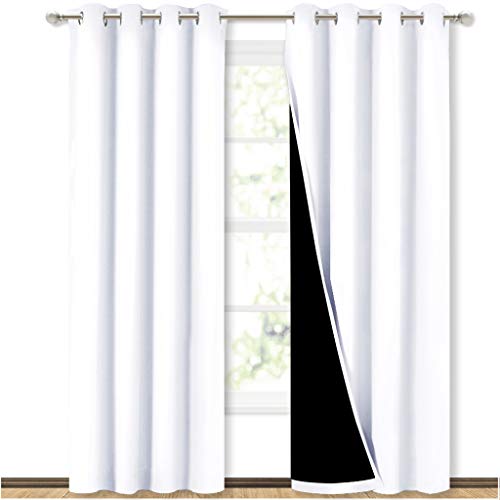
Light-filtering curtains soften the sun and work well for daytime use. Blackout curtains or blinds are better during peak daylight hours when the beam is strongest. If the room needs daylight, keep the dresser out of the path and use film on the window instead of relying on fabric alone.
Should I use wax, polish, or varnish to protect a dresser from sun?
Wax and polish can improve sheen and may help with surface moisture, but they do not meaningfully block UV. Varnish, lacquer, and polyurethane do form a more protective film, though each ages differently. For strong sun, window control usually matters more than a surface shine product.
A furniture-safe cleaner should come first so grime does not make fading look worse. Then choose the protectant based on finish type. On older shellac, for example, a heavy new wax layer can make the surface look better short term, but it will not stop fading where sun still lands.
What if that didn’t work?
If the dresser still fades after moving it and blocking the window, the finish is probably too exposed for a simple fix. At that point, use a room-level barrier if you have not already, then decide whether the topcoat is still sound. When the finish is chalky, worn, or uneven, refinishing is usually the better route.
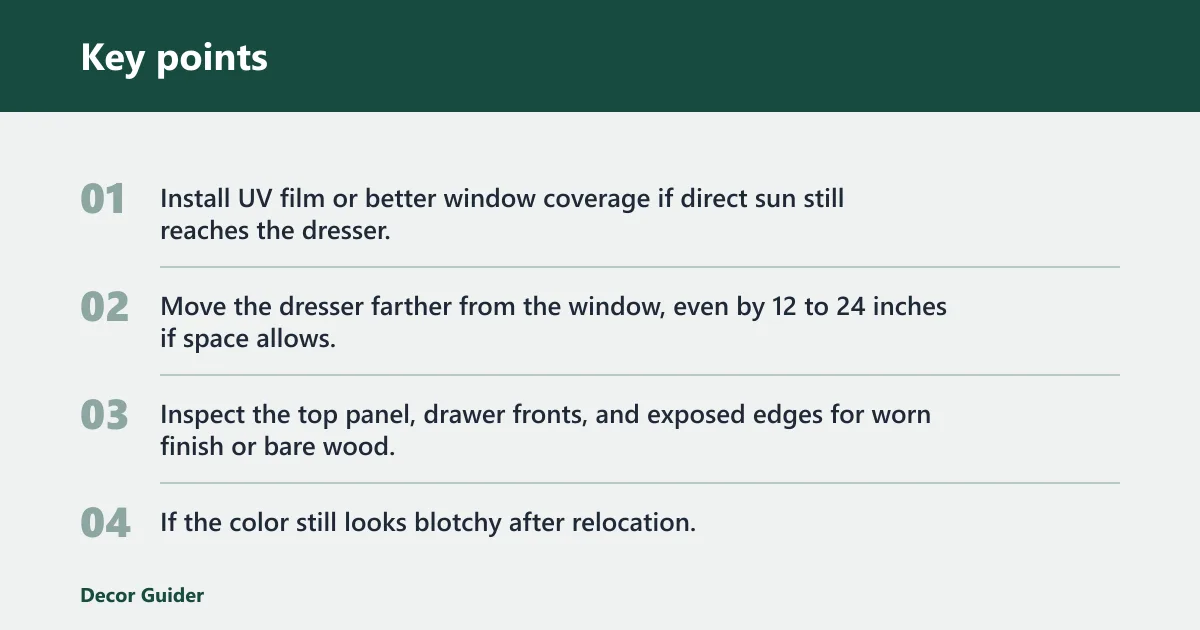
- Install UV film or better window coverage if direct sun still reaches the dresser.
- Move the dresser farther from the window, even by 12 to 24 inches if space allows.
- Inspect the top panel, drawer fronts, and exposed edges for worn finish or bare wood.
- If the color still looks blotchy after relocation, sand and refinish the affected surfaces.
Suppose a painted dresser sits beside a south-facing window and the top looks pale while the sides still match the original color. That is a sign of uneven exposure, not just surface dirt. A new topcoat will not correct the mismatch if the finish underneath is already broken down.
Common mistakes
Wax is often treated like sun protection, but it only changes surface feel and sheen. Another common error is leaving a dresser in direct sun for months and then trying to hide the fade with a cover. That usually leaves a sharper color line.
Do not trap moisture with a cover that hugs the wood. Cotton, felt, or linen are safer than plastic-like materials, but they still need airflow. Also skip cleaning shortcuts. Dirt and film can make the finish look duller, which makes fading seem worse than it is.
When should you refinish instead?
Refinish when the finish is chalky, worn, or ambered unevenly, or when faded areas still show after you fix the light exposure. If raw wood, bare spots, or deep color mismatch are visible, surface care will not bring the dresser back to even color.
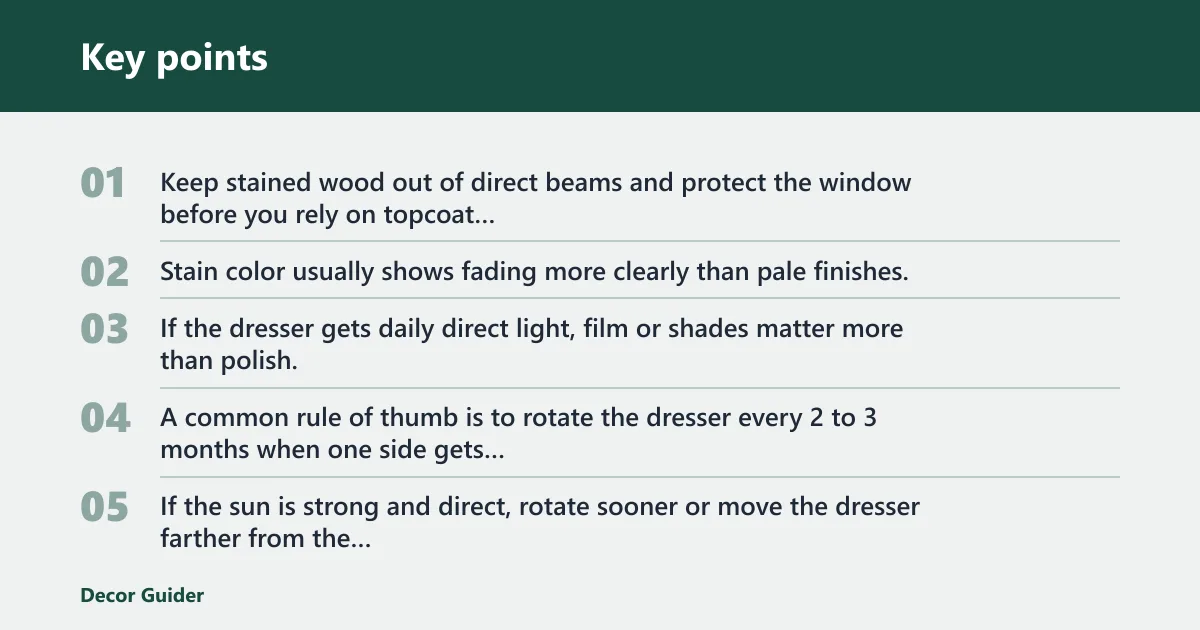
How to keep stained wood from fading in the sun
Keep stained wood out of direct beams and protect the window before you rely on topcoat products. Stain color usually shows fading more clearly than pale finishes, especially on tops and drawer fronts. If the dresser gets daily direct light, film or shades matter more than polish.
How often should I rotate a dresser in sunlight?
A common rule of thumb is to rotate the dresser every 2 to 3 months when one side gets more light than the other. If the sun is strong and direct, rotate sooner or move the dresser farther from the window. Rotation evens out exposure, but it does not block UV.
What is the best fabric or cover for protecting a dresser from sunlight?
Cotton, felt, or linen are the better short-term choices because they breathe and are less likely to trap moisture. Use them loosely, not tight against the wood. A cover is a temporary shield, so it should support other fixes such as placement, curtains, or UV film.
Frequently asked questions
How to protect wood furniture from sun damage
Block the beam first, then move the piece out of direct light. Use curtains, blinds, or UV window film on the window, and keep the surface clean so the finish does not look dull. For long exposure, a finish-specific topcoat matters more than wax.
How to keep stained wood from fading in the sun: keep stained wood away
Keep stained wood away from direct light and use a window treatment before you add any surface product. Stained surfaces show pale patches quickly on top panels and drawer fronts. If the room gets steady afternoon sun, UV film is usually a better first step than polish.
What stops wood dressers from fading near a window
UV-blocking film, shades, or curtains can reduce the most direct exposure near a window. Placement also matters, so even 12 inches farther from the glass can reduce the beam on the top panel. If the finish is weak or bare in spots, refinish those areas too.
Should I use wax: use wax or polish?
Use wax or polish for appearance, not as your main UV defense. Varnish, lacquer, and polyurethane offer more film protection, but the best result still comes from reducing the sunlight first. On antique shellac or oil finishes, matching the existing system is safer than adding a random layer.
Products related to this article
Sponsored / affiliate links. As an Amazon Associate I earn from qualifying purchases. I may earn additional commission from eligible campaigns.
 Furniture Wax - 100% Natural Sealant for Chalk Furniture Paint or Raw Wood, Light Protection, Easy To Apply, No Odor, Eco-Friendly - 7 Color Choices - Antiquing [Brown] (8 oz)
 All-in-One Water-Based Wood Refinishing Paint - Low VOC, Fast-Drying, for Furniture, Cabinets & Doors - Easy Furniture Makeovers, with Paint Roller (Orange Brown, 16 Fl Oz)