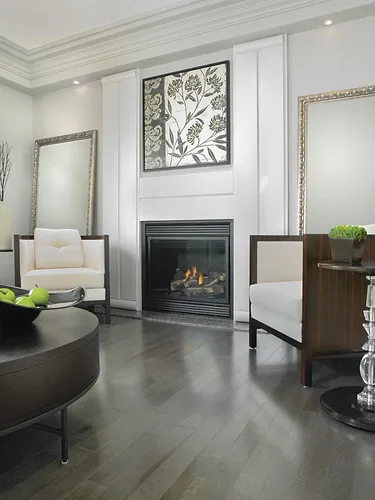
5 Best Dresser Mirrors for Modern Bedrooms (2026): based on specs
The best dresser mirror for a modern bedroom is usually a slim framed rectangle. A round or pill shape works when the dresser and room need softer lines. The right mirror fits the dresser width, cuts glare, and matches the hardware finish; poor sizing and the wrong frame can throw the whole setup off.
This guide is part of our Dresser care and maintenance guide series.
Quick comparison
| Product | Badge | Best for | Price | ||
|---|---|---|---|---|---|
 |
DUMOS 16" x 60" LED Full Length Mirror with Lights, LightedDUMOS | Our pick | 16 in x 60 in · 3 color LED | $59.93
Price as of 28 Sep 2026
|
View |
 |
Atilioo Bathroom Mirror for Wall, 24 Inch Round MirrorsAtilioo | Budget pick | 24 in round · matte black frame | $21.47
Price as of 28 Sep 2026
|
View |
 |
Wall Mounted Makeup Mirror – 1X/10X Magnifying MirrorALHAKIN | Pair with it | 8 in · 1x/10x magnification | $25.99
Price as of 28 Sep 2026
|
View |
 |
Coomily Full Length Mirror 71"x32", Arched Solid Wood FrameCoomily | Upgrade pick | 71 in x 32 in · arched solid wood | $199.99
Price as of 28 Sep 2026
|
View |
 |
JUSRON 360 Viewing Angle Self Hair Cutting Mirror ShowerJUSRON | Also great | 360-degree angle · hair cutting use | $25.99
Price as of 28 Sep 2026
|
View |
For small rooms, frameless mirrors and slim framed rectangles are the safest picks because they keep the surface calm and are easier to size well. For vanity use, detachable or adjustable models do better. For daytime rooms with strong light, a framed mirror with a quiet finish usually behaves better near windows.
According to Best Dresser with Mirror Options Guide For Your Bedroom… — The guide lists Bohaus Dressing Table at 56.13 x 15.44 x 46.44.
How we chose
This matrix puts the bedroom basics first: proportion, glare control, storage fit, install effort, and whether the style sits cleanly beside simple furniture.
| Mirror style | Proportion fit | Glare control | Storage compatibility | Install effort | Modern aesthetic fit | Overall use case |
|---|---|---|---|---|---|---|
| Frameless rectangle | 4/5 | 2/5 | 4/5 | 3/5 | 5/5 | Minimal rooms, narrow dressers |
| Slim framed rectangle | 5/5 | 4/5 | 4/5 | 3/5 | 5/5 | Best all-around modern choice |
| Round mirror | 3/5 | 4/5 | 3/5 | 3/5 | 4/5 | Softens hard-lined rooms |
| Detachable mirror | 4/5 | 3/5 | 5/5 | 2/5 | 4/5 | Rooms that double as vanity spaces |
| Adjustable or swivel mirror | 3/5 | 4/5 | 4/5 | 2/5 | 3/5 | Grooming and seated dressing |
| Wall-mounted setup | 5/5 | 4/5 | 5/5 | 1/5 | 4/5 | Tight rooms, stable placement |
The matrix below keeps things plain: slim framed rectangles win most categories, frameless mirrors stay visually quiet, and wall-mounted setups work best when floor space is tight. The room-size checklist later in this guide helps rule out mirrors that would crowd a narrow dresser or throw too much light into the bed area.
Room-size checklist
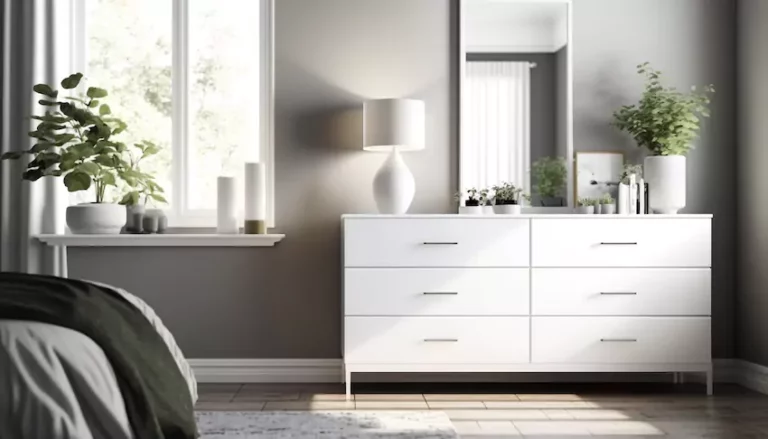
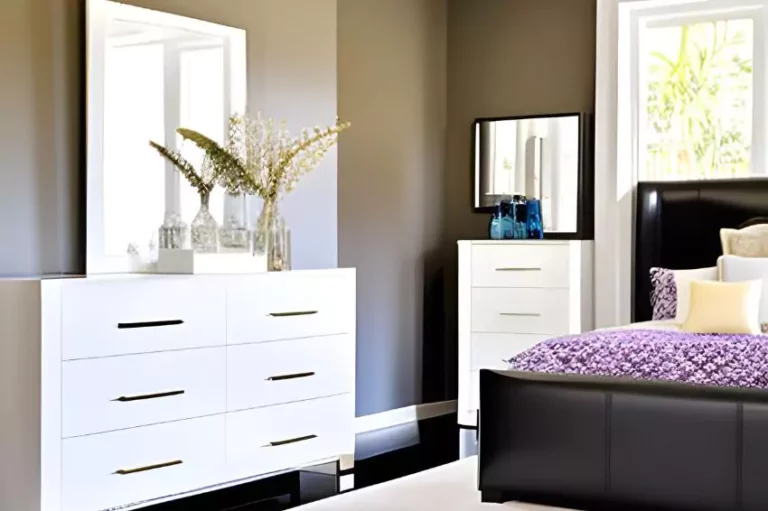
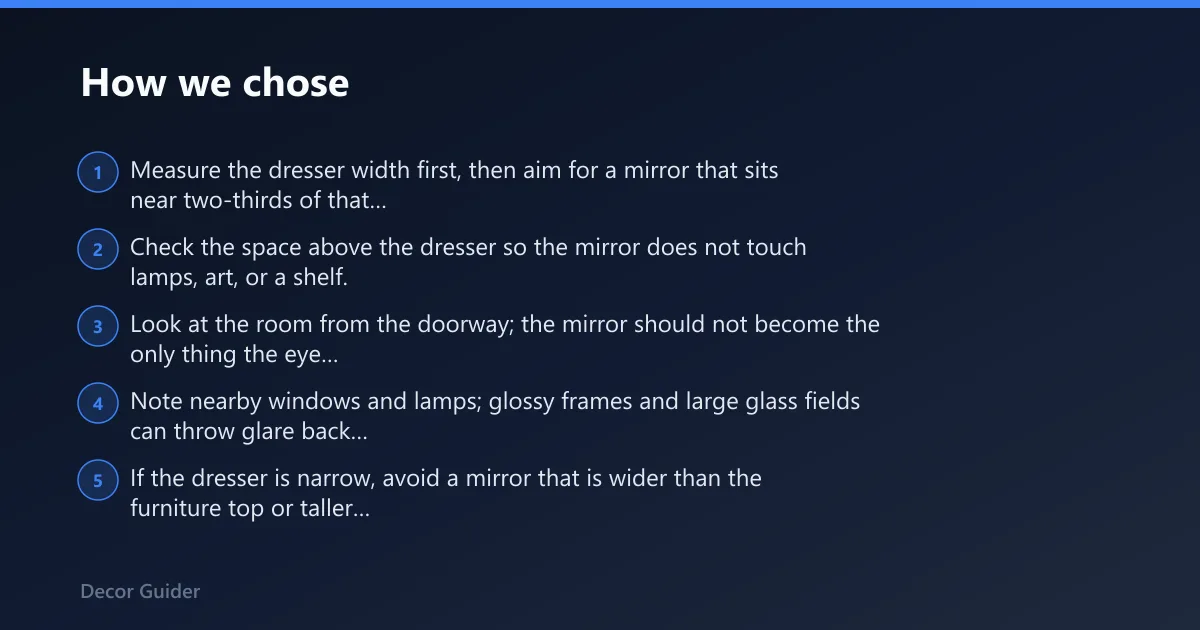
- Measure the dresser width first, then aim for a mirror that sits near two-thirds of that width.
- Check the space above the dresser so the mirror does not touch lamps, art, or a shelf.
- Look at the room from the doorway; the mirror should not become the only thing the eye sees.
- Note nearby windows and lamps; glossy frames and large glass fields can throw glare back into the room.
- If the dresser is narrow, avoid a mirror that is wider than the furniture top or taller than the wall zone above it.
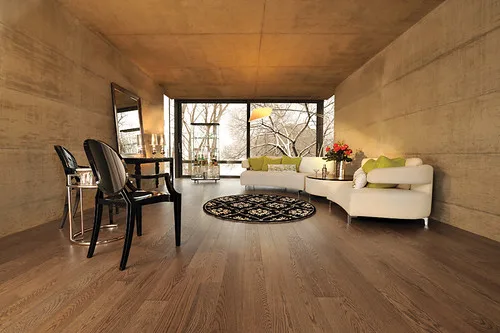
Best overall: slim framed rectangular mirror
A slim framed rectangular mirror is the best all-around choice for most modern bedrooms. It reads cleanly, fits many dresser widths, and is easier to style than ornate or oversized options. It keeps the dresser looking intentional without adding visual noise.
Why it works in most modern bedrooms
The rectangle follows the straight lines found in modern case goods. The slim frame gives the glass a clear edge without making the mirror feel heavy. On dressers with flat fronts, simple pulls, and matte finishes, too much decoration can look out of place.
Best frame finishes for clean-lined furniture
Matte black, brushed nickel, soft brass, and light wood all work well when the finish repeats something already in the room. A black frame pairs cleanly with black pulls and dark legs; brushed nickel reads well with cool-toned hardware; light oak or ash fits pale wood tones.
When to skip it
Skip a slim framed rectangle if the dresser is very narrow, the room already has hard edges everywhere, or the mirror would sit too close to a strong window reflection. In those cases, a round or frameless option can soften the setup and reduce crowding.
Frameless mirror: best for minimal modern rooms
A frameless mirror is the quietest-looking choice for a modern dresser. Its thin profile and bare edge keep the focus on the furniture line, which helps when the bedroom already has simple hardware, pale walls, and little decorative clutter.
What the thin profile does visually
Without a frame, the mirror nearly disappears at the edge, so the dresser top reads as one calm plane. That makes the room feel less busy, especially when the dresser sits under artwork or near a small bedside lamp.
Where glare becomes a problem
Frameless mirrors can be unforgiving near bright windows or strong lamp bulbs because there is no frame to soften the reflection. If the mirror faces a light source directly, the glass can pull attention away from the rest of the room and make the dresser area feel harsher than intended.
Best dresser pairings
Frameless works best with dressers that already have clean edges, hidden pulls, or minimalist hardware. It also suits floating-style or low-profile dressers where any added frame would look too bulky.
Framed mirror: best for matching hardware and finishes
A framed mirror is the better choice when the bedroom needs more structure or when hardware matching matters. Frame material, finish, corner shape, and edge detail all help the mirror connect to the dresser instead of floating above it as a separate object.
Frame material and finish choices
Metal frames feel the most modern when they have a matte or brushed finish. Wood frames work when the tone echoes the dresser top or legs. Painted frames can work too, but they should stay simple and low contrast if the room already has enough shape and color.
Corner shape and edge detail
Squared corners feel firmer and more architectural, which suits sharp-lined bedrooms. Rounded corners soften the look and help when the dresser hardware is already angular. Thick edges are harder to use well in small rooms because they make the mirror feel heavier than the furniture below it.
How to match dresser pulls and legs
Match the frame finish to the pull finish first, then check the leg color or base detail. A black frame with black pulls reads deliberate; a warm brass frame beside brass pulls looks coordinated; a pale wood frame beside a warm wood dresser keeps the setup calm without demanding exact matching.
Detachable or adjustable mirror: best for vanity-style flexibility

A detachable or adjustable mirror is best when the dresser has to work as a vanity, grooming station, or flexible storage surface. Some mirrors can be adjusted as well, and that extra movement matters when the user sits at the dresser or needs a closer viewing angle.
When removable design helps
Detachable mirrors are useful when the dresser top needs to switch between daily storage and grooming use. They also help in smaller rooms where the mirror may need to be moved for cleaning, seasonal rearranging, or better light control.
Tilt angle and viewing height
Adjustable mirrors work better when seated viewing height changes, because the mirror can tilt toward the face instead of forcing one fixed angle. That matters for makeup, hair checks, and dressing tasks, where a small change in tilt can make the reflection easier to use.
Storage trade-offs and layout limits
The trade-off is footprint and clutter. Detachable or swivel parts can take up more room on the dresser top, and they are less ideal when the surface already carries trays, lamps, or daily storage boxes.
Wall-mounted mirror: best for tight rooms and safety
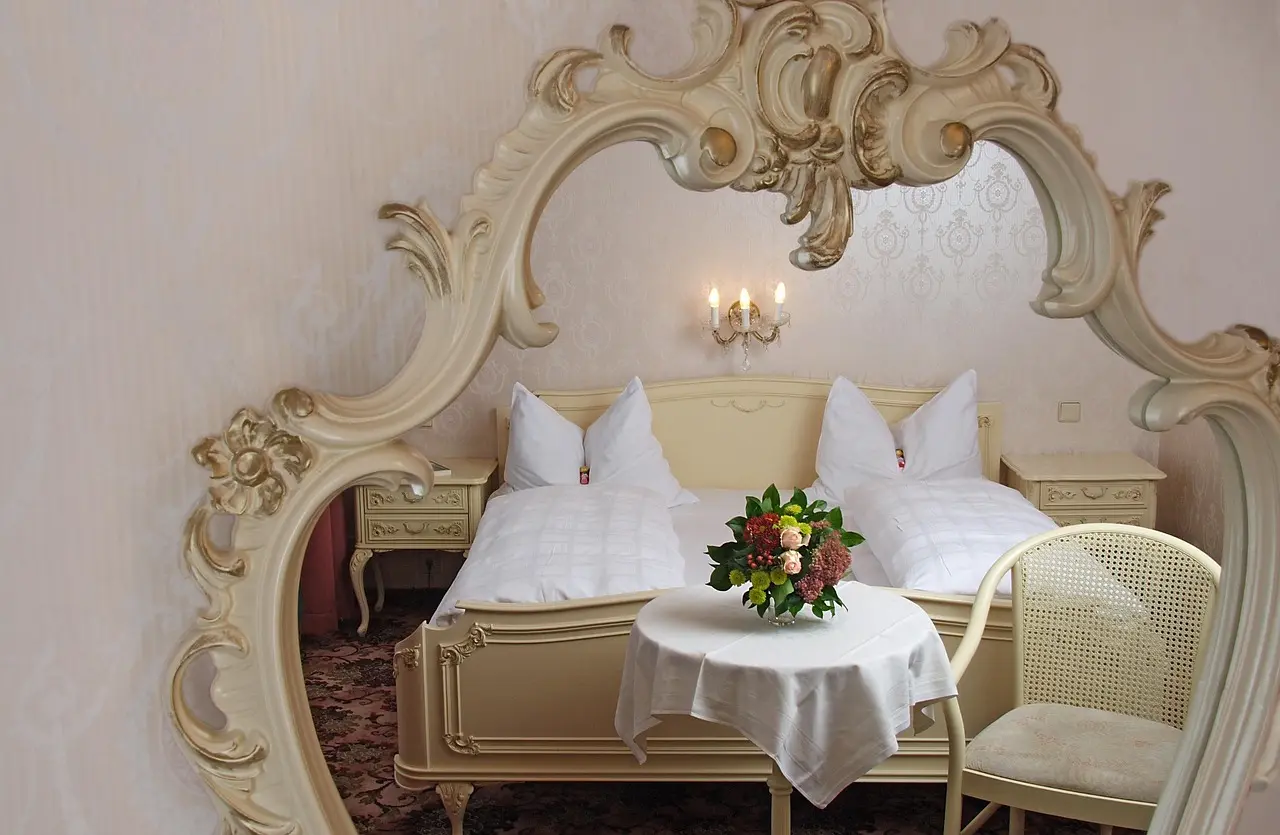
A wall-mounted mirror is the best choice when the room is tight, the dresser top is crowded, or stability matters more than portability. It keeps the mirror off the surface, frees storage space, and can be easier to size to the wall zone above the dresser.
Mounting brackets and wall attachment
Wall-mounted mirrors should use proper mounting brackets, and those brackets need to be fixed into the wall, not just the drywall surface. Stability starts with correct attachment, especially when the mirror is wider or heavier than a light decorative piece.
Anti-tip and stability checks
Mirror safety hardware matters because a tall or wide mirror can shift if the dresser is bumped or if the wall attachment is loose. Anti-tip considerations become more important in bedrooms with children, pets, or narrow walking paths beside the furniture.
Clearance above the dresser
Leave enough wall clearance so the mirror does not feel pinned to the dresser top. A small gap usually looks cleaner than a mirror that crowds the furniture edge, and it also leaves room for cords, lamps, or other surface items without visual compression.
What size mirror should go with a modern dresser?
The safest modern rule is to keep the mirror near two-thirds the dresser width, then adjust for ceiling height, wall space, and nearby lighting. That proportion usually keeps the dresser from looking crowded while still making the mirror feel connected to the furniture below it.
Width ratio to dresser width
A mirror that is too wide overwhelms a narrow dresser and can make the whole composition feel top-heavy. A mirror that is too small looks accidental, as if it was picked for the wall rather than for the furniture.
Height above the top surface
Leave a modest gap above the dresser top so the mirror does not sit directly on the surface unless the design calls for that. The exact spacing depends on wall height and lamp placement, but the goal is always the same: enough breathing room to keep the layout from feeling cramped.
Visual balance rules
If the dresser is low and wide, the mirror can be a little taller to keep the vertical balance in check. If the dresser is narrow or the ceiling is low, a slimmer mirror usually reads better because tall glass can feel like it is pressing the room downward.
Can a dresser mirror make a small bedroom look bigger?
A dresser mirror can make a small room feel larger when it is sized and placed well. The effect depends less on owning a mirror and more on whether the mirror reflects open wall, daylight, or a calm part of the room instead of a crowded corner.
Light bounce and glare control
Mirrored dressers can brighten a room by reflecting natural or artificial light, but that same reflection can produce glare if the mirror faces a lamp or window directly. In a small bedroom, the better move is often to angle the reflection toward open space, not toward the brightest source.
Failure cases in tight rooms
A mirror that is too large can make a small bedroom feel more crowded, not less. The problem is visual weight: the eye lands on the mirror first, and then the dresser, walls, and bed feel compressed around it.
Best placements for small bedrooms
Small rooms usually do best with frameless mirrors, slim framed rectangles, or wall-mounted setups that keep the floor and dresser surface free. Avoid bulky frames, deep edges, and mirrored tops that fight for attention in the same sightline.
Are swivel or adjustable dresser mirrors better than fixed ones?
Swivel or adjustable mirrors are better when the dresser doubles as a grooming station because they let the user set the viewing angle instead of accepting a fixed reflection. Fixed mirrors are better when the room values a cleaner look and the mirror is mainly there for proportion and light bounce.
Fixed mirrors
Fixed mirrors usually look simpler and stay more stable. They are a better fit for modern bedrooms that want low visual clutter and minimal mechanical detail.
Swivel and adjustable mirrors
Swivel mirrors are useful when the user sits at the dresser or needs to move between standing and seated use. The downside is that the hardware is visible, and visible joints can read less cleanly than a plain fixed sheet of glass.
Practical decision point
If the dresser is mostly storage, fixed usually wins. If the dresser is doing double duty as a vanity, adjustable usually wins, as long as the base and support hardware do not dominate the top.
How do I match a dresser mirror to modern decor and hardware?
Match the mirror to modern decor by repeating one material, one finish, and one shape language already present in the room. Clean lines, minimal hardware, neutral finishes, and low-visual-clutter styling all point toward a mirror that looks intentional rather than decorative for its own sake.
Frame language
If the dresser has straight pulls and square legs, use a square or rectangular mirror with crisp edges. If the room has softer forms, a round or pill mirror can echo that softness without breaking the modern feel.
Finish pairing
Use the mirror frame to repeat the finish of the drawer pulls, lamp base, or bed hardware. Matte black, brushed nickel, soft brass, and light oak are the easiest modern finishes to coordinate without creating too much contrast.
Shape and room rhythm
A mirror shape should not fight the dresser shape. Long horizontal dressers usually take a rectangle well; shorter or boxier dressers can handle a round mirror better because the curve stops the setup from looking too rigid.
What’s the difference between a dresser mirror and a vanity mirror?
A dresser mirror is usually chosen to sit with the dresser, support the room layout, and reflect light or space in a controlled way. A vanity mirror is more task-driven; it is built around grooming, closer viewing, and adjustable angles more often than a dresser mirror is.
Practical use differences
A dresser mirror often stays fixed and visually quiet. A vanity mirror is more likely to tilt, swivel, or detach because the user needs a better face-level angle for makeup, hair, or dressing details.
Layout differences
Dresser mirrors are commonly sized to the furniture width. Vanity mirrors may sit in smaller frames, use more hardware, or stand separately so the surface below can hold tools and grooming items.
Modern bedroom choice
If the bedroom is mostly for storage and sleeping, the dresser mirror should stay simple. If the dresser is also the daily grooming station, a vanity-style mirror is usually the better fit, even if the frame is plain.
How do I clean and maintain a mirrored dresser safely?
Dusting should be enough for mirror care in routine use, and fingerprints can be wiped away with a soft cloth. Clean the glass gently, keep moisture away from frame joints, and avoid harsh cleaners that can dull the finish or leave residue on the edge.
Glass care
Use a soft cloth on the mirrored surface and keep pressure light. If the mirror is near a lamp or window, check for streaks at an angle, since glare often makes smudges look worse than they are.
Frame and hardware care
Framed mirrors need attention at the corners and around the mounting points. Dust tends to collect where the frame meets the glass, so those edges should be cleaned with care, especially on painted or metal finishes.
Safety checks over time
For wall-mounted or adjustable mirrors, check that brackets remain tight and the mirror does not shift when the dresser is opened or closed. Stability matters more than shine, and a clean mirror that is poorly anchored is the wrong trade.
Which one should you buy?
For most people, the slim framed rectangular mirror is the best buy because it balances proportion, glare control, and modern style with the least fuss. Choose frameless if the room is very minimal, detachable or adjustable if the dresser doubles as a vanity, and wall-mounted if the room is tight or the setup needs more stability.
Best pick for small bedrooms
Pick a frameless mirror or a slim framed rectangle that stays close to two-thirds of the dresser width. Avoid heavy frames and oversized glass, because both can crowd a small room and make glare more noticeable.
Best pick for a vanity setup
Pick a detachable or adjustable mirror if seated grooming matters. The ability to shift tilt angle and viewing height is more useful than a purely decorative frame in that kind of room.
Best pick for low-glare daytime rooms
Pick a framed mirror with a matte finish and a simple edge, then place it so it does not face the brightest window directly. A frame helps tame the visual effect of strong daylight better than bare glass does.
Best pick for renters versus homeowners
Renters usually do better with detachable or freestanding options that do not depend on major wall work. Homeowners can choose wall-mounted mirrors more freely, provided the brackets, wall attachment, and anti-tip details are handled correctly.
Frequently asked questions
What dresser mirror style looks best in a modern bedroom?
The best modern choice is usually a slim framed rectangle because it matches clean-lined furniture and is easy to size correctly. A round or pill mirror can work when the room needs a softer shape, but the mirror should still fit the dresser width and the room’s hardware language.
Should I choose a framed mirror or a frameless mirror for my dresser?
Choose framed if you want to match pulls, legs, or other metal finishes and reduce harsh reflections a little. Choose frameless if the bedroom already feels busy or you want the most minimal look possible. In both cases, proportion matters more than decoration.
Products related to this article
Sponsored / affiliate links. As an Amazon Associate I earn from qualifying purchases. I may earn additional commission from eligible campaigns.