How to Seal a New Dresser: Keep Fumes Out of Drawers
Air out the dresser for about 48 to 72 hours first; if the smell still seems strong after that, seal the drawer interiors with a low-odor water-based or shellac-based sealer, and return it if the odor is sharp, chemical, or brings on symptoms. If you ignore that smell, clothes can pick it up, and off-gassing can stay trapped in the drawers for weeks. This guide shows how to judge the finish type, ventilate it, choose the least risky sealer, and line the drawers only after curing.
New dresser odor guide


New dresser odor usually comes from materials and curing, not from cleaning alone. MDF, particleboard, glue, and factory finishes can give off odor while they cure, and that smell tends to collect inside closed drawers where air movement is limited.
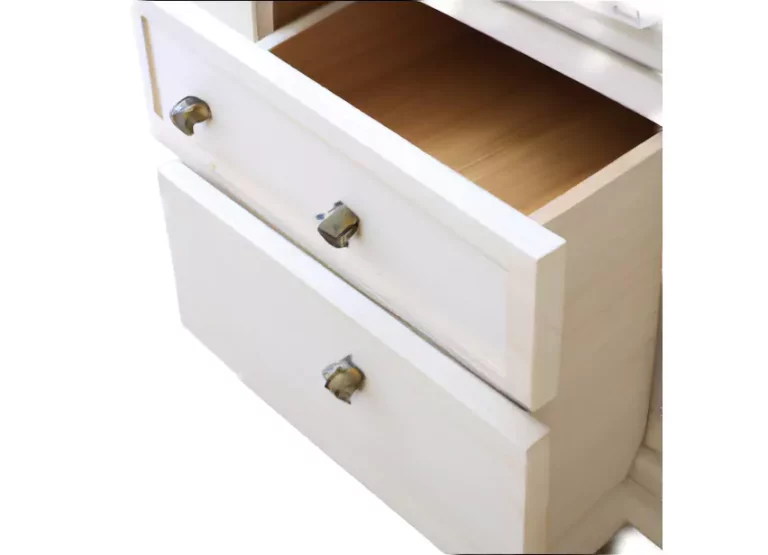
The drawer interior matters most. That is the main surface your clothing touches, so it is the first place to clean, air out, and, when needed, seal.
Why drawers smell stronger than the room
Closed drawers trap air. That lets odor build up even when the room smells only mildly off. If the dresser is made from MDF or particleboard, the panels and edge glue can keep giving off odor longer than solid wood, especially if the finish is still curing.
When sealing helps and when it does not
Sealing helps when the odor comes from unfinished drawer interiors, exposed composite board, or a porous surface that keeps giving off smell after airing. It does not help much if the dresser is so strong-smelling that the odor is sharp, chemical, or irritating. In that case, return or exchange it instead of coating over the problem.
How finish type changes the fix
Factory-finished or laminated drawers may only need ventilation and a liner. Unfinished interiors, raw MDF, and particleboard often need a barrier coat. If the drawer is already painted or laminated, avoid piling on more product unless the smell is clearly coming through the surface and the label allows another coating.
What you’ll need
- Vacuum with brush attachment or a dry microfiber cloth
- Mild cleaner and a second dry cloth
- Low-VOC or zero-VOC clear sealer, or a shellac-based sealer for odor blocking
- Water-based polyurethane if you want a tougher barrier with lower odor than many solvent finishes
- Fine-grit sanding pad if the interior has rough fibers, followed by dust removal
- Painter’s tape if you need to protect edges or hardware
- Small brush, foam brush, or pad applicator for thin coats
- Fan and open window for ventilation
- Unscented drawer liners or uncoated paper, if you plan to line after curing
- Activated charcoal bags for temporary odor control
Decision table for dresser odors
| Dresser material and smell severity | Safest method | Sealer type and coat count | Approximate wait-to-use window | When to avoid sealing and return or exchange instead |
|---|---|---|---|---|
| Solid wood, mild smell | Ventilate first, then line if needed | No sealer at first; use unscented liner if odor stays light | 48 to 72 hours of airing, then recheck | If the odor becomes sharp after airing or feels irritating |
| Factory-finished or laminated drawers, mild to moderate smell | Air out with drawers open; use charcoal as a temporary add-on | Usually none; seal only if the smell clearly comes from exposed interior wood or edges | 2 to 7 days, depending on the label and room airflow | If the smell does not fade after airing and the surface is fully closed already |
| MDF or particleboard, moderate smell | Clean, dry, dust-free interior, then seal | Low-VOC or zero-VOC clear sealer, 2 thin coats | Usually 24 to 72 hours after the final coat, but the product label controls | If the odor is strong enough to cause headaches, nausea, or eye irritation |
| MDF or particleboard, strong chemical smell | Do not rush coating; test ventilation first | Shellac-based sealer or water-based polyurethane, 2 to 3 thin coats | Only after full cure, often several days | If the smell remains sharp after repeated airing, or returns as soon as drawers close |
| Painted, lined, or already sealed drawers, lingering odor | Check for trapped moisture, then use a liner only if the surface is dry | Often none; if sealing is still needed, use a spot-tested, compatible clear coat | Depends on the existing finish and the new product label | If the finish is soft, tacky, peeling, or still curing |
How do you seal a new dresser so the smell goes away?
Seal the inside of the drawers only after you air the dresser out, clean the interior, and confirm the surface is dry and dust-free. Use a low-odor clear sealer for light odor or a shellac-based sealer for stronger odor blocking. Apply thin coats and wait for full cure before storing clothes.
- Open every drawer and place the dresser in a ventilated room for 48 to 72 hours.
- Vacuum the drawer interiors, wipe them with a dry microfiber cloth, and let any dampness disappear before coating.
- Choose a sealer that matches the surface: low-VOC clear sealer for mild odor, shellac-based sealer for stronger odor, or water-based polyurethane for a tougher barrier.
- Brush on a thin coat only on the unfinished interior surfaces. Do not flood the wood.
- Let the coat dry for the time on the label, then add a second thin coat if the product calls for it or if the odor is still present after drying.
- Wait for full cure before putting in clothes. If the label says 24 hours to dry and 72 hours to cure, use the longer number.
Picture a four-drawer MDF dresser that smells strongest in the bottom drawer after two days near a window. That points to odor concentrated inside the closed compartment, so sealing the unfinished interior is more useful than spraying fragrance in the room. If the smell is still sharp after the first coat dries, a second thin coat is the next step.
What sealant is best for the inside of drawers?
Shellac-based sealer is the strongest odor-blocking choice for many drawer interiors, especially when the smell comes from MDF, particleboard, or glue. Water-based polyurethane is a good choice when you want a clearer barrier and lower odor than many solvent finishes. A low-VOC clear sealer is the mildest option for lighter cases.
Shellac-based sealer for strong odor blocking
Shellac is often chosen when odor blocking matters more than appearance. It dries fast, but fast drying is not the same as full cure, so the label still controls when the dresser can be used. Spot test first if any part of the interior is visible from outside, because shellac can change the look of some surfaces.
Water-based polyurethane for a clearer barrier
Water-based polyurethane gives a protective film with less odor than many solvent-based finishes. It usually needs multiple thin coats to build a barrier that is even enough for drawer interiors. Let each coat dry fully before the next one, and wait for full cure before clothing goes back in.
When a clear sealant is the better fit
If the smell is mild and the surface is already clean and dry, a low-VOC or zero-VOC clear sealant is often the least risky option. Use it on unfinished interiors, not on surfaces that are still damp or dusty. Thin coats work better than one heavy coat, which can stay soft longer.
When not to seal at all
Do not seal if the dresser smell is so strong that it feels harsh in the nose or throat, or if the finish is still sticky. In that case, more ventilation is the safer first move, and return or exchange is the better option if the odor does not drop after the cure window on the label.
Can you line new dresser drawers safely?
Yes, but only after the interior is fully dry and the odor has dropped enough that a liner will not trap moisture or cover a curing finish. Unscented drawer liners are usually the safer choice. Scented liners can add fragrance, but they should never replace ventilation or sealing when the dresser still smells strong.
Unscented drawer liners versus scented liners
Unscented liners are best when you want a barrier between clothes and the drawer surface without adding a second odor source. Scented liners can help if the smell is already faint, but they mainly mask odor. They should not be the main fix for off-gassing.
Why moisture trapping matters
Trapped moisture can make odors linger and can keep finish from curing properly. If the drawer interior feels cool, damp, or tacky, skip liners for now. Let the dresser air longer until the surface is fully dry before adding anything flat against it.
When contact paper is a bad idea
Contact paper can be a poor choice on fresh furniture because it may trap moisture and can be hard to remove later. If you use a liner, choose one that does not seal in dampness and does not rely on strong adhesive over a still-curing surface.
How long does new dresser smell take to fade?
Light odor can fade after 48 to 72 hours of airing, but stronger off-gassing can last longer, especially with MDF or particleboard. The finish type and cure time matter as much as the room air. If the smell returns each time you close the drawers, the odor source is still active inside.
Ventilation time before clothes go
Keep the room ventilated and the drawers open during the first airing period. A fan aimed across the open drawers helps move odor out of the cabinet instead of just circulating it around the room. If the smell is mild after the first round, add another day or two before using it.
How cure time affects odor
Many sealers need more than dry-to-touch time before they stop giving off odor. A product can feel dry and still off-gas while curing. Follow the label for re-entry and cure windows, then add another day if the drawer still smells like the coating itself.
What to do if the smell lingers
If the odor remains after airing and one proper sealing cycle, use activated charcoal as a temporary add-on and keep the drawers open at intervals. Replace or recharge the charcoal as directed by the package. If the odor stays sharp after that, returning the dresser is the cleaner choice.
Picture a nursery dresser with particleboard drawers that still smell after three days near an open window. In that case, a shellac-based sealer on the unfinished interior is more appropriate than a scented liner alone, because the issue is the source material, not the room air.
Common mistakes
Most failures come from sealing too early, coating a dirty surface, or treating a strong off-gassing problem like a simple odor. If the dresser still smells sharp after airing, do not mask it with fragrance and call it done.
- Sealing over dust or moisture. Clean, dry, dust-free surfaces are necessary for any coating or liner to work well.
- Using the drawers before full cure. Follow the product label, not just the dry-to-touch time.
- Using fragrance alone. Scented liners and deodorizing products are add-ons, not the main fix.
- Ignoring symptoms. If the odor gives you headaches, nausea, or throat irritation, stop and return the dresser.
- Choosing contact paper over a breathable liner. That can trap moisture and keep the problem going.
Frequently asked questions
What can I put in drawers to stop new furniture smell?
Use unscented drawer liners and activated charcoal bags as support, not as the main fix. The liner should sit on a dry surface, and the charcoal should be replaced or recharged as the package directs. If the smell is strong, ventilation and sealing matter more than any insert.
How long does it take for a new dresser smell to go away?
Light odor may fade after 48 to 72 hours of ventilation. Stronger MDF or particleboard odor can take longer, especially if the drawers stay closed. If the smell is still sharp after the cure window on the label, return or exchange is worth considering.
Can I use shellac to seal a dresser interior?
Yes, shellac is a common odor-blocking choice for drawer interiors. Apply it in thin coats, and spot test any visible surface first because shellac can change the look of the wood. Do not store clothes until the coating is fully cured, not just dry to the touch.
Is it safe to line new dresser drawers with contact paper?
It is often a poor choice for new furniture that is still off-gassing or curing. Contact paper can trap moisture and may be hard to remove later. If you line the drawers, use an unscented product that will not seal in dampness against the interior surface.
What sealant is best for the inside of dresser drawers?
Shellac-based sealer is usually the strongest odor blocker, while water-based polyurethane is a good lower-odor barrier with multiple thin coats. If the smell is mild, a low-VOC or zero-VOC clear sealer may be enough. The product label always controls dry and cure time.
Why does my new dresser still smell in the drawers?
The smell often stays in the drawer because closed space holds the odor in place, especially with MDF, particleboard, glue, or a still-curing finish. Open-air ventilation helps, but the unfinished interior may still need a barrier coat if the odor keeps returning when the drawers are shut.
How do you air out a new dresser faster?
Open every drawer, move the dresser to a ventilated room, and use a fan to push air through the cabinet for 48 to 72 hours. Keep clothing out until the smell drops and any sealer has fully cured. If the odor stays sharp, stop and consider a return.
Products related to this article
Sponsored / affiliate links. As an Amazon Associate I earn from qualifying purchases. I may earn additional commission from eligible campaigns.