Does Baking Soda Remove Odor From Dresser Drawers?
Baking soda can often reduce mild dresser-drawer odors in about 24 to 72 hours if it is left dry in an open bowl or sachet, but it will not fix mold, urine, or smoke smells. Using the wrong method can leave white residue, trap moisture, or damage a finish. This guide shows when baking soda is enough, when to switch methods, and how to do it without harming wood.
What you’ll need

- Works across many household cleaning tasks
- No additives or chemicals
- USP-grade baking soda crystals
- Baking soda
- An open container or breathable pouch
- A soft cloth
- White vinegar
- Activated charcoal
- Enzyme cleaner
- Vacuum with a brush attachment, or a dry brush
Does baking soda remove odor from dresser drawers?
Yes, for mild odors. Baking soda can absorb stale air and a light wood smell in a dresser drawer. It works best as a dry deodorizer in an enclosed wood space that has already been emptied and aired out. It will not remove a source problem such as moisture, mold, or urine contamination.
What it can absorb
For wooden furniture, baking soda is a simple absorbent that can help freshen drawers with a light, dry smell. Put it inside the drawer in a shallow open container or a pouch, so the powder does not touch clothing or settle on the finish.
What it cannot fix
If the odor comes from mildew, pet urine, or another biological source, baking soda may only cover it for a short time. That kind of smell usually points to contamination or trapped moisture, which needs a different cleaner and a fully dry drawer before reuse.
How long should baking soda sit in a dresser drawer to absorb smell?
Leave the baking soda in place for several hours, or overnight if the stale smell is stronger but still dry. One overnight cycle is often enough to show whether the drawer needs another pass or a different treatment.
Use this timing approach
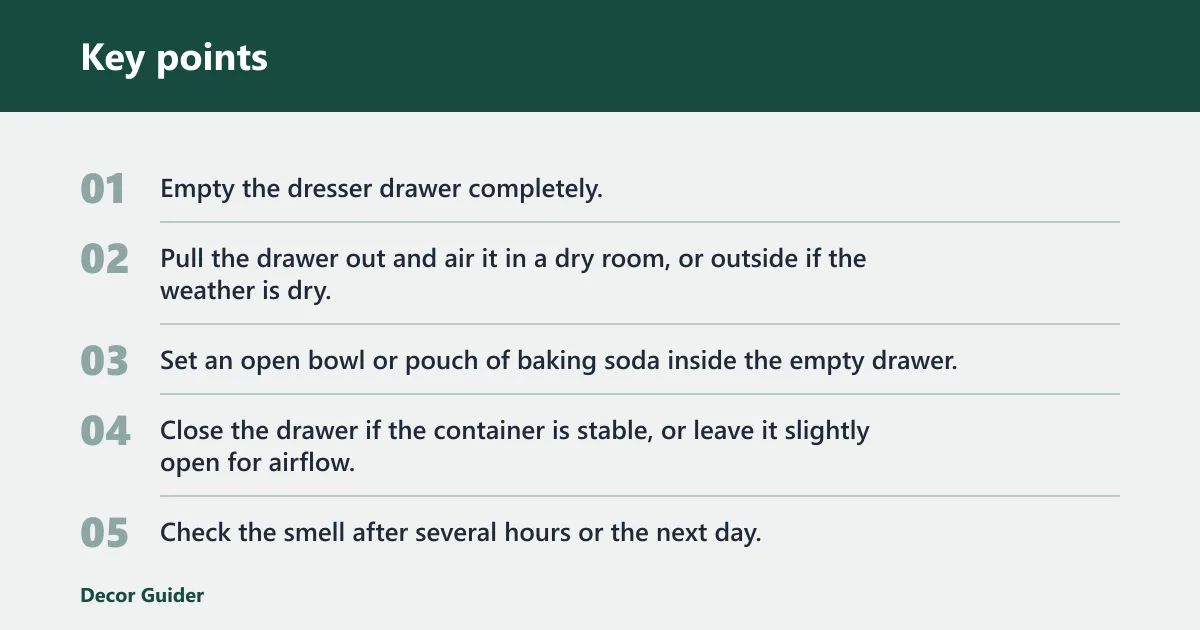
- Empty the dresser drawer completely.
- Pull the drawer out and air it in a dry room, or outside if the weather is dry.
- Set an open bowl or pouch of baking soda inside the empty drawer.
- Close the drawer if the container is stable, or leave it slightly open for airflow.
- Check the smell after several hours or the next day.
- Repeat once only if the smell is still light and dry.
For wooden furniture, overnight is a common rule of thumb because it gives the powder time to absorb odor without adding moisture. If the smell is unchanged after that, stop relying on baking soda alone and move to the next step.
How do you use it without damaging wood?
Keep baking soda dry and contained. Do not dump loose powder directly onto drawer wood or onto a liner, because residue can transfer to clothes and can be hard to remove from grooves or corners. Avoid any wet application on finished wood unless the label says the surface is safe for that cleaner.
Safer placement
A shallow bowl, a lidded sachet with breathable fabric, or a hidden corner pouch keeps the powder off the finish. Activated charcoal works the same way and is less messy if the drawer has delicate trim or if you want the deodorizer out of sight.
Use a spot test before liquid cleaners
If you move on to white vinegar, test it on a hidden spot first. Wood furniture finish can react to moisture, so any liquid cleaner should go on lightly and never be oversaturated. A damp cloth is safer than a soaking wipe.
What if the smell is mildew or urine?
Switch by odor type. Mildew means moisture is probably part of the problem, and urine means biological contamination is likely present. Baking soda may cut the smell, but it will not solve the source. White vinegar or an enzyme cleaner is usually the better next step.
Mildew odor
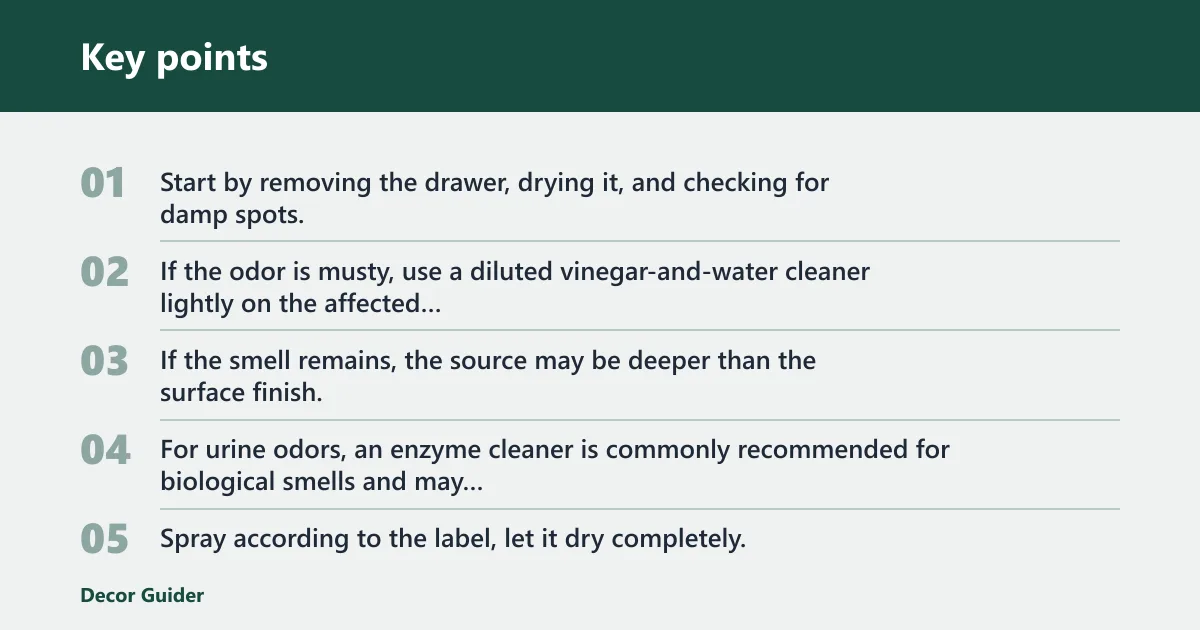
Start by removing the drawer, drying it, and checking for damp spots. If the odor is musty, use a diluted vinegar-and-water cleaner lightly on the affected wood, then let the drawer dry completely before closing it back up. If the smell remains, the source may be deeper than the surface finish.
Urine or pet odor
Use an enzyme cleaner for urine odors. For urine odors, an enzyme cleaner is commonly recommended for biological smells and may be more effective than neutralizers for that job. Spray according to the label, let it dry completely, and do not reload the drawer until the wood is fully dry.
Dresser drawer odor decision table
| Odor type | Likely cause | Safest treatment | When to stop baking soda |
|---|---|---|---|
| Stale odor | Closed storage, old air, light wood smell | Baking soda in an open container or pouch; air out the drawer first | Stop if the smell is still present after overnight or if it smells damp |
| Mildew odor | Moisture, damp storage, possible mold growth | Diluted white vinegar, light application, then full drying | Stop once you notice mustiness or visible moisture, and switch from dry deodorizing |
| Cedar odor | Natural cedar scent from lining or old blocks | Activated charcoal if you want to reduce the scent without wet cleaning | Stop if you want to preserve the cedar smell rather than remove it |
| Urine or pet odor | Biological contamination | Enzyme cleaner, then dry completely before reuse | Stop immediately if the smell is sharp or persistent after baking soda |
Say your drawer has a faint stale odor after months in storage. Baking soda in a pouch may be enough. Suppose the drawer smells musty after being in a damp basement. That is the point to stop dry deodorizing and move to a vinegar-based cleaner, because the source is moisture rather than trapped air.
How do you get rid of odor without making it smell like chemicals?
Use the lightest effective method and let the drawer dry fully before closing it. Strong-smelling cleaners can leave a new odor behind if they are overapplied. For many wooden drawers, dry deodorizing first, then a very light vinegar clean only if needed, keeps the result less noticeable.
Sunlight and fresh air
Sunlight and fresh air can cut old smells in wood furniture, and removing the drawers helps the airing-out method work better. Use this only in dry weather, and avoid leaving wood in direct moisture. Airflow matters more than heat.
Activated charcoal as a low-mess option
If you want a cleaner alternative to loose powder, activated charcoal is an even better absorbent than baking soda. Put it in freshener bags or hidden corner placement. It is a good choice when the drawer is already clean but still holds a faint smell.
Will baking soda work for cedar-smelling drawers too?
Baking soda can cut cedar smell, but cedar is not the same problem as stale air. If the goal is to keep the cedar scent, do nothing or use the drawer as is. If the cedar odor is too strong, activated charcoal is a better low-mess option than adding moisture with liquid cleaners.
When to leave cedar alone
Some cedar-lined drawers smell strong because the wood itself is the scent source. In that case, deodorizing may reduce the aroma you actually want to keep. Start with airing the drawer out briefly before using any absorbent, and stop if the smell is already pleasant and clean.
Common mistakes
Most problems come from using too much powder, skipping airflow, or choosing the wrong cleaner for the odor source. The drawer may smell better for a day and then return if the source is still active.
- Using too much baking soda. A thick layer leaves residue. Use a shallow container or pouch instead.
- Leaving moisture in the drawer. Damp wood traps odor. Dry the drawer fully before closing it.
- Skipping containment. Loose powder can transfer to clothes and liner seams.
- Using vinegar on a soaked finish. Light application only. Spot test first.
- Treating urine like stale air. Switch to an enzyme cleaner right away.
Frequently asked questions
Can baking soda damage wood or drawer finishes?
Dry baking soda is safer than liquid cleaners, but loose powder can leave residue on wood or clothing. The finish risk comes more from wet cleaning and oversaturation. If you need liquid treatment, spot test first and use the smallest amount that reaches the surface.
Should I put baking soda directly in the drawer or in an open container?
Use an open container or a pouch. Direct contact with the wood can leave powder in seams and corners, and it can transfer to clothes. A shallow dish or breathable sachet keeps the deodorizer in place and easier to remove later.
What should I do if the drawer smells like mildew or urine instead of just stale air?
Stop relying on baking soda alone. Mildew usually needs diluted white vinegar and full drying. Urine calls for an enzyme cleaner. In both cases, empty the drawer, air it out, and let it dry completely before putting anything back inside.
How do I get rid of odor in a dresser drawer without making it smell like chemicals?
Start with airflow and a dry absorbent. Activated charcoal is less messy than loose powder, and baking soda is often enough for a faint stale smell. If you use vinegar, dilute it and apply lightly so the cleaner smell does not linger in the wood.
When is the smell too strong for baking soda alone?
If the drawer still smells musty after overnight, or if the odor is urine, smoke, or damp mildew, baking soda is too weak by itself. Switch to a diluted vinegar cleaner for mildew, an enzyme cleaner for urine, or charcoal for a cleaner dry option.
Products related to this article
Sponsored / affiliate links. As an Amazon Associate I earn from qualifying purchases. I may earn additional commission from eligible campaigns.
 MOROSONO Pet Odor Eliminator Spray, Enzymatic Cleaner for Dog & Cat Urine, Carpet, Furniture & Litter Box, Lavender, 16 oz
 Zorbent Pet Accident Cleanup – Odor Remover for Dog & Cat Messes. Absorbs 1 Gallon. Pet-Safe Cleaner for Urine, Vomit, Poop & Accidents on Hardwood, Tile, Vinyl, Concrete, Short Carpet & Rugs, 5 qt