How to Fix a Dresser That Wobbles on Uneven Floors
Fix a wobbling dresser by checking the corner gaps: if the rock stays put when you rotate the dresser 90 degrees, the floor is out of level; if the wobble moves with the dresser, the dresser is the problem. Ignoring it can scrape floors, strain joints, and make drawers bind or tip. This guide shows how to diagnose the cause and choose the right fix for carpet, wood, tile, or a damaged dresser frame.
Diagnose the wobble first


Start with the floor, then the dresser, then both. A bubble level or phone level app can show whether the floor slopes toward a low corner, and a quick rotation test can show whether the wobble follows the room or stays with the furniture. That distinction changes the repair.
Check the dresser on the floor where it sits now. Then rotate it 90 degrees in place and see whether the same corner still lifts or whether the wobble changes sides. If the problem stays in the room corner, the floor needs shimming or a different support. If the problem follows the dresser, inspect the frame, joints, and base first.
What you’ll need
- Bubble level or phone level app
- Phillips or square screwdriver
- Measuring tape
- Furniture shims in wood, composite, rubber, or plastic
- Trim-to-fit shim pack or stackable shims
- Anti-slip pads in rubber or cork-backed styles
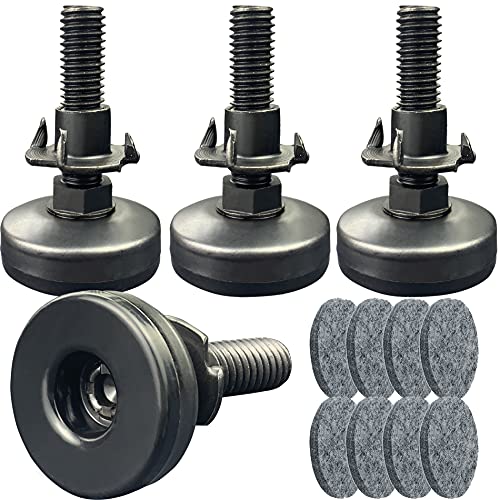
- Adjustable leveling feet, if the dresser accepts replacements
- Wood glue or corner braces for loose joints
- Wall anchor or anti-tip kit for tall dressers
Dresser wobble matrix
| Symptom | Likely cause | Best fix | When to stop DIY and repair the dresser |
|---|---|---|---|
| Wobble only on carpet | Carpet compression under one leg or corner | Recheck on a hard surface, then use wider support or a shim under the compressed corner | Stop if the base still twists after the carpet load is evened out |
| Wobble on hardwood or laminate | Small floor slope or uneven foot contact | Use furniture shims at the lowest leg; add anti-slip pads for grip | Stop if joints stay loose after leveling |
| Wobble on tile | Grout lines, uneven tile, or hard contact at one foot | Use non-marking shims or rubber-bottomed feet | Stop if a leg rocks on more than one corner or the base is bowed |
| Wobble returns after moving the dresser | Repeated floor irregularity or worn feet | Install adjustable leveling feet with rubber or nylon bottoms | Stop if the base is swelling, split, or loose at the joints |
| Side-to-side sway even when level | Loose back panel, cam locks, dowels, or screws | Reset loose fasteners, then reinforce with wood glue or corner braces | Stop if the frame racks or the bottom panel is warped |
| One corner never sits flat | Moisture-damaged or warped dresser base | Repair or replace the base before leveling | Stop immediately if MDF or particleboard is swollen |
How do you level the dresser?
Level the dresser only after the frame is tight. If the wobble is from floor slope or small height differences, furniture shims are the fastest fix. If the floor irregularity is likely to keep changing, adjustable leveling feet are the better permanent choice.
- Reset loose screws, cam locks, dowels, and back panels with the correct driver.
- Set the level across the top and mark the low corner that lifts off the floor.
- Slide a wood, composite, rubber, or plastic shim under the lowest leg or corner.
- Add about 1 to 2 mm at a time, then recheck the level and rock test after each addition.
- Trim any exposed shim so it does not catch dust or shift under load.
- Use anti-slip pads on hard floors if the dresser still creeps, but do not use pads to solve a major slope.
- Replace the feet with threaded adjustable leveling feet if the dresser base accepts them and the floor changes from room to room.
If a dresser rocks only when it sits on one side of a hallway rug, that can suggest carpet compression rather than a frame problem. That points to carpet compression, not a broken frame. Level it on the rug, then add a shim or wider support under the compressed corner instead of chasing the drawer alignment first.
Should you repair the dresser before shimming?
Yes, if the dresser sways, racks, or has a soft underside. A frame that is out of square can look like a floor problem, and shimming a damaged base can hide the real issue while the drawers keep binding. Fix the structure first when the wobble moves with the furniture.
- Open and close each drawer and watch for rubbing, pinching, or diagonal gaps.
- Press on the top corners to check for side-to-side sway and racking.
- Tighten back panels, corner joints, cam locks, and screws before adding height.
- Inspect the underside for swelling, bowing, soft spots, or split edges, especially on MDF or particleboard.
- Repair loose joints with wood glue or corner braces before expecting a level result.
Suppose a laminate-floor dresser still rocks after you shim the low leg. If the wobble remains in the same corner after a 90-degree turn, the base is likely warped or the frame is loose. A shim cannot correct a bowed bottom panel.
How do you match the fix to the floor type?
Floor type changes friction, indentation, and the material you should use. Carpet can compress and mimic a tilt. Hardwood and laminate need non-marking support. Tile can chip or telegraph marks if you use a hard edge. Concrete often needs a support that stays put on a rough, uneven surface.
Carpet
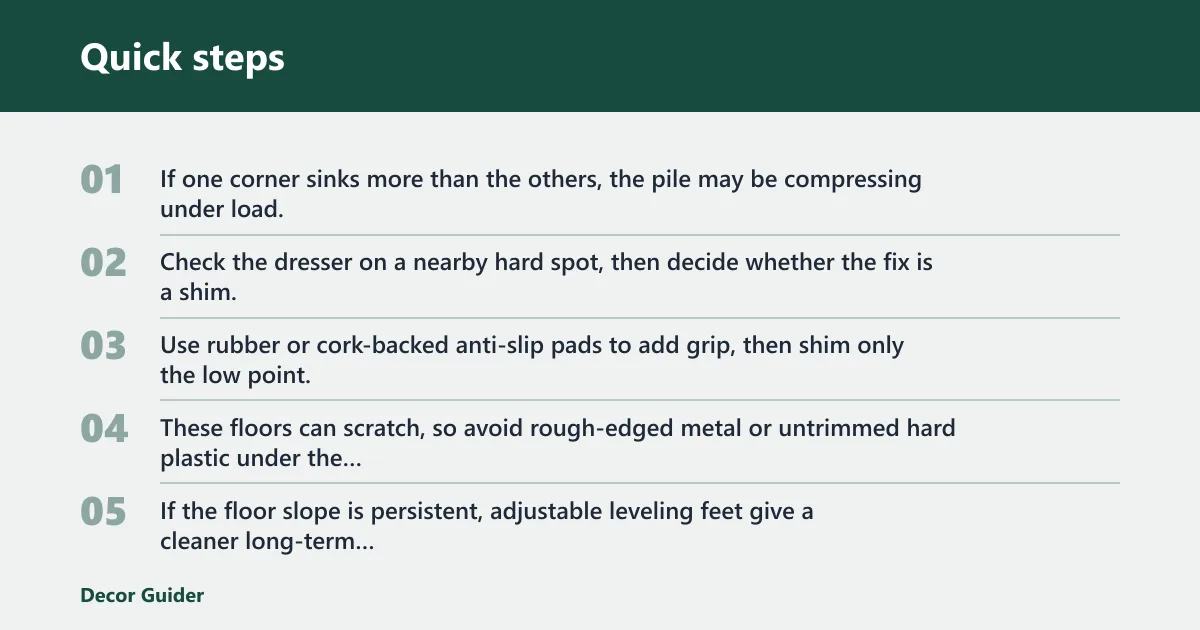
Use carpet as a clue, not the answer. If one corner sinks more than the others, the pile may be compressing under load. Check the dresser on a nearby hard spot, then decide whether the fix is a shim, a wider foot, or a wall anchor if the piece is tall.
Hardwood and laminate
Use rubber or cork-backed anti-slip pads to add grip, then shim only the low point. These floors can scratch, so avoid rough-edged metal or untrimmed hard plastic under the legs. If the floor slope is persistent, adjustable leveling feet give a cleaner long-term result than stacked pads.
Tile
Choose non-marking shims or replacement feet with rubber or nylon bottoms. Tile may have grout lines that create false contact points, so test the dresser after moving it a few inches in each direction. Do not use hard, narrow supports that can chip an edge.
Concrete
Concrete often has small height shifts and texture changes. Adjustable leveling feet work well when the dresser must sit in one spot for a long time. If the floor is rough, use a support with a stable bottom rather than a thin shim that can wander.
For a dresser, you rarely need to rebuild the room floor. You need to correct the contact points between the furniture and the floor. Find the low corner with a level, confirm which way the dresser rocks, and use shims or adjustable feet to bridge the difference.
- Place a level on the dresser top and note the low side.
- Rotate the dresser 90 degrees to see whether the wobble points to the floor or the frame.
- Install the smallest shim that removes the rock, then recheck.
- If the floor irregularity repeats in more than one spot, replace the feet with threaded adjustable leveling feet.
Should the floor itself be corrected? Only when the slope affects several pieces of furniture or creates a safety issue across the room. For one dresser, local leveling at the legs is usually the cleaner fix.
What is the quickest way to stabilize a dresser without tools?
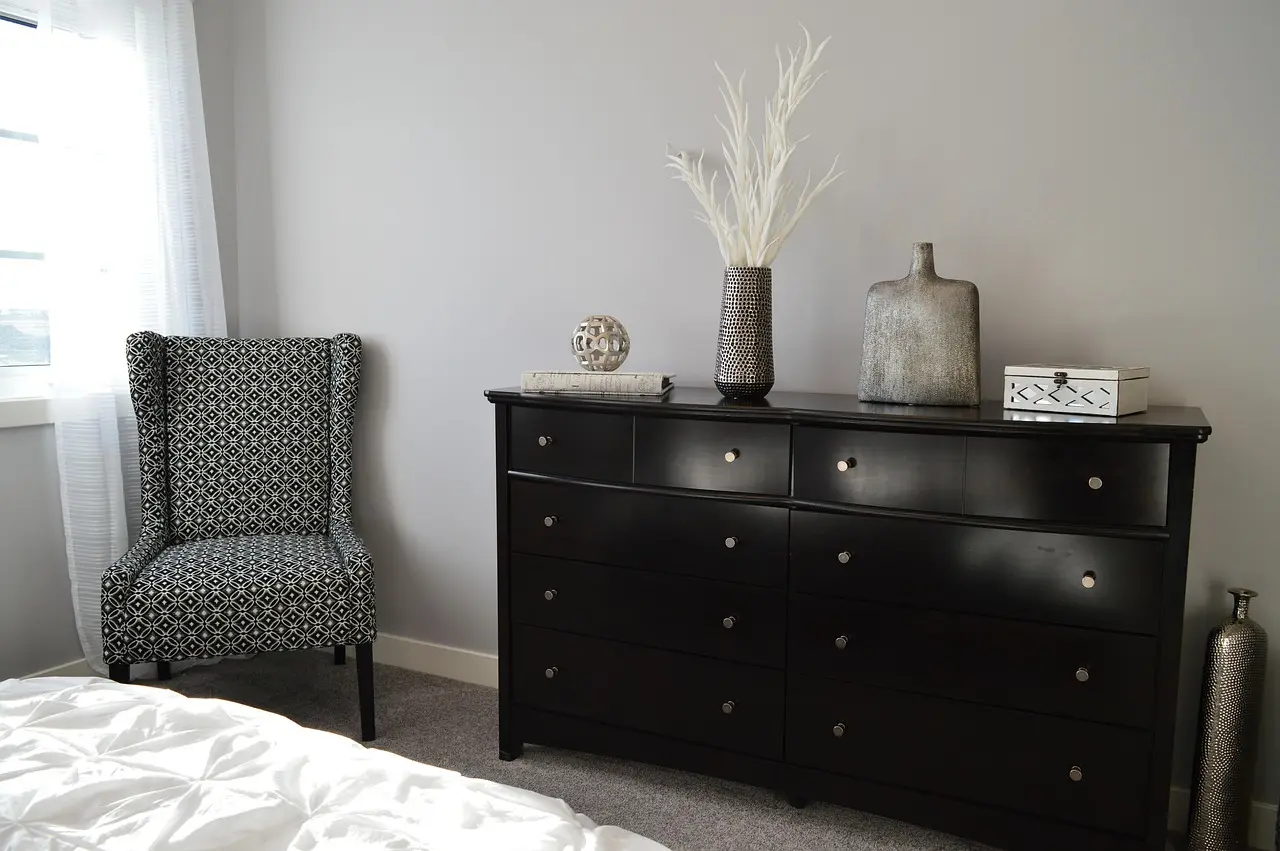
The fastest temporary fix is to reduce movement at the contact points with anti-slip pads or a folded card under the low corner, then confirm the dresser is not top-heavy. This is a short-term stabilization, not a true leveling repair, and it should be replaced with proper shims or feet.
Anti-slip pads work best on hardwood, laminate, vinyl, or tile when the dresser only slides or creeps. They add friction. They do not correct a major slope, a warped base, or a loose frame. If the piece is tall, anchor it to the wall before relying on any temporary stopgap.
Common mistakes
Using anti-slip pads as a leveling fix is the most common miss. Pads grip the floor, but they do not create the missing height needed to correct slope. If the dresser still rocks after a pad is in place, move to shims or adjustable feet.
Another mistake is shimming before checking the frame. Loose back panels, cam locks, and dowels can create the same side-to-side sway as an uneven floor. A warped or moisture-damaged base needs repair first, especially on MDF or particleboard furniture.
Do not mix the wrong material with the wrong floor. Hard plastic can mark tile edges, while a thin shim may compress on carpet. For tall or top-heavy dressers, a wall anchor or anti-tip kit is commonly recommended before normal use.
How do I stop a dresser from rocking without damaging the legs?
Use a shim that spreads the load and protects the finish, then recheck often. Wood, composite, rubber, and plastic shims all work if they fit flat under the lowest leg or corner. Do not force a hard wedge into a soft or cracked foot.
- Lift one corner just enough to slide in the shim.
- Choose a trim-to-fit or stackable shim if the gap is uneven.
- Set the dresser down, then test for front-to-back and side-to-side motion.
- Add one more thin layer only if the wobble remains after the first check.
Frequently asked questions
Why does my dresser wobble more on carpet than hard flooring?
Carpet compresses under load, so one leg may sink farther than the others even when the floor beneath is level. That makes the dresser feel unstable on carpet but steady on hardwood, laminate, or tile. Check the same spot on a hard surface before deciding that the dresser is damaged.
When should I use shims versus adjustable feet?
Use shims for small height differences and a fixed setup, especially when the gap is only at one corner or leg. Use adjustable leveling feet when the floor irregularity will keep changing, or when you need a cleaner long-term adjustment on concrete, tile, or uneven subfloor areas.
Should I level the floor, the dresser, or both?
Level the dresser first unless the floor slope affects more than one piece or creates a room-wide issue. If the dresser rocks because of the floor, correct the contact points with shims or adjustable feet. If the frame is loose or warped, repair the dresser before you try to level it.
How do I tell if the wobble is from the floor or the dresser frame?
Rotate the dresser 90 degrees. If the same room corner still causes the wobble, the floor is the likely cause. If the wobble moves with the dresser, check loose screws, cam locks, dowels, and the back panel, then inspect the underside for bowing or swelling.
What should I do if the dresser is also damaged at the top or joints?
Repair the damage before leveling. Tighten fasteners, reinforce loose joints with wood glue or corner braces, and inspect the back panel for racking. If the top is loose or the base is warped, shimming can hide the symptom but will not restore stable support.
How do I fix a damaged dresser top?
If the top is separating, loose, or pulling away at the corners, remove weight from the dresser and repair the joint before leveling. Tighten the fasteners underneath, add wood glue where panels meet, and clamp only if the construction allows it. A damaged top changes the whole frame load.
Products related to this article
Sponsored / affiliate links. As an Amazon Associate I earn from qualifying purchases. I may earn additional commission from eligible campaigns.