How to Anchor a Dresser to a Plaster or Drywall Wall
Anchor a dresser to a plaster or drywall wall with at least two wall studs using anti-tip straps or brackets; if studs are not where you need them, use heavy-duty metal toggle anchors rated for the load, not plastic anchors. Skipping proper anchoring can let a loaded dresser tip, crack plaster, or rip fasteners through drywall. This guide shows how to choose the safest attachment method, place fasteners, and avoid wall or furniture damage.
Before you drill

- Detects studs, metal, pipes, and AC wires
- Dual calibration modes
- LCD plus audio and light guidance
First identify the wall finish, check how the dresser is built, and clear the anchor zone. Those three checks tell you whether you can use studs, need a metal anchor, or should stop and change the plan before you crack plaster, miss a stud, or fasten into a weak back panel.
Identify the wall finish
Drywall is a hollow sheet material, so it can hold light anchors but needs stud backup for heavier dresser loads. Plaster is older and more brittle, often over wooden lath, and it cracks more easily around drilled holes. If the wall sounds hollow and crumbles at the edge, treat it as plaster or lath-and-plaster until proven otherwise.
Check dresser construction points
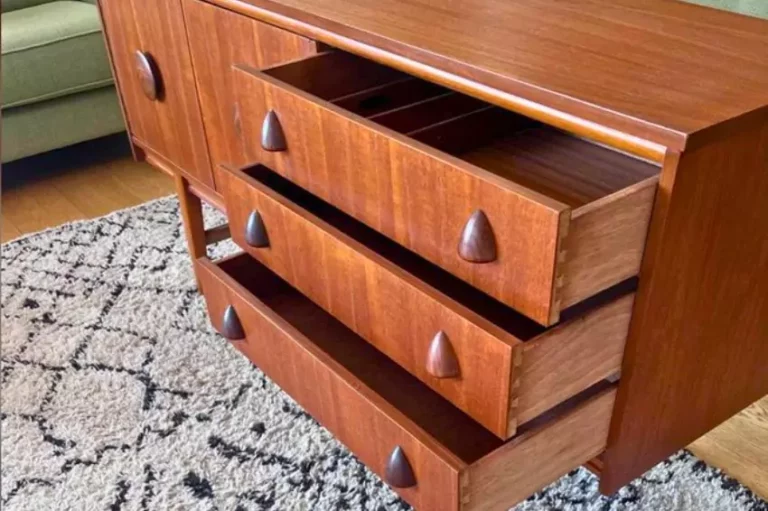
Anchor the restraint to structural parts of the dresser, not just the back panel. Solid wood and plywood tops, side rails, or interior blocking are better than thin particleboard or veneer-backed skins. Thin backs can tear out under load, so move the strap or bracket to a thicker frame member whenever possible.
Clear the anchor zone
Use a stud finder with wiring detection before drilling. Check around outlets, switches, and fixture zones, since hidden wiring often runs near those openings. Leave room above baseboards and uneven trim so the strap sits flat; if the hardware bridges a gap, it can rock and loosen over time.
What you’ll need
- Stud finder with wiring detection
- Drill and driver
- Wood bits and metal bits matched to the anchor package
- Anti-tip furniture restraint kit or bracket set
- Painter’s tape for marking holes
- Level
- Safety glasses
- Vacuum or brush for plaster dust
Dresser anchor decision table
This table maps wall type, dresser build, and risk level to the safest fastening path. When the wall or furniture feels uncertain, move up to a stronger metal anchor or a stud-backed attachment instead of guessing.
| Wall type | Furniture weight or risk | Furniture construction | Safest fastening approach | Common failure signs |
|---|---|---|---|---|
| Drywall with accessible stud | Any dresser, especially tall or top-heavy units | Solid wood or plywood frame | Stud screw into the stud with anti-tip strap or bracket | Strap tilts, screw spins, hollow sound where stud was expected |
| Drywall with no stud where needed | Light to moderate risk, lighter dresser | Thick side rail or top rail | Toggle bolt or molly bolt; reserve plastic expansion anchors for very light loads only | Stripped hole, anchor pulls forward, wall bows |
| Drywall, no stud, higher risk | Heavy dresser or child-accessible room | Particleboard or veneer-backed back panel | Professional help or redesign to reach a stud | Fastener wiggles, repeated stripping, back panel flex |
| Plaster over lath | Light-duty strap point only | Solid wood or plywood frame | Self-drilling metal anchor for light loads; use studs or toggles for higher loads | Crumbling plaster, hairline cracks, oversized hole edges |
| Plaster over lath | Moderate to heavy dresser | Particleboard or thin back panel | Stud screw, toggle bolt, or professional install if no safe stud is available | Cracked finish, anchor spinning, lath dust at the hole |
| Drywall or plaster with repeated failures | High risk, very tall dresser, or child room | Any construction | Professional help | Multiple stripped holes, broken trim, anchor won’t hold alignment |
How do you anchor a dresser safely?
Find studs first, then choose hardware for the wall type, then fasten the restraint into solid furniture points. After that, tighten the hardware enough to remove slack, but stop before you crush plaster, deform drywall, or bow the dresser back. Recheck the strap after the dresser is loaded.
- Locate studs with a stud finder that also detects wiring, then mark both sides of each likely stud.
- Choose a dresser strap or bracket that lands on a structural part of the dresser, not a thin rear panel.
- Match the wall fastener to the surface: stud screw for studs, toggle bolt or molly bolt for hollow drywall, self-drilling metal anchor for light plaster spots.
- Pre-drill only the size the anchor package calls for, especially in plaster; oversized holes are hard to recover from.
- Install the wall side first, attach the furniture side second, then remove slack so the dresser cannot shift forward.
- Test by pulling gently at the top front edge; if the restraint moves, stop and reset the anchor before normal use.
Say your 72-inch dresser sits over baseboard trim, and the strap lands on a gap instead of flat wall. Move the anchor point upward or use a bracket with a standoff so the hardware bears on the wall surface, not on trim that can split or pry loose.
How do you anchor to a plaster wall?
On plaster, use studs when possible. Plaster is more brittle than drywall, and plastic expansion anchors are not preferred because they can crack the finish. For light-duty spots, a self-drilling metal anchor is often a safer choice. For heavier loads, toggles or molly bolts are commonly used, or stop and find a stud.
- Probe the wall for studs and mark them before any drilling.
- Choose a self-drilling metal anchor only for light loads, or upgrade to a toggle bolt or molly bolt for heavier restraint points.
- Drill slowly and square to the wall so the hole does not chip the plaster edge.
- Insert the anchor without forcing it; if the hole is loose or crumbling, move to a new location.
- Tighten until the hardware is firm, then stop. If the plaster cracks, the fastener is too aggressive for that spot.
Suppose a plaster wall gives you a hollow sound beside a window trim and the hole edge starts shedding dust. Move the anchor to a stud line or use a toggle in a cleaner section; do not keep enlarging the same damaged hole.
How do you anchor a drywall wall?
For drywall, stud attachment is the strongest option and the best choice for anti-tip safety. If a stud is unavailable, use a toggle bolt or molly bolt for hollow-wall support. Plastic expansion anchors are generally for light loads, and if a drywall hole is stripped or softened, it is usually better to choose a new location rather than use more force.
- Find the stud line, confirm it with a second pass, and check for wiring near outlets and fixtures.
- Mark the restraint points so at least one fastener can land in a stud whenever possible.
- Use a toggle bolt or molly bolt for hollow drywall when a stud is out of reach.
- Keep plastic expansion anchors for very light loads only, about 10 pounds per anchor point for basic plastic self-drilling types and about 25 pounds for ribbed or wing styles.
- If the hole spins, strips, or sounds hollow around a wide area, shift to a new point or move to a stud-backed solution.
Common mistakes
The most common error is treating plaster and drywall the same way. That leads to over-expanded plastic anchors, cracked plaster, or fasteners that hold for a day and fail under a loaded top drawer. Another mistake is fastening the restraint to a thin dresser back instead of a structural rail.
Ignoring baseboards and trim causes another problem. If the strap crosses a trim gap, the dresser can rock and work the fastener loose. Missing studs and drilling near wiring are also avoidable failures; check with a stud finder that includes wiring detection before the first hole.
- Do not use plastic expansion anchors in brittle plaster when a metal anchor or stud is available.
- Do not rely on particleboard back panels for the restraint connection.
- Do not keep enlarging a stripped hole; move to a fresh location.
- Do not drill near outlets, switches, or fixture zones without a wiring check.
- Do not ignore a gap under the bracket caused by baseboards or uneven trim.
A common first-timer mistake is putting a strap into veneer-covered particleboard because it is the easiest surface to reach. The screw may bite at first, then tear out when the dresser is pulled forward; a thicker side rail or interior block is the better target.
When to stop and get help
Stop using anchors and move to a stud, a stronger strap kit, or professional install when the wall is crumbly, the hole keeps stripping, the dresser is unusually tall or top-heavy, or no safe stud location exists. For very high-risk furniture, a pro can place a load path that the wall and dresser can both support.
Wirecutter notes that furniture anchoring matters especially with small children. It also cites products such as the Hangman TK-400 Anti-Tip Kit, which is said to support up to 400 pounds when properly installed, and the Quakehold cable product, which claims it can withstand 1,000 pounds of force. Those figures still depend on correct installation and a sound wall.
What if the wall is hollow behind uneven trim?
Use a stud finder first, then shift the restraint point until the bracket sits flat. If trim leaves a gap and no stud lands at the needed spot, a toggle bolt or molly bolt may work in drywall, but on plaster the safer move is often a stud or a different fastening location.
What if the dresser uses a weak back panel?
Move the anchor point to a side rail, top rail, or interior block. Thin back panels flex under load, and that flex can loosen the wall fastener even when the wall anchor itself is sound. Structural furniture points give the restraint a steadier pull path.
Frequently asked questions
How do you anchor a dresser to a wall?
Use anti-tip straps or brackets, then fasten them into wall studs whenever possible. If a stud is not available, use a toggle bolt or molly bolt matched to the wall material. Attach the furniture side to a solid rail or block, then tighten until slack is gone.
How do you put drywall anchors in drywall?
Mark the spot, drill the hole size listed on the anchor package, insert the anchor, and drive the screw until snug. For dressers, prefer a stud or a metal hollow-wall anchor over basic plastic when the top is tall, heavy, or in a child’s room.
Do drywall anchors work in plaster?
Some do, but plain plastic expansion anchors are a poor fit for brittle plaster. A self-drilling metal anchor is the better light-duty option, and toggles or studs are better for higher loads. If the plaster crumbles at the hole, move to a different location.
What wall anchor should I use for a dresser?
If the wall is hollow drywall and the stud is out of reach, use a toggle bolt or molly bolt. For plaster, use a stud first, then a self-drilling metal anchor only for light points, not for the main load path.
What anchors work for plaster and lath walls?
Studs are best. If a stud is unavailable, toggles and molly bolts are the stronger hollow-wall choices, while self-drilling metal anchors fit only lighter locations. Because lath-and-plaster can crack around oversized holes, drilling slowly and keeping hole size exact matters more than anchor strength alone.
Products related to this article
Sponsored / affiliate links. As an Amazon Associate I earn from qualifying purchases. I may earn additional commission from eligible campaigns.