Dresser Mirror vs Wall Mirror: Which Fits Your Space?
Choose a dresser mirror if you want the mirror tied to the furniture and you have room for the extra height. Choose a wall mirror if you need tighter height control, a cleaner line above the dresser, or more room around lighting and safety. Bad placement can force you to hunch, block drawers, or create a tip-over risk. This guide compares dresser mirror vs wall mirror by clearance, grooming posture, storage, lighting, and safety.
This guide is part of our Dresser care and maintenance guide series.
| Decision factor | Dresser Mirror | Wall Mirror | Winner |
|---|---|---|---|
| Grooming function | Pairs with dresser storage and can serve as a vanity area for daily grooming. | Works for grooming if placed at the right height, but it is separate from storage. | Dresser Mirror |
| Placement flexibility | Locked to the dresser footprint and the wall space directly above it. | Can go above, beside, or near the dresser, as long as wall clearance works. | Wall Mirror |
| Room-height pressure | Can push total height to 70+ inches, which matters under low ceilings or windows. | Usually avoids adding height to the dresser itself. | Wall Mirror |
| Safety and anchoring | Tall mirrored furniture and topper units may need anchoring hardware. | Also depends on secure wall attachment and strong anchors. | Tie |
| Small-room fit | Can help a small bedroom feel more open when the proportions fit the dresser width. | Can also open a room visually while preserving drawer access below. | Tie |
Dresser mirror vs wall mirror: what is the real trade-off?


The real choice is between a built-in grooming station and a separate wall-mounted solution. A dresser mirror keeps the mirror tied to the storage piece and often turns the dresser into a vanity area, while a wall mirror gives you more control over height, placement, and what sits below it.
How each option affects storage, height, and room flow
A dresser mirror keeps the grooming zone centered over the drawers, which helps if you want one spot for clothing storage and daily prep. The trade-off is height. Non-mirrored dresser heights are typically between 30 and 50 inches, and adding a mirror can raise total dresser height to 70+ inches.
A wall mirror does not add to the dresser’s physical height, so it can keep sightlines cleaner in rooms with low ceilings or a window above the furniture. It also leaves the top of the dresser open for a lamp, tray, or another needed item, as long as the wall space above is clear.
📊 Adding a mirror can raise total dresser height to 70+ inches. Source: Dresser With Mirror vs. Without Mirror: Which to Choose?.
Which mirror is better for your bedroom layout?
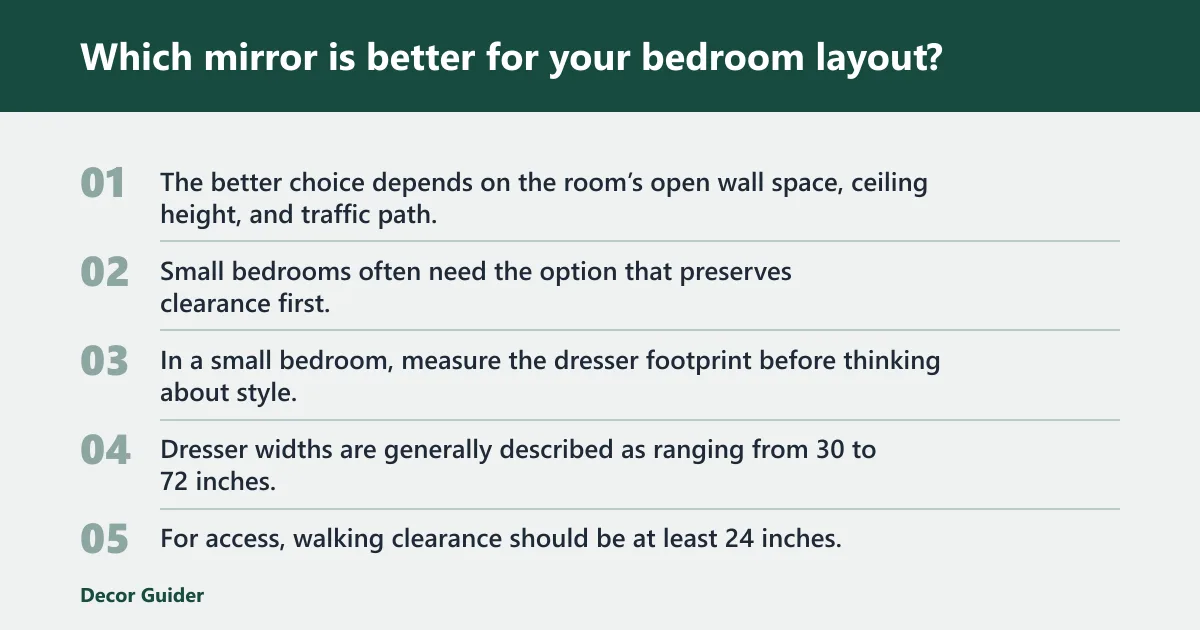
The better choice depends on the room’s open wall space, ceiling height, and traffic path. Small bedrooms often need the option that preserves clearance first, while larger rooms can support a taller dresser-and-mirror stack or a broader wall mirror without crowding the walkway.
Small bedrooms and tight walkways
In a small bedroom, measure the dresser footprint before thinking about style. Dresser widths are generally described as ranging from 30 to 72 inches, and typical dresser depth is usually between 16 and 24 inches, so the piece can claim more floor space than expected once drawers are open.
For access, walking clearance should be at least 24 inches, and the guidance says to allow 30 inches minimum between bed and dresser. If those clearances are already tight, a wall mirror often works better because it avoids adding more visual and physical bulk above the dresser.
Large bedrooms and tall walls
Large rooms give you more options. If the dresser width and wall width line up, a dresser mirror can anchor the furniture group and create a clear getting-ready zone. A wall mirror can do the same job with more freedom to place it where the light is best.
In a room with tall walls, a wall mirror often wins if you want the mirror centered at eye level without increasing the dresser’s overall height. That matters when the dresser already feels substantial or when you do not want the top edge crowding artwork, trim, or a high window.
Low ceilings, windows, and nearby doors
Low ceilings favor a wall mirror more often because the dresser mirror stack can feel tall fast. If the dresser sits under a window, the mirror may need to move to the wall beside it or use a smaller profile so it does not collide with the window line or reflect direct glare.
Doors matter too. A mirror placed near a door should not compete with the swing path or create a reflection that feels cramped when you enter. A wall mirror lets you shift the mirror off-center more easily than a fixed topper does.

How do dresser size and mirror size need to line up?
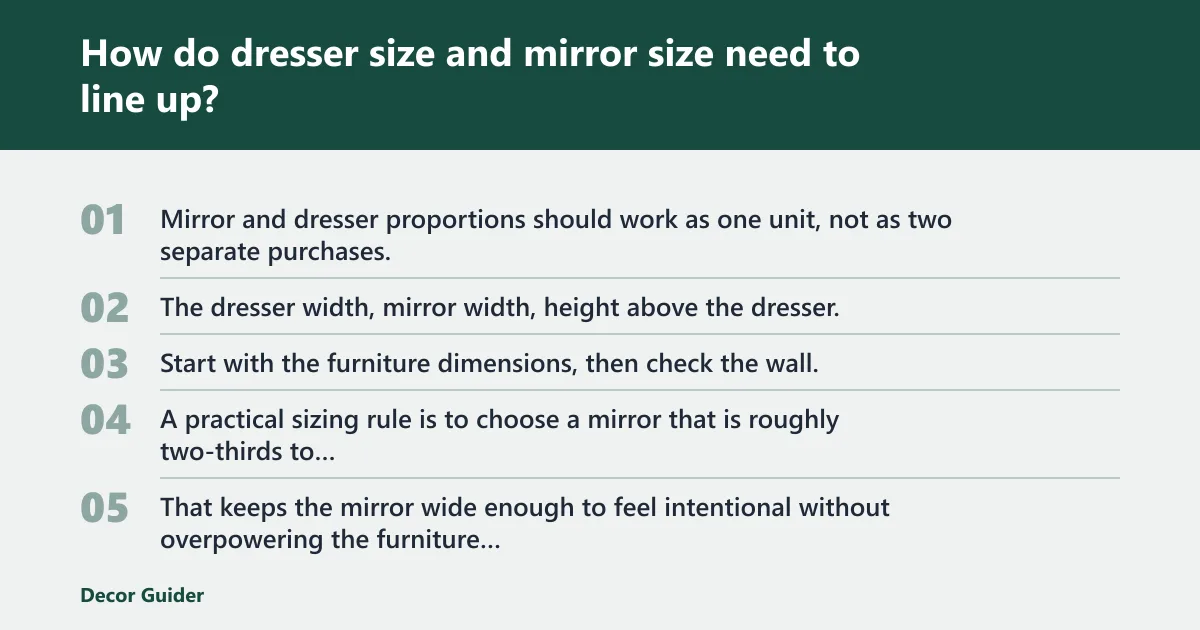
Mirror and dresser proportions should work as one unit, not as two separate purchases. The dresser width, mirror width, height above the dresser, and nearby circulation all shape whether the setup feels balanced or awkward. Start with the furniture dimensions, then check the wall.
Dresser width and mirror width fit
A practical sizing rule is to choose a mirror that is roughly two-thirds to three-quarters of the dresser width. That keeps the mirror wide enough to feel intentional without overpowering the furniture or extending into the next wall zone. On a dresser that size, that points you toward a mirror in the mid-40-inch range.
If the mirror is much wider than the dresser, the setup can crowd adjoining wall space and tighten the walk path. If it is much narrower, the look can feel off-balance and the usable grooming area may shrink, especially for makeup or hair checks.
Dresser height, mirror height, and eye level
A dresser mirror should support eye-level use without forcing you to hunch. The top edge of the dresser or its mirror frame should not push the viewing center too high, especially if the dresser already sits near the upper end of the 30 to 50 inch range before the mirror is added.
If a wall mirror is used instead, center the mirror where it serves the standing user, not where it only fills wall space. That is why wall mirrors often suit mixed-use rooms better: you can place them for actual grooming posture rather than for symmetry alone.
Dresser depth and walking clearance
Depth affects more than drawer reach. A dresser that is 16 to 24 inches deep needs room in front of it for safe access, and mirror placement should not reduce that zone by forcing a tighter path. If a door edge, bed corner, or chair already narrows the route, avoid adding a protruding mirrored topper.
Say your dresser is 58 inches wide and 22 inches deep in a room with a narrow side aisle. A tall mirror on top may make the setup feel heavier and harder to pass, while a wall mirror shifts the visual weight upward without taking more floor clearance.
Where should you place a wall mirror above a dresser?
A wall mirror works best when its height, wall position, and reflection line match the room’s daylight and obstacles. The right spot is usually above the dresser, but not every dresser needs a mirror directly centered over it. Windows, doors, TVs, and glare can all change the answer.
Height above the dresser top
Leave enough space above the dresser so the mirror does not feel pasted onto the furniture, but keep it low enough to serve a standing user. A common rule of thumb is to start several inches above the dresser top, then check the standing sightline at the mirror center. The usable height should feel natural, not stretched.
If the mirror sits too high, grooming becomes awkward and the dresser stops functioning like a vanity. If it sits too low, it can interfere with lamps, decor, or drawer use.
Avoiding window glare and bright reflections
Mirrors can help make a bedroom feel brighter by reflecting light, but placement decides whether that help becomes glare. A mirror under a window or across from direct sun can bounce a harsh reflection into the room and make it unpleasant to use in the morning.
If the dresser sits under a window, a wall mirror may still work if it is shifted slightly off the brightest angle. If glare is hard to control, use the opposite wall or a side wall instead of forcing the mirror above the dresser.
Working around TVs, doors, and wall obstructions
A TV above the dresser changes the whole plan. If the screen is already using the wall, a dresser mirror often becomes impractical, because the mirror and TV compete for the same vertical zone. In that case, use a separate wall mirror elsewhere or skip the mirror at the dresser.
Doors, switches, vents, and sloped ceilings create similar conflicts. A wall mirror is usually the better tool when the dresser area is not a clean rectangle, because it lets you place the mirror where wall clearance actually exists instead of where the dresser happens to land.
Is a dresser mirror better than a wall mirror for a small bedroom?
Not always. A dresser mirror can help a small bedroom feel more space-efficient when the dresser and mirror proportions are correct, but a wall mirror often wins when floor space, ceiling height, or wall clutter is tight. The smaller the room, the more valuable flexibility becomes.
When a dresser mirror helps a small room
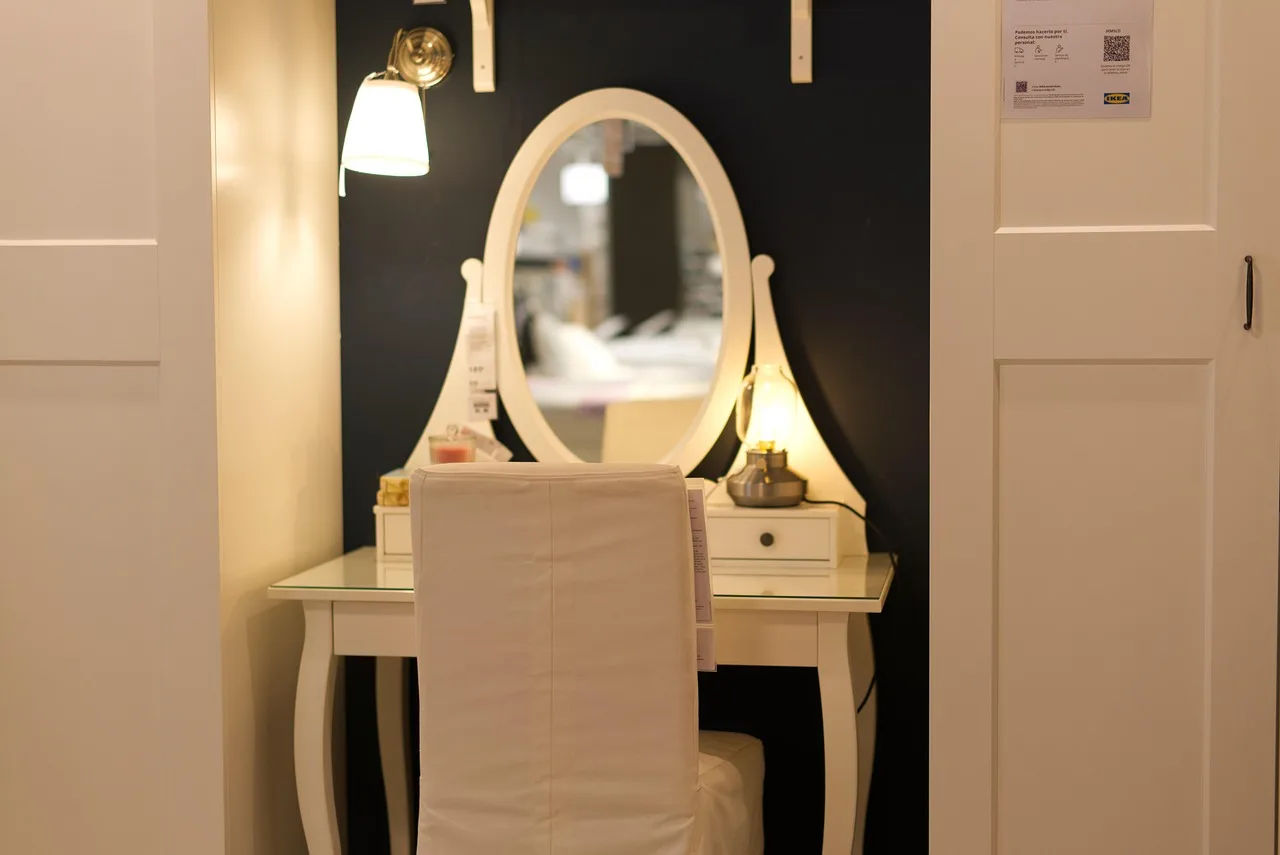
A mirrored dresser may create an illusion of more space in small bedrooms, and a dresser with a mirror can serve as a vanity area for daily grooming. That combination works best when the dresser width fits the wall and the mirror does not make the piece feel top-heavy.
If the bedroom has enough vertical space and the dresser is not blocking circulation, a mirrored setup can do two jobs at once. It stores clothing and supports getting ready.
When a wall mirror helps a small room
A wall mirror usually wins in very tight rooms because it keeps the dresser visually lighter and leaves the furniture top more open. That helps when you need a small lamp, a charging tray, or extra space for daily use without adding more furniture height.
It also gives you more freedom to mount the mirror away from glare or a cramped corner. In a small room, placement control often matters more than the mirror being attached to the dresser.
Can I use a wall mirror instead of a dresser mirror?
Yes. A wall mirror can replace a dresser mirror when the room has enough wall space and the mirror can be positioned for standing grooming. It is often the better choice when you want more height control, fewer tipping concerns from a tall topper, or a cleaner surface on the dresser itself.
When a wall mirror is the better replacement
A wall mirror is useful if you want to keep the dresser relatively low before any top piece is added. It also makes sense if the dresser is under a window, near a door, or below a TV, because each of those placements can crowd a dresser-mounted mirror.
If you need the dresser top for skincare, jewelry, or a lamp, a separate wall mirror can keep that area usable while still handling grooming tasks.
Renter-friendly and damage-free mounting
Renter-friendly mounting matters when wall damage is not acceptable. Damage-free hooks or removable mounting systems can work for lighter mirrors, as long as the mirror’s weight and backing suit the hardware. A weak hanger is not a real solution.
If the mirror is large or heavy, avoid guessing with adhesive strips alone. Use a mount that is appropriate for the wall type, or choose a freestanding or dresser-top setup that does not require drilling.
Do I need to anchor a dresser with a mirror?
Yes, if the dresser becomes tall, top-heavy, or wall-mounted as part of a mirrored unit. Anchoring hardware is there to prevent tipping, especially when drawers open and shift the center of gravity. The more mirror mass above the dresser, the more important secure attachment becomes.
Failure cases that matter
The main risks are unstable stands, weak wall anchors, and overloaded mirrored toppers. A dresser that seems stable when closed can tip once several drawers are open, or when a child pulls on the mirror frame. Tall mirrored furniture deserves the same caution as any high, narrow storage piece.
If the mirror is separate and wall-mounted, the wall anchors matter just as much. Use the supplied hardware only if it is rated for the mirror and wall type, and do not assume drywall alone will hold a heavy frame safely.
Which setup is safer?
Neither option is automatically safer. A well-anchored dresser mirror can be secure, and a wall mirror can be secure too. The safer choice is the one that fits the room without stretching the hardware or leaving the mirror in a shaky position.
If the dresser is tall, top-heavy, or used by children, a wall mirror may reduce tip-over risk by keeping the dresser lower. If wall attachment is weak or the wall is unsuitable, a low-profile dresser mirror with proper anchoring may be the better route.
Which mirror makes a bedroom look bigger?
Both can help, but placement decides the result more than the mirror category. A mirrored dresser may create an illusion of more space in small bedrooms, and a wall mirror can brighten a room by reflecting light. If glare is controlled, either can make the room feel more open.
Light direction matters more than mirror type
A mirror across from a window can reflect daylight and make the room feel brighter. But if that angle sends direct glare into your eyes or onto a screen, the effect turns negative fast. The best result comes from reflecting usable light, not hot glare.
That is why a wall mirror often has an edge in difficult rooms. You can shift it a few inches off the brightest path instead of locking it to the dresser centerline.
Scale and wall coverage matter too
Mirror size should match the dresser width and the wall width around it. A mirror that is too small can look lost; one that is too large can crowd the room and shrink the feeling of open wall area. Balance matters as much as reflectivity.
Picture a dresser around that width in a narrow room with a low bed line nearby. A medium wall mirror placed slightly above the dresser may read lighter than a full mirrored topper, even though both reflect the same room.
What mirror works best if my dresser is under a window?
A wall mirror is often the better fit under a window because it avoids the height conflict created by a topper mirror and gives you more freedom to manage glare. If the window is low, a dresser mirror may simply be too tall once added to the furniture height.
Check the window line first
Measure the space from the dresser top to the window sill before choosing a mirror. If the gap is small, a dresser mirror may block the window or look cramped. If the mirror will sit below the sill, a wall mirror nearby is usually the cleaner answer.
Also check whether the window will cast strong light at the mirror face during peak daylight. If so, shift the mirror to a side wall or use a smaller mirror that does not catch the direct beam.
What if I already have a vanity or TV above the dresser?
If the dresser already has a vanity function or a TV above it, a separate dresser mirror is usually the wrong move. The wall space is already assigned, and forcing another mirror there can create clutter, glare, or a layout conflict that makes the dresser harder to use.
When the space is already spoken for
A built-in vanity means the mirror role is already covered. Adding a second mirror can duplicate function without adding much value. In that case, keep the dresser simple and let the vanity handle grooming.
If a TV is mounted above the dresser, the TV should generally remain the main wall occupant. A mirror nearby, rather than above the dresser, is usually the more workable layout.
Decision table: which setup fits each bedroom scenario?
This table maps common room conditions to the better choice. Use it after you measure dresser width, dresser depth, wall width, window position, and walking clearance. The best answer is the one that solves the room’s real obstruction, not the one that looks best in isolation.
| Bedroom scenario | Check first | Better choice | Why |
|---|---|---|---|
| Small room with limited wall space | Can you keep at least 24 inches of walking clearance and 30 inches between bed and dresser? | Wall Mirror | Keeps the dresser lower and gives more placement control in tight quarters. |
| Dresser under a window | Is there enough space between the dresser top and sill for the mirror height? | Wall Mirror | Avoids a height clash and makes glare easier to manage. |
| Room with a TV above the dresser | Is the wall already occupied, leaving no safe mirror zone? | Wall Mirror or no mirror at the dresser | The TV and a dresser mirror usually compete for the same wall area. |
| Renter-friendly or damage-free mounting needs | Can the mirror be mounted without drilling, and is the hardware rated for the weight? | Dresser Mirror or lightweight Wall Mirror | Choose the option that avoids wall damage while staying secure. |
| Low ceiling with a tall dresser | Will adding a mirror push the unit to 70+ inches? | Wall Mirror | Preserves vertical breathing room and keeps the dresser from feeling top-heavy. |
| Large wall above a wide dresser | Does the dresser width fall within the 30 to 72 inch range and allow proportional mirror sizing? | Dresser Mirror | Creates a strong vanity zone when the proportions fit. |
Choose dresser mirror if… / Choose wall mirror if…
Choose a dresser mirror if you want a built-in grooming station, the dresser width and wall space line up well, and the room has enough vertical clearance for a taller unit. It is a strong pick when the mirror can sit at eye level, the walk path stays open, and you want the dresser to act like a vanity.
Choose a wall mirror if you need more flexibility around windows, doors, TVs, low ceilings, or glare. It is also the better choice when you want to keep the dresser lower, avoid extra height, or separate the mirror from the storage piece for a cleaner layout.
Frequently asked questions
Should I put a mirror on my dresser or hang one on the wall?
Put a mirror on the dresser if you want an all-in-one grooming zone and the room has enough height and clearance. Hang one on the wall if you need more control over placement, want to keep the dresser lower, or have a window, TV, or door that limits the top-of-dresser area.
Is a dresser mirror better than a wall mirror for a small bedroom?
Not automatically. A dresser mirror can help if the proportions fit and the room can handle the added height, but a wall mirror often works better in very small rooms because it gives you more placement freedom and keeps the dresser from feeling bulky or top-heavy.
How high should a mirror be above a dresser?
There is no single fixed number, but the mirror should sit high enough to clear the dresser top and low enough to serve a standing user without strain. Start a few inches above the dresser, then check whether the mirror center lands where your eyes naturally meet the glass.
Can I use a wall mirror instead of a dresser mirror?
Yes. A wall mirror is a practical substitute when the wall area above the dresser is available and the mirror can be centered for grooming. It is often the better choice under windows, near doors, or in rooms where a dresser-mounted mirror would make the setup too tall.
Which mirror makes a bedroom look bigger?
Both can help if they reflect light well and do not create glare. A mirrored dresser can make a small bedroom feel more open, while a wall mirror can do the same with more placement control. The bigger effect comes from choosing the right size and angle for the room.
Do I need to anchor a dresser with a mirror?
Yes, if the dresser becomes tall or top-heavy, or if a mirror topper adds weight above the drawers. Anchoring hardware helps prevent tipping, especially in rooms where drawers are opened often or where the furniture could be pulled forward by accident.
Products related to this article
Sponsored / affiliate links. As an Amazon Associate I earn from qualifying purchases. I may earn additional commission from eligible campaigns.