
RTA Dresser Review: Is It Worth It?
An RTA dresser is worth it if you want lower shipping costs and acceptable value, but only when the hardware, joinery, and anti-tip support are solid. The best results are often found in roughly the $150-$400 range. Poor assembly or weak construction can leave you with wobble, stripped cam locks, and a dresser that wears out fast. This guide weighs assembly effort, shipping burden, safety, repairability, and durability so you can judge the total cost before buying.
Verdict: is an RTA dresser worth it?
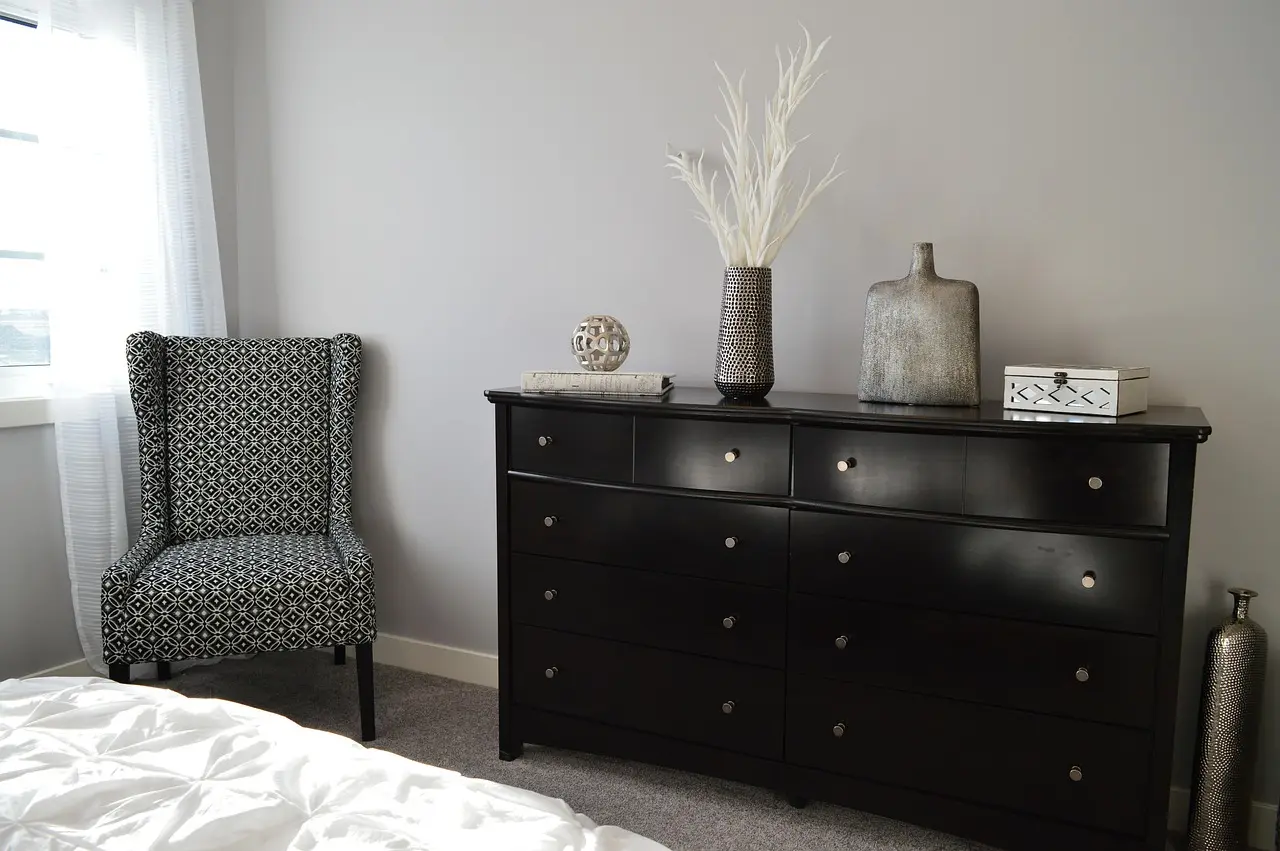


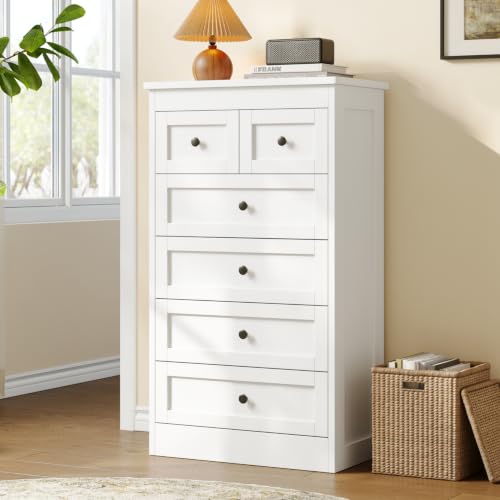
Yes, if you care about total ownership value more than showroom polish. A well-made RTA dresser can save money because flat-pack shipping trims freight charges, and modular designs can fit tighter spaces. The value drops fast when the build uses weak slides, thin panels, poor edge protection, or no dependable anti-tip plan.
The best case is a dresser with solid wood parts, sensible drawer sizing, included safety hardware, and a design that lets you repair or replace damaged pieces without buying a whole new unit. That combination can age well enough to justify the assembly time.
Best case for buying one
Choose an RTA dresser when you need a specific footprint, expect to move again, or want a modular layout that can change with the room. Lower freight costs and a lower price per drawer matter more than a fully assembled piece in those cases.
When the value drops fast
Skip it when the box count is high, the finish chips easily, or the drawer system depends on weak slides and thin fasteners. At that point, the low sticker price can disappear into your time, your tools, and the risk of rework.
Bottom-line recommendation by buyer type
Buyers who want the longest lifespan should favor solid wood and better hardware. Families with children should treat included anti-tip anchoring as a requirement. Frequent movers should look hard at modular systems and the weight of each drawer before buying. Renters with stair-only access may want a lighter, simpler dresser instead.
RTA dresser decision matrix
This matrix is for comparing ownership value, not just appearance. Score each category from 1 to 5, then total the points. A higher score means the dresser is easier to live with over time, cheaper to move, and less likely to need repairs.
| Criterion | What a high score looks like | What a low score looks like | Score weight |
|---|---|---|---|
| Price per drawer | Low cost for usable drawer count and size | High price for shallow or undersized drawers | 5 |
| Assembly time | Clear instructions, few steps, quick alignment | Many fasteners, awkward alignment, repeated fixes | 4 |
| Box count | Few boxes, easy staging, less unpacking waste | Many boxes, more cardboard, harder inventory check | 3 |
| Carry-in difficulty | Manageable weight, clear handles, fewer tight turns | Heavy boxes, awkward corners, stair problems | 4 |
| Drawer smoothness | Even glide, low noise, consistent closure | Binds, rattles, or sticks under load | 4 |
| Anti-tip safety | Included kit, clear wall anchoring, stable front load | No kit or poor anchoring guidance | 5 |
| Material durability | Solid wood or strong panel construction with solid joints | Fragile panels, weak edges, fastener pull-out | 5 |
| Scratch resistance | Finish resists everyday contact and cleans easily | Edges chip or mark from routine use | 3 |
| Warranty value | Limited lifetime coverage with realistic support terms | Short or vague coverage with little repair value | 3 |
| Moveability | Modular, reusable, and easier to relocate or reconfigure | Bulky one-piece build that is hard to move | 4 |
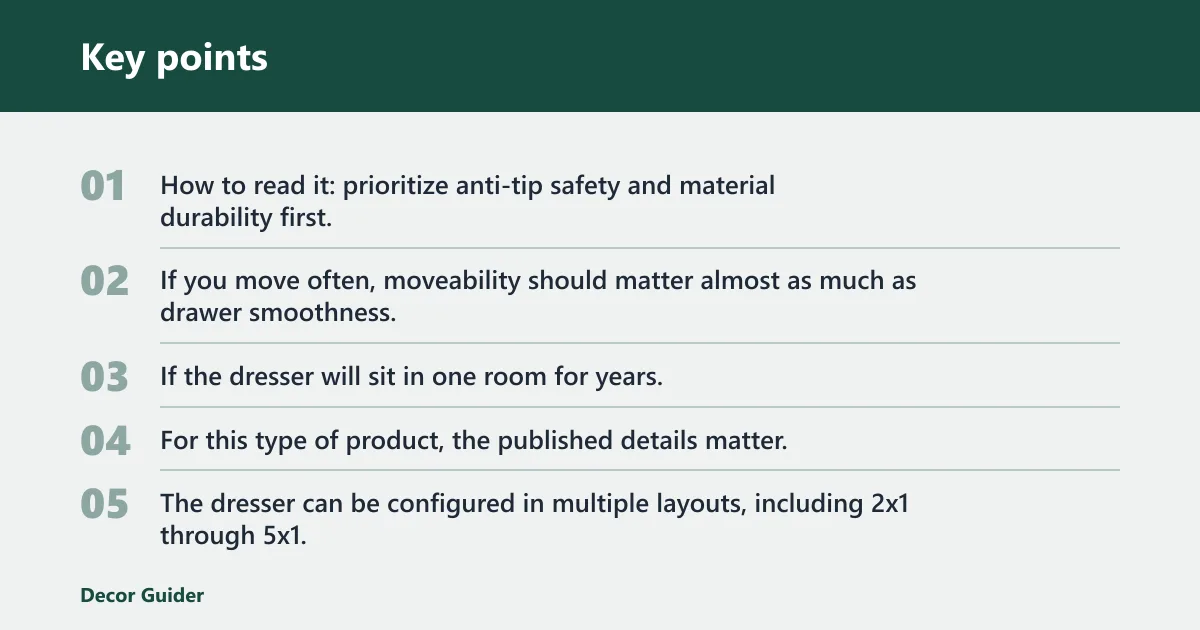
How to read it: prioritize anti-tip safety and material durability first, then weigh price per drawer against carry-in difficulty. If you move often, moveability should matter almost as much as drawer smoothness. If the dresser will sit in one room for years, scratch resistance and warranty value move up.
For this type of product, the published details matter. The dresser can be configured in multiple layouts, including 2×1 through 5×1. The 4×2 model measures 66 x 19 x 38 inches, and each drawer is about 30 x 15 x 5 inches. It is made from repurposed solid wood, comes in Walnut, Natural, Espresso, and Gray, includes a limited lifetime warranty, and has soft-close drawers. The dresser comes in individually boxed drawers.
How much assembly should you expect?
Most RTA dressers need real setup time, even when the hardware is well organized. For this dresser, setup took about 15 to 20 minutes according to the available product details. That is quick for this category, but buyers should still expect careful alignment, hardware checks, and safety anchoring after the main build.
Common assembly steps
- Unpack each individually boxed drawer and check the hardware count.
- Lay out the frame or modules in the final room position.
- Attach side, top, or divider pieces in the correct order.
- Install drawers and verify that each slide tracks evenly.
- Fasten the anti-tip kit to the wall if included.
- Recheck squareness after loading the first few drawers.
Tools and patience required
A basic screwdriver and the included fasteners are often enough, but you still need patience for alignment. The slowest part is usually not tightening screws. It is making sure every drawer sits square and closes without rubbing.
Where builds usually slow down
The build usually slows down at slide alignment, corner fit, and wall anchoring. If one fastener goes in crooked, the drawer may bind later. A common first-timer mistake is rushing the final snug-down before checking that the drawer front sits even with the frame.
What materials are worth paying for?
Solid wood usually costs more, but it also changes the ownership equation. It is heavier, more repairable, and better able to take repeated tightening than thin panel stock. MDF and laminate can lower the price, but they usually give up repairability and edge strength.
Solid wood versus MDF
Solid wood is the best choice when you want long service life, easier spot repair, and better fastener holding. MDF can be stable and flat, but it is more sensitive to edge damage and stripped screw holes. It also tends to be less forgiving if you have to disassemble and rebuild.
Laminate and veneer tradeoffs
Laminate can resist everyday wiping and some scuffs, but once an edge chips, repair options are limited. Veneer can look cleaner than raw panel stock and may offer a better finish than plain MDF, yet it still depends on the substrate beneath it. The substrate matters more than the top layer.
Finish quality and scratch resistance
Scratch resistance is not only about appearance. A weak finish can expose edges to swelling, peeling, or visible wear after routine use. With an RTA dresser, the finish quality often decides whether the unit still looks acceptable after frequent drawer pulls and normal cleaning.
Suppose a 4×2 dresser sits in a bedroom used every day. If the finish is thin and the drawer edges chip after a few months, the piece may still function, but the repair burden rises. A better finish cuts that upkeep.
How good are the drawers and slides?
Drawer hardware is one of the clearest value signals in an RTA dresser. Soft-close drawers reduce slam noise and can feel easier in daily use, but they do not fix poor alignment or weak construction. Standard slides can still work well if they support the load and stay true over time.
Soft-close versus standard slides
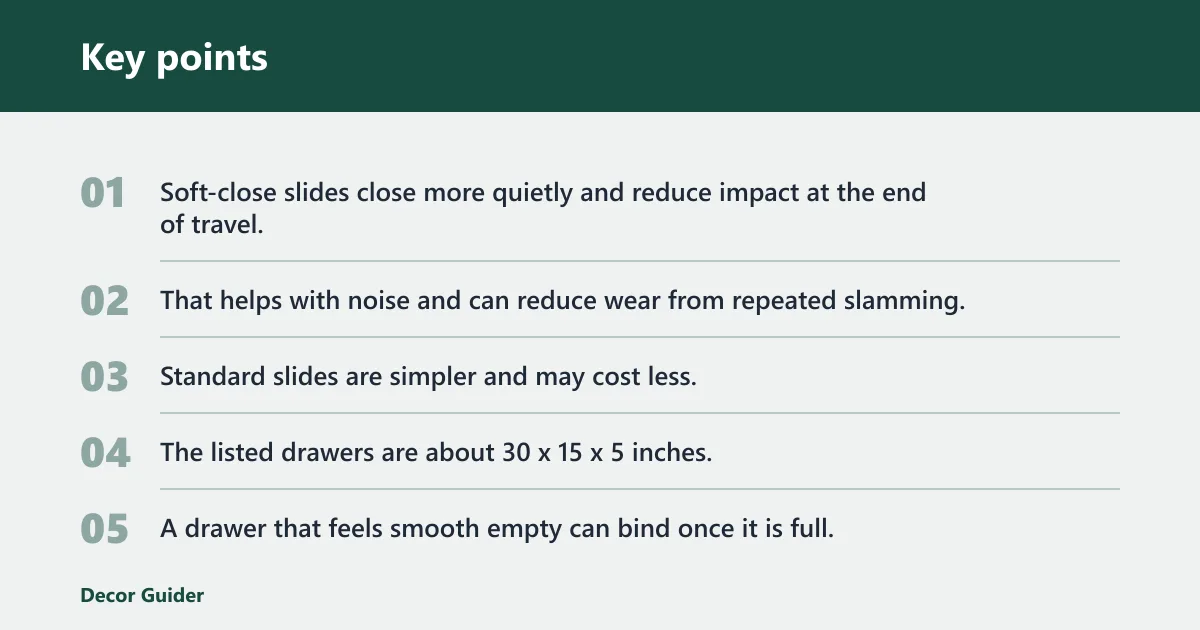
Soft-close slides close more quietly and reduce impact at the end of travel. That helps with noise and can reduce wear from repeated slamming. Standard slides are simpler and may cost less, but they can feel harsher and may show wear sooner if the drawer is heavily loaded.
Load support and daily usability
Drawer size matters as much as slide type. The listed drawers are about 30 x 15 x 5 inches, which is a useful size for folded clothes, but the usable load still depends on the slide quality and the drawer box construction. A drawer that feels smooth empty can bind once it is full.
The available figures also note that each drawer weighs about 52 pounds and the top drawers weigh up to 65 pounds. That kind of weight tells you this is not a featherweight piece, and it also hints at why carrying, lifting, and final placement deserve attention before assembly begins.
Signs of weak drawer hardware
Watch for rattle, uneven gaps, sticking on one side, or drawers that close with a thunk instead of a controlled finish. Those are the early signs of poor slide alignment or weak hardware. If the drawer front starts drifting out of square, the problem usually grows with use.
Do RTA dressers stay stable over time?
They can, but only if the frame is square, the load is balanced, and the anti-tip hardware is actually installed. Stability is the difference between a dresser that settles in and one that slowly develops wobble, drawer misalignment, or a dangerous forward lean.
Anti-tip kit and wall anchoring
An anti-tip kit should be treated as safety hardware, not an optional extra. Wall anchoring matters most in homes with children, pets, or drawers that pull out heavy enough to shift the center of gravity. If the kit is included, install it. If it is optional, add one.
Wobble, sag, and misalignment risks
Wobble usually starts with uneven floors, loose fasteners, or a frame that was not pulled square during assembly. Sag can show up in the top or in heavily used drawers. Misalignment often appears as one drawer face sitting higher than the rest after the dresser has been loaded.
Repairability after repeated use
Repairability is where solid wood and modular construction can pay off. If a panel loosens, a slide wears out, or a corner gets dinged, easier replacement matters. A modular dresser system can also beat a one-piece dresser when you want to rearrange, split it into smaller pieces, or adapt the layout from dresser to nightstand use.
Packaging and shipping burden
Flat-pack design lowers freight burden, but it does not make the item light or simple to carry. The dresser comes in individually boxed drawers, which can help distribute weight and reduce damage risk, yet it also creates more unpacking and more cardboard waste to handle afterward.
Box count and carry-in difficulty
More boxes usually mean easier individual lifts and a better chance that one damaged carton will not ruin the whole order. The tradeoff is more trips from the door, more sorting, and more time spent checking parts before assembly. For stairs and tight hallways, that burden matters.
Cardboard waste and delivery weight
Expect a noticeable pile of packaging with any dresser shipped in pieces. That waste is part of the ownership cost, especially for bigger configurations. Heavy delivery weight also increases the chance that a box gets dropped, which can damage corners, edges, or drawer slides before you even begin assembly.
Damage risks before assembly
Flat-pack dressers are vulnerable at the edges. A dinged corner or crushed box can mean chipped finish, damaged slide mounts, or a warped panel. Inspect the cartons before opening, and photograph anything that looks compromised so replacement parts are easier to request.
Who should buy an RTA dresser?
An RTA dresser fits buyers who want flexibility, lower shipping burden, and a layout that can adapt over time. It is less appealing for people who hate assembly, move often without disassembly, or want the easiest possible path to a ready-to-use bedroom piece.
Frequent movers and renters
Frequent movers should look at modular dresser systems first. The ability to reconfigure 2×1 through 5×1 layouts can make the purchase more useful across different rooms. Renters benefit too, as long as they can anchor the unit properly and carry the boxes without damage.
Families with kids
Families with children should put anti-tip hardware at the top of the checklist. Safety and wall anchoring matter more than style in that setting. Soft-close drawers help reduce slamming, but the real safety question is whether the dresser can stay put when a drawer is pulled open.
Buyers who should skip one
Skip an RTA dresser if you want zero assembly, move the unit often without help, or need the toughest possible edge protection in a busy room. Buyers who prioritize long-term repairability and lower shipping cost can still choose one, but only if the materials and hardware justify it.
Picture a narrow apartment bedroom where the dresser has to clear a tight stairwell. A modular unit that arrives in individually boxed drawers may be easier to carry than one heavy carcass. The same setup can be a poor fit if the buyer cannot anchor it to the wall or does not want to spend time on alignment.
Frequently asked questions
Are RTA cabinets worth the money?
For dressers and other flat-pack furniture, they are worth the money when the hardware, finish, and safety features are strong enough to last. The value falls when repairs are hard, shipping damage is common, or the price per drawer is high relative to the material quality and warranty.
Are RTA cabinets any good?
They can be good, but only if the design supports stable assembly and durable use. Look for solid materials, reliable drawer slides, and a clear anti-tip plan. A well-built RTA dresser can be a smart purchase; a weak one becomes a short-term bargain with long-term costs.
Are RTA cabinets good quality?
Quality varies widely. In dresser terms, the best clues are material choice, slide quality, finish durability, and whether the frame holds square after loading. Solid wood and good joinery usually point to better quality than thin panels and vague hardware descriptions.
Is the RTA Store legit?
This article cannot verify retailer legitimacy from the provided product details alone. Before buying, check the seller’s return policy, warranty terms, shipping coverage, and whether the exact dresser configuration matches the listing. Those details matter more than the storefront name.
The RTA Store vs RTA Cabinet Store: which is better?
There is not enough verified information here to rank one retailer over the other. Compare the exact product spec sheet, warranty coverage, delivery terms, and replacement-part policy. For a dresser purchase, the better seller is the one that gives clearer support for shipping damage and hardware issues.
What should I look for in a solid wood RTA dresser?
Look for repurposed solid wood, solid drawer construction, dependable slides, and a finish that can handle routine contact. A limited lifetime warranty is a useful value signal, but it should be paired with clear replacement-part support and an included anti-tip kit or easy wall anchoring plan.
How much assembly time should I expect with an RTA dresser?
For this dresser, the listed setup time is about 15 to 20 minutes. In general, allow extra time for alignment, drawer installation, and wall anchoring. More complex modular layouts can take longer, especially if you are checking every gap and fastener carefully.
Do RTA dressers hold up well over time?
They can, especially when made from solid wood with strong slides and good safety hardware. Over time, the usual weak points are wobble, edge wear, drawer misalignment, and loose fasteners. A dresser that starts square and stays anchored has a better chance of holding up.
What problems do RTA dressers have after assembly?
The most common problems are wobble, drawer drift, sticking slides, and chipped edges from shipping or everyday use. If the anti-tip kit is not installed, stability can suffer. If the finish is weak, even normal cleaning and handling may leave visible wear sooner than expected.
Are rta cabinets worth the money: they are worth the money?
They are worth the money when the package trims shipping costs and the parts are good enough to avoid fast wear. In dresser terms, the best value comes from solid materials, clean assembly, and repairable hardware. Weak construction can erase the savings quickly.
The rta store vs rta cabinet store
There is not enough verified information here to declare one better. Compare the exact dresser listing, return window, warranty language, and whether the seller supports replacement parts. Clearer terms usually matter more than the storefront label.
Is rta cabinet store legitimate?
This article cannot verify legitimacy from the supplied product details. Check the listing accuracy, shipping terms, and warranty coverage before ordering. A legitimate seller should clearly state what is covered, how replacements are handled, and what happens if a box arrives damaged.
Products related to this article
Sponsored / affiliate links. As an Amazon Associate I earn from qualifying purchases. I may earn additional commission from eligible campaigns.