What Is the Difference Between Solid Wood and Veneer Dressers?
Solid wood dressers are built from solid boards, while veneer dressers use a thin wood layer over a core such as plywood or MDF; choose solid wood if you want thicker material for sanding, filling, and future color changes, and veneer if the surface and edges are intact. A poor match can mean peeling edges, limited repair options, or a dresser that cannot be refinished without damage. This guide explains how each material affects durability, moisture response, repairs, and what to check before you buy or restore one.
Solid wood vs veneer dressers
The difference is bigger than a label on the tag. In a dresser, the material choice changes what you can sand, what you can patch, how the piece handles humidity, and whether a future repair means a light touch or a full rebuild of a damaged part.
Solid wood dressers typically use boards or lumber for the visible and structural parts. Veneer dressers use a thin wood surface over a substrate, and that core may be plywood, MDF, particleboard, Masonite, or another wood species. That substrate controls much of the dresser’s real-world strength and repair path.
Why the difference matters for repair and refinishing
Solid wood gives you more sanding depth, more stain-change options, and more freedom to repair dents or surface wear. Veneer can look similar from the outside, but the top layer may be thin enough that aggressive sanding cuts through the wood surface and exposes the core beneath.
That is why two dressers that look similar in a showroom can age very differently. One can be stripped and refinished several times. The other may only tolerate a light refresh, edge repair, or patching on small damaged spots.
Where the trade-off shows up in daily use
The trade-off often appears on drawer fronts, side panels, tops, shelves, and backs. Solid wood can move with humidity, while veneer over a stable substrate can stay flatter on broad panels. In dresser use, that can mean fewer seasonal gaps or less visible warping on veneered surfaces, especially on large flat areas.
At the same time, veneer edges can chip, peel, or separate at corners where people bump the dresser or pull drawers hard. Solid wood has its own failures too, but the repair options are usually broader when the damage stays within the board thickness.
Dresser material decision table
| Visible clue | Likely construction | Repairability | Refinishing risk | Humidity behavior | Best use case |
|---|---|---|---|---|---|
| End grain visible at edges; grain continues through the board | Solid wood | High. Dents, scratches, and many surface defects can often be sanded or patched. | Lower, if the wood has enough thickness for sanding. | Moves across the grain with humidity changes. | Dressers you plan to keep long term and refinish later. |
| Wood surface on a flat panel, with plywood layers or edge clues at cutouts | Plywood veneer | Moderate. Small damage may be patched; edge repair depends on veneer thickness and core quality. | Moderate. Sanding must stay light, but the build can be hard to spot at a glance. | Usually steadier than solid wood on wide panels. | Drawer sides, shelves, backs, and tops where panel stability matters. |
| Smooth surface with no end grain; heavy-feeling flat panels; machine-cut edges | MDF veneer | Low to moderate. Surface damage can be patched, but swollen edges are hard to fully restore. | Higher. Thin veneer and soft fiber core limit sanding and stain changes. | MDF veneer is generally stable in normal indoor use, but it can be vulnerable to swelling if water reaches exposed edges. | Budget dressers used in dry rooms with limited wear on edges. |
| Visible chips at corners; crumbly edge; lightweight flat panels | Particleboard veneer | Low. Chips, blown corners, and stripped fasteners are hard to recover cleanly. | High. Surface repair is limited, and edge damage can spread. | Can swell and break down quickly if moisture enters the core. | Short-term use, low-cost storage, or furniture that will not face heavy wear. |
| Different materials on fronts, sides, backs, and internal parts | Mixed-construction dresser | Varies by part. Drawer fronts may refinish well while back panels or side skins do not. | Varies by part. The safest refinish plan depends on the thinnest or weakest layer. | Varies by part. Solid rails may move more; engineered panels may stay flatter. | Most households. This is common in mass-market and midrange dressers. |
What clues show solid wood or veneer?
The fastest clue is end grain. Solid wood often shows end grain at edges, corners, or where a panel is cut. Veneer usually hides a thin wood face over a substrate, so the visible edge may reveal plywood layers, fiberboard, or a different core beneath the top surface.
Look for end grain and edge detail
End grain is the cross-section of a board, and it is one of the clearest identification cues. If you see annual rings or the cut ends of fibers continuing through the edge, that points toward solid wood. If the edge looks like a separate thin skin over a core, veneer is more likely.
On a dresser, the strongest clues are often at drawer fronts, top edges, underside corners, and any chip or nick that exposes the layer below.
Check grain direction across panels
Solid wood usually shows grain that tracks through the thickness of the board, though the pattern may vary from face to face. Veneer can show a very consistent pattern on large flat panels because the surface is a matched sheet laid over another material. That does not prove one material by itself, but it helps when combined with edge clues.
Say your dresser has a wide top with a repeated grain pattern and a cutout handle that reveals layered edges. That combination points more strongly to veneer over plywood than to one solid slab.
Spot signs of a substrate beneath the surface
The substrate is the core material beneath the veneer. Common types include plywood, MDF, particleboard, and Masonite. If a chip exposes a brown fiber core, layered plies, or a different wood species under a thin face, you are likely looking at a veneered panel rather than solid wood.
Finish can confuse the picture. A natural finish can reveal mismatch, while a dark stain may reduce contrast and make a veneered piece look closer to solid wood at a quick glance. Light stain can make veneer and solid wood differences more visible in a natural finish.
- Open one drawer and inspect the back of the front panel.
- Check the top edge, bottom edge, and any corner chips for end grain or layered substrate.
- Look at the back panel and underside, where manufacturers often use a different material.
- Feel for a thin face layer at corners, drawer edges, and around hardware holes.
- Compare the grain on the drawer front with the side panels and top.
- Look for swollen edges, separation, or chipped veneer before you judge the piece by its finish.
Can you repair or refinish each one?
Solid wood is usually more forgiving because you can sand deeper, fill defects, and refinish the surface more than once if the board thickness allows it. Veneer can be repaired in some cases, but the thin top layer limits sanding and makes edge damage more serious. The substrate determines how much work the dresser will tolerate.
Solid wood repair and sanding limits
Solid wood dressers can often handle scratches, dull finish, water marks, and shallow dents. You can sand, patch, stain-match, and refinish many solid wood surfaces, especially drawer fronts and tops. The limit is wood thickness and joinery condition, not the face layer alone.
Even so, solid wood is not problem-free. It expands and contracts across the grain with humidity changes, so joints can loosen, panels can warp, and long boards can split if the design does not allow movement.
Veneer repair, patching, and re-veneering
Veneer repairs depend on thickness and substrate quality. Traditional veneer is typically 1/16″ to 1/28″ thick, while industrial veneer is often paper-thin, 0.5mm or less. That leaves little room for aggressive sanding, especially around corners and edges.
Small chips can sometimes be filled, patched, or replaced with new veneer on a damaged spot. Larger failures may call for re-veneering a panel or replacing the part altogether. If the core is particleboard or Masonite and water damage has swollen the edge, repair becomes much harder.
When refinishing becomes risky
Refinishing becomes risky when the veneer is thin, already uneven, or lifting at the edges. A color change can also be hard to manage if the old stain has penetrated the face layer unevenly. Natural finishes often expose this problem first, because differences in color tones and graining can stand out more clearly.
Suppose a 48-inch dresser has a cherry-toned veneer top with one chipped corner and a dull clear coat. A light refinish may be possible if the edge is stable. Heavy sanding, however, can expose the substrate in a single pass.
Which dresser is more stable in humidity?
Veneer dressers are often more stable on large panels because the thin wood face sits on a substrate that resists movement better than a full solid board. Solid wood moves across the grain with humidity changes, so it can swell, shrink, bow, or open joints if the build does not account for that movement.
How wood movement affects solid wood
Wood movement is not a defect; it is a material behavior. Solid wood expands and contracts across the grain as humidity rises and falls. In a dresser, that can affect drawer fit, top panel flatness, and the way frame joints hold up over time.
Good furniture design leaves room for that movement. Poor design traps the wood, which can lead to splits, warped tops, or stressed joinery.
Why veneer can be steadier on large panels
A veneered panel usually relies on a more stable core. That is why a veneer top or side panel can stay flatter than a thick solid board in the same room conditions. Plywood veneer is often a strong version of this idea, because plywood can resist movement better than some other wood-based cores and can be hard to tell from solid wood at a glance.
That stability matters on broad dresser surfaces. It can help keep the top, sides, and shelf panels flatter across seasonal changes.
How mixed construction changes the answer
Many dressers combine materials. A solid wood frame may support veneered side panels, or solid drawer fronts may pair with engineered drawer boxes. In that case, humidity response depends on the part you are inspecting, not the label on the whole dresser.
That is why one corner can open up while another stays flat. A mixed build is normal, and the weakest component often decides the repair path.
Choose solid wood if… / Choose veneer if…
The right choice depends on how you plan to use the dresser. Solid wood is the stronger bet if you want deeper repair options and expect to refinish the piece later. Veneer can be the smarter pick if you want panel stability, a lower price, or a cleaner look on large surfaces without paying for all-solid construction.
Choose solid wood if you want deeper repair options
- You want to sand and refinish the dresser more than once.
- You expect dents, scratches, or worn finish that need repair later.
- You are choosing a piece with structural parts like legs and frames made from solid lumber.
- You want more flexibility if the color or stain needs to change later.
Choose veneer if you want better panel stability or lower cost
- You need a dresser with flatter wide panels and fewer seasonal shifts.
- You are buying on a tighter budget and want decent appearance without paying for all-solid boards.
- The veneer is on plywood rather than particleboard or Masonite.
- The surface and edges are intact, with no signs of lifting, swelling, or corner loss.
Is veneer furniture cheaper than solid wood? Usually, yes, because the face layer is thin and the substrate can cost less than solid boards. But price depends on the substrate, joinery, hardware, and finish quality. A plywood veneer dresser can cost more than a weak solid-wood piece with poor construction.
What should I buy if I want a dresser that lasts longer? Start with condition, then material. A well-built plywood veneer dresser with intact edges and solid joinery can sometimes outlast a poorly made solid wood dresser. If you want the broadest repair path, though, solid wood still gives you more sanding and refinishing room.
What parts are usually solid or veneered?
One dresser can use both materials at once. That is common. Builders may reserve solid wood for stress points and use veneer or engineered panels where a flat surface or lower cost matters more. The part-by-part build is what you should inspect, not only the sales label.
Frames, legs, and drawer fronts
Frames and legs are often solid wood because they carry stress and need dependable joinery. Drawer fronts may also be solid wood, especially on better pieces, because they take daily contact and can be sanded or repaired more easily if damaged.
On some dressers, drawer fronts are veneered for appearance while the drawer box itself uses a different material. Check each drawer separately.
Side panels, tops, shelves, and backs
Side panels, tops, shelves, and backs are common places for veneer or engineered substrates. These parts benefit from flatness and cost control. Plywood veneer is common for shelves or backs because it can be strong and visually close to solid wood at a glance.
Particleboard and Masonite are less forgiving when moisture enters the edge. If you see swelling, bubbling, or crumbling around fastener holes, the repair outlook drops fast.
Why one dresser can use both materials
Mixed construction lets manufacturers spend material where it matters most. A dresser may use solid wood on the front frame, plywood veneer on the sides, and particleboard on a hidden back panel. That mix can be practical, but it also means one damaged part does not tell you the whole story.
Why do veneer and solid wood pieces look different in the same finish? Grain selection is part of it. The color tones and graining of solid woods may not match veneers because the log selection is different, and light stain can make those differences more visible in a natural finish. Darker stain can reduce contrast, but it does not change the core construction.
Frequently asked questions
What is the difference between solid wood and veneer dressers?
Solid wood dressers use solid boards for the visible or structural parts. Veneer dressers use a thin wood layer over a substrate such as plywood, MDF, particleboard, or Masonite. The difference matters because it changes repair options, sanding limits, humidity response, and how the piece wears over time.
Are plywood, MDF, and particleboard veneer dressers the same?
No. They all have a wood face over a core, but the core changes performance. Plywood veneer is usually the strongest and most stable of the three. MDF veneer is smoother and more uniform, while particleboard veneer is usually the least tolerant of moisture and edge damage.
How can you tell if a dresser is veneer or solid wood?
Check the edges, corners, and underside for end grain, layer lines, or a different core beneath the surface. Solid wood often shows continuous grain through the edge. Veneer often shows a thin face over plywood, fiberboard, or another substrate, especially where the finish is chipped or worn.
Can veneer dressers be refinished or repaired?
Yes, but with limits. Small chips can sometimes be patched, and some panels can be re-veneered. Light sanding may be safe on thicker veneer, but thin veneer can sand through quickly. If the substrate is swollen or damaged, repair becomes more difficult and may not hold up well.
Is solid wood furniture always better than veneer?
No. Solid wood gives you more refinishing room and often better repair options, but veneer can be more stable on large panels and may cost less. A good plywood veneer dresser can be a smart choice if the edges are intact, the substrate is sound, and the joinery is strong.
Which is more stable in humidity, solid wood or veneer?
Veneer is often more stable on large panels because it sits on a substrate that moves less than solid wood. Solid wood expands and contracts across the grain with humidity changes, which can affect fit and flatness. Stability still depends on the quality of the substrate and the dresser design.
Products related to this article
Sponsored / affiliate links. As an Amazon Associate I earn from qualifying purchases. I may earn additional commission from eligible campaigns.
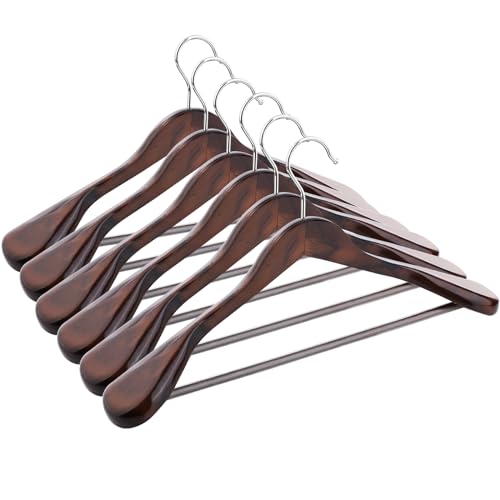 ABHENG Solid Wood Suit Hangers, 6 Pack, Coat Hangers with Non Slip Trouser Bar, 360° Swivel Hook, Heavy Duty Wide Hangers for Suit, Coat, Jacket, Trousers, Pants,17.3" W x 9" H, Dark Walnut AWY0406H
 TRIBEWOOD 55" Solid Wood Entryway Bench with 2 Drawers, Farmhouse Long Bench End of Bed Stool with Open Storage Shelves for Hallway, Mudroom, Bedroom, Dark Brown