How to Put a Dresser Drawer Back on Its Track
Pull the drawer fully out, line up both slide members with the matching rails, and push it back until both sides seat flush or click into place; if one side still drops, the track, clip, or box is out of line. Forcing it can bend the slides, strip mounting screws, and crack the drawer box. This guide shows how to put a dresser drawer back on its track and how to tell a simple re-seat from a hardware problem.
Identify the slide type first

Start by finding the slide hardware before you try to put anything back together. Drawer tracks appear on cabinets, dressers, desks, and other furniture, and the drawer box may be wood, wood composite, sheet metal, or plastic. The repair path changes with the slide type, so this check comes before cleaning, tightening, or lubrication.
Side-mount slides
Side-mount slides sit on the left and right cabinet walls and on the matching sides of the drawer box. They are common on newer furniture with metal runners, ball-bearing slides, or plastic friction tracks. Look for two parallel rails at the sides and check whether a small tab, roller, or bearing carriage is damaged.
Center-mount slides
Center-mount hardware uses a single rail or guide under the drawer centerline. If the drawer has one main track rather than two side rails, inspect the center member for sag, wear, or loose screws at the back and front. A small twist in the cabinet can keep a center guide from seating evenly.
Under-mount slides
Under-mount slides hide under the drawer and usually use release tabs or clips. Do not force the drawer straight off the front if it will not release. Find the tabs first, because some designs must be pressed before the drawer can come free without damaging the hardware.
What to check before reinstalling?
Before you try to re-seat the drawer, make sure the box is square, the slide members are not bent, and the cabinet opening is not racked. A drawer can refuse to go back in because the drawer box is out of square, while the hardware looks fine at first glance.
Check the drawer box
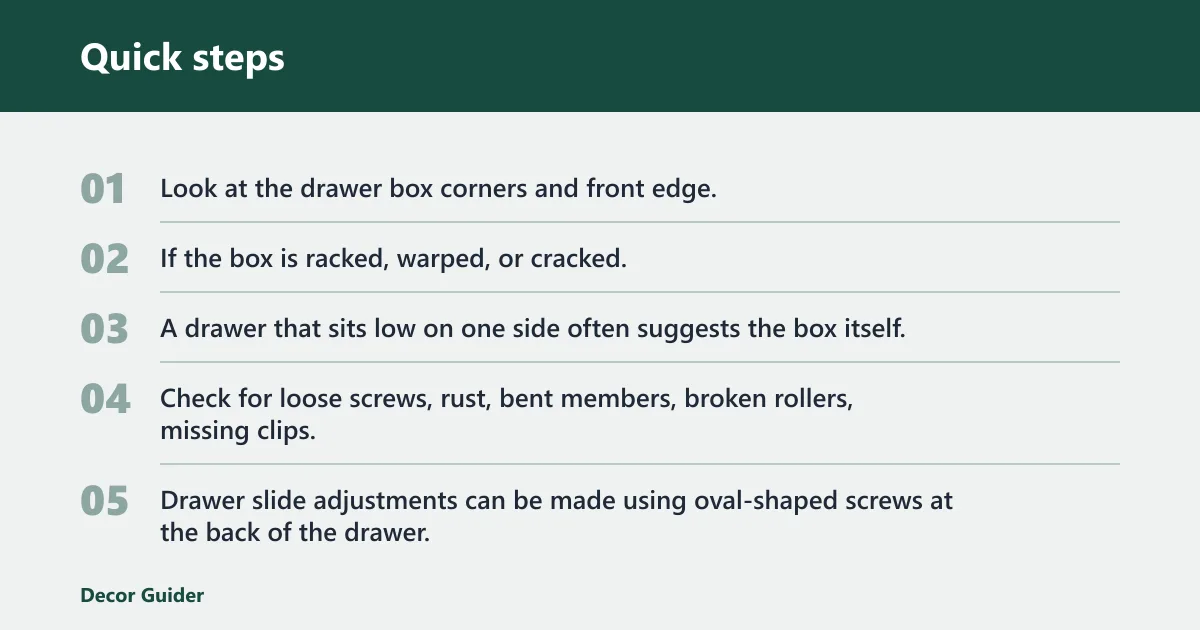
Look at the drawer box corners and front edge. If the box is racked, warped, or cracked, the slides may never line up long enough to catch. A drawer that sits low on one side often suggests the box itself, not only the track hardware.
Inspect the hardware
Check for loose screws, rust, bent members, broken rollers, missing clips, and stripped screw holes. Drawer slide adjustments can be made using oval-shaped screws at the back of the drawer, and loosening screws can help shift the fit slightly if the drawer is too tight. If a metal member is visibly bent, adjustment will not fix it.
Check the cabinet opening
Use a level tool to see whether the slides are level and whether the cabinet is twisting the drawer path. Wood furniture is not always perfectly square. A small tilt can cause a drawer to bind on one side even when the drawer box itself is otherwise sound.
Say your bedroom dresser has a narrow top drawer that catches on the right side and then drops free on the left. That symptom often means the right slide is higher, bent, or not engaged, while the left side is entering the track normally. A quick level check can separate a simple alignment issue from hardware damage.
How do you put the drawer back on the track?
Set the drawer flat, match both sides to the slide channels, and push it in slowly until it seats. Do not ram one side in first. If the drawer binds, drops, or stops early, pull it back out and reset the alignment instead of forcing the rails together.
- Pull the drawer straight out until both slide members are visible.
- Match the left and right sides at the same height.
- Set the drawer straight into the opening, with no angle.
- Slide it in a few inches while keeping even pressure on both sides.
- Stop if one side lifts, catches, or scrapes hard.
- Pull back out, inspect the problem point, and realign before trying again.
For side-mount slides, look for both rails engaging at the same time. For center-mount hardware, keep the center runner centered and level. For under-mount slides, watch for the release tabs to clear and then let the drawer travel straight into the guides. The drawer should move without a lurch or a sudden drop.
Drawer slide matrix
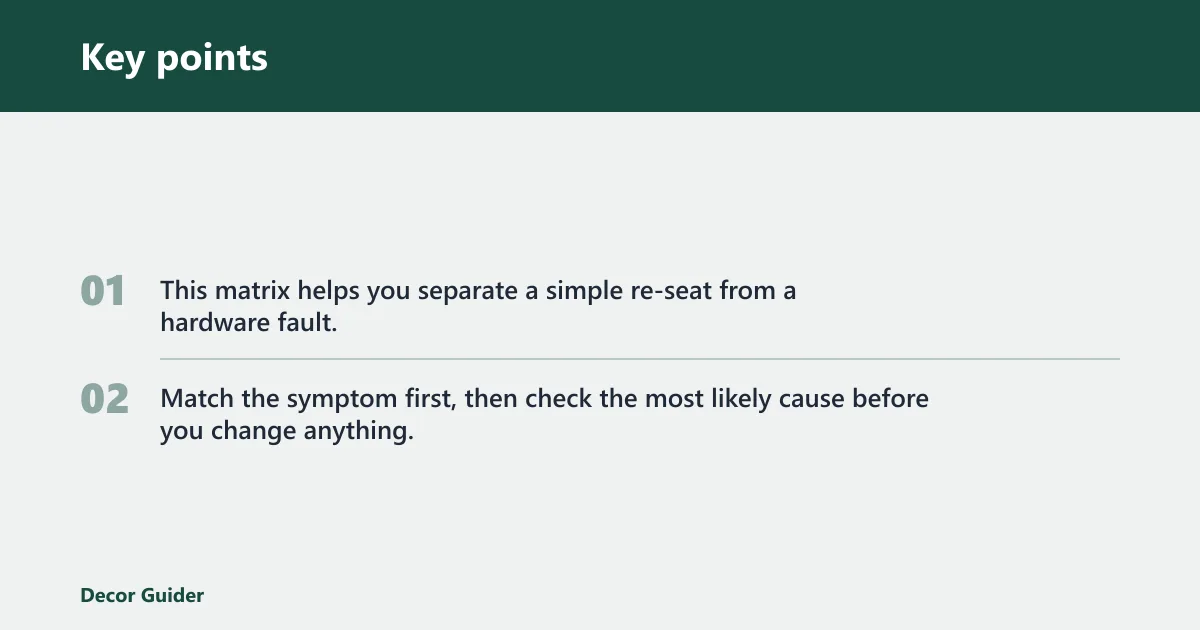
This matrix helps you separate a simple re-seat from a hardware fault. Match the symptom first, then check the most likely cause before you change anything.
| Symptom | Likely cause | Quick check | Fix | Replace threshold |
|---|---|---|---|---|
| Drawer will not catch the slide | Misaligned slide height, wrong slide type, or drawer box out of square | Compare both sides with a level tool and check that the drawer front sits square in the opening | Realign the slides, loosen the mounting screws slightly if needed, and re-seat slowly | Replace if the rail is bent, cracked, or missing a matching member |
| Drawer catches then falls out | Broken roller, missing retaining clip, or worn track catch | Look for a release tab that is not engaged, or a roller that does not turn | Reattach with the proper release method, then test travel again | Replace if the catch no longer holds or the roller assembly is broken |
| One side binds | Racked drawer box, loose screws, or one slide mounted out of level | Watch which side slows first and check for rubbing marks on that side | Square the box, adjust the mounting screws, and confirm both sides start together | Replace if the slide member is bent or the drawer side is cracked |
| Drawer sits low or crooked | Slide height mismatch, worn bearing, or warped drawer bottom | Measure whether the drawer front sits even with the cabinet opening | Relevel the slides and reset the drawer box before tightening screws | Replace if the slide droops, the track is worn through, or the box no longer holds shape |
| Drawer pops out again after reinstall | Loose hardware, disengaged clip, stripped screw holes, or worn retention point | Pull gently and see whether the same side disconnects each time | Retighten, re-seat, and test the full travel path | Replace if it keeps disengaging after alignment or the screw holes no longer hold |
Adjust the hardware and test again
Use adjustment only after you have identified the slide type and found the problem point. Loose screws, especially at the back of the drawer, can shift the fit enough to let a tight drawer run square again. Tighten only after the drawer moves cleanly through its full path.
Loosen, align, retighten
Back off the mounting screws just enough to let the slide move. That small change can correct a drawer that is too tight or slightly out of square. Then slide the drawer in and out several times before tightening the screws fully.
Check level and flush closing
Use a level tool to verify that both slides are level and that the drawer closes flush. The ideal rear setback is about 3/32 to 1/8 inch back. If the drawer still leans or rubs after the adjustment, the hardware may be worn rather than merely misaligned.
A common first-timer mistake is to loosen one side, push the drawer in halfway, and then tighten the wrong screw before checking travel. That can lock the drawer into the same bind. Adjust both sides together, then test the full stroke.
Clean and lubricate the track
Cleaning comes after inspection, not before diagnosis. Dust, grit, and old residue can make a good slide feel bad, but lubrication will not fix bent metal, cracked wood, or stripped mounting points. Use the right product for the track material.
Clean the drawer track
Wipe dust, debris, and hardened buildup from the drawer track, the slide path, and the contact points. On older and inexpensive furniture, wooden tracks or sliders often pick up grime that creates drag. On newer furniture, plastic friction tracks or bearing slides may need only a careful wipe before they run smoothly again.
Choose the right lubricant
For wooden sliders, paraffin wax or a bar of soap can reduce friction. For modern slides, silicone spray or beeswax is the better choice. Apply a small amount after cleaning so you do not trap grit in the track. Avoid heavy residue that can collect more dirt.
When should you replace the slides?
Replace the slides if the hardware is bent, cracked, rusted through, stripped, or keeps disengaging after alignment. Cleaning and lubrication help only when the path is intact. If the drawer drops off the track again after proper re-seating and adjustment, the hardware has passed the repair point.
Match the replacement to the existing type
Choose replacement slides that match the existing slide type and mounting location. Drawer slide types include side-mounted slides, bottom-mounted slides, and bottom-mount single drawer slides, while some furniture uses side-mount, center-mount, or under-mount hardware. Mixing types usually creates more alignment trouble, not less.
Stop and replace instead of forcing it
If you can see a bend, a cracked wood member, a missing retaining part, or stripped screw holes that will not hold, stop there. A drawer that repeatedly falls out after adjustment is telling you the slide no longer retains the load correctly. Replacement is the safer fix.
Frequently asked questions
Why does my drawer fall off the track when I pull it out?
That usually points to a broken roller, a missing clip, a loose screw, or a slide that is not level. It can also happen when the drawer box is out of square and the slide loses alignment at full extension. Check which side drops first, then inspect that part closely.
How do I tell what type of drawer slides I have?
Look at where the hardware is mounted. Side-mount slides sit on both cabinet walls, center-mount hardware runs down the middle, and under-mount slides sit below the drawer with hidden hardware. The mounting location tells you which repair path to follow and which release method to use.
Do I need to replace the slides or just adjust them?
Adjust them if the drawer is only slightly off, the screws are loose, or the slides need level correction. Replace them if you see a visible bend, cracked wood, rust damage, stripped screw holes, or repeated disengagement after a careful realignment. If the same failure returns, adjustment is no longer enough.
How can you get a drawer back on track after it slides out wrong?
Reset it from the start: pull it out, confirm the slide type, inspect the retaining parts, and align both sides before pushing it in. If it catches, stop and correct the angle. A drawer that was forced off the track often needs a careful re-seat, not a harder push.
Products related to this article
Sponsored / affiliate links. As an Amazon Associate I earn from qualifying purchases. I may earn additional commission from eligible campaigns.