How to Reattach a Drawer Slide That Pulled Out of the Wood
For a pulled-out drawer slide, use wood glue and toothpicks for small stripped holes, wood filler plus new pilot holes for moderate damage, or a wood patch or block for severe blowout. If you skip the damaged wood repair, the slide will loosen again, bind, or rip out under load. This guide shows how to inspect the hole, match the repair to the damage, and remount the slide securely.
This guide is part of our Dresser and Drawer Repair: Fixing Sticking Drawers, Slides, Smells and Finishes series.
What you’ll need
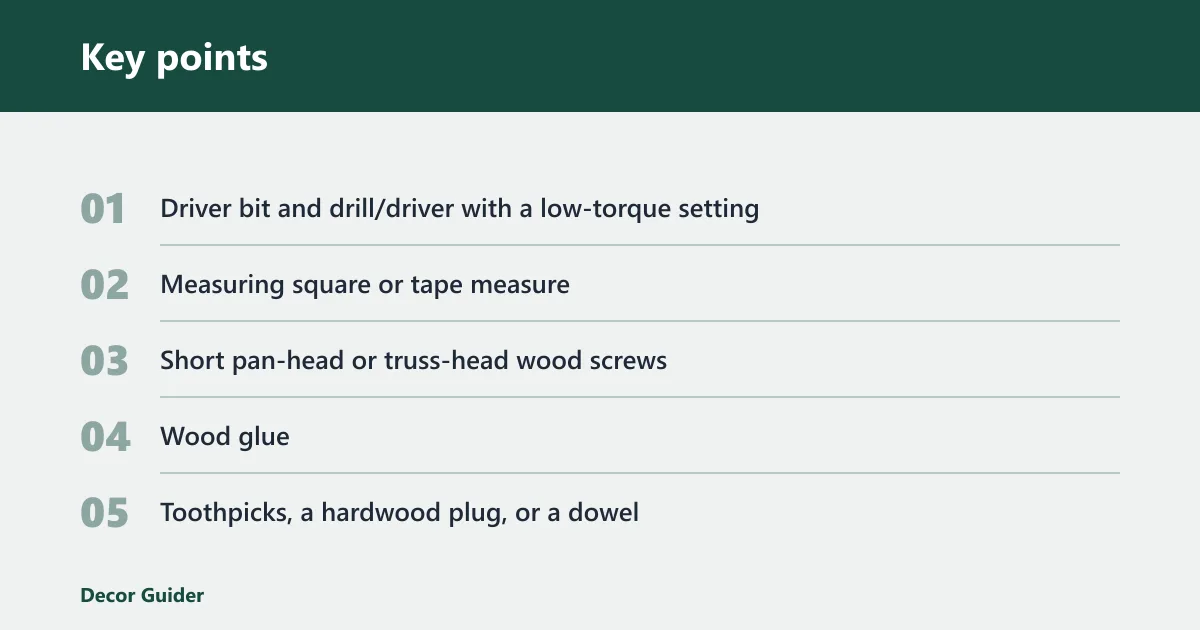


- Driver bit and drill/driver with a low-torque setting
- Measuring square or tape measure
- Short pan-head or truss-head wood screws
- Wood glue
- Toothpicks, a hardwood plug, or a dowel
- Wood filler or epoxy for minor stripped holes
- Drill bits for pilot holes
- Replacement slide hardware, if the rail is bent or seized
- Clamps, if you are using a dowel, plug, or patch repair
What to check before you start
Identify the slide type first: side-mount or undermount, and whether it is ball-bearing or roller style. Check the mounting hole pattern, the slide length, and the load rating. Then inspect the drawer side panel material. Solid wood, plywood, and particleboard fail differently, and edge thickness near the mounting point changes how much fastener bite you can trust.
| Failure type | Repair, move holes, or replace | Tool and screw notes |
|---|---|---|
| Split wood | Repair if the split is short and closed; move holes if the edge is weak | Use glue, clamp, and a pilot hole slightly smaller than the screw root diameter. Choose a short pan-head screw that will not punch through the panel. |
| Stripped holes | Repair | Fill with toothpicks, a dowel, or a hardwood plug plus wood glue. Trim flush, let it cure, then re-drill a pilot hole. |
| Blown-out particleboard | Move holes or replace | Use fresh wood with a larger bite if possible. In thin or crumbly board, filler alone will not hold a slide under load. |
| Bent slide | Replace | Match the length and mounting style. Same-brand compatibility may matter on ball-bearing units with fixed hole spacing. |
| Misalignment | Move holes | Re-measure with a square and tape measure. Check the setback from the front, then confirm both sides sit level. |
How do you reattach the slide?
Take the drawer out, clean the damaged area, and rebuild the wood before fastening the slide again. A screw can only hold if the material around it still has enough density. If the hole is weak, the fix needs to restore bite first, then restore alignment.
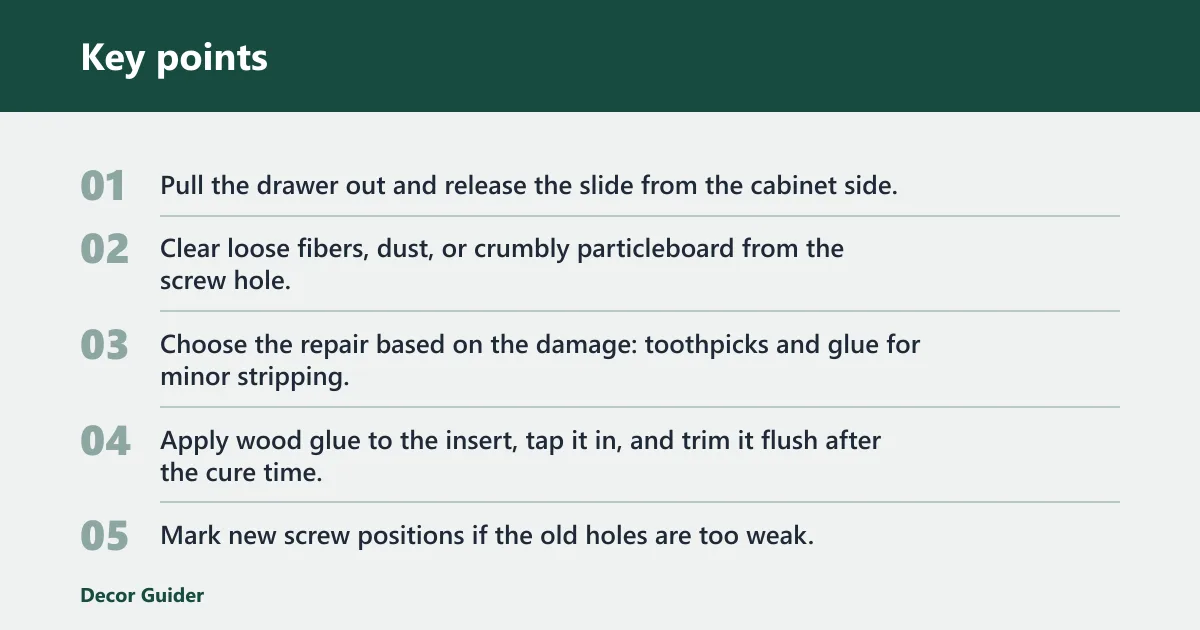
- Pull the drawer out and release the slide from the cabinet side.
- Clear loose fibers, dust, or crumbly particleboard from the screw hole.
- Choose the repair based on the damage: toothpicks and glue for minor stripping, a dowel or hardwood plug for larger holes, or a patch/block for blowout.
- Apply wood glue to the insert, tap it in, and trim it flush after the cure time.
- Mark new screw positions if the old holes are too weak.
- Drill pilot holes smaller than the screw root diameter.
- Set the slide level and parallel to the cabinet opening, then fasten with short pan-head or truss-head screws.
- Reinstall the drawer and open and close it several times before loading it.
Say your side-mount slide pulled out of a 5/8-inch particleboard dresser side, and the screw hole has crumbled to about 1/2 inch across. A dowel repair or a fresh mounting point is safer than filler alone, because the board near the edge is already weakened. That same board may hold a slide again only if the new screw lands in denser material.
If that didn’t work, try this next
Shift the slide to fresh wood if the repaired hole still spins or crushes. Move the mounting point far enough to escape the damaged fibers, then drill a clean pilot hole. If the rail is bent, seized, or no longer matches the drawer box, stop repairing the wood and replace the slide hardware instead.
Should you repair, move, or replace?
The right choice depends on the substrate and the amount of damage. Solid wood and plywood often accept a repair or a new hole nearby. Particleboard is less forgiving. Once the face layer has blown out or the edge has thinned around the screw, a relocation or replacement usually gives a better result than another plug in the same spot.
- Keep the same hole only when the repair feels firm and the screw threads bite cleanly.
- Move the holes when the old location is enlarged but the panel still has usable thickness nearby.
- Replace the slide when the metal rail is bent, the bearing track binds, or the hole pattern no longer lines up with a stable mounting area.
- Match the replacement slide to the same mounting style and length, and check the load rating before reinstalling.
Suppose an undermount slide on a plywood drawer box keeps slipping at the rear screw only. If the front screw remains tight and the rail is straight, moving the rear hole a few centimeters into sound wood is usually better than packing the old hole again. That keeps the mounting pattern from relying on one worn spot.
Why does it pull out again?
Repeat failure usually means the wood repair was only part of the problem. Under-sized pilot holes can split the panel. Oversized pilot holes let screws wander. Side loading from a drawer that sits out of square puts constant stress on one fastener. Weak particleboard near the edge can also fail even after a clean-looking repair.
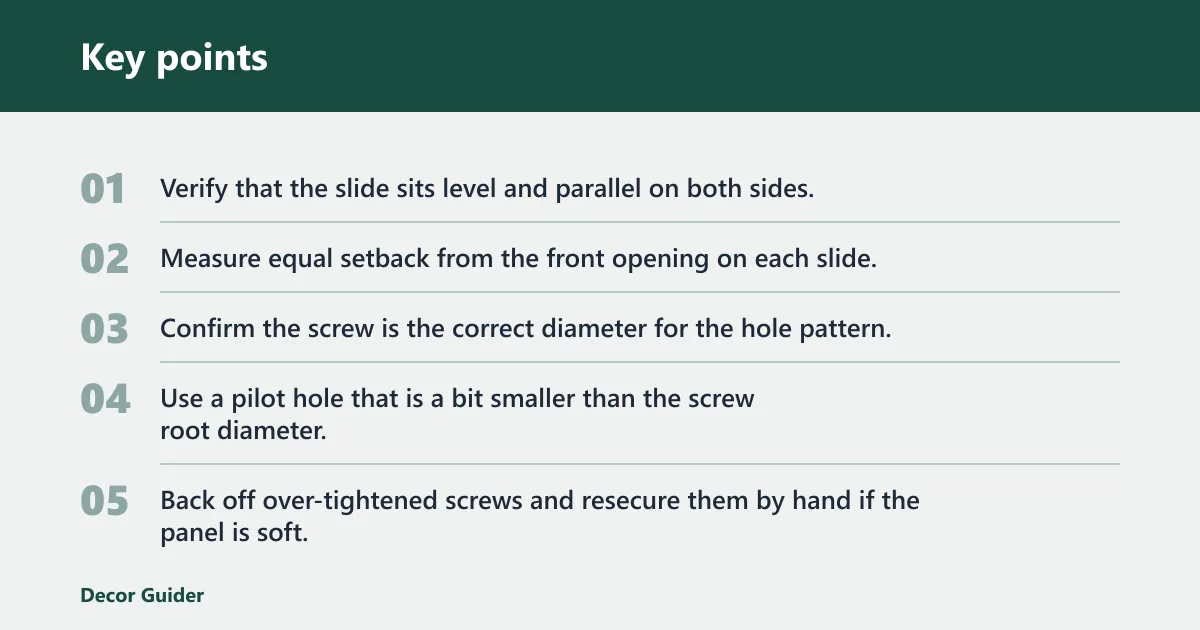
Check these causes in order
- Verify that the slide sits level and parallel on both sides.
- Measure equal setback from the front opening on each slide.
- Confirm the screw is the correct diameter for the hole pattern.
- Use a pilot hole that is a bit smaller than the screw root diameter.
- Back off over-tightened screws and resecure them by hand if the panel is soft.
A common first-timer mistake is to tighten the last screw until the bracket sits flush, then discover the panel face has crushed and the slide has shifted. Back the screw out, rebuild the hole if needed, and reset the mounting with lighter torque. On thin cabinet material, one extra turn can create the next pull-out.
How do you line up a drawer slide so the drawer closes properly?
Line-up starts with the cabinet opening, not the drawer face. Both slides need the same height, the same front setback, and the same angle to the box. If one side sits higher or farther forward, the drawer can rack, drag, or refuse to close fully.
- Place a square against the cabinet side and mark the target height.
- Measure the setback from the front edge on both sides.
- Hold the slide parallel to the opening and start the first screw loosely.
- Check for level, then tighten the remaining screws in sequence.
- Close the drawer halfway, then fully, and correct any bind before final tightening.
For a top-up adjustment, move the slide in about 1/16-inch steps and check the drawer after each move. That small change is enough to correct rubbing without throwing off the drawer face. Bigger jumps can create a new alignment problem faster than they solve the old one.
Can you reattach the slide without replacing the whole slide?
Yes, if the metal rail is straight and the mounting pattern still matches sound wood. A pulled-out screw hole does not automatically mean the slide itself is bad. If the rail moves smoothly and the damage is limited to the wood, repair the hole, remount the slide, and test the action before replacing parts.
Use a repair, not a replacement
- The rail is straight and the bearings or rollers move freely.
- The mounting holes still match after you shift to fresh wood.
- The drawer box is square and does not rack when pushed in.
Replace the slide
- The rail is bent or seized.
- The screw pattern no longer matches the cabinet side.
- The slide’s length or load rating no longer suits the drawer.
Common mistakes
Using filler where a stronger repair is needed is the most common misstep. Filler works for minor stripping only, and it needs full cure time before the screw goes back in. It is a weak choice for a high-stress mounting point in soft wood or particleboard.
Another mistake is driving a screw too deep in thin panel material. Use a short pan-head or truss-head screw with a length that will not punch through the side panel. The wrong length can split the repair or distort the slide hole pattern.
Skipping the square-and-level check also causes repeat pull-out. If the slide is angled, the drawer side loads the fasteners every time it closes. That stress works against even a solid repair.
Frequently asked questions
How do I reattach a drawer slide that pulled out of the wood?
Remove the drawer, rebuild the damaged hole, and remount the slide with a pilot hole that matches the new fastener path. Use toothpicks and glue for small stripping, a dowel or hardwood plug for larger wear, and move the hole if the surrounding wood is too weak.
Can I screw a drawer slide back into stripped wood?
Only if the stripped area has been rebuilt first. A bare oversized hole may not hold up well under drawer load. Pack the hole with glue and wood insert material, let it cure, then drill a fresh pilot hole and fasten with the correct screw diameter.
Should I use wood glue, filler, or a wood insert for stripped screw holes?
Use wood glue with toothpicks, a dowel, or a hardwood plug when the screw needs a stronger bite. Use filler or epoxy only for minor stripping and low-stress spots. For drawer slides, a glued insert usually gives a better hold than filler alone.
What size screws should I use to reattach a drawer slide?
Use a short pan-head or truss-head wood screw that fits the slide’s mounting holes and will not punch through the panel. The screw diameter should match the existing hole pattern, and the length should stay within the panel thickness at the mounting point.
When is the wood too damaged to reuse the same screw holes?
If the hole is blown out, the edge has crumbled, or the panel material feels soft and hollow around the screw, move to fresh wood. Particleboard with severe edge damage often needs a new mounting point or replacement hardware rather than another attempt in the same spot.
Products related to this article
Sponsored / affiliate links. As an Amazon Associate I earn from qualifying purchases. I may earn additional commission from eligible campaigns.