Narrow Dresser Review for Tight Spaces
A narrow dresser for tight spaces is often about 16 to 24 inches deep, should leave at least 30 inches of clearance in front, and should fit the items being stored, not just the room size. Poor fit means blocked doors, cramped walkways, and drawers you cannot open fully. This guide reviews narrow dressers by footprint, drawer access, and storage capacity so you can choose one that works in a small bedroom, apartment, or dorm.
Verdict

- Eight drawers help sort clothing and clutter.
- Slim profile fits tighter spaces more easily.
- Groove handles avoid protruding bumps.
The best fit is the dresser that clears your walkway, opens without hitting a bed or door, and matches your clothing volume. A tall narrow chest is the strongest choice when floor space is the limit and you can anchor it. A shallower dresser works better when door swing and aisle width are the main problem.
Specs at a glance
| Check | Why it matters in tight rooms | What to look for |
|---|---|---|
| Width | Determines whether the dresser fits between the bed, closet, and wall | Measure the clear wall span first; slim profiles are easier to place |
| Depth | Controls how far the dresser intrudes into the walkway | Shallow depth is often the safer choice when clearance is tight |
| Height | Vertical storage can free up floor space, but tall units need more stability care | Choose taller units only if the top drawer stays reachable and anchoring is possible |
| Drawer count | More drawers do not guarantee usable storage | Match the count to what you store, then check internal drawer dimensions |
| Drawer glides | Influences day-to-day opening effort and full access | Metal slides usually feel smoother than basic runners |
| Anti-tip hardware | Important for tall units, homes with children, and pet traffic | Plan to anchor any top-heavy dresser |
Tight-space fit calculator
Use a simple pass/fail check before buying. A dresser passes if it leaves at least 30 inches of clear walking space in front, does not block the door swing, and still lets the drawers open fully. If any one of those fails, the dresser is too large for that spot.
| Room width | Wall length available | Dresser width | Dresser depth | Door-swing clearance | Recommended placement | Likely failure mode |
|---|---|---|---|---|---|---|
| Apartment bedroom: 9 ft | 54 in clear wall | 28 to 36 in | 16 to 18 in | Pass only if the room still keeps 30 in in front | Beside the bed or on the wall opposite the closet | Drawer handles snag the walkway or block the entry door |
| Dorm: 7 ft | 36 in clear wall | 20 to 28 in | 14 to 16 in | Pass only if the door opens away from the dresser | Under a wall shelf or at the foot of the bed if allowed | Door swing cuts into drawer travel |
| Narrow primary bedroom: 10 ft | 60 in clear wall | 30 to 40 in | 16 to 20 in | Pass if closet doors and bedroom door both clear the corners | Along the longest blank wall or under a sloped ceiling section | Top drawer opens, but the room still feels pinched |
Simple pass rule: if the dresser depth plus drawer pull space leaves less than 30 inches of walkway, skip it. Simple fail rule: if the door hits the dresser before the drawer opens fully, the unit is too deep or in the wrong place.
Who is it for?
A narrow dresser is best for renters, apartment bedrooms, dorms, and awkward alcoves where wall length matters more than total room size. It also works well when you want storage that does not project far into the room or interrupt a closet path.
Best for renters and apartment bedrooms
Fabric drawer dressers often fit renters well because they are light, budget-friendly, and easier to move when the layout changes. A narrow dresser with a slim frame also helps when you cannot anchor into every wall or when the room layout changes often.
Best for dorms and awkward alcoves
A tall narrow chest fits where a wider low dresser cannot, especially in a hallway-like bedroom or an alcove beside a door. That vertical form uses height instead of width, which is the core reason it works in small-space layouts.
Not ideal for deep storage needs
If you store bulky sweaters, jeans, and bedding, a very shallow dresser may disappoint. The problem is not only total volume. Shallow drawers can also waste space around folded stacks and make deeper items harder to close inside.
What works
The strongest narrow dresser is the one that fits the room and the storage task at the same time. Vertical storage wins when floor space is scarce, but only if the unit still opens cleanly and stays stable enough for daily use.
Vertical storage in a small footprint
A tall narrow chest is the small-space classic because it uses height instead of width. That tradeoff matters most when the floor is already crowded with a bed, a nightstand, or a closet door that opens into the room.
Shallow depth that keeps paths open
Shallow depth options help keep pathways clear in narrow rooms. A common example is a dresser around 11.73 inches deep, which is notably slim for a bedroom unit and may suit a tighter aisle if the drawer pulls stay inside the footprint.
Picture a 39-inch aisle between the bed and the opposite wall. A 24-inch deep dresser sounds manageable on paper, but once you account for drawer pull and open-door space, the usable walkway can feel much smaller. Depth is often the first number that exposes a bad fit.
Drawer layout that matches folded clothing
Internal drawer dimensions matter more than drawer count alone. A unit with six narrow drawers may look efficient, yet each drawer can be too shallow for folded jeans or bulky knits. Wider, deeper drawers usually waste less space around bulky stacks, even if there are fewer of them.
Drawer glides matter too. Metal slides generally support smoother opening and closing than basic runners, and that matters in a tight room because a drawer that sticks or tilts can hit a bedframe or catch on a handle.
What does not?
Several narrow dressers fail in the same predictable ways: tipping risk, shallow drawers that waste usable storage, and hardware that interferes with opening clearance. Those failures show up fast in small rooms because there is nowhere for the mistake to hide.
Tipping risk in tall units
Do narrow dressers tip over more easily? They can, especially when they are tall, lightly built, or loaded with weight in the top drawers. Taller units place more mass above the floor, so anti-tip anchoring matters more than it does on short, wide dressers.
An anti-tip kit is not optional on a tall dresser in a home with children or pets. The safest move is to anchor the unit to the wall and avoid placing heavy items in the upper drawers unless the dresser is secured.
Too-shallow drawers and dead space
Shallow drawers can look efficient from the outside while leaving dead space around folded clothes. That means you may get several drawers on paper but lose practical storage volume for shirts, socks, and thicker items.
Shallow depth is useful for pathway clearance. It is not a shortcut to better storage. If you need room for bulky folded clothing, a deeper drawer often beats a thinner one with more compartments.
Hardware, handles, and opening clearance problems
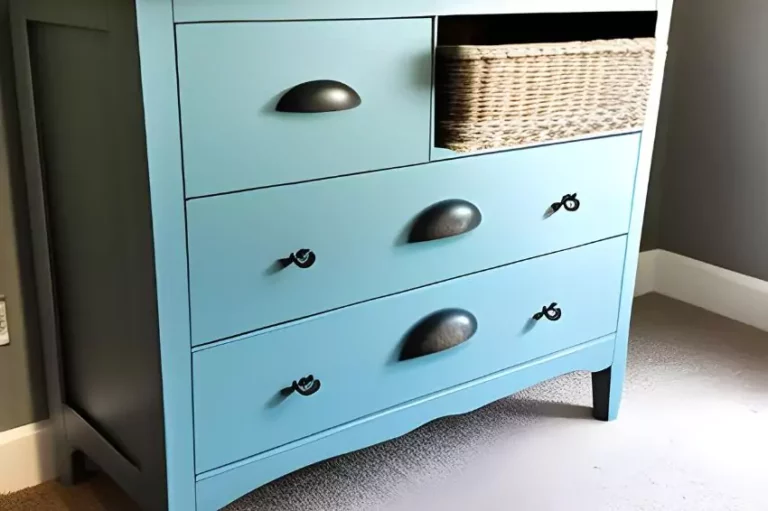
Protruding handles can snag on tight walkways or stop a door from opening fully. Handleless fronts or groove pulls reduce that risk. IKEA lists LASTARE with a narrow-door design that takes up less room when opened, which is exactly the kind of detail that matters in a compressed layout.
Suppose your bedroom door opens inward and the dresser sits on the nearest wall. Even a modest handle can become the failure point if the door and drawer both need the same space at the same time.
Alternatives
Tall narrow chest
FACBOTALL’s 44.5-inch tall white dresser leans into the tall narrow chest approach, with eight drawers and a slim profile that should suit a tighter footprint. It is a practical choice when you want more divided storage, but the taller build increases the need for anti-tip anchoring and makes the top surface less useful for daily items.
Shallow depth dresser

- Six drawers provide organized storage.
- Handleless design keeps the look sleek.
- Metal slides support smoother drawer movement.
Jocoevol’s 19.7-inch wide, 15.7-inch deep, 47.2-inch high dresser fits the shallow depth category better than a bulkier chest. The handleless front helps in a tight room, and the metal slides should improve daily drawer movement. The tradeoff is that a slimmer depth can reduce storage volume for folded clothing.
Fabric drawer dresser

- Four drawers offer compact vertical storage.
- Wood top keeps daily essentials within reach.
- Steel frame and wooden board add stability.
Welfuturer’s slim four-drawer unit is the most renter-friendly of the three because it is lightweight, compact, and easier to move. Its steel frame and wooden top add some structure, but fabric drawers do not match the rigidity or long-term drawer feel of a solid wood or engineered wood dresser.
Engineered wood dresser
Engineered wood dressers can be a good middle ground in cramped rooms, but build quality varies. Assembly can take time, finish quality depends on the veneer, and lower-cost boards may flex more than buyers expect. The upside is a cleaner look and a more furniture-like feel than fabric storage towers.
Should you buy it?
Buy a narrow dresser if your room is limited by wall space, walkway clearance, or door swing rather than by a lack of total storage options. It is also a good pick if you want a cleaner visual line in a small room and can keep the top drawer within easy reach.
Best pick by room size
For an apartment bedroom, a shallow dresser or slim tall chest is usually the safer fit. For a dorm, a fabric drawer dresser can work if you need portability and lower cost. For a narrow primary bedroom, a taller unit makes sense only when the room still leaves room for door swing and access to the closet.
Best pick by storage type
If you store mostly folded T-shirts and undergarments, a compact 3–4 drawer dresser can keep the room looking clean. If you store mixed clothing and want better sorting, a taller six- or eight-drawer chest gives more organization, but the drawer sizes still need to be checked against what you fold.
When to skip and buy a different dresser style
Skip the narrow dresser if the room cannot keep 30 inches of clear walking space in front of it, if the closet door already competes for wall space, or if you need deep drawers for bulky items. In those cases, a lower wide dresser with better drawer volume may work better than a tall slim one.
Frequently asked questions
What size dresser fits a small bedroom?
A small bedroom usually needs a dresser that fits the wall, not the room’s total square footage. A practical target is a narrow unit that leaves at least 30 inches in front for walking and drawer access. If the room also has a closet door or entry door nearby, the usable width shrinks fast.
How narrow should a dresser be for a tight space?
For a tight space, narrower is usually better only until storage becomes too shallow or cramped. Many buyers do well with a dresser in the slim to mid-slim range, especially when depth stays modest. Width matters less than whether the dresser clears the bed, closet, and door swing at the same time.
Is a tall narrow dresser better than a wide dresser for small rooms?
A tall narrow dresser is better when floor space is the main constraint and you can anchor it safely. A wide dresser can be better if you need deeper drawers or a top surface that is easier to use. The right answer depends on whether the room is short on width, depth, or stability margin.
What depth is best for a shallow dresser?
Shallow dressers often work best around 16 inches deep or less when the room is tight, because they protect walkway clearance and reduce door conflicts. Deeper than that can still work, but only if the room has enough front clearance for both the drawer pull and your walking path.
Are fabric dressers good for small spaces?
Fabric dressers are good for small spaces when you need a lightweight, budget-friendly unit that is easy to move. They suit renters and people who rearrange often. The downside is drawer rigidity, which is lower than wood or engineered wood, so they are better for light clothing than heavy folded items.
What should I measure before buying a narrow dresser?
Measure wall length, walkway clearance, door swing clearance, and closet proximity before you shop. Then compare those numbers with dresser width, depth, and height. If the dresser sits beside a bed, include mattress edge space and any handle protrusion. That is the fastest way to avoid a blocked path or a drawer that will not open fully.
Products related to this article
Sponsored / affiliate links. As an Amazon Associate I earn from qualifying purchases. I may earn additional commission from eligible campaigns.