How to Stop a Dresser From Tipping Over with Heavy TV on Top
Move the TV off the dresser if you can; if it has to stay, anchor the dresser to the wall, keep the top light, and level the base first. A heavy load on the top front edge can tip the dresser when a drawer opens or someone presses on it, and the result can be serious. The CPSC tip-over guidance and furniture makers’ installation instructions both emphasize wall anchoring, and fasteners must match the wall type. This guide covers quick stabilization, proper anchoring, and the checks that matter after installation. If you need more background, see our related guides on wall anchor selection, leveling furniture on uneven floors, TV placement safety, and anti-tip hardware installation.
What you’ll need


- Anti-tip strap or the included safety fitting from the furniture package
- Screws and plugs matched to your wall type
- Tape measure
- Small level
- Pencil for marking fixings
- Optional shims for an uneven floor
- Drill and wall-rated bits, if drilling is allowed
Dresser stability checklist
| Immediate no-tools actions | Hardware-required actions | Failure checks |
|---|---|---|
| Move heavy items off the top front edge; slide the TV back; close all drawers. | Pick the anti-tip fitting; match screws and plugs to solid wall, hollow wall, or solid wood wall. | The dresser should not rock, lean, or pull away at the top. |
| Reduce drawer load in any drawer that feels heavy or forward-weighted. | Fasten the restraint to the wall and the dresser frame, not to a loose back panel alone. | No drawer should create a visible forward lean when opened. |
| Place the heaviest items low and centered inside the dresser. | Use screws without plugs for solid wood, if the fitting instructions call for that. | The TV should stay centered and set back, with no wobble during a gentle pull test. |
| Shim low corners if the floor slopes or the rug edge lifts one side. | Ask for advice if the wall material is unclear or the included hardware does not match. | Any movement at the top means the installation needs another check. |
How do you stop a dresser tipping with a TV on top?
Start by reducing the top load, then anchor the dresser to the wall, then check that drawers and floor conditions are not creating a new tip path. Centering the TV helps, but it does not replace anchoring. A TV still adds top weight and increases the tipping hazard, and the CPSC advises anchoring unstable furniture and TVs to prevent tip-over incidents.
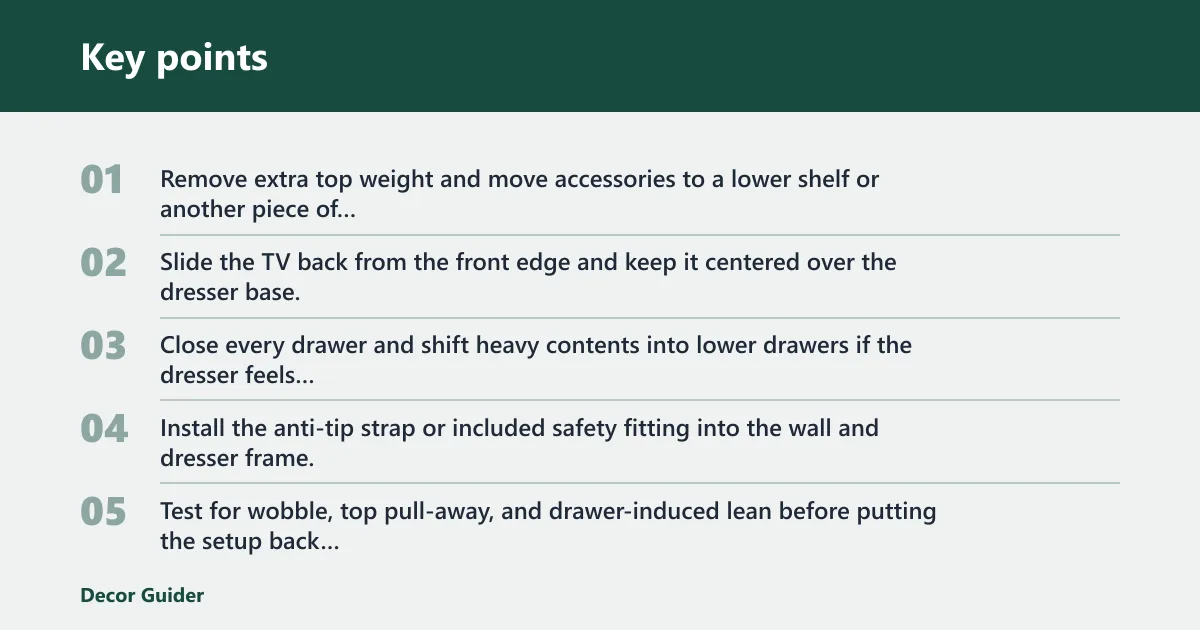
- Remove extra top weight and move accessories to a lower shelf or another piece of furniture.
- Slide the TV back from the front edge and keep it centered over the dresser base.
- Close every drawer and shift heavy contents into lower drawers if the dresser feels front-heavy.
- Install the anti-tip strap or included safety fitting into the wall and dresser frame.
- Test for wobble, top pull-away, and drawer-induced lean before putting the setup back into service.
An upper drawer that is partway open can make the dresser feel less stable, especially if a TV sits near the front edge. That small change can move the center of gravity enough to make the dresser feel unstable even before anyone touches it. Furniture manufacturers, including IKEA, direct users to secure tall or top-heavy furniture to a wall, so move the TV back, close the drawer, and anchor the dresser before adding anything else.
Do you need to anchor a dresser if the TV is heavy?
Yes. A heavy TV adds load, but it does not steady the dresser. The dresser must be secured to the wall because a shifted center of gravity can move outside the base. Even one open drawer can change the tipping force, and multiple open drawers raise the risk further. Adults and children both create tip-over risk when they lean, climb, pull, or open drawers.
When centering the TV is not enough
Centering helps only if the dresser is already stable. If the base rocks, the floor slopes, the rug edges lift one side, or drawers are loaded heavily, the dresser can still tip. Treat centering as load control, not a replacement for a restraint. For wall fasteners, use hardware matched to the wall material rather than a one-size-fits-all anchor.
When temporary stabilization is acceptable
If you are waiting for hardware or permission, use short-term load reduction only: move the TV back, empty heavy top drawers, and keep all drawers closed. That is a bridge, not a finished fix. Do not leave a top-heavy dresser unsecured for long. If you need wall-fastener guidance by surface type, see our wall anchor selection guide.
What wall anchor do you need?
The wall type decides the screws and plugs. IKEA says screws and plugs suitable for the wall type are needed, and for solid wood, screws without plugs are used. A fitting that works in one wall can fail in another, so check the structure before choosing hardware. Use the manufacturer instructions first, then verify the fastener choice against the wall material with a reliable wall-anchor guide.
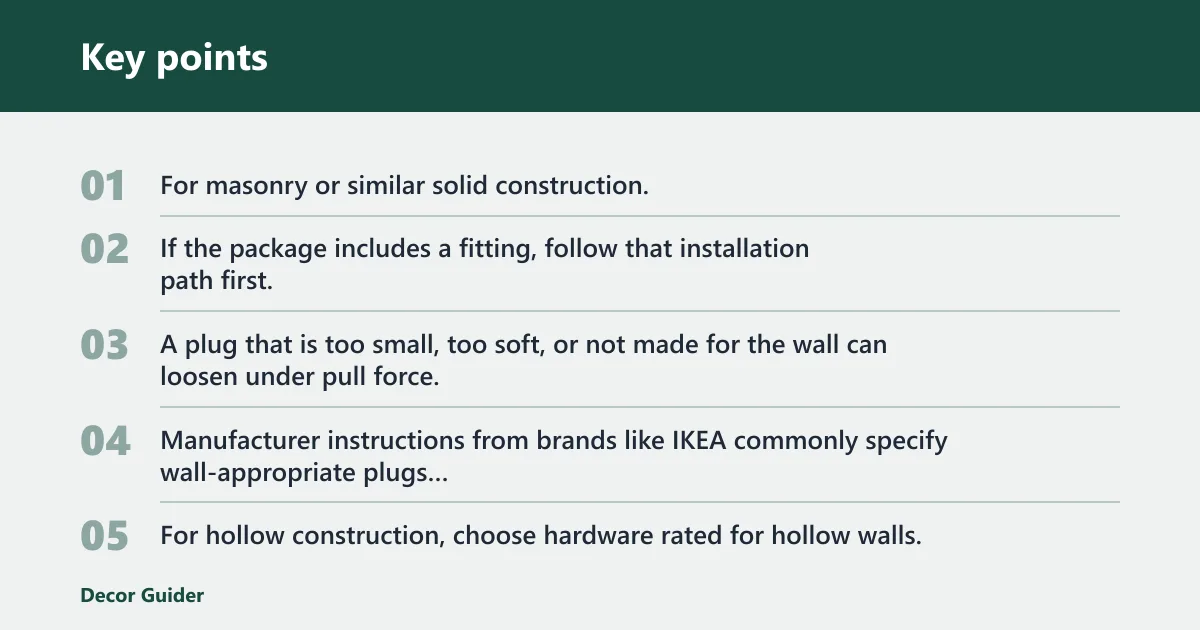
Solid wall
For masonry or similar solid construction, use hardware rated for that wall and the screw-and-plug combination specified for it. If the package includes a fitting, follow that installation path first. A plug that is too small, too soft, or not made for the wall can loosen under pull force. Manufacturer instructions from brands like IKEA commonly specify wall-appropriate plugs and screws for this reason.
Hollow wall
For hollow construction, choose hardware rated for hollow walls. Do not assume a generic screw will hold. If the included fitting does not state hollow-wall use, stop and select a restraint meant for that wall type or ask for help before drilling. Fastener guidance from reputable home-improvement sources generally emphasizes that hollow wall anchors must spread load across the wall cavity, not just bite into the face layer.
Solid wood wall
Fasten into the wood structure, not just the surface finish. The same source says to use screws without plugs for solid wood. If the dresser is going into solid timber, a properly driven screw into the structure is more dependable than an anchor made for drywall or masonry. When in doubt, match the hardware to the substrate instead of forcing a generic solution.
What if you rent and cannot drill?
If drilling is not allowed, reduce the load first and ask for permission or a landlord-approved option. A renter can use non-permanent steps only as a short bridge. That means lowering the top load, closing drawers, and preventing the dresser from being used as a climb point until proper anchoring is possible. If you need a no-drill option, compare the restraint maker’s instructions with your lease terms before relying on it.
- Confirm whether the lease allows wall fixings or whether a landlord-approved method is required.
- Move the TV lower, or remove it from the dresser until anchoring is allowed.
- Keep the heaviest items in the lowest drawers and remove extra weight from the top.
- Use temporary furniture restraints only if they do not require drilling and the manufacturer approves them for your setup.
- Replace the temporary setup with wall anchoring as soon as permission or hardware is available.
A common first-timer mistake is treating a no-drill strap as finished security. If the dresser still rocks or slides on carpet, it is not stable enough for a heavy TV. The short-term goal is to lower the force that could start a tip; the long-term fix is proper wall anchoring. For a floor-specific walkthrough, see leveling furniture on uneven floors.
Common mistakes
These errors are common because they look harmless. Each one can leave a tip path in place.
- Leaving a heavy TV plus accessories on top of the dresser
- Ignoring a single open drawer because it seems minor
- Assuming the dresser is safe because the TV is centered
- Using screws or plugs that do not match the wall type
- Skipping checks on sloping floors, thick carpet, or rug edges
- Trusting a strap when the dresser still rocks after installation
If the dresser still wobbles after anchoring, stop and inspect the top connection first. A strap that is too loose, a back panel that flexes, or stripped screw holes can leave the unit moving even though it is technically attached. Recheck the bracket, the wall material, and the dresser frame before assuming the install is complete.
If that didn’t work, try this next
If the dresser still feels unstable after the first pass, move to the next higher-control fix. Start with load reduction, then the wall fitting, then the floor.
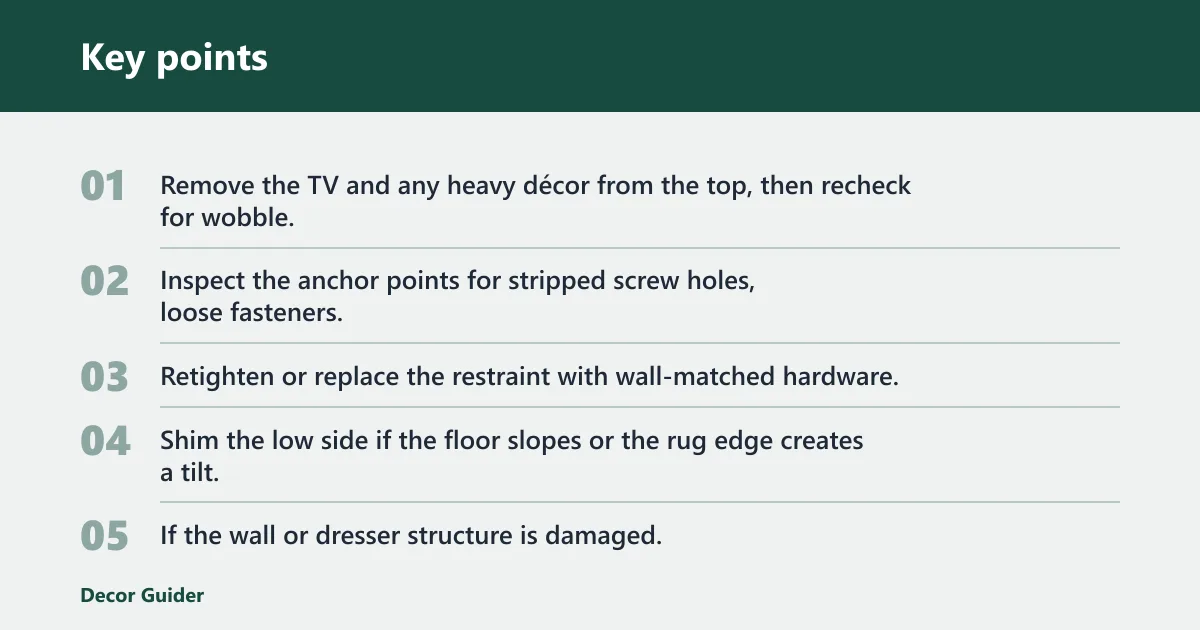
- Remove the TV and any heavy décor from the top, then recheck for wobble.
- Inspect the anchor points for stripped screw holes, loose fasteners, or flex in the dresser back.
- Retighten or replace the restraint with wall-matched hardware.
- Shim the low side if the floor slopes or the rug edge creates a tilt.
- If the wall or dresser structure is damaged, stop and get a different fitting or professional advice.
Say your dresser is on a thick rug and one rear foot sinks slightly. Even a well-placed strap can leave a small lean if the base is not level. A shim under the low corner and a fresh wall check can be the difference between stable and still risky. If the TV placement is the issue, move it back from the front edge and re-evaluate before adding weight.
Dresser tip-over checklist
Use this as a final pass after the hardware is in place. A dresser can still tip if one part of the setup is overlooked.
- Lower the top load and remove anything stored near the front edge.
- Close every drawer and keep the heaviest contents in lower drawers.
- Center the TV and slide it back so it does not overhang the front.
- Select the wall fitting that matches the wall type and use the correct screws and plugs.
- Fasten the anti-tip restraint to the dresser frame and wall.
- Check for wobble, top pull-away, drawer-induced lean, and any movement when you give the dresser a gentle pull.
- Level the base if carpet, rug edges, or a slope makes one side sit higher or lower.
One practical rule: if the dresser shifts at the top when you pull lightly, it is not ready for a heavy TV. Recheck the restraint, the wall type, and the base level before normal use. A final verification should include the wall type, the drawer load, and the TV’s position before you call it done.
Frequently asked questions
How do I stop a dresser from tipping over with a TV on top?
Move the TV off the dresser if possible; if it must stay, secure the dresser to the wall with the correct anti-tip fitting, keep the top load low, and level the base. Then check for wobble and drawer pull-out force before using it normally. The safest setup is the one that removes top-heavy load and uses wall anchoring together.
What kind of wall anchor do I need for a dresser?
Match the fitting to the wall type: solid wall, hollow wall, or solid wood wall. The same source says to use screws and plugs suitable for the wall type, and for solid wood, screws without plugs. If the wall is unclear, stop and confirm before drilling. Our wall anchor selection page breaks down the choices.
Can a dresser tip over if only one drawer is open?
Yes. A pulled-out drawer works like a lever, and even a small weight can shift the center of gravity a lot. One open drawer can sometimes change the tipping force enough to matter, especially if the TV is heavy or the dresser already rocks. Keep drawers closed whenever the dresser is carrying top weight.
How do I make a dresser more stable on carpet or an uneven floor?
Check whether the rug is soft or thick, whether a rug edge lifts a foot, and whether the floor slopes. Use shims to level the base, then recheck the restraint. If the dresser still rocks, do not rely on the carpet to hold it steady. See our guide to leveling furniture on uneven floors for a more detailed approach.
What should I do if I rent and can’t drill into the wall?
Lower the top load, keep drawers closed, move the TV off if possible, and ask for permission or a landlord-approved option. Use only temporary stabilization that does not require drilling if the manufacturer allows it, and treat that as a short bridge to proper anchoring. If you later get approval, switch to wall hardware that matches the wall and the furniture.
Products related to this article
Sponsored / affiliate links. As an Amazon Associate I earn from qualifying purchases. I may earn additional commission from eligible campaigns.