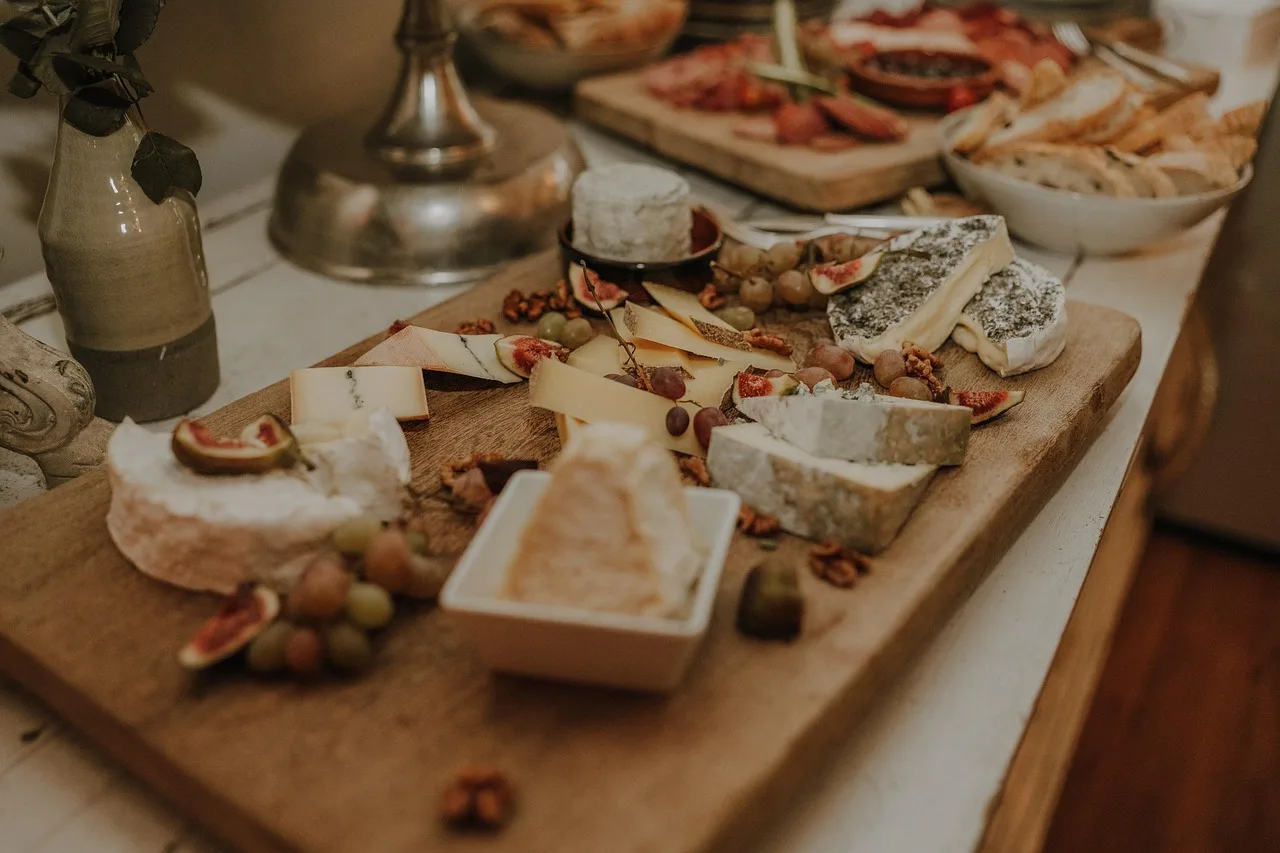
How to Make a Valentine’s Day Charcuterie Board
Build a Valentine’s Day charcuterie board by choosing the right mix for the guest count, then match the mix to your mood: romantic, kid-friendly, or budget-focused. Guess wrong, and the board can look sparse, tip expensive, or miss the people eating it. This guide shows how to size it, pick the right foods, and arrange it for each style.
Cheese, meat, fruit, and crunch pairings for your board


A good Valentine board uses cheese, cured meat, fruit, sweets, and crunch in a way that fits the group. Keep the colors in the pink-red-white range, then use neutrals such as crackers and breadsticks so the board does not feel overloaded.
For a romantic board, lean a little more savory and use strawberries, raspberries, chocolate, and heart-shaped details. For kids, increase the sweets and fruit, and reduce strong cheeses or spicy meat. For budget builds, rely on one premium cheese and fill out the rest with pantry items.
What cheese, meat, fruit, sweets, and crunch work best?
Use 1 to 3 cheeses for balance and variety. A soft cheese such as brie or Camembert pairs well with a firmer option such as aged cheddar or gouda, and goat cheese gives you a tangy third choice if you want more contrast.
For meats, salami and prosciutto are the easiest core choices, while chorizo, soppressata, and Serrano ham add more spice or salt. Fruit should bring color and moisture control, so strawberries, raspberries, grapes, blackberries, and pomegranate all work well. For crunch, use assorted crackers, pretzel sticks or twists, breadsticks, shortbread, and chocolate wafers.
How do you choose a romantic, kid-friendly, or budget mood?
A romantic board is usually the most savory of the three, with a small amount of chocolate or candy as a finish. A kid-friendly board should be sweeter, softer, and easier to grab. A budget board should keep the same color story but swap luxury items for simple stand-ins.
Say your board is for two adults on date night. A small tray with one soft cheese, one cured meat, strawberries, crackers, and a few chocolate pieces will look intentional without crowding the surface. Suppose the board is for six kids and adults together. Add more fruit, more crackers, and fewer specialty meats so everyone finds something familiar.
What base size should you use for the food volume?
Use a wooden board, marble slab, serving platter, or slate plate. Match the base to the amount of food, not the other way around. A small board works for a focused spread. A larger platter gives you room for taller items and loose garnish.
If the board is too small, the ingredients touch too much and the crackers soften faster. If it is too large, the board can look thin. Keep the base just big enough to leave a few open spaces for garnish and easy serving.
What do you need to make one?
- 1 wooden board, marble slab, serving platter, or slate plate
- 2 to 3 small bowls or ramekins for loose items, jam, or candy
- 1 cheese knife or spreader for soft cheese
- Toothpicks for easy picking and tidy bites
- Mini forks for fruit or chocolate pieces
- Tongs for crackers, meat, or rolled ribbons of prosciutto
- 1 to 3 cheeses, such as brie, Camembert, cheddar, gouda, or goat cheese
- Cured meats such as salami, prosciutto, chorizo, soppressata, or Serrano ham
- Fresh fruit such as strawberries, raspberries, grapes, blackberries, and pomegranate
- Sweets such as chocolate-covered strawberries, macarons, truffles, cookies, mini brownies, or pink and red candy
- Crunchy items such as crackers, pretzel sticks or twists, breadsticks, shortbread, and chocolate wafers
- Optional garnish such as mint, rosemary, or edible flowers
How do you plan the board size, portions, and budget?
Use the planner below to match the board to the guest count and occasion. For evidence-based portion ranges, the cheese and meat amounts are aligned to typical appetizer versus light-meal grazing guidance, while the storage and make-ahead notes reflect food-safety timing for dairy, deli meat, and cut fruit. Plan the board so the surface, servings, and budget all agree before you start arranging it.
| Board size | Estimated board dimensions | Occasion | Cheese | Meat | Fruit | Crackers and crunch | Exact cracker count | Sweets | Garnish | Budget estimate band | Budget swap options | Make-ahead notes |
|---|---|---|---|---|---|---|---|---|---|---|---|---|
| 2 people | About 10 x 14 inches or an 8- to 10-inch round board | Appetizer | 6 to 8 oz total; 1 to 2 cheeses | 4 oz total | 1 to 1 1/2 cups, mostly strawberries and grapes | 1 small sleeve crackers plus 1 crunchy item | 18 to 24 crackers | 4 to 6 chocolate pieces or 2 to 4 cookies | 1 small herb sprig or a few berries | $18 to $30 | Use cheddar instead of brie; use salami instead of prosciutto; use cookies instead of macarons | Cut cheese and wash fruit a day ahead; add crackers and chocolate right before serving. |
| 4 people | About 12 x 16 inches or a 12-inch round board | Light meal | 10 to 12 oz total; 2 cheeses | 8 oz total | 2 to 3 cups, with red and pink fruit balanced across the board | 2 sleeves crackers plus 1 to 2 crunchy items | 36 to 48 crackers | 8 to 12 pieces total, including truffles, cookies, or brownies | 2 to 3 herb sprigs or a few pomegranate seeds | $30 to $45 | Use gouda or cheddar as the main cheese; use pretzels and shortbread for filler | Pre-portion meats and sweets in bowls; keep crackers sealed until the last minute |
| 6 people | About 18 x 24 inches or a 15-inch round board | Light meal | 14 to 18 oz total; 2 to 3 cheeses | 12 oz total | 3 to 4 cups, with strawberries, raspberries, grapes, and blackberries | 3 sleeves crackers plus 2 crunchy items | 54 to 72 crackers | 12 to 18 pieces total | Several sprigs or a fuller garnish line | $45 to $70 | Use one premium cheese and two pantry cheeses; use candy and mini brownies in place of extra pastries | Build the base early, but add delicate fruit and sweets near serving time |
| Kid-friendly swap row | Same board size as the matching guest count | Appetizer | Mild cheddar, mozzarella, or young gouda | Omit meats if serving very young children; otherwise use mild salami in small pieces only | Strawberries, grapes, apple slices, and berries | Butter crackers, pretzels, breadsticks, and animal crackers | Match the guest count above, then add 6 to 12 extra crackers for snacking | Cookies, mini brownies, yogurt melts, or pink and red candy | Mint, berry clusters, or plain cut fruit | $20 to $40 | Use pantry fruit, simple crackers, and one cheese; skip spicy meats and anything with a hard rind | Hold meats back if you are serving toddlers or if you want a simpler board; add only what the children can pick up easily. |
| Galentine swap row | Same board size as the matching guest count | Light meal | Brie, goat cheese, cheddar, or gouda | Keep meats if the group wants savory bites; choose prosciutto, salami, or soppressata | Strawberries, raspberries, blackberries, and pomegranate | Crackers, breadsticks, and chocolate wafers | Match the guest count above, then add 6 extra crackers for lingering grazing | Chocolate-covered strawberries, macarons, truffles, cookies, or mini brownies; for a sweet centerpiece, link to Chocolate-covered strawberries | Rosemary, mint, edible flowers, or pomegranate seeds | $35 to $65 | Use one premium cheese, then fill with fruit, cookies, and crackers if you want a polished but affordable spread | Keep chocolate, berries, and delicate sweets refrigerated until the board is nearly finished; assemble close to serving time. |
How do you build it step by step?
Put the biggest and messiest pieces down first so the board holds its shape. Then fill in the smaller items around them. This order matters most on tight boards, where every inch has to work harder.
- Place bowls or ramekins first for loose candy, jam, or small fruit.
- Set down the biggest cheese pieces next, leaving enough room for a knife or spreader.
- Add cured meat in folded ribbons, loose rolls, or quick rose shapes for a fuller look.
- Place fruit around the open spaces, keeping wet fruit away from crackers.
- Fill the remaining gaps with crackers, breadsticks, shortbread, and chocolate wafers.
- Add sweets last so they stay neat and visible.
- Finish with garnish and a few tiny spaces so the board does not feel packed shut.
For meat presentation, salami works well as a rose or a folded fan. Prosciutto looks clean in loose ribbons, while chorizo or soppressata can be cut into rounds or folded into small stacks. Serrano ham can be draped in thin layers for a more elegant line.
If the board still looks thin, a common top-up adjustment is to add about 2 ounces of crackers or about 1/2 cup of fruit, then recheck the spacing before adding more. That keeps you from overfilling the board too early.
How much charcuterie do you need per person?
For an appetizer board, plan on 2 to 3 oz of cheese per person and 2 oz of meat per person. For a light meal, move up to 4 to 5 oz of cheese per person and 3 to 4 oz of meat per person. Those ranges leave room for fruit, sweets, and crackers without turning the board into a full dinner platter.
For two people, the appetizer version stays compact and date-night friendly. For four people, a light-meal version usually needs two cheeses, one soft and one firm. For six people, add a third cheese only if the board has enough surface area and enough crackers to carry it.
When should you use appetizer portions?
Use appetizer portions when the board leads into dinner or sits beside drinks. The board should feel abundant, but not heavy. That is the best place for one soft cheese, one firm cheese, one or two meats, and a modest amount of fruit and sweets.
When should you use light-meal portions?
Use light-meal portions when the board is the main food for the evening. Add more meat, more crackers, and a firmer mix of fruit so the board lasts longer. A mixed group usually eats through crunchy items first, so include a little extra there.
How do you make it look good?
Use color blocks instead of scattering every item everywhere. Put red strawberries near pink candy, then break up those bright areas with white cheese, pale crackers, and neutral breadsticks. That keeps the board from looking flat.
Height matters too. Stack crackers in short rows, fold meat into loose layers, and place soft cheese in a small bowl so it sits neatly and is easy to serve. The board looks fuller when a few items stand higher than the rest.
How do you use red, pink, white, and neutral color blocks?
Keep the board in a controlled palette. Pink and red ingredients create the Valentine feel, while white cheese and neutral crackers keep the look clean. Too many colors make the board read as random instead of themed.
How do you mix heights and shapes?
Round berries, folded meat, rectangular crackers, and heart-shaped candy give the eye movement. Put the tallest items toward the center or toward one back corner if the board is being viewed from one side. Leave small open pockets so the arrangement does not look forced.
How do you add heart details without crowding the board?
Use one or two heart-shaped elements, not every item in a heart shape. A heart cookie, a heart candy, or a heart cutout in cheese is enough. If the board is already busy, subtle color and shape are better than more decoration.
How far ahead can you make it?
Most of the board can be prepped ahead of time. Cheese can be sliced, meat can be portioned, fruit can be washed and dried, and sweets can be sorted into bowls. Save the final assembly for close to serving, especially if the board includes berries, chocolate, or crackers. For food safety and texture, assembled boards should not sit at room temperature for more than 2 hours, or 1 hour if the room is above 90°F; cut fruit, soft cheese, and deli meat are especially time-sensitive (USDA FSIS guidance on perishable foods; FDA Food Code time-and-temperature guidance).
The goal is freshness, not speed alone. Fruit leaks, crackers soften, and chocolate can melt if the board sits in a warm room too long. Keep those items separate until the end.
How should you prep cheeses, meats, and add-ins early?
Wrap cheese and meat separately, then bring them out just before arranging the board. Chocolate-covered strawberries, macarons, truffles, and cookies can be portioned into small containers if the room is warm. That makes the final build faster and cleaner. For safe storage, keep cheeses chilled, deli meats refrigerated, and fruit washed and dried until the last step; USDA FoodKeeper guidance generally recommends refrigerating opened dairy and deli meats promptly and using cut fruit soon after prep.
When should you wait to add crackers and delicate fruit?
Add crackers last so they stay crisp. Put strawberries and raspberries on dry paper towels before they go on the board. If pomegranate arils are used, keep them in a ramekin or a tight cluster so they do not roll into the crackers. For the cleanest texture, add these items only after the board is already on the table.
How do you keep chocolate and crisp items from softening?
Keep the board out of direct heat and away from steam. If the room is warm, hold chocolate pieces in the refrigerator until the board is nearly finished, then add them at the end. That keeps the surface glossy instead of soft.
What common mistakes should you avoid?
Fruit leakage onto crackers is one of the fastest ways to ruin the texture. Dry berries well, and place juicy fruit in its own zone or in a small bowl. If berries are very ripe, use them near the center where they are easier to control.
Chocolate softening is another issue. Keep chocolate pieces chilled until serving time if the room is warm. Overfilling is a third problem: if the board is too small, the food piles up and the layout looks cramped. Use a larger base or reduce the number of items.
A common first-timer mistake is piling the board with too many pink treats before leaving room for cheeses, fruit, and savory bites. Suppose the board is for four people and the tray is only 12 by 16 inches. If macarons, brownies, candy, and strawberries all go on at the start, the crackers lose their space and the board stops feeling easy to serve. A budget swap often fixes that better than forcing in one more specialty item.
Frequently asked questions
How do you make a Valentine’s Day charcuterie board?
Start with the guest count, then choose one mood and size the food to match it. Use 1 to 3 cheeses, a cured meat or two, red and pink fruit, one or two sweets, and enough crackers to make the board easy to eat. Add bowls first if you need to manage loose items.
What should I put on a Valentine’s Day charcuterie board?
Use cheeses such as brie, Camembert, cheddar, gouda, or goat cheese; meats such as salami, prosciutto, chorizo, soppressata, or Serrano ham; fruit such as strawberries and raspberries; and crunchy items such as pretzel sticks or twists. Finish with chocolate, candy, or cookies for a Valentine feel.
Can I make a Valentine’s Day charcuterie board for two?
Yes. A two-person board works well with 6 to 8 oz of cheese, about 4 oz of meat, 1 to 1 1/2 cups of fruit, and a modest amount of sweets and crackers. A small platter or board is usually enough if you keep the layout tight and avoid extra filler.
What should I include on a Galentine’s Day charcuterie board?
A Galentine’s board often works best with more variety and a slightly sweeter mix. Add strawberries, raspberries, chocolate-covered strawberries, macarons, cookies, and a few savory items so the board still feels complete. Use bright colors and enough crackers for easy sharing.
What can I use if I don’t have a heart-shaped board?
Use a wooden board, marble slab, serving platter, or slate plate. Shape the food instead: arrange strawberries in a heart curve, place cheese in a rounded cluster, or tuck candy into a heart outline made from fruit. The board shape matters less than the arrangement.
How do I make a Valentine charcuterie board kid-friendly?
Use milder cheese, familiar crackers, strawberries, grapes, cookies, mini brownies, and pink or red candy. Keep strong cured meats to a minimum or leave them out entirely. A kid-friendly board works best when the food is easy to pick up and not too salty or spicy. If you are serving toddlers or very young children, cut grapes lengthwise and keep the board focused on fruit, cheese, and simple sweets.
How far in advance can I assemble a charcuterie board?
You can prep most ingredients a day ahead, but the full board should be assembled close to serving. Add cheese and meat early if needed, then wait on crackers, delicate fruit, and chocolate until the end. That keeps textures crisp and colors clean.
How do you style a Valentine’s Day charcuterie board so it looks pretty?
Use a limited color palette, vary the height of the food, and repeat shapes without crowding the tray. Place pink and red ingredients in clusters, break them up with white cheese and neutral crackers, and leave a few empty spaces so the board reads as deliberate rather than packed.
Products related to this article
Sponsored / affiliate links. As an Amazon Associate I earn from qualifying purchases. I may earn additional commission from eligible campaigns.