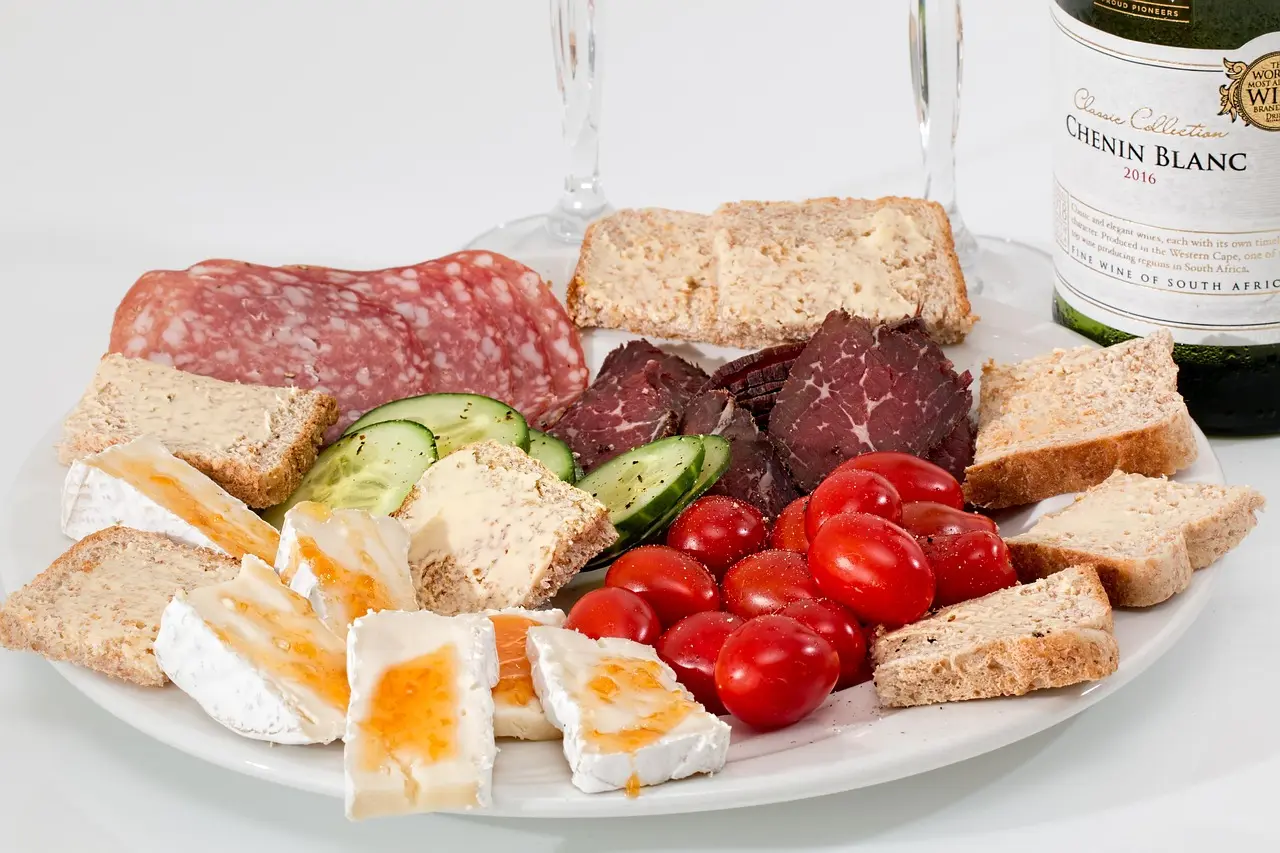
Baked Brie vs Charcuterie Board
Use Baked Brie when you want one warm centerpiece for two to six people; choose a standard Charcuterie Board when you need more variety, a longer serving window, or less oven timing risk. Pick the wrong format and the cheese can cool, the board can turn soggy, or the spread can feel off-balance. This guide compares Baked Brie vs Charcuterie Board for a Valentine’s Day snack board and shows when each works best.
| Decision factor | Baked Brie | Charcuterie Board | Winner |
|---|---|---|---|
| Texture | Warm, soft, and spoonable while still holding some shape | Cooler, firmer, and more varied across cheeses, fruit, crackers, and meats | Baked Brie |
| Timing | Best served immediately after baking at 350°F | Can be assembled ahead and held longer before serving | Charcuterie Board |
| Serving scale | Best for two to six people as a focal point | Better for intimate groups and larger gatherings with broader variety | Charcuterie Board |
| Mess risk | Higher if the wheel leaks, overbakes, or runs into jam | Lower when the board is built with firm items and dry placement | Charcuterie Board |
| Cost risk | Usually lower if you build from grocery items, but toppings can add up | Higher if you buy many separate cheeses, meats, and specialty fruit | Baked Brie |
What each format gives you at the table
Baked Brie shifts the board from a grazing spread to a warm centerpiece. A common wheel is about 6-8 ounces, and many recipes bake it at 350°F for about 15-20 minutes, enough to soften the center without breaking the rind.
Charcuterie Board gives you breadth instead of one hot focal point. It usually centers on one cheese and then moves outward through crackers, fruit, nuts, and meats, so it works when guests will graze over time.
Texture matters more than variety when the board is small
On a two-person board, texture often matters more than a long ingredient list. Warm brie spreads easily onto bread or crackers, which makes a date-night board feel deliberate even with a short ingredient list.
For a larger or slower-paced gathering, the charcuterie format has the edge. The board keeps its structure longer, and no one has to rush to catch cheese at the right temperature.
When is baked brie the better centerpiece?
Baked Brie is the better centerpiece when you want a warm, romantic board with limited ingredients and a clear focal point. It works especially well for two people, because one wheel of brie can anchor the spread without leaving a half-used platter of extra cheeses.
Best use cases for two people
For a Valentine’s board, baked brie works well when the meal is appetizer-forward and you want one shared dish that feels special. Use a small round oven-proof dish, skillet, or shallow bowl to keep the cheese contained while it bakes, then move it onto a larger board for serving.
Suppose you are building a board for two and want just one cheese plus a few bright accents. A 6-8 ounce wheel, a handful of crackers, sliced pear, grapes, and a spoonful of fig jam will read as complete without turning into a full dinner spread.
When warm cheese improves the board
Warm cheese helps when the rest of the board is built around contrast. Crackers add crunch, bread gives a softer base, and sweet toppings such as honey, cranberries, or fig jam balance brie’s richness.
That warmth also helps if you want the board to feel more date-night than buffet. Red and berry-forward pairings like strawberries, raspberries, blackberries, and figs keep the plate on theme without requiring much extra styling.
When to skip baking and serve it cold
Choose a standard Charcuterie Board when you need to serve over a longer window, when the oven is already crowded, or when you want firmer cheese textures. An unbaked brie wedge stays tidy on the board and is easier to refill around with fruit and crackers.
That choice also makes sense if you want less risk. Baked brie can leak if it is overdone, and a warm jam topping can spread fast; a cold wedge avoids that failure point.
How do you serve brie on a charcuterie board?
Serve brie by deciding first whether it is the hot centerpiece or a cold cheese among others. Keep the rind on, use a contained baking vessel if you heat it, and place the brie where guests can reach it with crackers or bread without dragging toppings across the board.
Leave the rind
The rind is edible and usually left on. It helps the wheel hold its shape while baking, and it gives guests a cleaner way to scoop the softened center.
For a baked version, some recipes prefer double cream Brie for pastry-style baking, while triple cream can become too gooey. That matters most when you want a neat slice instead of a puddle.
Choose the right vessel
Bake brie in a small round oven-safe dish, skillet, or shallow bowl. The vessel should hold the cheese while it softens, then you can move it to a larger serving board after baking if the presentation calls for it.
Board size and serving scale affect how much else should surround it. A small wheel with a few garnishes needs less open space than a full cheese spread with several accompaniments.
Arrange the board around the cheese
Place the brie in the middle or slightly off-center, then set crackers, fruit, and nuts around it. Start with larger pieces, then fill gaps with smaller items.
That center-first layout keeps the board easy to read. It also stops fragile fruit from getting buried under heavier items like sliced bread or nut clusters.
Brie pairings for a Valentine board
For Valentine’s Day, the best pairings lean red, pink, and berry-forward. Brie works well with fruit and lightly sweet toppings, so you can keep the board romantic without drifting into a generic winter spread.
Crackers and bread
Crackers and bread are the main vehicles for brie. Crackers add crunch, while sliced bread can carry warm baked brie and its toppings more comfortably if you want a softer bite.
If guests need gluten-free options, include a gluten-free cracker or bread alternative rather than assuming one base fits everyone. That keeps the board usable for more people without changing the overall look.
Red and pink fruit
Figs, pears, grapes, apples, and blackberries are common with brie, and they fit Valentine’s color cues well. Strawberries and raspberries also work when you want more red and pink on the board.
Cut pear slices close to serving to reduce browning. If you want the board to stay neat, keep them whole until the last minute and fan them out right before guests sit down.
Jams, honey, and nuts
Fig jam, honey, cranberries, and pistachios are common toppings. Sweet toppings balance brie’s richness, while nuts add crunch and a small bitterness that keeps each bite from tasting flat.
Use a light hand here. Too much jam can slide off warm cheese and make the board wet, especially if the brie has just come out of the oven.
Baked Brie decision table
This table compares three practical formats: a baked brie centerpiece, a brie wedge only, and a premade charcuterie board. It is meant to help you match the board to the occasion, not to crown one option as best in every case.
| Format | Serving size | Prep time | Cost risk | Mess risk | Best for occasion | Make-ahead window |
|---|---|---|---|---|---|---|
| Baked Brie centerpiece | 2 to 6 people | Short, but requires oven timing | Low to medium | Medium to high | Date night, small Valentine board, warm appetizer focus | Best baked right before serving |
| Brie wedge only | 2 to 4 people | Very short | Low | Low | Simple grazing board, slower service, minimal cleanup | Can be plated ahead and held chilled |
| Premade charcuterie board | 2 to 14 people depending on size | None at serving time | High | Low to medium | When convenience matters more than custom selection | Usually ready on arrival; no assembly needed |
Serving size
A brie-led board scales best from two to six people. Beyond that, one wheel tends to feel small unless you add multiple cheeses or a broader meat-and-fruit spread.
Boarderie’s Classic Cheese & Charcuterie Board is a useful size reference: the classic size serves 2-3 people, the medium size serves 4-6 people, and the large size serves 10-14 people. Boarderie lists the classic board price at $139, with sizes from $139 to $249 overall.
Prep time
A baked wheel needs attention right before serving, even though the ingredient list may be short. A cold wedge is faster because it skips the oven entirely, and a premade board removes assembly from the equation.
That timing difference is the main reason baked brie wins only in specific situations. Warm brie is appealing, but it is less forgiving if guests are late or the rest of the meal runs behind.
Cost risk
Building from grocery items usually keeps cost risk lower, especially if you use one wheel of brie and a few seasonal fruits. The bill climbs when you add specialty crackers, premium nuts, several cheeses, and a separate meat selection.
A premade board can be convenient, but convenience carries a price premium. It makes sense when time matters more than mixing your own fruit and cheese selection.
What size board works for two?
For two people, a small board works best when it includes one primary cheese, one or two supporting textures, and just enough fruit to keep the plate lively. You do not need a crowded spread; you need a board that feels full without leaving leftovers that will wilt or go soft.
Ingredient quantities for 2 people
Start with about one 6-8 ounce brie wheel if you want baked brie, or one small brie wedge if you want a cold board. Add one small bowl of jam or honey, one to two fruit choices, and one cracker or bread option plus a nut for crunch.
Picture a small oval board with brie in the center, a few strawberries, sliced apples, and pistachios in separate piles. That gives enough color and contrast for a Valentine table without turning the board into a shopping list.
How many cheeses to include
For a small charcuterie board, one to three cheeses is a common range. If brie is the star, one supporting cheese is usually enough, because too many cheeses can crowd out the fruit and make the board feel heavy.
Brie already reads as a centerpiece cheese. If you add another cheese, choose one with a different texture so the board does not all blur together.
When a premade board makes sense
A premade board makes sense when you need a polished result with almost no setup time. It also helps when you are serving four or more people and want enough variety without buying several full-size packages that may not get finished.
For two people, it is usually harder to justify unless the board will anchor the whole meal. In that case, the convenience can outweigh the cost.
What can go wrong with baked brie?
The main risks are leakage, overbaking, and sogginess. Baked brie should be warm, soft, and still hold shape; if it gets too hot or sits too long, the center can run out and the board can lose structure.
How to avoid leaks
Keep the brie in a shallow oven-safe dish or skillet while it bakes. That vessel catches soft cheese before it spreads onto crackers, and it also gives you a stable base if you want to move the cheese onto a serving board afterward.
A common first-timer mistake is adding a heavy topping before checking the cheese’s softness. If the brie is already very soft at the edge, extra jam can push it over the line and make it spill.
How to avoid overbaking
Bake brie at 350°F and watch for softness rather than color. A typical bake time is 15-20 minutes, and the wheel should be warm enough to cut into but not so loose that it collapses.
Serve it immediately after baking. That is when the texture is best, and it keeps the board from drifting into a puddle while guests are still assembling bites.
How to keep fruit and jam from making the board soggy
Use jam as a topping, not a flood. Keep juicy fruit in small clusters, leave some dry board space for crackers, and cut pear slices close to serving so they do not brown and soften the surrounding area.
When the board needs to sit for a while, keep the warm cheese separate until the last minute. That one change protects the crackers, bread, and fruit from absorbing moisture too early.
Verdict: Baked Brie or Charcuterie board?
Choose Baked Brie if you want a warm centerpiece for two people, like a Valentine’s appetizer board with one 6-8 ounce wheel, a few crackers, sliced pear, grapes, and fig jam.
Choose Charcuterie Board if you need a longer serving window or more variety, such as a slower-paced gathering where guests graze over time with firmer cheeses, fruit, crackers, and meats.

- Reversible surface supports both cutting and display needs
- Ergonomic handle allows for easy carrying in kitchens
- Ideal stage for arranging meat, cheese, and bread
Frequently asked questions
Do you bake brie for a charcuterie board?
You can, but you do not have to. Bake brie when you want a warm centerpiece that guests can scoop and spread, and keep it cold when you need a firmer cheese that holds for longer. The right choice depends on timing, board size, and how much variety you want.
What do you put with brie on a charcuterie board?
Start with crackers or bread, then add fruit, nuts, and a sweet topping. Common pairings include figs, pears, grapes, apples, blackberries, fig jam, honey, cranberries, and pistachios. For Valentine’s Day, strawberries and raspberries also fit the color theme well.
How long should baked brie stay in the oven?
A typical baked brie time is 15-20 minutes at 350°F, depending on the size and format. The goal is warm, soft cheese that still holds shape. If you are baking a pastry version, the timing is longer, about 25 to 30 minutes.
Should the rind be left on baked brie?
Yes. The rind is edible and usually left on, and it helps the cheese stay intact while it softens. Removing it can make the wheel harder to handle and more likely to spread too quickly on the board.
Can you make baked brie ahead of time for a charcuterie board?
You can prep the toppings and board ahead, but baked brie itself is best served right after baking. If you need advance work, assemble the fruit, crackers, nuts, and jams earlier, then bake the cheese at the end so the centerpiece stays warm and soft.
Products related to this article
Sponsored / affiliate links. As an Amazon Associate I earn from qualifying purchases. I may earn additional commission from eligible campaigns.