Valentine’s Day Brownie Pan Size Chart
For Valentine’s Day brownies, use an 8×8-inch pan for thick, giftable squares, a 9×13-inch pan for thinner party pieces, and choose a heart-shaped pan only if its capacity matches one of those standard pans. The wrong pan can speed up baking, dry out the edges, or leave the center underdone. This guide gives a Valentine’s Day brownie pan size chart with dimensions, bake-time ranges, thickness, and serving yields, plus when specialty heart pans make sense.
What you’ll need


- 8×8-inch, 9×9-inch, and 9×13-inch brownie pans
- A heart-shaped pan, if you want a specialty Valentine presentation
- Brownie batter from a box mix or from scratch
- Measuring cups for batter portions
- Toothpick or cake tester
- Parchment paper or nonstick spray
- Cooling rack
- Brownie pop mold if you are making brownie pops
- Sticks for brownie pops, added after cooling
- Mini cupcake wraps for serving mini brownie truffles
Brownie pan size chart
| Pan dimension | Approximate batter capacity | Estimated brownie yield | Typical thickness | Valentine use case |
|---|---|---|---|---|
| 8×8-inch | About 3 to 4 cups | 9 to 12 small squares | Thick, fudgy center | Couple’s dessert or a small gift box |
| 9×9-inch | About 4 to 5 cups | 12 to 16 squares | Medium thickness | Shareable tray with a balanced edge-to-center ratio |
| 9×13-inch | About 6 to 8 cups | 20 to 24 party pieces | Thinner, more even bake | Party tray, classroom treat, or family-sized Valentine dessert |
| Heart-shaped specialty pan | Varies by brand and depth | Varies by design | Depends on area and depth | Special Valentine presentation when the pan matches a standard volume |
| Brownie pop mold | Varies by mold cavity size | Individual brownie pops | Single-portion pop | Giftable brownie pops for decorating, dipping, and packing in mini cupcake wraps |
The 9×13-inch pan is the common reference size for many boxed mix and homemade brownie recipes because it makes a thin, even slab that cuts cleanly for a crowd. The 8×8-inch pan makes a smaller batch with thicker bars. The 9×9-inch pan sits between them and changes the edge-to-center ratio enough to matter for fudgy texture.
How to scale brownie batter
-
Match batter to area.
Start with the pan’s footprint. A 9×13-inch pan has 117 square inches, a 9×9-inch pan has 81 square inches, and an 8×8-inch pan has about 64 square inches. That area change affects thickness more reliably than the outside pan label. -
Adjust for depth.
If the batter fills a pan more deeply, the center needs more time. A deeper layer usually gives a fudgier middle, while a shallow layer bakes faster and sets with a drier edge. -
Plan bake time by size.
At 350°F, brownie pops in a mold are often timed around 25 minutes, while a 9×13-inch pan is commonly baked for about 20 to 28 minutes. -
Use the right batter type.
Box brownie mix works for quick Valentine treats and also fits specialty molds. For a pan swap, check whether the recipe is written for a 9×13-inch pan or a smaller square pan before you pour. -
Scale with a clear formula.
For a recipe written for 9×13-inch pan area, use this rule: target batter = recipe batter × desired pan area ÷ 117. Example: a recipe built for 117 square inches moved to a 64-square-inch 8×8-inch pan needs less batter, or the pan will overflow.
Say your recipe uses a 9×13-inch pan and you want thicker Valentine squares in an 8×8-inch pan. Reduce the batter to the share that matches 64 square inches, then start checking a few minutes earlier than the original bake time. The same batter in a smaller pan rises higher and can overbake at the edges before the center sets.
If you are baking for a party tray and want neat slices with more edge pieces, a 9×13-inch pan gives that result better than an 8×8-inch pan because the slab is thinner and easier to portion into 20 to 24 pieces. That is the size to choose for gift bags, classroom trays, or a buffet dessert.
What size pan should you use?
Choose the pan by the finish you want. Use an 8×8-inch pan for dense, thick brownies, a 9×9-inch pan for a middle-ground batch, and a 9×13-inch pan when you need more servings and a thinner bake. If you are using a heart pan, match its capacity to one of those sizes instead of guessing.
For fudgy brownies
An 8×8-inch pan is the strongest choice when you want a fudgier center and thicker bars. The smaller footprint holds the batter higher, so the edges set while the middle stays softer. Pull it when the center has a few moist crumbs, not wet batter.
For party trays
A 9×13-inch pan is the better fit for a large Valentine spread. It cuts into more pieces with less waste at the edges, and it gives you thinner brownies that are easier to plate beside fruit, cookies, or candy.
For balanced slices
A 9×9-inch pan is useful when you want something between a thick square and a crowd-size tray. It gives you a different edge-to-center ratio than a 9×13-inch pan, which can matter if some guests want firmer edges and others want softer centers.
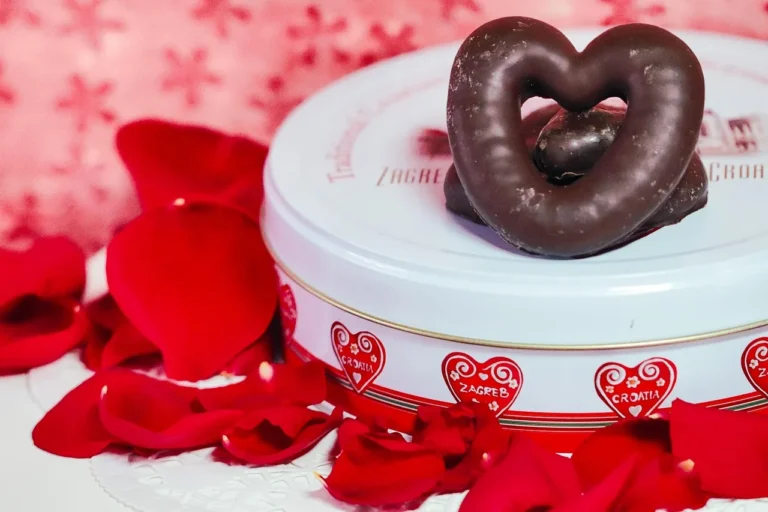
Can you use a heart-shaped pan?
Yes, but only if the heart-shaped pan’s capacity is close to a standard pan you already know. Heart-shaped pans vary by brand and depth, so do not assume a 9-inch heart pan behaves like a 9-inch square pan. Check the pan volume or compare its footprint to a familiar 8×8, 9×9, or 9×13 reference.
Heart pans make sense for a plated dessert or a small gift when the shape matters more than slice count. They are less useful if you need exact serving numbers, because the curved edges and variable depth change both bake time and yield. If the pan is shallow, start checking earlier than the recipe says.
When a heart pan is worth it
Use one when the dessert is for a partner, a small gift box, or a table centerpiece. It is less helpful for a large party unless you already know the mold’s volume and the brownie recipe fits without overfilling.
When should you use brownie pop molds?
Use brownie pop molds when you want individual Valentine treats that can be dipped, sprinkled, and packed one by one. Brownie pops are better for gifting than a full pan brownie, and they work especially well with box brownie mix. For this format, the mold matters more than a square pan size.
Brownie pop molds need a different workflow from sheet brownies. Brownies are baked in the mold at 350°F, and the stick goes in after cooling so the structure does not tear. A 25-minute bake time is a useful timing point for this style, but check the mold cavities and color as the final test.
Brownie pops were baked at 350°F. The recipe used a box brownie mix. Brownies were made with Wilton Brownie Pop Molds. The molds were sent by Wilton for the trial run. Mini cupcake wraps were used for serving.
How to finish brownie pops
-
Cool the mold fully.
Let the brownie pop release cleanly before adding the stick. If the brownie is warm, it can split around the stick hole or crumble on removal. -
Insert the sticks.
Push the stick into the cooled brownie pop after it is firm enough to hold shape. This keeps the center from tearing while it is still tender. -
Dip and decorate.
Coat with melted chocolate, then add sprinkles before the coating sets. The pop format is what makes the decoration fast and tidy. -
Pack for gifting.
Place finished pieces in mini cupcake wraps or a small box so they stay upright. That also keeps the chocolate shell from rubbing off.
Common mistakes
Overflow happens when batter is poured into a pan that is too small for the recipe volume. If the recipe was written for a 9×13-inch pan, do not pour the full batch into an 8×8-inch pan unless you reduce the batter first. The safest move is to measure the batter or use the pan-area formula above.
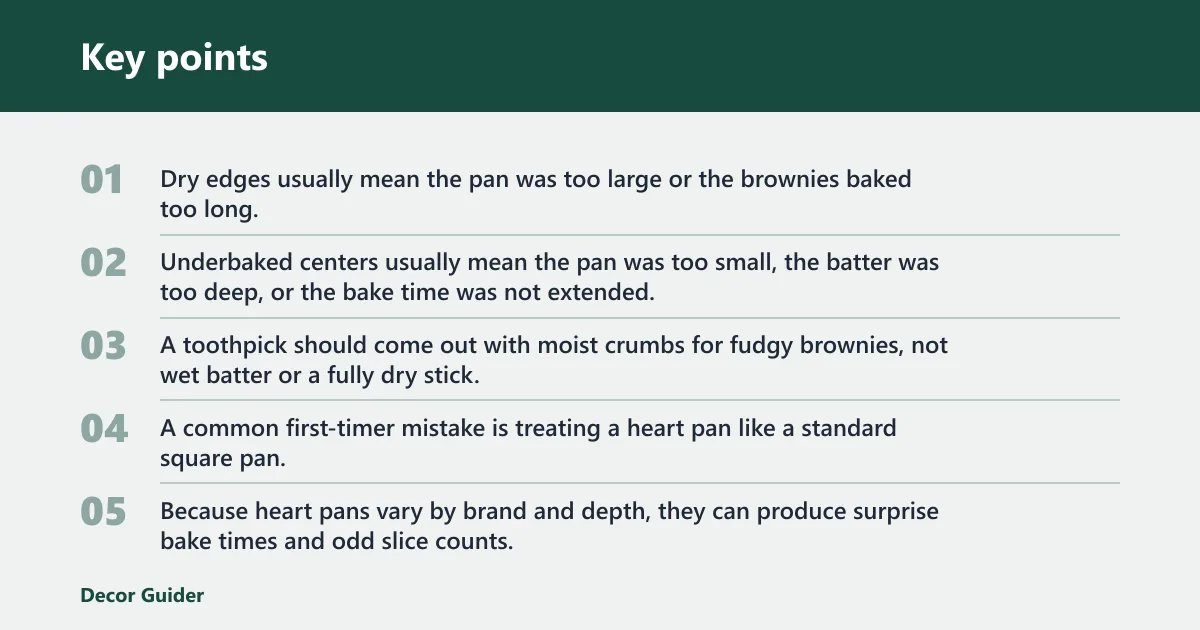
Dry edges usually mean the pan was too large or the brownies baked too long. Underbaked centers usually mean the pan was too small, the batter was too deep, or the bake time was not extended. A toothpick should come out with moist crumbs for fudgy brownies, not wet batter or a fully dry stick.
A common first-timer mistake is treating a heart pan like a standard square pan. Because heart pans vary by brand and depth, they can produce surprise bake times and odd slice counts. Match the pan volume first, then choose your bake time from the size it most closely resembles.
For brownie pops, the most common miss is adding the stick too early. Wait until the pieces are cool and firm. If the stick goes in while the brownie is soft, the center can split and the coating will not hold well.
If that did not work, the next fix is usually a size change, not a longer bake. Move to a smaller or larger pan that matches the batter volume, then recheck at the earlier end of the time range. For Valentine gifts, a pan that fits the batter beats forcing the batter into the wrong shape.
Frequently asked questions
What size pan for brownies?
An 8×8-inch pan makes thick brownies, a 9×9-inch pan gives a middle-ground batch, and a 9×13-inch pan is the standard choice for thinner pieces and more servings. If you want Valentine gifts, the best pan is the one that matches your target thickness and cut count.
How big is a brownie pan?
Common brownie pans are 8×8 inches, 9×9 inches, and 9×13 inches. Their areas are 64, 81, and 117 square inches, respectively. That footprint changes thickness, bake time, and yield more than the outside label alone.
How many brownies in a 9×13 pan?
A 9×13-inch pan usually yields about 20 to 24 party pieces, depending on how large you cut them. If you cut larger dessert squares, expect fewer servings. If you are packing gift boxes, the thinner slab gives you more tidy pieces to work with.
What is the standard brownie pan size?
The 9×13-inch pan is the common reference size for many brownie recipes, especially when you want a thinner slab and more servings. Boxed mix and homemade recipes often use it as the baseline for yield and timing.
How do I scale brownie recipes for different pan sizes?
Use the area formula: target batter = recipe batter × desired pan area ÷ 117 when the original recipe is written for a 9×13-inch pan. Then adjust bake time by the pan depth. A smaller pan usually needs more time; a larger pan usually needs less.
What pan size should I use for brownie pops?
Use a brownie pop mold, not a square pan, when the goal is individual Valentine treats. Brownie pops are baked in the mold, cooled, then fitted with sticks and decorations. A box brownie mix works well for this format, and 350°F is a common bake temperature for it.
Can I make heart-shaped brownies in a regular pan?
Yes, if you cut the cooled slab with a heart cutter or stencil after baking. That is often more predictable than guessing at a heart-shaped pan’s volume. If you do use a heart-shaped pan, confirm its capacity first because brand and depth change the result.
What size pan makes fudgy brownies?
An 8×8-inch pan is the best match when you want thicker, fudgier brownies. The smaller footprint produces a deeper layer, which keeps the center softer while the edges set. For an even fudgier result, pull it as soon as the center has moist crumbs.
Products related to this article
Sponsored / affiliate links. As an Amazon Associate I earn from qualifying purchases. I may earn additional commission from eligible campaigns.