Is It Better to Make Valentine’s Day Dinner for Two?
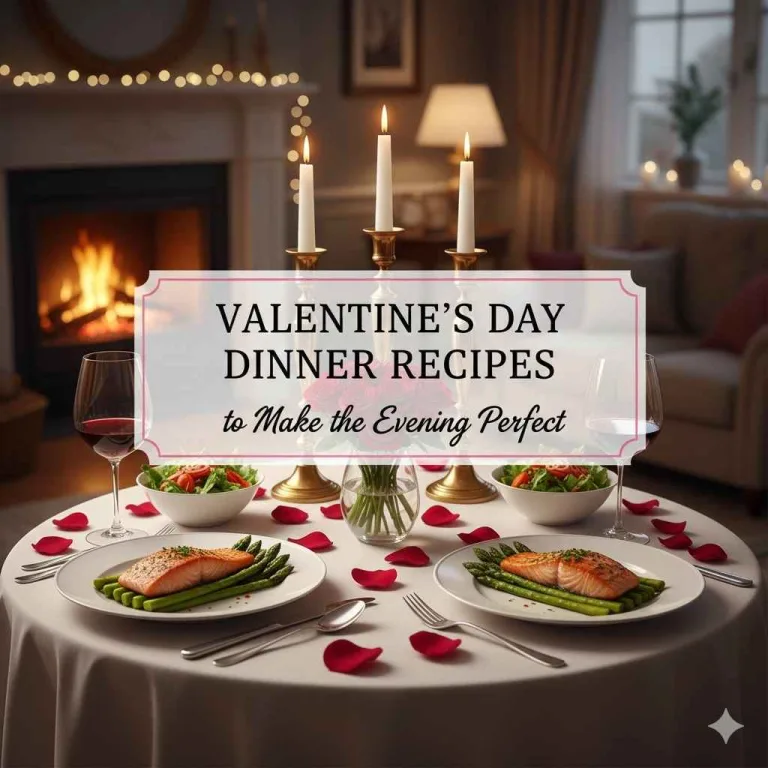
Is it better to make Valentine’s Day dinner for two or a family-style meal? Choose dinner for two when the night is mainly about privacy, romance, and a lighter cleanup load. Choose a family-style meal when kids, relatives, or guests are part of the celebration and shared dishes fit the mood better. The best choice depends on how much conversation, effort, cost control, leftovers, and hosting stress you want to manage.
Decision table
| Household type | Romance level | Prep time | Cleanup load | Best meal format |
|---|---|---|---|---|
| Couple | High, with focused conversation | Lower if you keep to a plated menu | Lower, because fewer dishes and smaller portions | Dinner for two |
| Family with kids | Moderate, more relaxed than private | Moderate to high, depending on serving style | Moderate to high if several shared dishes are used | Family-style meal |
| Multigenerational home | Moderate, with a shared-table feel | Moderate, because portions must scale cleanly | Moderate, especially if dishes are passed around | Family-style meal |
| Blended household | Moderate, with less of an exclusive date-night feel | Moderate, since different eaters may want different sides | Moderate to high if the menu has several components | Family-style meal |
Quick recommendation: choose dinner for two for a quiet couple’s night, family-style for homes with kids or extended family, and a plated-but-shared approach if the evening needs both romance and inclusion.
Is Valentine’s dinner for two the better choice?
Yes, if the evening is mainly about intimacy, focused conversation, and a clear date-night feel. Dinner for two often works well when you want smaller portions, fewer dishes, and closer control over budget and timing.
When intimacy matters most
A two-person dinner creates fewer interruptions and gives the meal a more intentional pace. It also fits plated starter-main-dessert menus well, since each course can arrive in the right order without managing a large table.
That format can feel especially strong when the evening is meant to stay private. The table only needs two settings, and the menu can stay simple without losing impact.
How portions, timing, and cleanup change
With dinner for two, scaling is easier. A main course can be trimmed to two portions without extra containers, and the cleanup usually stays lighter because there are fewer serving dishes.
A common mistake is choosing a recipe that makes about six servings when only two people are eating. That often means extra pans, more leftovers than planned, and a dinner that feels less like a date and more like meal prep.
What the format does well
- Supports focused conversation.
- Works well with a starter, main, and dessert.
- Makes timing easier to control.
- Usually keeps cleanup lighter.
Set the table for two, add one candle, keep the music soft, and plate the starter before anyone sits down. The room feels intimate because the meal moves at one pace.
Is a family-style Valentine’s meal a better fit?
It can work well when the evening includes kids, extended family, or other guests who should feel included at the same table. Family-style service makes room for larger portions, more variety, and a more relaxed shared meal, though it usually reduces the feeling of an exclusive date night.
Households with kids or extended family
Family-style works well when you need flexibility. Kids can take smaller portions, adults can pass dishes, and grandparents do not need a separate menu.
This format also fits blended households, where a shared table can feel more inclusive than a fixed romantic menu. The tradeoff is that the evening becomes communal first and romantic second.
How shared dishes change the mood
Shared bowls and platters create a different energy from plated service. People pass food, talk across the table, and linger over the same dishes, which can feel warm and easy.
That said, the dining room may feel less like a private date. If romance is the priority, keep the table calm and the menu controlled so the shared format does not turn into a cafeteria line.
How do you choose the right meal format?
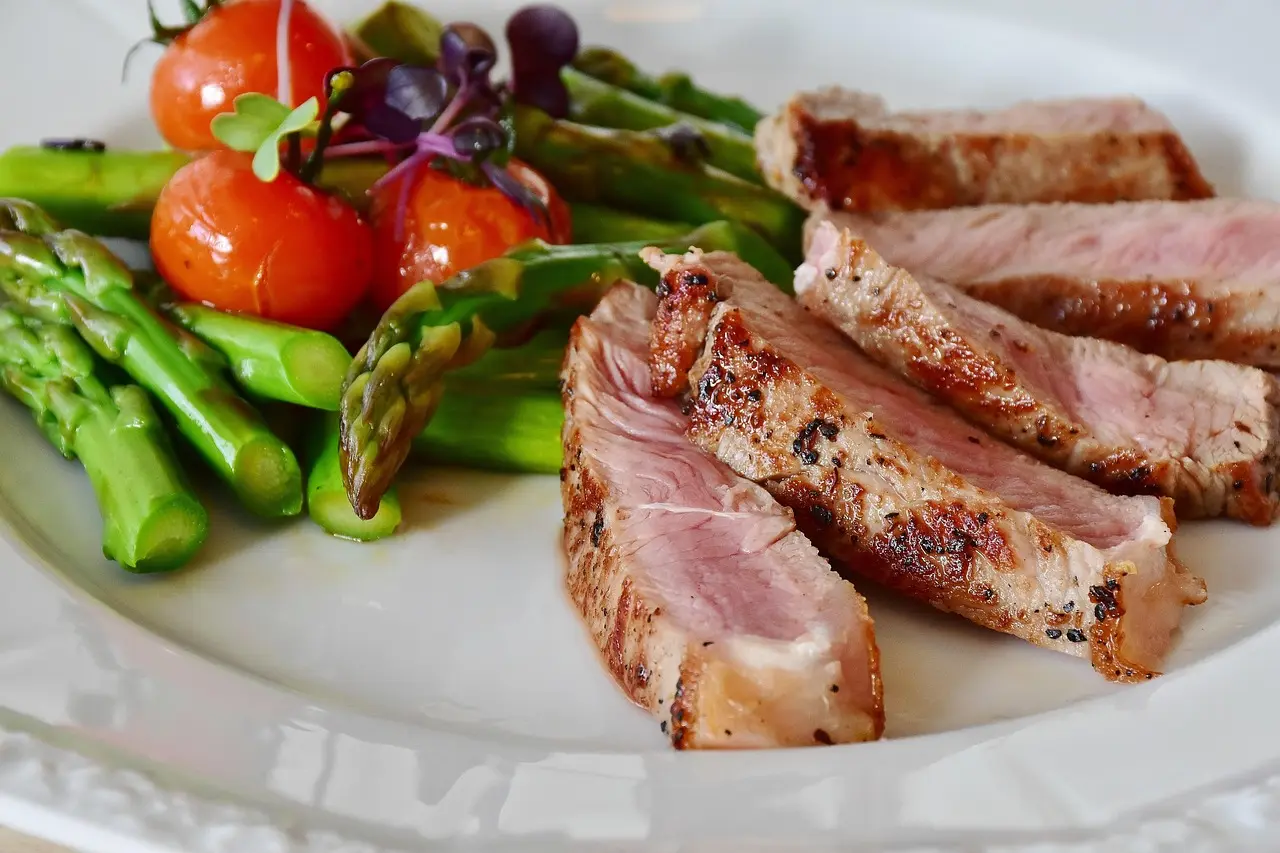
Choose the format by asking who the dinner is for, how much privacy you want, how much time you have, and how much cleanup you can accept. Romance, effort, cost, and leftovers all shift depending on whether you serve two people or a full table.
Privacy and romance
If the goal is conversation without interruptions, dinner for two is the stronger choice. If the goal is a shared celebration that includes children or relatives, family-style makes more sense even if the date-night feel softens.
Budget and prep time
Cooking at home can lower costs, especially when you use seasonal produce, inexpensive cuts of meat, and sides you can make ahead. A smaller two-person menu is also easier to time than a large spread.
Suppose you have 45 minutes before guests arrive. A plated dinner for two can stay controlled with one main pan and a quick starter, while a family-style meal may need more dishes in motion at once.
Cleanup and leftovers
Cleanup is often the biggest hidden difference. Dinner for two usually means fewer serving dishes, while family-style adds platters, bowls, and extra utensils.
Leftovers matter too. If you want planned extra portions for the next day, family-style can make sense. If you want a clean finish and minimal storage, dinner for two is easier to manage.
- Define the guest list. Decide whether the meal is for two people, kids, relatives, or a mixed group. That choice determines serving style before you pick recipes.
- Set the time limit. Choose a menu that fits the window you actually have, including starter, main, and dessert. A short evening needs fewer moving parts.
- Count the dishes. List the pans, bowls, and platters each format needs. Fewer pieces usually means less cleanup and less stress after dinner.
- Plan leftovers on purpose. Decide whether you want none, one extra meal, or several lunch portions. That keeps portions from being too large or too thin.
What should you serve either way?
A simple three-course structure works well for both formats: a light starter, a main course that fits your skill level, and dessert that feels like a finish rather than another chore. Keep portions sensible so the main course still feels central.
Starter course
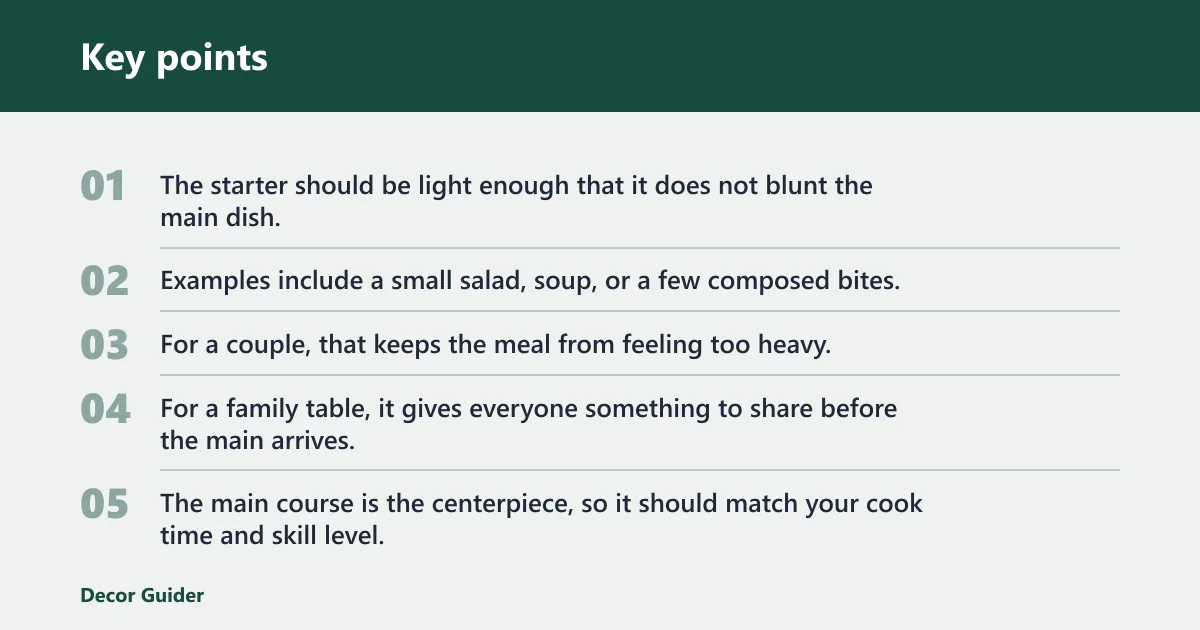
The starter should be light enough that it does not blunt the main dish. It can serve 2 or 4 depending on the recipe, and it is a good place for make-ahead work because it should not demand last-minute attention.
Examples include a small salad, soup, or a few composed bites. For a couple, that keeps the meal from feeling too heavy. For a family table, it gives everyone something to share before the main arrives.
Main course
The main course is the centerpiece, so it should match your cook time and skill level. It can lean elegant or comfort-food based, but it should scale cleanly for two or for a group without awkward leftovers or uneven portions.
A large skillet works well for seared mains, a slow cooker helps when you need hands-off timing, and a pressure cooker can shorten cook time when the menu needs speed. For family-style service, a dish that can move from pot to platter works especially well.
Dessert course
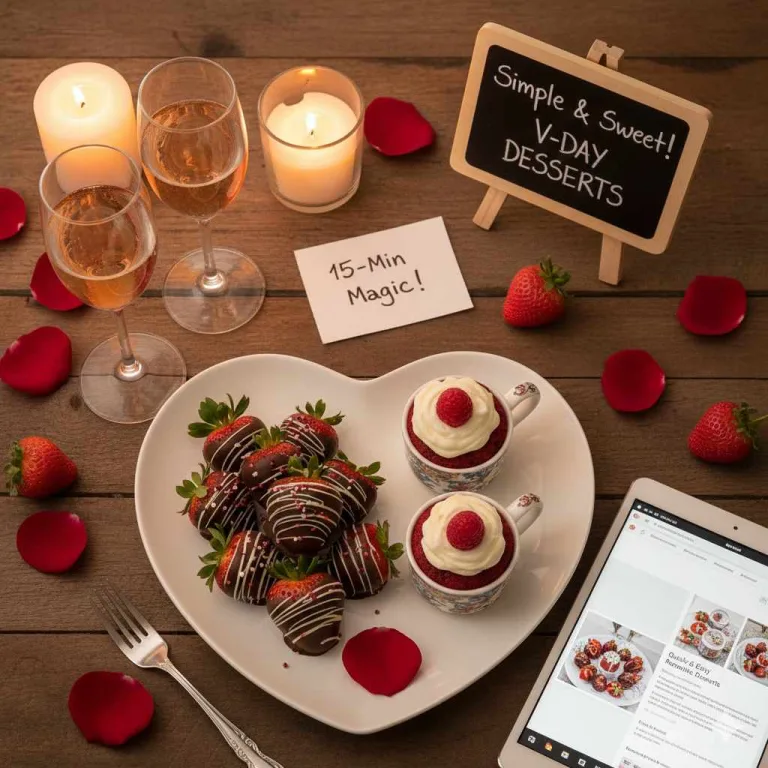
Dessert should feel like a calm finish, especially after a richer dinner. It can be shareable or portioned individually, and make-ahead planning helps keep the last course low-stress.
If the main is heavy, keep dessert lighter. If the dinner is simple, a more indulgent dessert can provide the romantic finish without adding much work at the table.
How do you keep Valentine’s dinner special without overcomplicating it?
Keep the focus on pacing and atmosphere, not kitchen theatrics. A few deliberate choices in lighting, music, and table setup can do more for the mood than a complicated menu with extra steps.
Lighting, music, and table setup
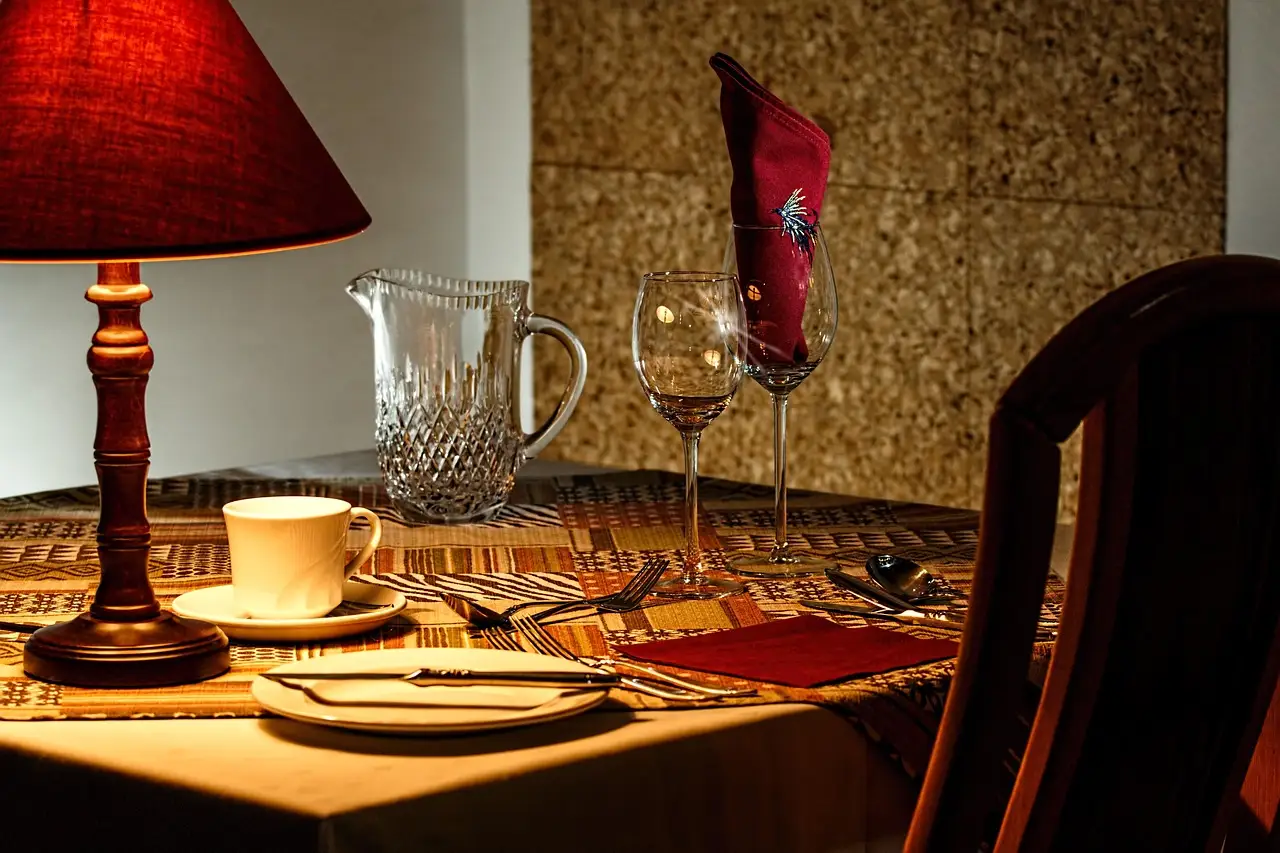
Use soft lighting, low music, and a table that looks finished before the first plate arrives. Those details help the room feel calm and make the meal feel intentional without extra effort.
A simple cloth, matching plates, and cleared counters are usually enough. If the table is crowded or the kitchen is noisy, the evening can feel rushed even when the food is good.
Pacing the courses
Do not serve everything at once unless the meal is meant to be casual. A starter should open the evening, the main should anchor it, and dessert should give the night a slower close.
Family-style meals can still feel orderly if the courses arrive in sequence. The key is to avoid putting every dish on the table at the same time, which can flatten the rhythm of the night.
What budget-friendly swaps work best?
Budget control comes from ingredient choice, portion size, and how much of the meal you make from scratch. Seasonal ingredients, cheaper cuts of meat, and make-ahead components all help lower cost without making the dinner feel bare.
Seasonal ingredients and cheaper cuts
The page material behind this topic points to seasonal ingredients for budget control, and it also notes that cooking from scratch can be cost-effective. Good ingredients should carry the meal, so you do not need heavy garnish or expensive extras.
Cheaper cuts of meat also help when the cooking method suits them. A slow cooker or pressure cooker can make those cuts more tender, which lets you spend less without lowering the quality of the main dish.
Make-ahead components versus dine-in
Make-ahead sides, desserts, and starter elements reduce stress on the day. That matters even more if the evening includes children or guests, because last-minute work multiplies fast.
A home-cooked meal usually gives you more control than dining out. You set the menu, the pace, and the leftovers, and you avoid the bill and timing limits that come with a restaurant table.
Equipment that helps
- Slow cooker. Useful for hands-off mains that need time, especially when you are feeding a larger group.
- Pressure cooker. Helpful when you need a faster main without giving up a cooked-from-scratch feel.
- Large skillet. Good for quick searing, sauce building, and portioned dinners for two.
- Serving platters. Essential for family-style meals that need food to move easily from kitchen to table.
Frequently asked questions
Is it better to make Valentine’s Day dinner for two or with the whole family?
It is better to match the format to the evening’s goal. Choose dinner for two when you want privacy, conversation, and simpler cleanup. Choose a family-style meal when the table includes kids, guests, or relatives and the priority is shared time rather than a private date-night feel.
What are the pros and cons of a Valentine’s dinner for two?
The main pros are intimacy, easier timing, smaller portions, and fewer dishes. The main con is that it excludes everyone else by design, so it is not the best fit for a household that wants a shared celebration. It also works best when the menu stays controlled.
What are the pros and cons of a family-style Valentine’s dinner?
The pros are inclusion, larger portions, and flexibility for mixed ages or family sizes. The con is that it can reduce the exclusive date-night feeling and usually creates more dishes to wash. If romance matters, keep the table setting calm and the menu organized.
How do I make Valentine’s dinner feel special without overcomplicating it?
Use a simple course structure, soft lighting, and a clean table. Keep the menu short, choose foods your partner enjoys, and avoid recipes that need constant attention. A good pace matters more than complexity, especially if you want the evening to feel relaxed.
What Valentine’s dinner ideas work if I want to cook on a budget?
Look for seasonal ingredients, cheaper cuts of meat, and recipes with make-ahead pieces. Cooking from scratch can be cost-effective, especially when you keep the menu simple and let good ingredients do the work. Home cooking is often cheaper than dining out.
What can I prep ahead for a Valentine’s dinner at home?
Starter components, dessert, sauces, and chopped vegetables are all smart make-ahead tasks. You can also set the table early and portion ingredients before cooking begins. That lowers the chance of last-minute rushing and keeps the meal centered on the table instead of the stove.
Products related to this article
Sponsored / affiliate links. As an Amazon Associate I earn from qualifying purchases. I may earn additional commission from eligible campaigns.