Chocolate Fondue Serving Size Chart
For chocolate fondue, plan about 2 to 3 ounces of chocolate and 1 to 2 tablespoons cream per person, plus 4 to 6 ounces of dippers. Too little chocolate leaves guests waiting; too much leaves you with a bowl of cooled fondue and wasted fruit, cake, and marshmallows. This guide gives a precise serving-size chart for 2, 4, 6, or 8 people, with simple adjustments for light appetites, dessert-only nights, and party grazing.
What chocolate fondue
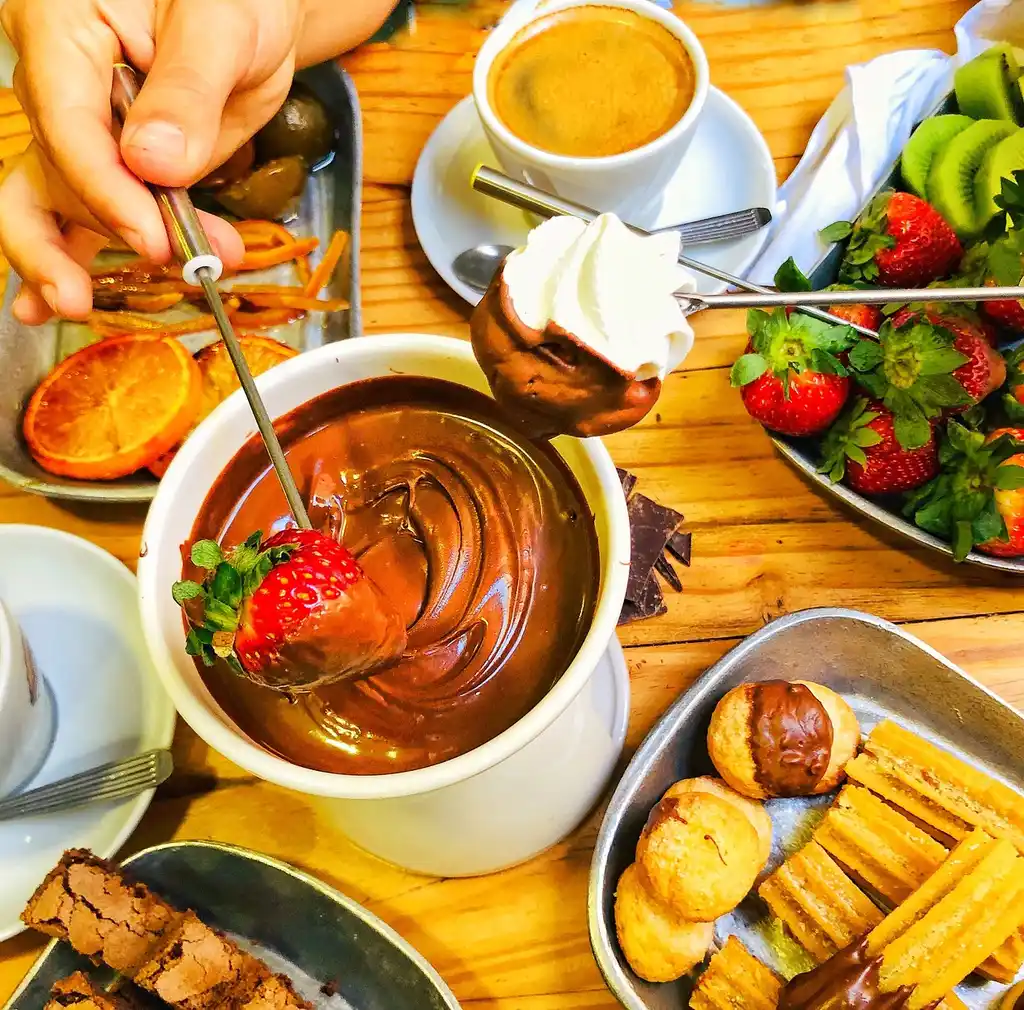


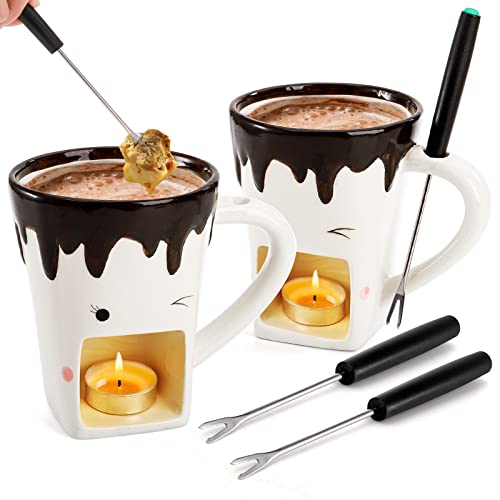
Chocolate fondue is warm melted chocolate for dipping, kept soft enough to coat fruit, cake, and other dippers without setting in the bowl. It is usually warmed, not boiled, and the holding temperature matters because chocolate thickens fast once it cools. A thinner batch gives easier dipping; a thicker batch clings more heavily to food.
Warm serving texture and chocolate type
Chocolate type changes both flavor and batch behavior. Dark and semi-sweet chocolate usually hold structure well and feel less sweet, milk chocolate tastes softer and often needs a little more care with thickness, and white chocolate can move quickly from smooth to overly thick if overheated. Tescoma recommends dark, milk, or white chocolate with high cocoa butter content.
If you are planning for a group, treat the chocolate style as part of the portion plan. A batch that is meant to coat strawberries and pretzels can be slightly looser than one built for pound cake or biscotti, because heavier dippers pull more sauce off each dunk.
Chocolate fondue servings by guest count chart
| Guests | Chocolate | Cream | Estimated dip servings | Second-helping margin | Adjustment guide |
|---|---|---|---|---|---|
| 2 | 6 oz | 1/2 cup | 6 to 8 dips | Small margin | Light: 5 oz; Standard: 6 oz; Heavy: 8 oz |
| 4 | 10 oz | 3/4 cup | 12 to 16 dips | Moderate margin | Light: 8 oz; Standard: 10 oz; Heavy: 12 oz |
| 6 | 12 oz | 1 cup | 18 to 24 dips | Comfortable margin | Light: 10 oz; Standard: 12 oz; Heavy: 14 to 16 oz |
| 8 | 16 oz | 1 1/4 cups | 24 to 32 dips | Useful buffer | Light: 12 oz; Standard: 16 oz; Heavy: 18 oz |
This chart assumes average dessert portions and a mix of fruit, marshmallows, pretzels, and cake. It also reflects a practical scaling pattern: small groups can get by with less, but guests tend to dip more when several textures are on the table. For one reference batch, a recipe page serves 6 with 12 oz chocolate and 1 cup heavy cream.
How much chocolate fondue do you need?
Start with the chart, then shift for appetite. For light appetites, stay near the low end. For dessert-only nights, use the standard amount. For grazing or a party where people keep dipping over a longer span, add more chocolate rather than only more fruit, because the bowl needs enough volume to stay fluid.
Light appetite adjustment
For a light crowd, plan closer to 2 ounces of chocolate per person and keep the dip list short. Two people usually need 5 to 6 ounces; four people often need about 8 ounces; six people can manage with about 10 ounces if the dippers are generous and the meal before fondue was substantial.
Standard dessert portion
For a normal dessert course, use the middle column in the chart. That amount works well when fondue is the last course and each guest takes a few pieces of fruit, one or two marshmallows, and a piece of cake or pretzel. It also gives room for a second pass without immediately thinning out the bowl.
Heavy appetite or grazing adjustment
For party grazing, plan nearer 3 ounces per person, especially if the table stays open for more than a few minutes. A common first-timer mistake is buying enough dippers for the crowd but not enough chocolate to keep the bowl generous through the second round. More chocolate gives you a safer margin than a thin batch.
Picture 8 guests with strawberries, marshmallows, and cake cubes. A 16-ounce batch gives enough to move through a first round and still leave a little for late arrivals or second helpings. If the bowl looks low before the last two guests have dipped, add warm cream in small amounts to keep the surface fluid.
What chocolate and cream ratio works best?
A practical starting ratio is about 8 ounces chocolate to 1 cup heavy cream. That ratio is close to the recipe page that serves 6 with 12 oz chocolate and 1 cup heavy cream, and it matches the go-to ratio cited by Back9Dips. Use it as a base, then adjust for the chocolate type and the texture you want.
Dark, milk, and white chocolate differences
Dark and semi-sweet chocolate usually tolerate the standard ratio well. Milk chocolate can feel softer and may need slightly less cream if you want a thicker coat. White chocolate often needs the most careful heat control because it can turn pasty faster if the bowl runs hot. High cocoa butter content helps every type stay smoother.
When to add more cream
Add heavy cream if the fondue turns too thick or starts to drag on the fork. Add it in small splashes, not a large pour, and stir until the bowl looks glossy again. The same source notes that homemade fondue can be made by adding heavy cream to melted chocolate, which is the simplest way to thin a batch that has tightened.
- Warm the cream first. Use a small amount of cream at room temperature or slightly warm, then add it gradually. Cold cream can cause the bowl to tighten before the mixture smooths out.
- Stir in short passes. Fold the cream through until the texture loosens, then stop. Overstirring can make the mixture lose body, especially with milk or white chocolate.
- Check the coating. Dip one strawberry or marshmallow and look for a thin, even coat. If it runs off too fast, the bowl needs more chocolate; if it clumps, add a little more cream.
When to add more chocolate
Add more chocolate if the fondue looks thin, glossy in a watery way, or leaves a weak coat on fruit. Melt the extra chocolate separately or in the warm bowl if space allows, then stir it in until the texture firms slightly. This is the right fix when you want more cling for cake cubes or biscotti.
How to size the fondue pot
Choose the pot size around the batch, not the other way around. A small electric fondue set needs enough room for stirring and dipping without crowding the bowl. The DELÍCIA fondue dish uses a maximum of 300 g chocolate, which is a useful ceiling when you are planning a single small batch.
Small electric fondue set limits
If your set has a small bowl, do not fill it to the rim. Leave space for stirring and for the heat to move through the chocolate evenly. For a compact pot, a batch near 300 g chocolate is a practical upper limit, especially if you also plan to add cream and want room for dipping forks.
Keeping the bowl warm without overheating
Most fondue sets are meant to hold the chocolate warm, not hot. The appliance referenced here has a melting setting at 60 °C and a holding setting at 40 °C. That difference matters: melt at the higher setting, then switch to the lower one so the bowl stays fluid without scorching.
- Melt the chocolate gently. Heat the chocolate until just smooth, then add the cream. Avoid boiling the cream or pushing the chocolate past a gentle melt.
- Switch to hold mode. Move the pot to the lower setting once the mixture is fluid. A holding temperature around 40 °C helps preserve texture during serving.
- Stir between rounds. Give the bowl a quick stir every few minutes. That keeps the surface even and prevents the edges from thickening first.
Suppose a 2-person dessert uses 6 ounces chocolate and 1/2 cup cream in a small fondue pot. If the pot runs hot, the edges may stiffen first while the center stays fluid. Turning the set down before serving gives a more even dip from the first strawberry to the last marshmallow.
Best dippers for chocolate fondue
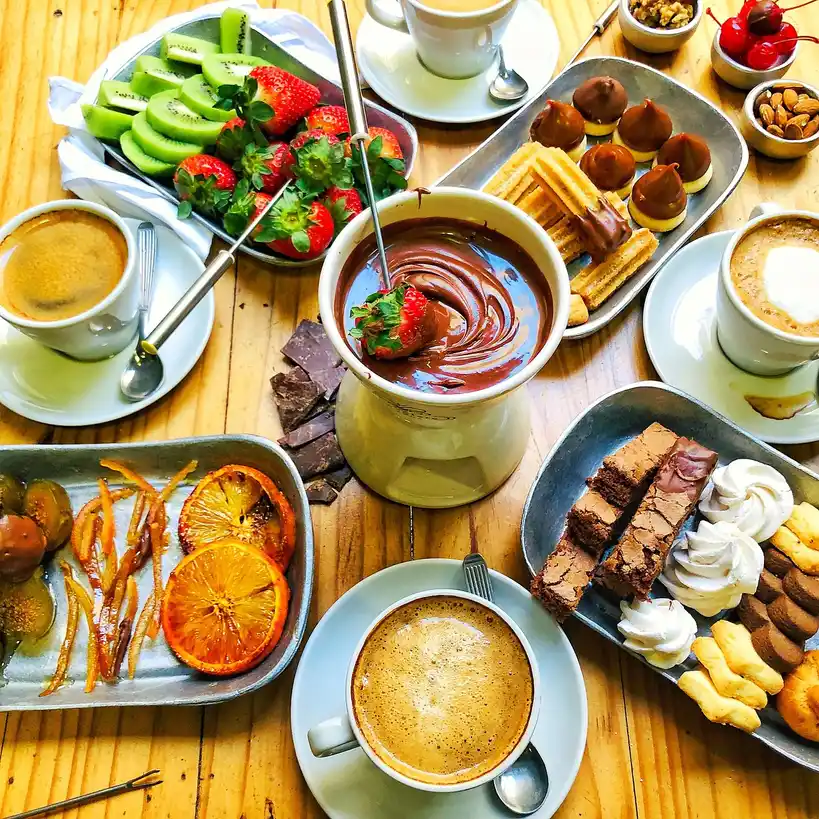
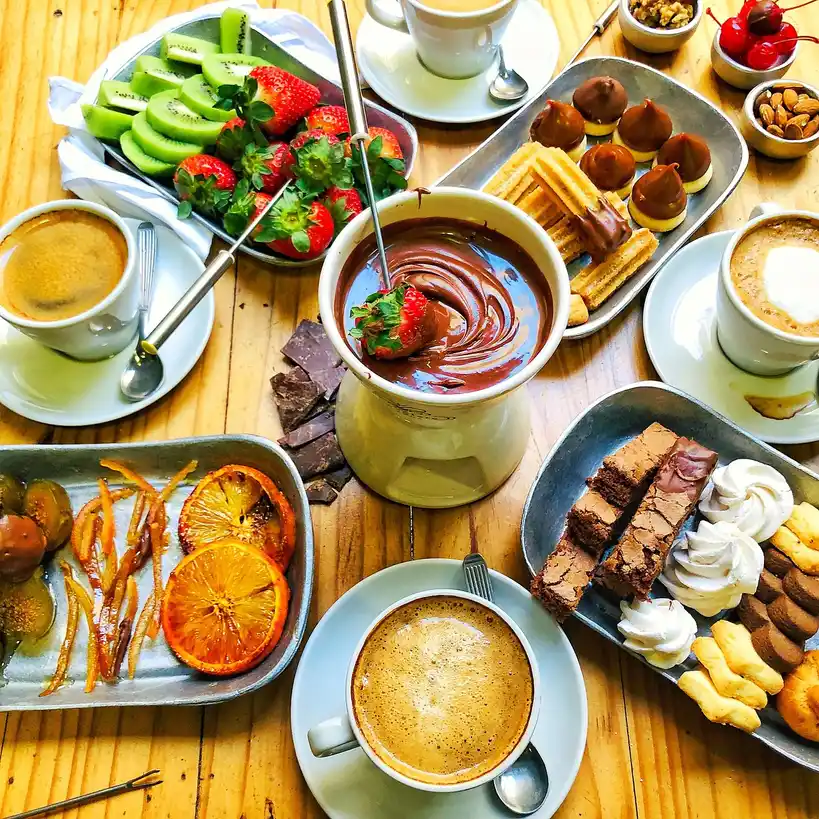
The best dippers are sturdy enough to stay on a fork and dry enough to hold chocolate well. Fruit, marshmallows, pretzels, biscotti, and cubed cake all work. Choose a mix of juicy, crisp, and soft pieces so the table does not feel repetitive and the chocolate amount stretches in a predictable way.
Fruit and cake
Strawberries, banana slices, apples, pineapple, and pears are strong choices because they bring moisture and a clean bite. Cubed cake adds structure and soaks up a thicker coating. If you are serving a group, cut the cake into bite-size cubes so guests can dip without breaking the piece apart in the bowl.
Marshmallows and pretzels
Marshmallows are useful when you want soft sweetness with very little prep. Pretzel rods bring salt and a firm grip, which is helpful when the fondue is on the thicker side. Back9Dips lists marshmallows and pretzel rods as popular picks, and both work well for a table that needs a few less delicate options.
Biscotti and other crisp dippers
Biscotti, shortbread cookies, and other crisp dippers hold up well when the fondue is not too thin. They are best for a thicker batch because they need enough coating to avoid tasting dry. Keep these pieces small; large crisp dippers can crack if the chocolate cools too quickly on contact.
- Arrange the dippers first. Put fruit, cake, marshmallows, and crisp items on separate plates. That keeps wet items away from dry ones and makes the dip count easier to manage.
- Use long-handled forks. Fondue forks or bamboo skewers keep hands farther from the warm bowl and help guests reach the center without leaning in. Back9Dips lists long fondue forks or bamboo skewers as essential tools.
- Count serving rounds. Plan about 4 to 6 ounces of dippers per person for a dessert course. That amount fits the chocolate chart above and leaves room for a second helping without overbuying.
Frequently asked questions
How much chocolate for fondue?
Plan 2 to 3 ounces of chocolate per person, with 4 to 6 ounces of dippers. For a small table, 6 ounces serves 2, 10 ounces serves 4, 12 ounces serves 6, and 16 ounces serves 8. That range gives enough volume for dipping without leaving a large leftover bowl.
How much chocolate per person for fondue?
A practical target is 2 to 3 ounces per person. Use the lower end for a light dessert after a full meal and the higher end when fondue is the main dessert attraction. If the group likes repeated dipping or uses heavier items like cake and biscotti, stay near 3 ounces.
What is chocolate fondue?
Chocolate fondue is warm melted chocolate served for dipping fruit, marshmallows, pretzels, cake, and other bite-size items. It is kept warm enough to stay fluid, often around a holding setting rather than a high melt setting, so it remains dippable while guests serve themselves at the table.
What foods go with chocolate fondue?
Fruit, marshmallows, pretzels, biscotti, shortbread, and cubed cake all fit well. Strawberries, banana slices, apples, pineapple, and pears are especially common. Choose at least one juicy item, one crisp item, and one soft item so the chocolate feels varied and the serving plan is easier to judge.
How much fondue will I need for a party?
For a party, build the amount around guest count and appetite level. Use about 6 ounces for 2, 10 ounces for 4, 12 ounces for 6, and 16 ounces for 8 when dessert is the main focus. Add more chocolate if the table will graze for a long time or if second helpings are likely.
Products related to this article
Sponsored / affiliate links. As an Amazon Associate I earn from qualifying purchases. I may earn additional commission from eligible campaigns.