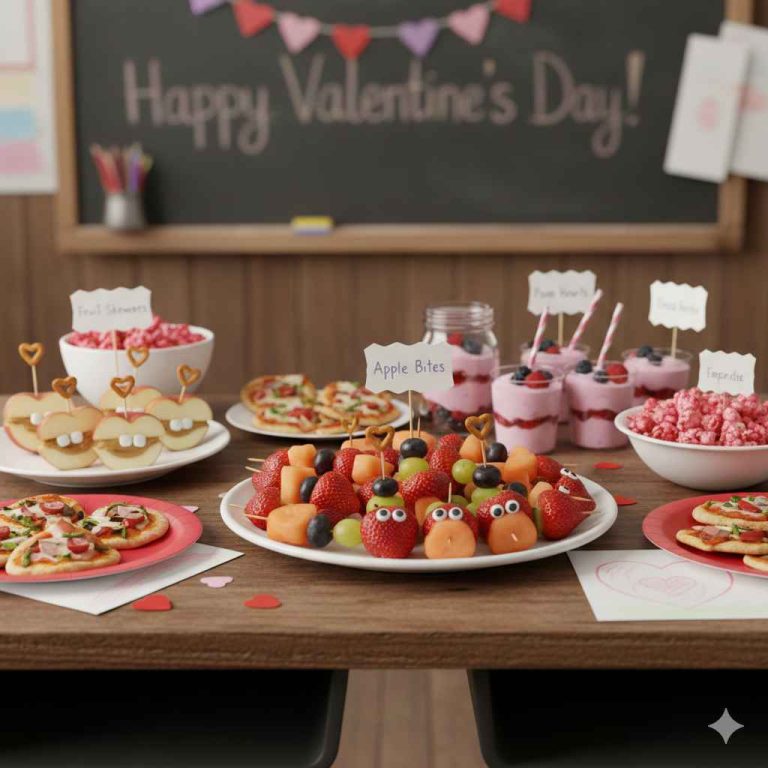
Valentine’s Day Cookie Portion Size Chart
For Valentine’s Day cookie portion planning, a common rule of thumb is to use about 2-ounce dough balls for 3-inch cookies, 1-ounce balls for 2-inch cookies, and 0.5-ounce balls for mini cookies; that yields roughly 12, 24, and 48 cookies per 24 ounces of dough. Wrong sizing throws off batch counts, packaging, and how many treats you can give, sell, or send. This guide turns cookie diameter into yield, dough weight, and pack counts for gifts, parties, school treats, and bulk orders.
What changes cookie yield?



Cookie yield depends most on diameter, thickness, and dough weight. Wider cookies spread farther and lower the total count; thicker cookies usually need more dough and a longer bake; consistent scoop size keeps both batch counts and packaging counts predictable. Diameter alone does not give you a full plan.
Diameter and spread
A 2-inch cookie usually gives a much higher count than a 3-inch cookie from the same batch, because area increases quickly as diameter grows. A wider cookie also needs more space on the tray, which lowers how many fit per round. If you want tidy gift counts, set the size before you mix the dough.
For Valentine cookies, common working sizes are 2 inches for minis, 3 inches for standard gift cookies, and 4 inches or larger for oversized statement cookies. Smaller cookies fit school treats and party platters well. Larger cookies suit boxed gifts, but they reduce yield and raise breakage risk in bags.
Thickness and bake time
Thin cookies bake faster and are more likely to crisp at the edges, which can help a dessert table tray but can also make packaging more fragile. Standard thickness is the safest choice for gifting because the cookie keeps its shape and is less likely to crack. Thick cookies need more bake time and careful cooling before boxing.
A common first-timer mistake is pairing a large diameter with a soft dough that spreads too much. That can turn a planned 3-inch cookie into a wider, flatter round that no longer fits the box count you expected. If the dough is soft, chill it before portioning.
Scoop size and dough weight
Portion by weight whenever possible. Teaspoons and tablespoons help with rough measuring, but grams give the most even cookies. A common rule of thumb is that a 1-tablespoon portion is about 15 grams, while a 2-tablespoon portion is about 30 grams, though exact density depends on the dough.
Cookie portion chart
This chart turns diameter into yield, dough weight, tray planning, and packaging counts. The numbers are planning figures for a standard home-baking batch of about 24 ounces of dough, with cookie count based on portion weight rather than final baked diameter. Final spread can still change the fit.
| Cookie diameter | Scoop / dough weight | Estimated yield per 24 oz batch | Cookies per gift box | Best use case |
|---|---|---|---|---|
| 1.5 to 2 inches | #60 to #40 scoop, about 0.5 oz / 14 g | about 48 cookies | 6 to 12 in a small box | School treats, party platters, sampler packs |
| 2.5 to 3 inches | #20 to #16 scoop, about 1 oz / 28 g | about 24 cookies | 3 to 6 in a medium box | Gift boxes, handouts, party favors |
| 3.5 to 4 inches | #10 scoop, about 2 oz / 56 g | about 12 cookies | 2 to 4 in a shallow box | Premium gifts, bakery-style singles |
| 4.5 inches and larger | 2.5 oz to 3 oz / 70 to 85 g | 8 to 10 cookies | 1 to 2 per box | Oversized gifts, single-cookie packages |
For bulk Valentine baking, the most efficient size is often the 2.5- to 3-inch cookie. It is large enough for decorating and gifting, but small enough to keep yield practical. For school treats, minis are better because you can count out more servings from one batch.
How many cookies for gifts?

For gifts, plan by container first and then choose the cookie diameter. Small gift boxes usually fit 3 to 6 standard cookies, while cellophane bags work best with 2 to 4 cookies depending on thickness. Oversized cookies are better packed singly or in pairs because they crack and shift more easily.
Small gift boxes
A flat box around 6 by 6 inches generally suits 4 to 6 cookies that are about 2.5 to 3 inches wide. If the cookies are thick, use the lower end of that range. If the cookies are decorated with icing, leave room so the tops do not rub.
For a 24-cookie batch, that means you can usually fill 4 to 8 gift boxes, depending on how many cookies you place in each box. A 12-cookie batch works well for single-recipient gifts. A 48-cookie batch is better for multiple small boxes or mixed packages.
Cellophane bags
Clear bags are simple, but they are less forgiving than boxes. A 4-by-6-inch bag usually suits 1 to 2 standard cookies or 3 to 4 minis. A 5-by-7-inch bag can hold 2 to 3 standard cookies or 4 to 6 minis if the cookies are flat enough to stack without crushing the icing.
- Match the bag to the cookie. Choose a bag that leaves at least a little space above the cookies so the closure does not press on the decoration. Taller cookies need a wider bag, not just a longer one.
- Count the package first. Decide whether each bag gets 1, 2, or 3 cookies before you bake. That keeps the batch size aligned with the final number of gifts.
- Pack after full cooling. Cool cookies completely before bagging so trapped steam does not soften the surface or smear icing. This matters most for thick cookies and frosted tops.
Oversized cookies and breakage
Cookies at 4 inches or larger are more likely to crack in boxes and bags because their weight shifts during transport. For those sizes, a single-cookie sleeve or a shallow box is safer than stacking. If the cookie is heavily decorated, a rigid container is the better choice.
Suppose you want 20 gift bags for a class exchange. If each bag gets 2 mini cookies, you need 40 minis total, or about one 24-ounce batch plus a little extra dough. If each bag gets 1 large cookie, you need 20 large cookies, which is closer to two standard batches and more packaging space.
How many cookies for parties?
For parties, use serving counts rather than gift counts. A practical range is 2 to 3 mini cookies for each child and 1 to 2 standard cookies for each adult, with extra cookies for dessert tables and seconds. If the cookie is rich or heavily frosted, stay near the lower end of the range.
Children’s servings
For children, 2 mini cookies or 1 standard cookie usually works well, especially if the table has other sweets. School treats should stay small and easy to handle. Mini cookies also reduce waste because children often prefer a smaller portion over one large cookie.
Adult servings
For adults, plan 1 to 2 standard cookies per person if the cookies are one part of a larger spread. If the cookie is the main dessert, count 2 standard cookies per adult or 3 minis per adult. Rich fillings and frosting make smaller counts more realistic.
Dessert table counts
For a dessert table, count 2 to 3 cookies per guest if cookies are one of several desserts. For a cookie-only table, plan 3 to 4 cookies per guest in mixed sizes. That mix works well because small cookies fill the tray and larger cookies give the display height.
- Count guests by group. Separate children, adults, and expected seconds before you portion the dough. Different groups need different serving counts.
- Assign a cookie size. Use minis for kids and buffet trays, standard cookies for favors, and larger cookies for plated dessert. One size per use keeps planning simpler.
- Add a small buffer. Bake 10 to 15 percent extra for broken cookies, taste testing, and surprise guests. That buffer matters more when the cookies are decorated or stacked.
Dough weights and scoop sizes
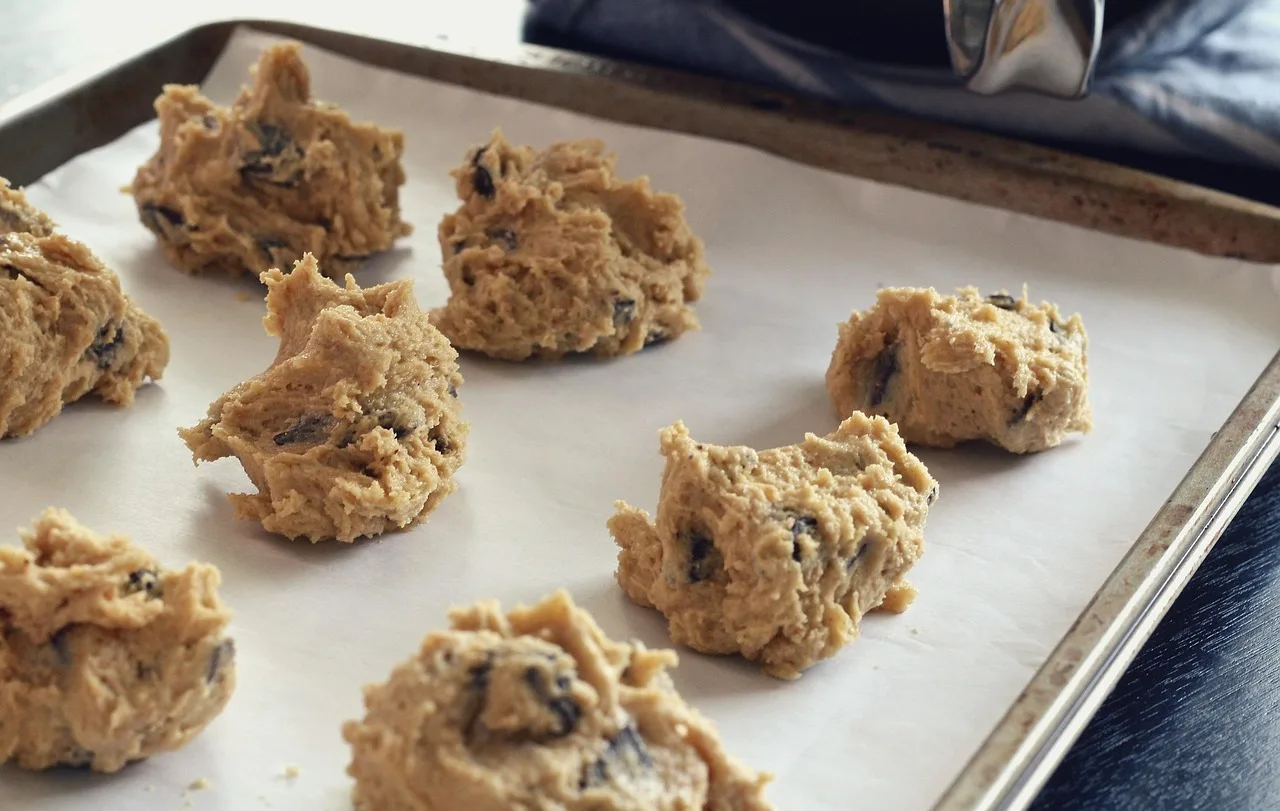
Weight is the cleanest way to portion cookie dough evenly. Scoop numbers help, but the same scoop can hold different doughs at slightly different weights. For Valentine cookies, the most useful range is #40 to #10, depending on whether you want minis, standard cookies, or large bakery-style rounds.
Teaspoon and tablespoon equivalents
A level teaspoon of dough is usually a mini portion, close to 5 grams. A level tablespoon is often around 15 grams, and 2 tablespoons is about 30 grams. Those figures are approximate, but they are close enough for home planning when you do not want to weigh every piece.
Numbered scoop guide
#40 scoops are about 0.75 tablespoon and work well for thumbprints and very small cookies. #60 scoops are smaller still and are useful when you want many bite-size pieces. #20 and #16 scoops are common for standard drop cookies, while #10 scoops suit larger sandwich-style cookies and decorated singles.
- #60 scoop. Best for tiny bites and sampler trays. Use it when you want many cookies from one batch and do not need a formal gift presentation.
- #40 scoop. Good for thumbprints and mini drops. It gives a small, even portion that bakes quickly without turning into a crumbly pebble.
- #20 scoop. A practical standard for 1-ounce cookies. It works well for school treats, party favors, and neat boxed gifts.
- #16 scoop. Slightly larger than #20 and useful when you want a fuller 3-inch cookie with a softer center.
- #10 scoop. Best for 2-ounce portions, sandwich cookies, and large decorated cookies that need enough dough to hold their shape.
When to use mini, standard, or large scoops
Use mini scoops when you want more pieces from each batch. Use standard scoops when you need a balanced cookie that fits common gift boxes. Use large scoops when you want a premium look or a cookie that can carry heavier decoration without spreading too thin.
How many cookies should I plan per person for a Valentine’s party?
Plan 2 to 3 mini cookies for each child and 1 to 2 standard cookies for each adult. If the cookies are one part of a broader dessert table, those counts are enough. If cookies are the main dessert, increase the portion by one cookie per person.
For school treats, the useful target is usually one mini cookie or one small standard cookie per child. For adult parties, a 3-inch cookie is a better serving size than a 4-inch cookie because it is easier to plate and leaves room for other desserts.
Sheet capacity and spacing
Tray planning affects how many bake rounds you need. A half-sheet pan commonly holds about 12 standard 2.5- to 3-inch cookies in a 3-by-4 layout. A quarter-sheet pan usually holds about 4 to 6 of the same cookies. Leave enough space for spread so the edges do not run together.
Half-sheet pan counts
On a half-sheet pan, 2-inch minis can often fit 20 to 24 cookies if the dough is sturdy and the spacing is tight. Standard 3-inch cookies are safer in a 12-cookie layout. Larger 4-inch cookies usually fit 6 to 8 per pan, depending on how much they spread.
Quarter-sheet pan counts
A quarter-sheet pan is useful for small batches, but it fills quickly. Four 3-inch cookies is a safe planning number, and six mini cookies is often possible. If you are baking multiple Valentine batches, quarter sheets can help with rotating flavors and keeping colors separate.
Spacing for even baking
Leave at least 2 inches between mini cookies and 3 inches between standard cookies when you expect normal spread. Thick dough can tolerate slightly tighter spacing, but only if it does not flatten much in the oven. Crowding the tray raises the chance of merged edges and uneven color.
- Map the tray count. Divide the total cookies by the number that fit on each pan. That tells you how many bake rounds you need before you start.
- Leave spread room. Space cookies farther apart if the dough is soft or warm. This keeps round shapes and prevents one cookie from pushing into the next.
- Rotate between rounds. Bake one tray at a time when even color matters most, or rotate pans halfway through if your oven fits more than one sheet. That helps the cookies brown at the same pace.
Packaging counts for boxes and bags
Packaging counts are easiest to plan from the cookie diameter and thickness, not from the recipe alone. Flat, standard cookies stack better. Thick cookies take more room and are more likely to crack if they are forced into a tight box or bag.
Gift box fit
A 6-by-6-inch box usually fits 4 to 6 standard Valentine cookies, 6 to 8 minis, or 2 oversized cookies. A 4-by-4-inch box usually fits 1 to 2 standard cookies or 3 to 4 minis. If the cookies are decorated, use the lower end of the count so the tops stay intact.
Bag sizes
A 4-by-6-inch cellophane bag is best for one large cookie or two minis. A 5-by-7-inch bag usually handles two standard cookies or a small stack of minis. If the cookie has a thick royal icing border, choose a wider bag so the closure does not press the surface.
Packing thicker cookies
Thicker cookies need extra cooling time before boxing because warm centers make the surface softer and more fragile. Pack them single-layer whenever possible. If you must stack, separate layers with parchment so icing and sprinkle details do not transfer.
Say your target is 24 school treats, and you choose 1-ounce cookies. One 24-ounce batch is the right starting point, and a half-sheet pan can handle the batch in about two rounds if you bake 12 at a time. That keeps the count, tray plan, and package count aligned.
Frequently asked questions
How many Valentine’s Day cookies fit in a gift box?
Most small gift boxes hold 3 to 6 standard Valentine cookies, 6 to 8 minis, or 1 to 2 oversized cookies. The exact count depends on thickness and decoration height. If the cookies are iced or stacked, cut the count by one or two so the lid closes without pressure.
What cookie size is best for Valentine’s Day gifts?
A 2.5- to 3-inch cookie is the most practical gift size for most home bakers. It fits common boxes, looks substantial, and still gives a decent batch yield. Larger cookies feel special, but they take more dough and are more likely to crack during transport.
How do I portion cookie dough so all cookies bake evenly?
Use a scoop or scale, and portion by grams when possible. A 1-ounce portion gives a standard cookie, while a 2-ounce portion gives a larger one. Keep the portions level, chill soft dough if needed, and space the cookies evenly so they bake at the same pace.
How many mini cookies equal one regular Valentine cookie serving?
As a serving estimate, 2 to 3 mini cookies usually equal one regular 3-inch cookie. If the minis are very small, use 3 to 4. If the regular cookie is thick or heavily frosted, 2 minis may be enough for one serving on a dessert table.
How much dough do I need for 12, 24, or 48 Valentine cookies?
For 12 cookies, plan about 24 ounces of dough if each cookie is 2 ounces, 12 ounces if each is 1 ounce, or 6 ounces if each is 0.5 ounce. Double those amounts for 24 cookies, and quadruple them for 48. Weight-based planning keeps the batch size accurate.
Products related to this article
Sponsored / affiliate links. As an Amazon Associate I earn from qualifying purchases. I may earn additional commission from eligible campaigns.