How Much Do Pot and Pan Organizers Cost?
Most pot and pan organizers cost about $15 to $60, but the real total often lands around $25 to $100 once cabinet size, dividers, hardware, and shipping are included. Buy the wrong fit and you can waste money on returns, loose cookware, or a rack that eats usable cabinet space. This guide breaks down price tiers, fit complexity, and common add-ons so you can estimate your real spend before buying.
This guide is part of our Cast iron skillet care guide series.
How much pot and matrix


This cost ladder separates sticker price from the extras that often change the bill. The same organizer can stay cheap in a standard cabinet and turn costly in a deep, awkward, or narrow space that needs add-ons or special mounting.
| Organizer type | Typical price band | Likely add-ons | Ideal cabinet size | Best use case | True total cost |
|---|---|---|---|---|---|
| Vertical dividers | $15–$35 | Screws, spacers, felt pads | 15–24 in. wide, 18–24 in. deep | Lids, frying pans, sheet pans | $20–$50 |
| Cabinet insert racks | $20–$50 | Hardware, anti-slip feet, extra brackets | 18–36 in. wide, 21+ in. deep | Stacked pans in medium cabinets | $30–$70 |
| Stackable racks | $15–$40 | Rubber pads, replacement clips | Any cabinet with 12+ in. height | Small kitchens and budget setups | $20–$55 |
| Pull-out organizers | $35–$100 | Slide rails, screws, soft-close parts | 15–36 in. wide, 22+ in. deep | Heavy cookware and easy access | $50–$140 |
| Wall-mounted racks | $25–$90 | Anchors, wall hardware, hanging hooks | Open wall space, not cabinet space | Visible storage and frequent-use pans | $35–$120 |
| Countertop organizers | $20–$60 | Non-slip feet, lid stands, shipping | Clear counter area, no cabinet fit needed | Rentals and temporary storage | $25–$75 |
Price bands by organizer type
Cabinet inserts and vertical dividers sit in the lower-to-middle range because they use less material and fewer moving parts. Pull-out systems cost more because rails, baskets, and mounting points add parts and installation time.
Steel, coated metal, and reinforced wire usually sit above bamboo or basic plastic. Rust resistance matters more in humid kitchens and near sinks, and that finish often adds cost without changing the organizer’s shape.
True total cost by kitchen fit
A standard 30-inch base cabinet may stay near the sticker price if the organizer fits cleanly. A narrow cabinet, a deep corner unit, or a space with protruding hinges can push the total higher because you may need spacers, alternate hardware, or a different style altogether.
Space lost to handles and lids also matters. A rack that fits the cabinet width on paper may still waste usable depth if pan handles cannot angle correctly or if lids need separate slots.
Add-ons that change the bill
Shipping is often the first hidden cost. Heavy steel racks and pull-out systems can ship at a higher rate than simple wire dividers, and replacement parts or extra brackets can add more than a few dollars once you need a second order.
Installation can also shift the total. A no-tool setup may stay close to the listed price, while screw-mounted or slide-out rail systems may need anchors, a drill, or professional help in cabinets with thin sides or awkward framing.
How much do pot and pan organizers cost?
Many buyers land around $15 to $60 for the product itself. The total often reaches about $25 to $100 after shipping, mounting hardware, and fit-related add-ons, especially when the cabinet is deep, narrow, or has door hardware that limits layout choices.
Budget tier expectations
Budget models usually cost $15 to $30 and often use wire, plastic, or light coated metal. They work best when you want a simple divider, a small rack, or a countertop unit without installation.
A common first-timer mistake is buying the cheapest rack for a heavy cast-iron set. If the organizer flexes, pans shift, and the cabinet stops feeling orderly fast.
Mid-range and premium ranges
Mid-range organizers usually run $30 to $60 and often add better finish quality, stronger frames, or adjustability. Premium models often start near $60 and rise to $100 or more when they include slide-out rails, stronger load support, or cabinet-specific hardware.
Adjustable models cost more because they solve more fit problems. They also bring more parts, which means more assembly time and a higher chance of needing extra screws or brackets.
What shipping and hardware add
Shipping can add a small amount or a meaningful share of the total when the organizer is heavy or oversized. Hardware may include anchors, specialty screws, rubber feet, or anti-tip parts, and those pieces matter most for wall-mounted and pull-out systems.
What is the cheapest way to organize pots and pans?
The cheapest route is usually a simple cabinet reconfiguration using shelf dividers, stacked lids, or repurposed bins. That approach can cost almost nothing if you already have bins or risers, but the tradeoff is lower stability and less tailored fit.
DIY shelf dividers and risers
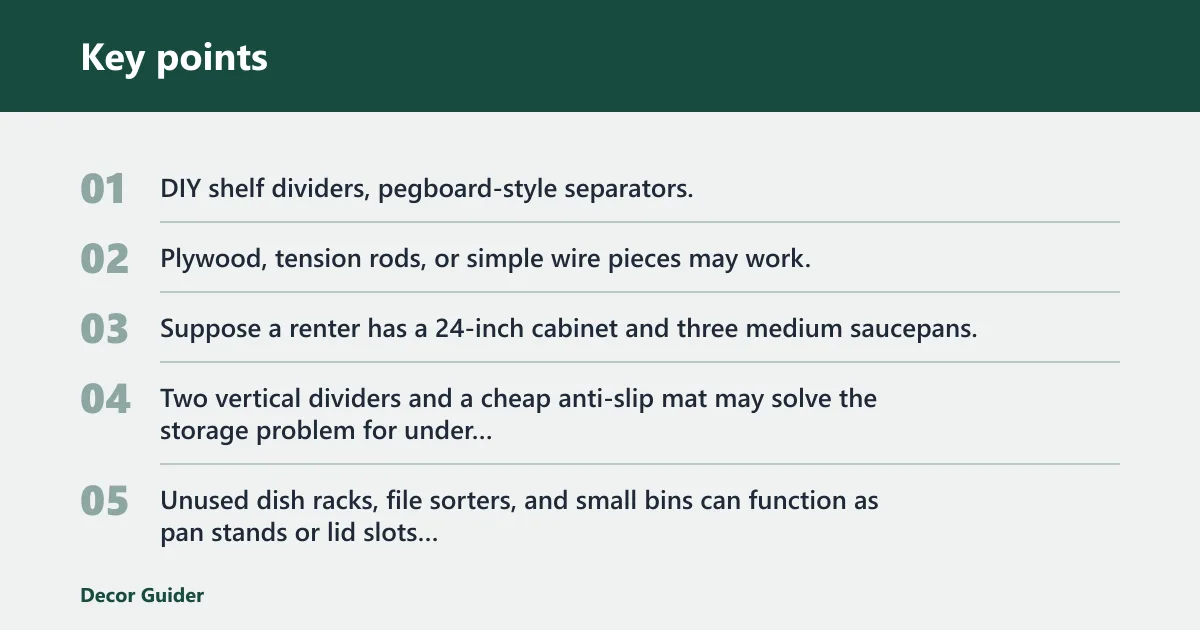
DIY shelf dividers, pegboard-style separators, and low risers can cost about $5 to $20 in basic materials. Plywood, tension rods, or simple wire pieces may work, but you need accurate spacing so lids and handles do not jam the door.
Suppose a renter has a 24-inch cabinet and three medium saucepans. Two vertical dividers and a cheap anti-slip mat may solve the storage problem for under $20, while a custom pull-out system would cost several times more.
Repurposed racks and bins
Unused dish racks, file sorters, and small bins can function as pan stands or lid slots for very little money. This option works best for lightweight cookware, not for heavy Dutch ovens or stacked cast iron.
When cheap storage backfires
Low-cost setups fail when they tip, scratch nonstick surfaces, or block access to deeper items. If you spend money twice because the first organizer bends or does not fit around handles, the cheap choice becomes the expensive one.
How much does a cabinet organizer cost?
Cabinet organizers usually cost $15 to $100 depending on whether you buy a fixed insert, a divider system, or a pull-out unit. Cabinet width, depth, and height drive the price because they affect both the product size and the hardware needed to install it.
Cabinet inserts and vertical dividers
Cabinet inserts are often the least expensive cabinet-specific option. Vertical dividers tend to be the best value for lids and pans with long handles because they use the cabinet height efficiently and need little or no moving hardware.
Pull-out systems and slide rails
Pull-out systems cost more because the rails must carry weight smoothly. They are a stronger choice for heavy cookware, but the true cost climbs if the cabinet sides are thin, if the opening is not square, or if you need soft-close parts.
Fit costs for deep or corner cabinets
Deep cabinets often need longer rails, which raises the price. Corner cabinets are more complicated because the usable depth changes from front to back, and a standard organizer may waste a surprising amount of space unless it has adjustable arms or a shape made for corners.
How do materials affect price?
Material choice changes both cost and durability. Steel and coated metal usually cost more than bamboo or basic plastic, but they tend to support heavier cookware better and resist bending under repeated use.
Steel, wire, and coated metal
Steel and coated metal are common in mid-range and premium organizers because they handle weight well. Wire is often cheaper, lighter, and easier to ship, but thinner wire can scratch pans if the spacing is too tight or the coating wears down.
Rust resistance matters in cabinets near dishwashers or sinks. A lower-priced rack without a solid coating may look fine at first, then start to discolor where moisture collects.
Bamboo and plastic options
Bamboo can look cleaner on a countertop and may cost more than basic plastic, but it is not always the best choice for wet storage. Plastic is usually the lowest-cost material, though it is better for light pans, lids, or temporary setups than for heavy cookware.
Material tradeoffs to weigh
Heavy cookware support, nonstick-safe spacing, and scratch prevention often matter more than the lowest price. If the organizer lacks soft edges or enough separation, it can cost less upfront and more later when cookware finishes get marred.
Which organizer fits your kitchen size?
The best organizer depends on cabinet dimensions, cookware weight, and how much setup you want to do. Small kitchens usually do better with compact vertical or stackable systems, while larger family kitchens may justify pull-out storage or stronger inserts.
Small apartment kitchens
For a small apartment, a stackable rack or vertical divider usually gives the best mix of low cost and flexible fit. These options work well when cabinet depth is limited and you need to keep one shelf usable for lids or small skillets.
Family kitchens with heavy cookware
Family kitchens often need stronger support because larger pots, Dutch ovens, and wide pans add weight fast. A pull-out organizer or steel insert can be worth the higher price if it keeps the load stable and easy to reach.
Rental-friendly and awkward cabinet setups
Rental-friendly setups usually favor no-tool or adhesive-mounted products because they reduce permanent changes. For awkward corner cabinets, adjustable arms or modular dividers may cost more, but they often waste less space than a one-size rack.
A common first-timer mistake is choosing a pot and pan organizer based only on price without checking whether it includes adjustable dividers or hardware. Depth and height matter too, and so do hinges, handles, and lid clearance when the door closes.
What affects the final total cost
The final total usually comes from four things: installation method, hardware, shipping, and replacement parts. Capacity, lid storage, and scratch protection also matter because a cheaper organizer can fail if it cannot actually hold the cookware you own.
Tools, screws, and adhesive
No-tool setup is usually cheapest on paper, but it may limit load capacity. Screw-mounted and slide-out rails cost more because they need tools and more precise fit, while adhesive-mounted parts are cheaper upfront but can fail on slick or greasy cabinet surfaces.
Shipping, returns, and replacement parts
Returns can eat into savings if the size is wrong or the material feels too flimsy. If an organizer arrives missing a bracket or bent from transit, replacement parts can add time and money that never show up in the original price tag.
Capacity and cookware protection
Check how many pans the organizer can hold, not only the listed cabinet size. A rack that fits six pans on the page may hold fewer once lids, handle width, and nonstick-safe spacing are included.
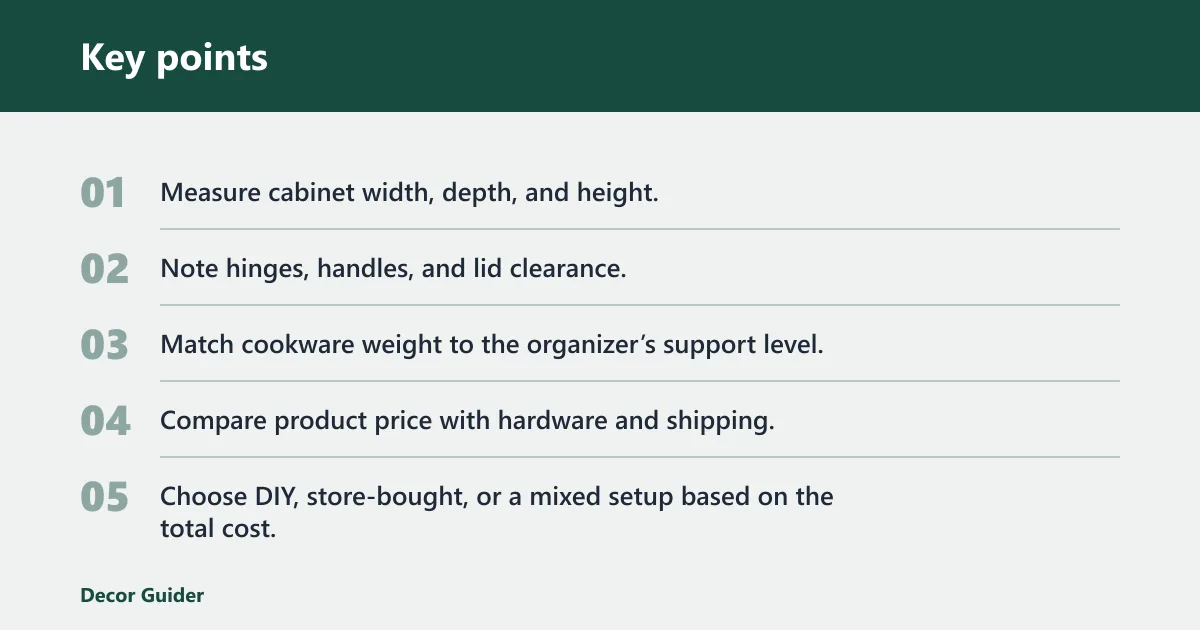
- Measure cabinet width, depth, and height.
- Note hinges, handles, and lid clearance.
- Match cookware weight to the organizer’s support level.
- Compare product price with hardware and shipping.
- Choose DIY, store-bought, or a mixed setup based on the total cost.
How to organize your pots and pans without buying much often means using one strong divider, one rack, and the cabinet layout you already have. If the cabinet is tight, combine vertical storage for lids with stacked storage for lighter pans and skip the more expensive moving parts.
Frequently asked questions
How much does a pot and pan cabinet organizer cost?
A cabinet organizer usually costs $15 to $100 depending on whether it is a fixed insert, divider set, or pull-out system. Cabinet depth, load capacity, and installation method change the total more than color or finish.
Are DIY pot and pan organizers cheaper than store-bought ones?
Often yes, but only if you already have tools and avoid wasted materials. Once you buy lumber, screws, adhesive, or replacement pieces, a DIY build can approach the cost of a basic store-bought organizer.
How much do adjustable pot and pan organizers cost?
Adjustable models usually cost about $25 to $80, with the higher end often tied to better hardware, stronger finishes, and more fit range. They cost more because they solve more cabinet problems, but they also take more time to assemble.
Do cabinet organizers cost more than wall or rack organizers?
Usually cabinet pull-out organizers cost more than simple wall or countertop racks because they need rails, brackets, or heavier-duty mounting. Basic vertical cabinet dividers can be cheaper than wall systems, but the gap narrows once you add hardware and shipping.
Products related to this article
Sponsored / affiliate links. As an Amazon Associate I earn from qualifying purchases. I may earn additional commission from eligible campaigns.