How to Season a Stainless Steel Griddle Properly
Seasoning a stainless steel griddle is a crucial step to achieve a non-stick surface, enhance its durability, and prevent food from sticking. This process creates a protective layer that improves cooking performance and makes cleanup significantly easier. Understanding how to properly season your griddle ensures you get the most out of your cooking adventures, whether you’re flipping pancakes or searing steaks.
Simply put, seasoning your stainless steel griddle involves heating oil on its surface until it polymerizes, forming a hard, non-stick layer. This should be done before the first use and then reapplied periodically to maintain its effectiveness and protect the metal.
Key Takeaways
- Seasoning a stainless steel griddle forms a natural non-stick barrier, crucial for easy cooking.
- The process requires high heat and a suitable cooking oil that can polymerize.
- Multiple thin layers are more effective than one thick, uneven coat.
- Regular maintenance and re-seasoning are key to a long-lasting, non-stick surface.
- Proper seasoning prevents rust and enhances the longevity of your griddle.
What is Griddle Seasoning?
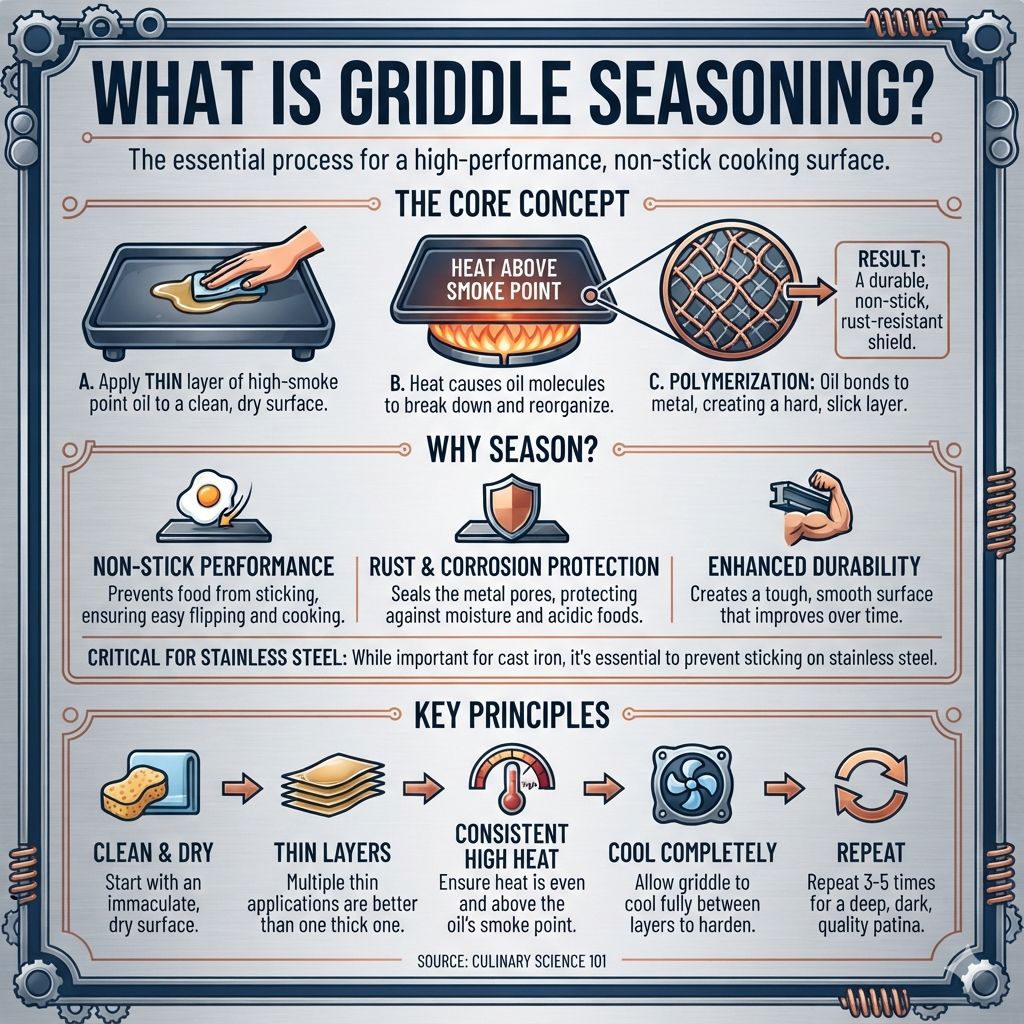
Griddle seasoning is a chemical process where cooking oil is heated on the griddle’s surface to a temperature above its smoke point. This heat causes the oil molecules to break down and reorganize, bonding with the metal in a process called polymerization. The result is a hard, durable, and slick surface that mimics the performance of seasoned cast iron.
This polymerized layer is what provides the non-stick properties. Without it, food will stick, leading to frustrating cooking experiences and difficult cleanup. For stainless steel, which is naturally prone to sticking, proper seasoning is even more critical than for materials like cast iron.
Think of it like creating a protective shield. This shield not only makes cooking easier but also helps to protect the stainless steel from rust and corrosion, especially when exposed to moisture or acidic foods.
The Science Behind Polymerization
Polymerization is the process by which small molecules (monomers) link together to form large chains (polymers). In griddle seasoning, cooking oils, which are triglycerides, break down under high heat. The fatty acid chains in the oil separate and bond with the iron or steel, forming a cross-linked network.
This network is tough, smooth, and slick.
- Oils with a high smoke point are preferred for seasoning.
- Heat needs to be consistent and high enough for polymerization to occur effectively.
- Multiple thin layers are better than one thick layer, which can become gummy or peel.
- The surface should be clean and dry before oil application.
- Allowing the griddle to cool completely between applications helps the layer harden.
The quality of the seasoning depends on the type of oil used, the temperature, the duration of heating, and the number of layers applied. A well-seasoned griddle will have a smooth, dark, almost black appearance.
Why Season a Stainless Steel Griddle?
Stainless steel griddles are popular for their durability, resistance to rust, and ease of cleaning compared to other materials. However, their inherent porous nature means they are susceptible to food sticking. Seasoning addresses this directly by creating a protective barrier.
Beyond non-stick performance, proper seasoning also enhances the lifespan of your griddle. The polymerized layer acts as a sealant, preventing moisture from reaching the underlying metal and thus inhibiting rust formation. This is especially important if your griddle is used outdoors or in humid environments.
For professional chefs and home cooks alike, a well-seasoned griddle means more consistent cooking results, less waste from ruined food, and a more enjoyable cooking experience overall. It’s an investment in your culinary equipment that pays off with every meal.
Benefits of Proper Seasoning
- Non-Stick Surface: The primary benefit, allowing food to release easily.
- Rust Prevention: Seals the metal, protecting it from moisture and oxidation.
- Enhanced Durability: The polymerized layer adds a tough, protective coating.
- Improved Heat Distribution: A smooth surface can lead to more even cooking.
- Easier Cleanup: Less stuck-on food means quicker and simpler cleaning.
- Aesthetic Appeal: A dark, uniformly seasoned surface looks professional.
What You’ll Need for Seasoning
Before you begin the seasoning process, gather the necessary items to ensure a smooth and effective application. Having everything on hand will prevent interruptions and allow you to maintain consistent heat, which is vital for successful polymerization.
The right tools and materials make a significant difference. Choosing the correct oil and having adequate ventilation are key components to a safe and effective seasoning session. Remember that this process involves high heat and smoke, so safety and preparation are paramount.
| Item | Description |
|---|---|
| Stainless Steel Griddle | Ensure it’s clean and dry. |
| Cooking Oil | High smoke point oils like flaxseed, grapeseed, canola, or vegetable oil. |
| Paper Towels or Lint-Free Cloths | For applying and wiping excess oil. |
| Heat-Resistant Gloves | For safe handling of the hot griddle. |
| Spatula or Scraper | To spread oil and scrape off any loose bits. |
| Ventilation | Open windows or use an exhaust fan. |
The choice of oil is significant, as oils with lower smoke points will burn off before they can properly polymerize.
Choosing the Right Oil
Not all oils are created equal when it comes to seasoning. You need an oil with a smoke point high enough to reach polymerization temperatures without burning excessively. Oils that leave a sticky residue after cooking are generally not ideal.
- Flaxseed oil: Often considered the best for seasoning due to its unique fatty acid profile that polymerizes very hard. However, it can be more expensive and prone to cracking if not applied perfectly.
- Grapeseed oil: Has a high smoke point and polymerizes well, creating a durable layer.
- Canola oil: A common and affordable option with a good smoke point, suitable for initial seasoning.
- Vegetable oil: A readily available choice that works for basic seasoning, though might not provide as durable a finish as others.
- Lard or Crisco (Vegetable Shortening): Can be used, but they may leave a slightly softer layer than pure vegetable oils.
Avoid using extra virgin olive oil or butter, as their smoke points are too low for effective polymerization and they can leave sticky residues.
How to Season a Stainless Steel Griddle: A Step-by-Step Guide
The seasoning process is straightforward but requires attention to detail. Follow these steps carefully for the best results and a griddle that will serve you well for years to come.
It’s important to work in a well-ventilated area because the process will generate smoke. Ensure your griddle is completely clean and dry before you start applying any oil.
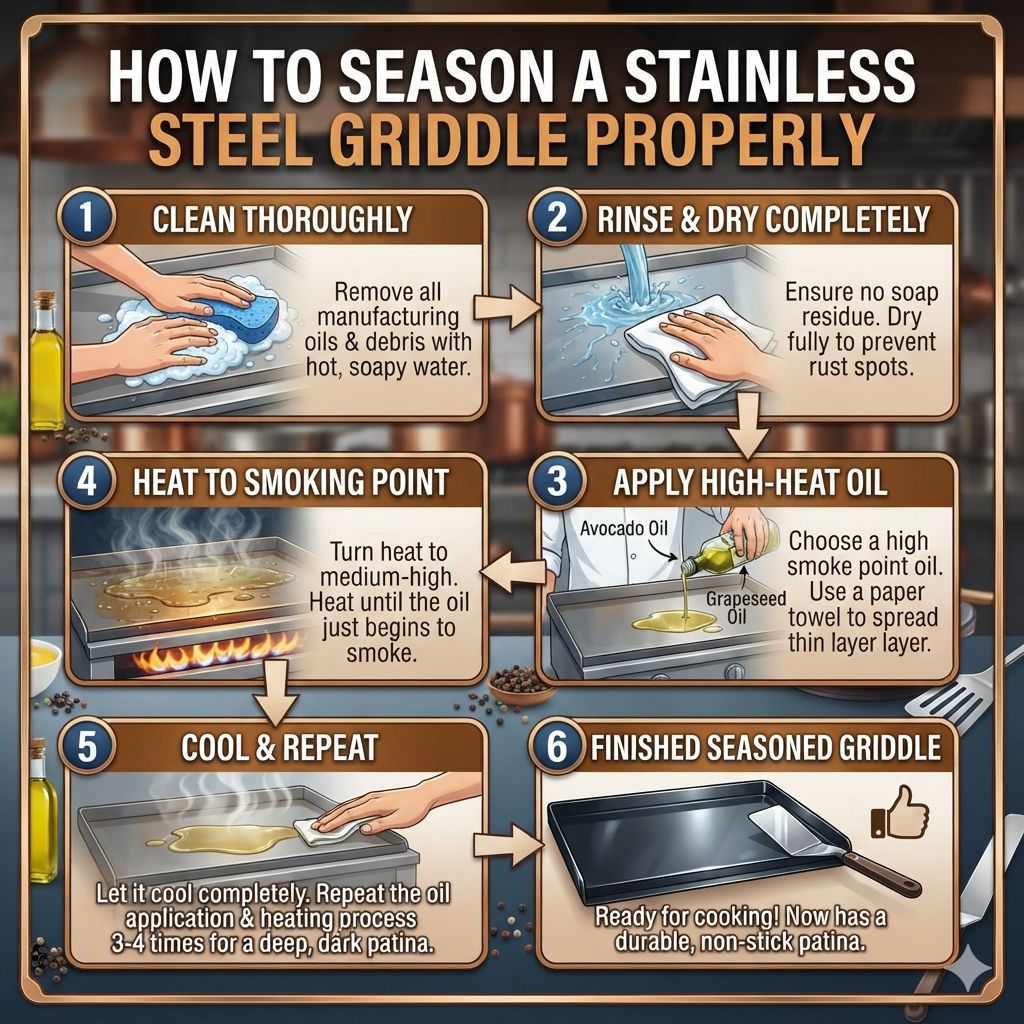
- Clean the Griddle: Start by thoroughly cleaning your stainless steel griddle. Use soap and water to remove any manufacturing residue, grease, or dirt. Rinse it well and dry it completely. If there are any stubborn marks, use a mild abrasive cleaner.
- Apply the First Thin Layer of Oil: Pour a small amount of your chosen cooking oil onto the griddle surface. Using paper towels or a lint-free cloth, spread a very thin, even layer of oil across the entire surface. You want to coat every inch.
- Wipe Off Excess Oil: This is a critical step. Use a clean paper towel or cloth to wipe off as much of the oil as you possibly can. It might seem counterintuitive, but too much oil will result in a sticky, uneven, and weak seasoning layer. You want to leave only a microscopic sheen of oil.
- Heat the Griddle: Place the griddle over medium-high heat. Allow it to heat up until it begins to smoke. This smoking indicates that the oil is reaching its smoke point and polymerization is beginning.
- Maintain Heat and Let It Smoke: Let the griddle smoke for about 15-30 minutes. The exact time depends on your heat source and the oil used. You should see a hazy smoke rising. Avoid disturbing the surface during this time.
- Cool Down: Once the smoking subsides, turn off the heat and allow the griddle to cool down completely. This cooling period allows the polymerized layer to harden properly.
- Repeat the Process: Once cool, repeat steps 2 through 6 at least 3-5 times. Each layer builds upon the last, creating a stronger and more durable non-stick surface. The griddle will gradually darken with each layer.
For a truly robust seasoning, many recommend repeating this process 6-10 times, especially before the first significant use of the griddle.
Tips for a Better Seasoning
- Thin Layers are Key: Always aim for the thinnest possible layer of oil. It’s better to have many thin layers than a few thick ones.
- Even Coverage: Make sure to cover the entire surface, including the edges, for uniform performance.
- Adequate Ventilation: The smoke produced can be substantial. Ensure good airflow to keep your cooking environment safe and comfortable.
- Patience is a Virtue: Don’t rush the process. Allowing the griddle to cool completely between layers is as important as the heating itself.
- Consistency Matters: Use the same type of oil for all layers during the initial seasoning to ensure a uniform bond.
Maintaining Your Seasoned Griddle
Once seasoned, your stainless steel griddle requires ongoing care to maintain its non-stick properties and longevity. Regular maintenance prevents the seasoning from degrading and keeps your cooking surface in top condition.
Cleaning after each use is the most important aspect of maintenance. Avoid harsh scrubbing that can strip away the polymerized layer. Instead, opt for gentle cleaning methods that preserve the seasoning.
Think of it as continuing the seasoning process with every cook. By treating your griddle well after use, you reinforce the existing seasoning and prepare it for the next cooking session.
Cleaning After Each Use
Immediately after cooking, while the griddle is still warm (but not searing hot), scrape off any food debris using a spatula or a griddle scraper. For stuck-on bits, you can pour a little water onto the warm surface, which will steam and help loosen the food.
- Scrape away all food particles immediately after cooking.
- For stubborn bits, add a small amount of water to the warm griddle to create steam.
- Wipe the surface clean with paper towels or a soft cloth. Avoid steel wool or abrasive scrubbers.
- If necessary, use a minimal amount of mild dish soap. Rinse thoroughly and dry immediately.
- Apply a very thin layer of cooking oil to the surface and wipe it down again. This helps to maintain the seasoning and protect against rust.
Never let your griddle air dry, as this can lead to rust spots, especially on the edges or any unseasoned areas.
Re-Seasoning and Touch-Ups
Over time, especially with heavy use or improper cleaning, the seasoning layer can wear down. You’ll notice food starting to stick more frequently. This is a sign that it’s time to re-season.
Minor touch-ups can be done after cleaning. Simply apply a very thin layer of oil and heat it gently for a few minutes until it just starts to smoke, then let it cool. This reinforces the existing seasoning.
| Maintenance Task | Frequency | Description |
|---|---|---|
| Scrape & Wipe | After every cooking session | Remove food debris while griddle is warm. |
| Light Oil Coat | After cleaning, before storage | Apply a thin layer to protect and maintain seasoning. |
| Full Re-Seasoning | When sticking becomes noticeable (e.g., every 6-12 months) | Repeat the initial seasoning process (multiple thin layers). |
| Deep Clean | If heavy carbon buildup occurs | Use a griddle stone or mild abrasive, then re-season immediately. |
For a full re-seasoning, follow the step-by-step guide as if it were a new griddle, applying 4-6 thin layers.
Common Mistakes to Avoid
Many people make common mistakes when seasoning their stainless steel griddles, which can lead to poor results or damage the surface. Being aware of these pitfalls can save you frustration and ensure a successful seasoning.
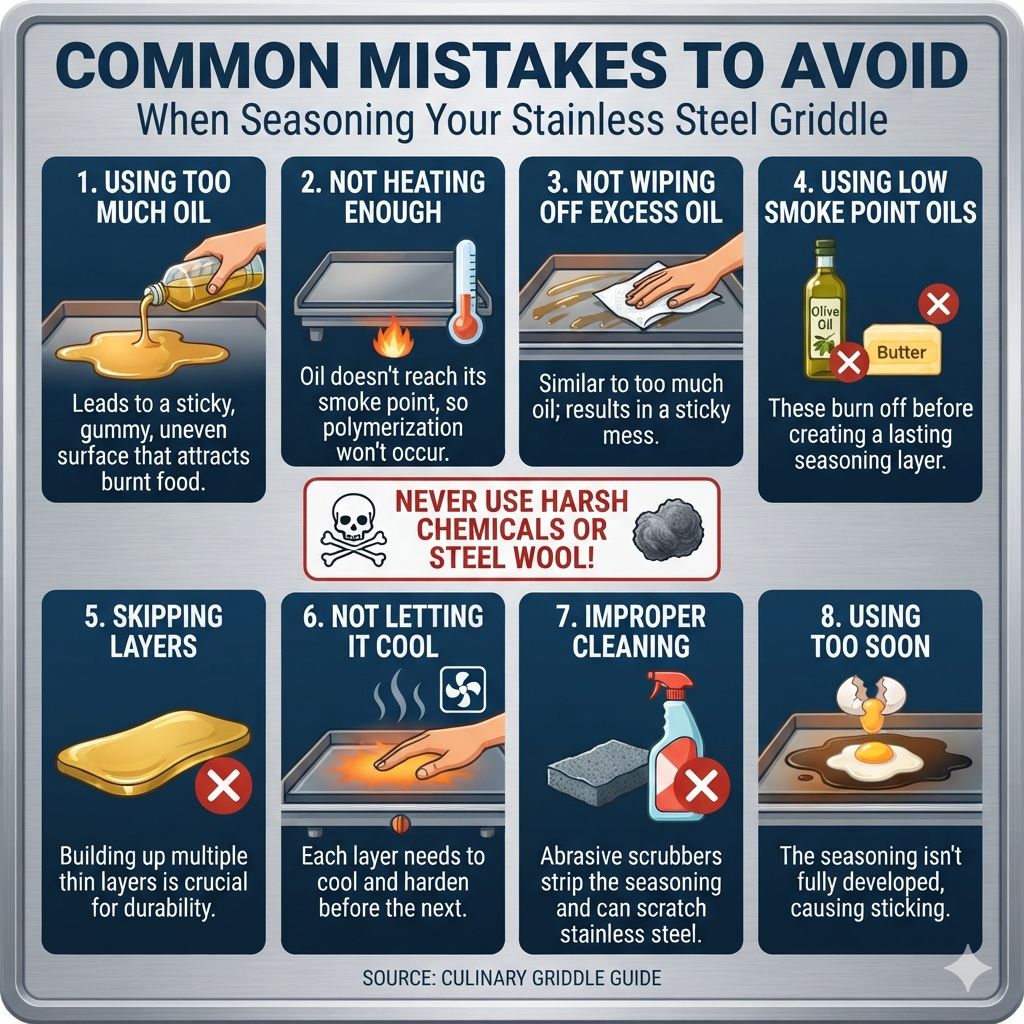
One of the most frequent errors is applying too much oil. This creates a sticky, gummy surface that attracts burnt food particles and is difficult to clean. Instead, always strive for ultra-thin layers.
Warning: Never use harsh chemicals or abrasive scrubbers like steel wool on a seasoned griddle. These can strip away the delicate polymerized layer and even scratch the stainless steel itself.
- Using Too Much Oil: This is the most common mistake. It leads to a sticky, uneven surface.
- Not Heating Enough: If the oil doesn’t reach its smoke point, polymerization won’t occur properly.
- Not Wiping Off Excess Oil: Similar to using too much oil, this results in a sticky mess.
- Using Low Smoke Point Oils: These burn off before creating a lasting seasoning layer.
- Skipping Layers: Building up multiple thin layers is crucial for durability.
- Not Letting it Cool: Each layer needs to cool and harden before the next is applied or before cooking.
- Improper Cleaning: Using abrasive materials or allowing the griddle to air dry can damage the seasoning and cause rust.
Another mistake is using the griddle before it is fully seasoned. While a brand-new griddle can be used with caution, a properly seasoned one offers significantly better performance from the start.
Frequently Asked Questions
What is the best oil for seasoning a stainless steel griddle?
Flaxseed oil is often cited as the best due to its high polymerization rate, creating a very hard and durable layer. However, grapeseed oil, canola oil, or vegetable oil are also excellent, readily available choices that provide good results and are more cost-effective.
How many layers of seasoning are needed?
For initial seasoning, a minimum of 4-6 thin layers is recommended. For optimal results and maximum durability, applying 8-10 layers before heavy use is ideal. The griddle will darken significantly as more layers are added.
Can I use my stainless steel griddle without seasoning it first?
Yes, you can use it, but food will stick much more readily. Seasoning is highly recommended to create a non-stick surface, prevent rust, and improve overall cooking performance. A new, unseasoned griddle will be prone to sticking.
How often should I re-season my stainless steel griddle?
You should re-season your griddle whenever you notice food starting to stick more than usual, or if the surface begins to look dull or patchy. This might be every few months to once a year, depending on how frequently you use it and how well you maintain it after each use.
Is it normal for a seasoned griddle to smoke when cooking?
A small amount of smoke during cooking is normal, especially if you’re cooking at higher temperatures. However, excessive smoke that fills the kitchen might indicate that the oil used for cooking has a low smoke point or that the seasoning layer is degrading and burning off.
Final Thoughts
Properly seasoning your stainless steel griddle is an essential step that transforms it into a high-performing, non-stick cooking surface. By following a diligent seasoning process and committing to regular maintenance, you’ll ensure your griddle remains reliable and enjoyable to cook on for years. This investment in care translates directly to better meals and less kitchen frustration.
Products related to this article
Sponsored / affiliate links. As an Amazon Associate I earn from qualifying purchases. I may earn additional commission from eligible campaigns.