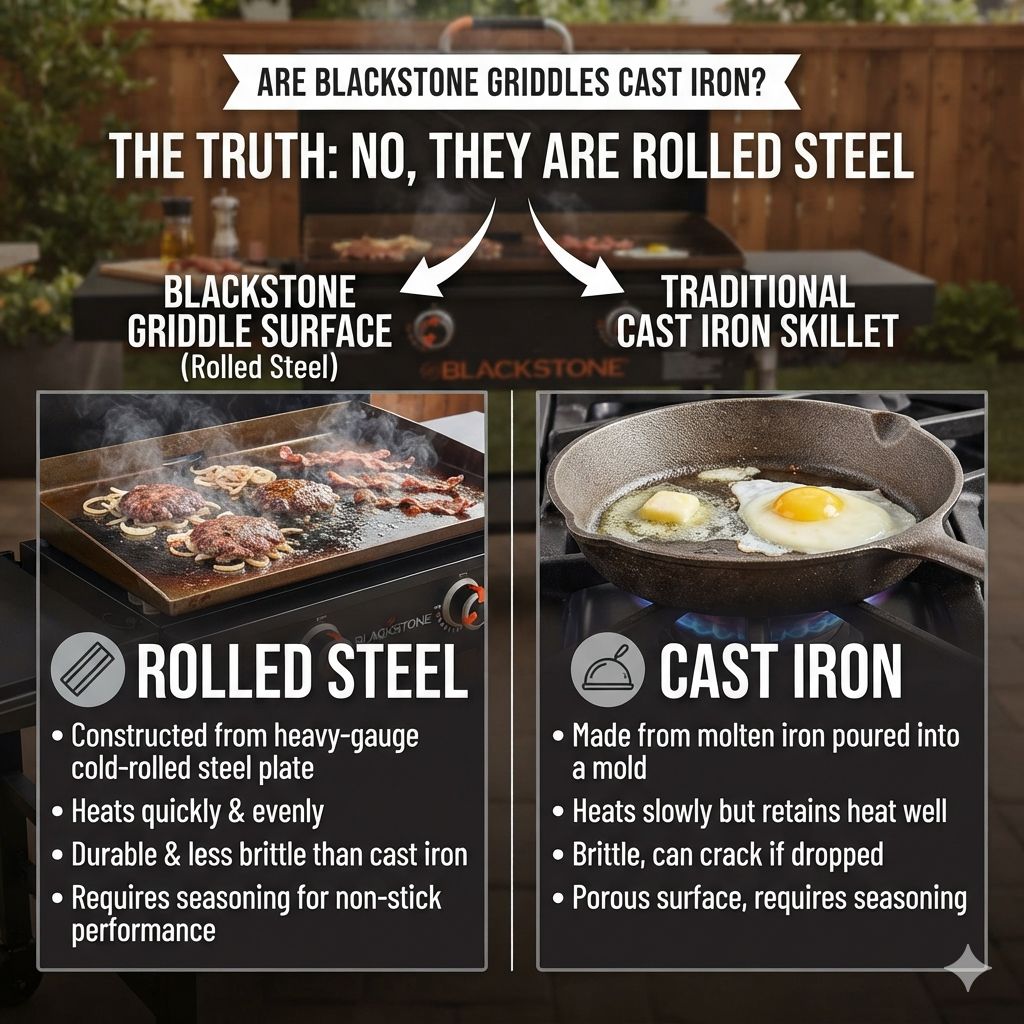
Are Blackstone Griddles Cast Iron? Truth Explained
Blackstone griddles are incredibly popular for outdoor cooking, but a common question arises: are they made of cast iron? Understanding the material of your griddle is crucial for proper care, cooking performance, and longevity. This post will cut through the confusion and clarify exactly what Blackstone griddles are made of, their benefits, and how to best maintain them.
In short, Blackstone griddles are not made of cast iron. They feature a thick, cold-rolled steel cooktop, which offers excellent heat retention and a smooth cooking surface after proper seasoning. While different from cast iron, steel provides a durable and versatile alternative for a fantastic outdoor cooking experience.
Key Takeaways
- Blackstone griddles are constructed from cold-rolled steel, not cast iron.
- Steel offers excellent heat distribution and retention, ideal for searing and high-heat cooking.
- Proper seasoning is crucial for both steel and cast iron to prevent sticking and rust.
- Blackstone griddles require specific maintenance practices distinct from cast iron cookware.
- The durability and performance of steel make it a prime choice for Blackstone’s popular outdoor cooking platforms.
What is Cold-Rolled Steel?
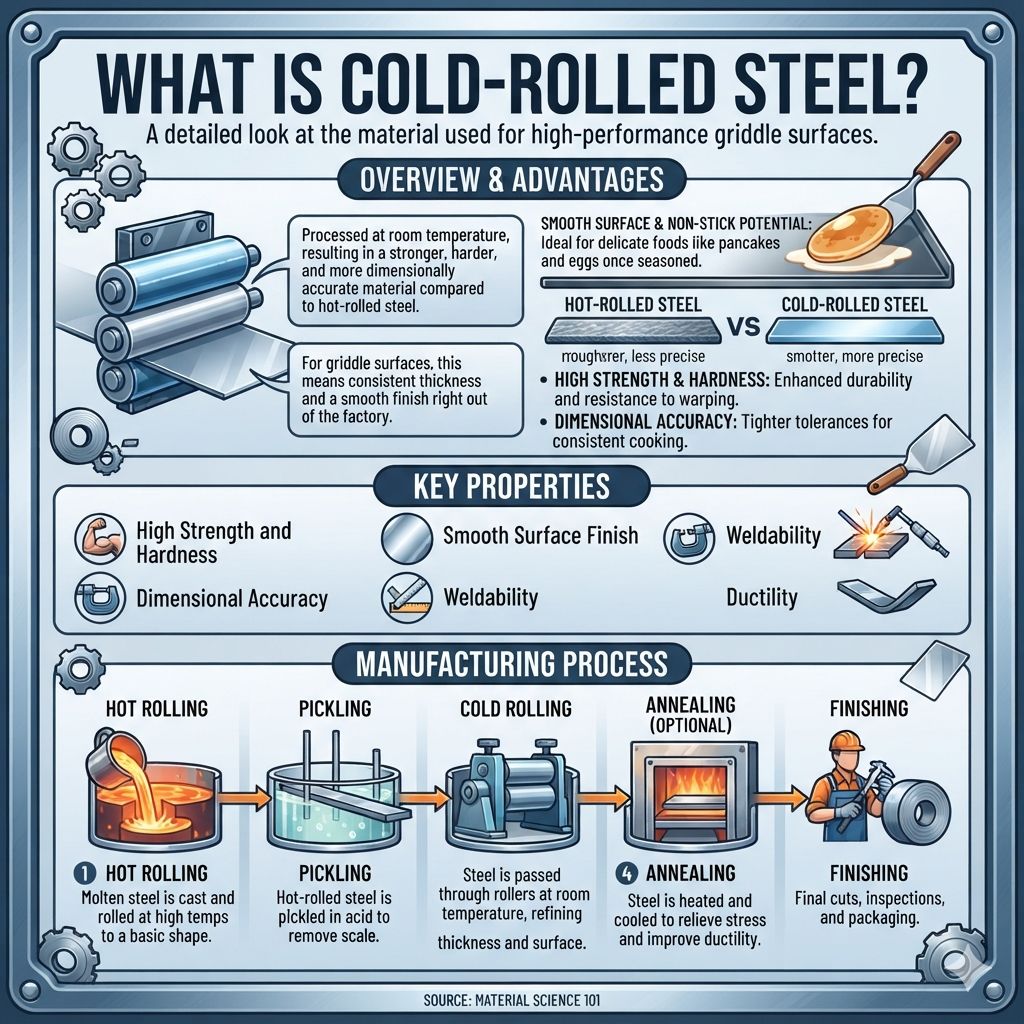
Cold-rolled steel is a type of steel that has been processed at room temperature. This manufacturing method results in a stronger, harder, and more dimensionally accurate material compared to hot-rolled steel. For griddle surfaces, this means a more consistent thickness and a smoother finish right out of the factory.
The smooth nature of cold-rolled steel is a significant advantage for griddle cooking. It allows for a naturally non-stick surface once seasoned, making it easier to flip delicate items like pancakes or cook eggs without them sticking. The enhanced hardness also contributes to the surface’s durability and resistance to warping under high heat.
When people ask if Blackstone griddles are cast iron, they’re often thinking about the ideal qualities of a heavy-duty, heat-retaining cooking surface. Cold-rolled steel meets these needs effectively, providing a robust platform for all sorts of culinary creations.
- High Strength and Hardness: Cold-rolled steel is stronger and harder than hot-rolled steel due to the cold working process.
- Smooth Surface Finish: The process yields a superior surface finish, reducing the need for extensive initial grinding.
- Dimensional Accuracy: It has tighter tolerances for thickness and flatness, ensuring a more even cooking experience.
- Weldability: Generally good weldability, though requires specific procedures.
- Ductility: While harder, it retains a reasonable degree of ductility.
The manufacturing process of cold-rolled steel involves several steps:
- Hot Rolling: Steel is first hot-rolled to achieve a basic shape and reduce its thickness.
- Pickling: The hot-rolled steel is then pickled in acid to remove scale and impurities.
- Cold Rolling: The steel is passed through rollers at room temperature, further reducing its thickness and refining its surface.
- Annealing (Optional): Sometimes, the steel is annealed to relieve stresses from cold working and improve ductility.
- Finishing: Final cuts and inspections are performed.
Why Steel is Used for Blackstone Griddles
Blackstone deliberately chooses cold-rolled steel for its griddle tops because of its ideal cooking properties. It heats up relatively quickly and distributes heat evenly across the entire surface. This ensures consistent cooking results, whether you’re searing burgers or making a breakfast medley.
Another key reason is its durability. Outdoor griddles are exposed to various weather conditions and intense cooking temperatures. Cold-rolled steel is robust enough to withstand these demands, offering a long lifespan with proper care.
Its density also contributes to excellent heat retention, allowing for perfect searing and caramelization.
Compared to cast iron, steel can be lighter, which is a consideration for portable griddle models. While cast iron is renowned for its heat retention, well-seasoned cold-rolled steel provides a comparable experience for most outdoor cooking applications, often at a more accessible price point.
- Even Heat Distribution: Steel heats up uniformly, reducing hot spots and ensuring consistent cooking.
- Excellent Heat Retention: Holds heat well, crucial for searing meats and maintaining cooking temperature.
- Durability: Resists warping and cracking under high temperatures, offering a long lifespan.
- Smooth Cooking Surface: Develops a naturally non-stick surface when seasoned properly.
- Corrosion Resistance (when seasoned): Seasoning creates a protective barrier against rust.
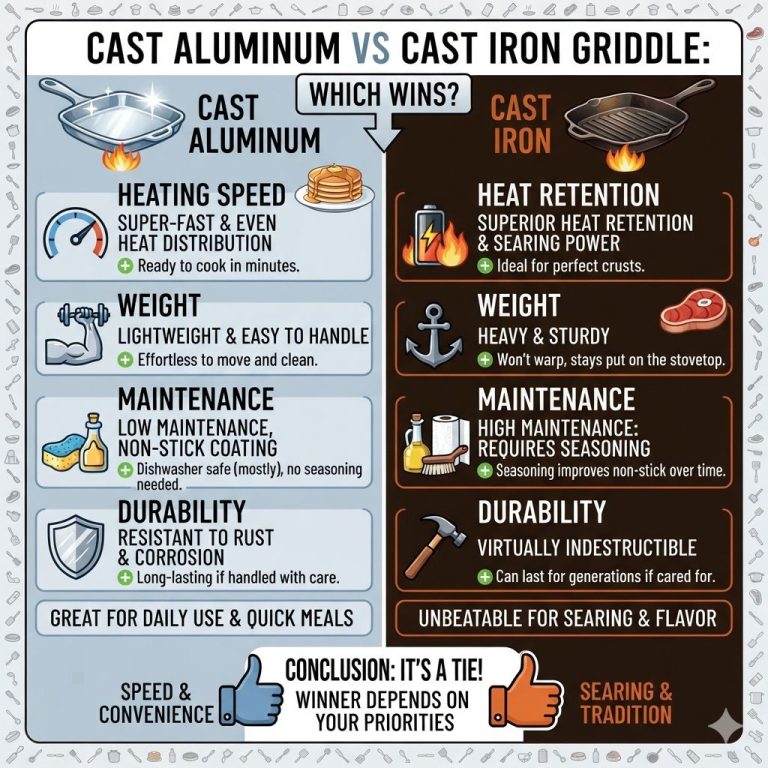
Here’s a comparison of steel versus cast iron for griddle applications:
| Feature | Cold-Rolled Steel | Cast Iron |
|---|---|---|
| Heat Distribution | Excellent, fast | Good, but can have hot spots |
| Heat Retention | Very Good | Excellent, superior |
| Weight | Lighter | Heavy |
| Corrosion Resistance | Requires diligent seasoning | Requires diligent seasoning |
| Surface Smoothness | Naturally smooth | Can be porous without seasoning |
This comparison highlights that while cast iron excels in heat retention, steel offers a compelling balance of performance, weight, and even heating for outdoor griddling.
The Importance of Seasoning Your Blackstone Griddle
Just like cast iron, the performance and longevity of a cold-rolled steel Blackstone griddle depend heavily on proper seasoning. Seasoning is the process of polymerizing oil onto the steel surface, creating a natural, non-stick layer that also protects against rust. Without it, your griddle will be prone to sticking and rapid corrosion.
The initial seasoning is critical. Blackstone griddles often come with a thin layer of protective oil from the factory, which must be cleaned off before you begin the seasoning process. This involves applying a thin layer of high-smoke-point cooking oil (like vegetable, canola, or flaxseed oil) and heating the griddle until the oil smokes and polymerizes.
This process is typically repeated several times.
Regular maintenance, including re-seasoning after cleaning and occasional light oiling, is key to maintaining that smooth, non-stick surface. This diligent approach ensures your Blackstone griddle will be a reliable cooking companion for years to come, performing every bit as well as a cast iron equivalent for most tasks.
- Creates a Non-Stick Surface: Polymerized oil forms a slick layer that prevents food from sticking.
- Prevents Rust: The seasoned layer acts as a barrier against moisture and oxygen.
- Improves Cooking Performance: A well-seasoned surface allows for better searing and easier food flipping.
- Enhances Durability: Protects the steel from scratches and wear during cooking.
- Requires Repetition: Multiple coats are needed for an effective, long-lasting finish.
The seasoning process typically involves these steps:
- Clean the Griddle: Remove any factory coating or debris with warm water and soap.
- Dry Thoroughly: Use a towel, then heat the griddle on low for a few minutes to ensure all moisture is gone.
- Apply Oil: Spread a very thin layer of high-smoke-point oil over the entire surface.
- Heat to Smoking Point: Turn the heat up until the oil begins to smoke heavily.
- Let it Cool: Allow the griddle to cool down completely.
- Repeat: Perform steps 3-5 at least 3-5 times for a good base layer.
Cast Iron vs. Steel Griddles: Key Differences
While both cast iron and cold-rolled steel griddles offer excellent cooking surfaces, their fundamental differences lie in their material composition, manufacturing, and inherent properties. Understanding these distinctions helps in appreciating why Blackstone chose steel and how to care for each material.
Cast iron is an alloy of iron and carbon with a higher carbon content than steel. This composition gives it exceptional heat retention, meaning it stays hot for a long time once heated. However, cast iron heats up slower and can have more pronounced hot spots if not properly managed.
It’s also significantly heavier and more prone to cracking if dropped or subjected to extreme temperature shock.
Cold-rolled steel, as discussed, is denser, harder, and more uniform in thickness. It heats up faster than cast iron and provides very even heat distribution. While its heat retention isn’t as prolonged as cast iron’s, it’s more than sufficient for most griddling tasks.
Steel is also generally lighter and less brittle.
Maintenance is another area where differences appear. Both require diligent seasoning and rust prevention. However, cast iron can sometimes develop a more rugged, “seasoned-in” patina over time, while steel can be easier to maintain a perfectly smooth surface with consistent seasoning.
| Attribute | Cold-Rolled Steel Griddle | Cast Iron Griddle |
|---|---|---|
| Material Composition | Iron alloy with lower carbon content, processed at room temperature. | Iron alloy with higher carbon content (typically 2-4%). |
| Heat Up Time | Faster | Slower |
| Heat Distribution | Very even | Can be uneven without proper management |
| Heat Retention | Good | Excellent |
| Weight | Lighter | Heavier |
| Durability Against Impact | Less prone to shattering | Can shatter if dropped or hit hard |
| Ease of Seasoning | Relatively easy, forms smooth layer | Requires building up layers over time |
This table clearly shows why cold-rolled steel is a practical and high-performing choice for the vast majority of outdoor griddle users seeking efficiency and ease of use.
Maintaining Your Blackstone Griddle
Proper maintenance is key to ensuring your Blackstone griddle, made of cold-rolled steel, remains in top condition. This involves regular cleaning after each use and periodic deeper maintenance to preserve the seasoned surface and prevent rust.
After cooking, while the griddle is still warm but not scorching hot, scrape off any food debris using a metal spatula or a specialized griddle scraper. Avoid using soap and water, as this can strip away the hard-earned seasoning. Instead, a quick wipe-down with a damp cloth or paper towel is usually sufficient.
For stubborn bits, a deglazing process with a small amount of water can help lift them.
Crucially, always apply a light coat of cooking oil to the clean surface after drying. This thin layer of oil prevents rust from forming, especially in humid environments or when the griddle is stored for extended periods. If you notice any rust spots, they can typically be removed with steel wool or a wire brush, followed by re-seasoning the affected area.
- Scrape After Cooking: Always remove food residue while the griddle is warm.
- Avoid Harsh Soaps: Use water sparingly and avoid detergents that strip seasoning.
- Oil After Cleaning: Apply a thin layer of cooking oil to protect against rust.
- Regular Re-seasoning: Periodically re-apply oil and heat to reinforce the non-stick layer.
- Protect During Storage: Cover your griddle or store it in a dry place.
- Address Rust Promptly: Remove rust spots and re-season the area immediately.
Here’s a simplified maintenance schedule:
- Post-Cook Cleaning: Scrape, wipe with damp cloth, apply light oil. (Every use)
- Deep Clean & Season: More thorough scraping, maybe light degreasing, re-apply oil layers. (Monthly or as needed)
- Rust Removal: Steel wool/brush, then full re-seasoning. (If rust appears)
- Storage Prep: Ensure clean, dry, and lightly oiled before long-term storage.
Common Misconceptions About Blackstone Griddles
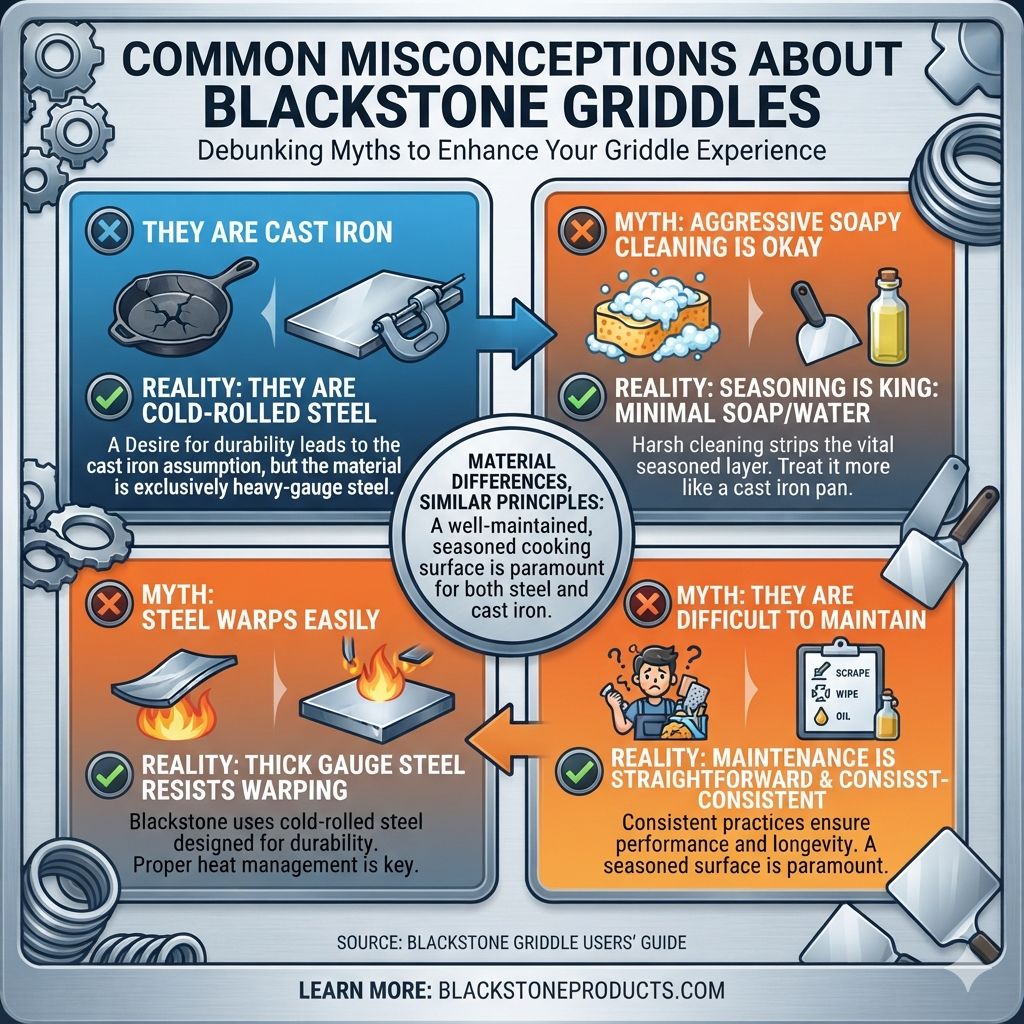
The most prevalent misconception is that Blackstone griddles are made of cast iron. This stems from the desire for a robust, high-performance cooking surface, a quality long associated with cast iron cookware. However, as we’ve established, Blackstone exclusively uses cold-rolled steel for their cooktops.
Another common misunderstanding relates to cleaning. Some users may treat their Blackstone griddle like a stainless steel grill, aggressively scrubbing with soap and water. This can damage the crucial seasoned layer.
The key to a Blackstone is treating it more like a cast iron pan—minimal soap, prompt oiling, and consistent heat management.
People also sometimes assume that because it’s steel, it’s prone to warping or burning through quickly. While any metal can warp under extreme, uneven heat, the thick gauge of cold-rolled steel used by Blackstone is designed to resist this. Combined with proper seasoning and heat control, the steel cooktop is exceptionally durable.
- Misconception: Blackstone griddles are cast iron. Reality: They are cold-rolled steel.
- Misconception: Aggressive cleaning with soap is fine. Reality: It strips seasoning; use minimal soap or just water.
- Misconception: Steel warps easily. Reality: Thick gauge steel is durable with proper heat management.
- Misconception: They are difficult to maintain. Reality: Maintenance is straightforward with consistent practices.
Understanding these misconceptions helps new users avoid common pitfalls and ensures they get the best performance and longevity from their Blackstone griddle. The material is different, but the principle of a well-maintained, seasoned cooking surface is paramount for both steel and cast iron.
Frequently Asked Questions
Are Blackstone griddles harder to maintain than cast iron?
Not necessarily. While both require diligent seasoning and rust prevention, Blackstone griddles’ cold-rolled steel surface can be easier to clean and re-season due to its natural smoothness. Avoiding harsh soaps is key for both, but the initial seasoning process for steel can sometimes be quicker to establish a good base.
Can I use any oil to season my Blackstone griddle?
It’s best to use cooking oils with a high smoke point, such as vegetable oil, canola oil, grapeseed oil, or flaxseed oil. These oils polymerize effectively at high temperatures, creating a durable non-stick layer. Avoid low-smoke-point oils like olive oil, as they can burn off before properly polymerizing.
What happens if I don’t season my Blackstone griddle?
If you don’t season your Blackstone griddle, the raw steel surface will be prone to sticking, making cooking difficult and frustrating. More importantly, it will quickly rust when exposed to moisture or humidity, significantly shortening its lifespan and degrading its cooking performance.
Is the heat distribution on a Blackstone griddle truly even?
Yes, the cold-rolled steel used in Blackstone griddles heats up very evenly. This is one of its primary advantages, ensuring consistent cooking across the entire surface. You won’t find as many pronounced hot spots as you might with some cast iron cookware, leading to more uniform results.
How often should I deep clean and re-season my Blackstone griddle?
For daily cooking, a quick scrape and oiling after each use is sufficient. A deeper clean and re-seasoning is typically recommended every 1-3 months, depending on usage frequency and environmental conditions. If you notice significant sticking or rust, it’s time for a deeper maintenance session.
Final Thoughts
Blackstone griddles are not cast iron but rather high-quality cold-rolled steel. This material choice offers excellent performance, durability, and even heating, making it a superb choice for outdoor cooking. By understanding the properties of steel and committing to proper seasoning and maintenance, you’ll ensure your Blackstone griddle provides countless delicious meals for years to come.
Products related to this article
Sponsored / affiliate links. As an Amazon Associate I earn from qualifying purchases. I may earn additional commission from eligible campaigns.