Ceramic Vs Hard Anodized Cookware: Which Is Best?
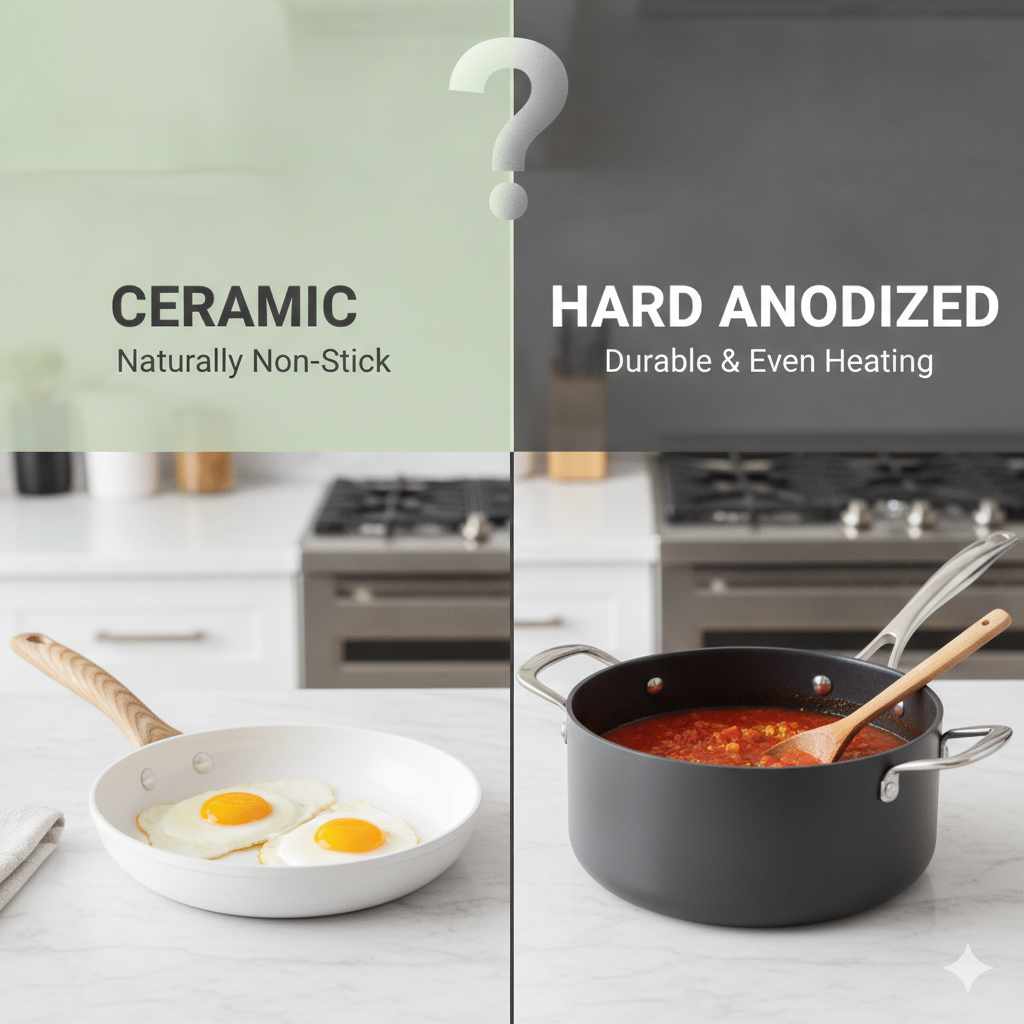
Ceramic cookware and hard anodized cookware are popular choices. Ceramic offers a non-stick surface often free of certain metals. Hard anodized cookware is durable and heats evenly. The best choice depends on your cooking style, budget, and health concerns.
Understanding Ceramic Cookware
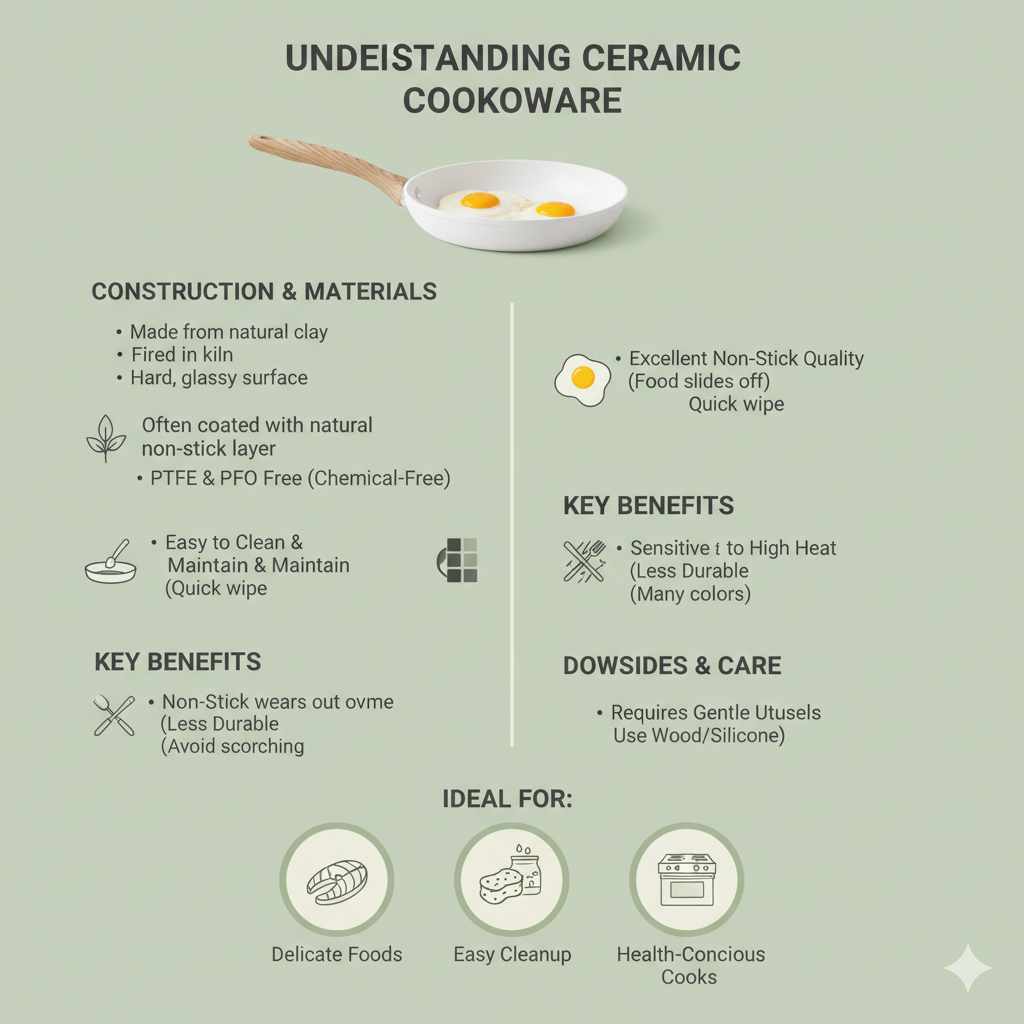
Ceramic cookware is made from clay. It’s then fired in a kiln. This gives it a hard, glassy surface.
This surface is often coated with a non-stick layer. This non-stick layer is usually made from natural materials. It doesn’t use PTFE (like Teflon) or PFOA.
That’s why many people choose it. They worry about chemicals in other non-stick pans.
The main draw of ceramic is its non-stick quality. Food slides right off. This makes cooking eggs and fish very easy.
Cleanup is also a breeze. A quick wipe with a sponge often does the trick. Many ceramic pans are also quite pretty.
They come in many colors. This can add a nice touch to your kitchen.
However, there are some downsides. The non-stick coating on ceramic can wear out. This happens faster than with some other types.
It might not last as long. Also, you need to be careful with high heat. Very high heat can damage the coating.
You should avoid metal utensils. They can scratch the surface. This means using wood or silicone tools.
This is a change for some cooks.
What is Hard Anodized Cookware?
Hard anodized cookware is different. It starts with aluminum. This aluminum is put through a special electrical process.
This process makes the aluminum much harder. It also makes it more non-porous. This is called anodizing.
The result is a very strong material. It’s much stronger than regular aluminum.
This hardness means it’s very durable. It resists warping. It also resists scratches better than many other metals.
Hard anodized pans heat up very evenly. This is great for cooking. Hot spots are less likely to form.
This helps food cook consistently. It reduces burning in some areas and undercooking in others.
Many hard anodized pans have a non-stick coating applied. This coating is bonded to the hard surface. It often lasts longer than coatings on other types of pans.
This cookware is also safe for use with metal utensils. This is a big plus for many people. It handles high heat well.
It’s a workhorse for serious cooks. It’s also oven-safe to high temperatures.
Comparing the Surfaces and Performance
When you look at performance, there are clear differences. Ceramic is excellent for delicate foods. Think pancakes, eggs, and crepes.
The food really doesn’t stick. This makes them a joy to use for these specific items. However, their non-stick power can fade over time.
They need gentle care. They are best used on medium heat.
Hard anodized cookware offers a different kind of performance. It’s great for searing meats. It handles high heat beautifully.
It heats so evenly that you get a perfect crust. While many have non-stick coatings, they are not always as “slippery” as ceramic. But their non-stick is often more durable.
They can handle more abuse. You can use metal utensils without much worry. This makes them versatile.
Heat conductivity is another point. Both materials can conduct heat well. Aluminum, the base for hard anodized, is a great conductor.
Ceramic’s heat spread depends on its construction. Overall, hard anodized often wins for even heating. This is due to the anodizing process strengthening the aluminum.
It distributes heat more uniformly.
Durability and Longevity
Durability is a big factor. Nobody wants to replace cookware often. Ceramic cookware’s lifespan depends a lot on care.
If you use it gently, avoid metal, and don’t overheat it, it can last a few years. But the non-stick surface can degrade. It might start sticking after some time.
It’s more fragile. It can chip if dropped.
Hard anodized cookware is built tough. The anodizing process itself makes the metal very strong. It resists dents and warping.
The non-stick coatings applied to it are also typically more robust. They are bonded better to the surface. This means they are less likely to peel or scratch.
Many hard anodized pans can last for a decade or more. They are a long-term investment for many home cooks.
Think about what you do in the kitchen. Do you do a lot of high-heat searing? Do you use metal spatulas?
If so, hard anodized will likely hold up better. If you mostly cook delicate items and are very careful with your pans, ceramic might serve you well for a good while. But for sheer resilience, hard anodized takes the lead.
Ceramic vs. Hard Anodized: Quick Scan
Ceramic:
- Non-stick: Excellent for delicate foods.
- Health: Often free of PTFE and PFOA.
- Care: Needs gentle handling.
- Durability: Can wear out faster.
- Heat: Best with medium heat.
Hard Anodized:
- Non-stick: Good, more durable.
- Health: Base is aluminum; coating varies.
- Care: Can handle metal utensils.
- Durability: Very strong and long-lasting.
- Heat: Excellent for high heat and even cooking.
Health and Safety Considerations
Health is a primary concern for many. Ceramic cookware is often marketed as “green” or “healthy.” This is because its non-stick surface is typically made from natural materials. It doesn’t contain PTFE (polytetrafluoroethylene) or PFOA (perfluorooctanoic acid).
These chemicals have raised concerns over the years. When overheated, PTFE can break down and release fumes. PFOA has been linked to health issues.
So, if you’re avoiding these, ceramic is a good choice.
Hard anodized cookware itself is safe. The anodizing process makes the aluminum inert. It won’t react with food.
The main health consideration for hard anodized pans comes from the non-stick coating applied to them. Most modern non-stick coatings are PFOA-free. Always check the product details.
If the coating is damaged, it’s best to replace the pan. However, the underlying hard anodized aluminum is very safe.
I remember a friend of mine. She was really worried about chemicals in her kitchen. She switched to all-ceramic pans.
She felt so much better knowing she wasn’t cooking with potential toxins. She loved how easy it was to cook eggs. But after about a year, she noticed her pans weren’t as non-stick.
Eggs started to stick. She was a bit disappointed. It made me think about the trade-offs.
For me, I prioritize durability. I like to cook at high heat. I also tend to be a bit rough with my utensils.
I chose hard anodized pans for my daily use. I made sure to get ones with good, PFOA-free non-stick coatings. I still keep a ceramic skillet for certain tasks.
It’s good to have options. But my main workhorses are hard anodized.
Ease of Use and Maintenance
How easy is it to cook and clean? Ceramic pans shine here, initially. Food truly glides.
Cooking is a joy. But, maintaining that glide requires effort. You must use lower heat.
You must avoid metal utensils. You need to clean them gently. No abrasive scrubbers.
No dishwasher if you want them to last. It’s a more delicate process.
Hard anodized cookware is more forgiving. You can use metal spatulas. You can use higher heat for searing.
They can often go in the dishwasher, though handwashing is always recommended for longevity. Cleanup is usually simple. A little soap and water.
For tougher bits, a non-abrasive scrubber works well. They are built for everyday, robust use.
I recall a time when I was in a rush. I needed to cook dinner fast. I grabbed a metal spatula and dug into my hard anodized skillet.
I didn’t even think about it. The food came up easily. And the pan?
It was totally fine. That’s the kind of ease I value. It means less stress in the kitchen.
On the flip side, my sister-in-law loves her ceramic set. She says it makes her feel like a gourmet chef. She enjoys the ritual of cooking with care.
She uses wooden spoons. She washes them by hand. For her, the extra effort is worth it for the results and the peace of mind.
It really shows how different people want different things from their cookware.
Key Differences in Maintenance
Ceramic:
- Cleaning: Hand wash only. Use soft sponge.
- Utensils: Wood, silicone, or nylon only.
- Heat: Medium heat is best. Avoid high heat.
- Storage: Protect surface from scratches.
Hard Anodized:
- Cleaning: Dishwasher safe (often), but hand wash recommended.
- Utensils: Metal utensils are generally safe.
- Heat: Can handle medium-high to high heat.
- Storage: Very durable, less concern for scratching.
Cost and Value
The price point for cookware can vary wildly. Generally, ceramic cookware tends to be more budget-friendly. You can find a decent ceramic skillet for a reasonable price.
Full sets can also be quite affordable. This makes them accessible. They are a good entry point for someone wanting non-stick without worrying about certain chemicals.
Hard anodized cookware often sits in the mid-to-high price range. It’s an investment. A single high-quality hard anodized skillet can cost as much as a small ceramic set.
The reason for this is the manufacturing process. Anodizing is more complex. The materials used are also often of higher quality.
The durability justifies the higher cost for many.
When looking at value, consider longevity. A cheap pan that needs replacing every year might cost more in the long run than a pricier pan that lasts ten years. If you cook often, and rely on your cookware daily, investing in something durable like hard anodized might be more economical.
You get better performance for longer.
I’ve seen people buy very cheap ceramic pans. They are excited about the non-stick. But after a few months, they are frustrated.
The non-stick is gone. They have to buy new pans. That’s not good value.
On the other hand, I have a hard anodized Dutch oven that’s about 8 years old. It still looks and cooks like new. That’s excellent value.
What About Other Cookware Types?
It’s helpful to know how these compare to other common types. Cast iron is a classic. It heats slowly but retains heat incredibly well.
It’s very durable and can last generations. However, it’s heavy. It needs seasoning.
It’s not non-stick naturally.
Stainless steel is another popular choice. It’s very durable. It doesn’t react with food.
It’s great for searing and deglazing. Many pans have aluminum cores for better heat. The downside is that food can stick easily.
It requires more oil or butter.
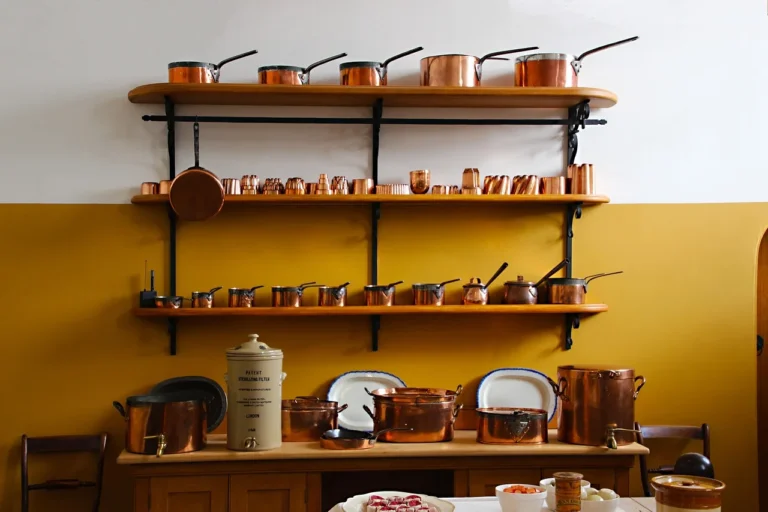
Copper cookware offers superb heat control. It heats up and cools down very quickly. It’s beautiful.
But it’s very expensive. It often needs lining with tin or stainless steel. It also requires careful cleaning.
Non-stick coatings exist on many types. You can find non-stick stainless steel. You can even find non-stick cast iron.
But the core material still matters. Ceramic and hard anodized are distinct categories. They offer different benefits based on their construction and surface treatment.
Quick Comparison to Other Cookware
Cast Iron:
- Pros: Extreme durability, great heat retention.
- Cons: Heavy, needs seasoning, can rust, not naturally non-stick.
Stainless Steel:
- Pros: Durable, non-reactive, good for searing.
- Cons: Food can stick, requires more oil.
Copper:
- Pros: Excellent heat control, beautiful.
- Cons: Expensive, needs special care, often lined.
Which Type is Best for You?
The “best” cookware is subjective. It depends on your cooking habits and priorities. If your main concern is avoiding certain chemicals and you cook delicate items like eggs frequently, then ceramic cookware might be your top choice.
You’ll need to be mindful of its care requirements. You’ll accept that its non-stick might not last forever.
If you are a serious home cook who values durability, even heating, and versatility, then hard anodized cookware is likely the better option. It can handle high heat, metal utensils, and rigorous use. It’s an investment that pays off in the long run.
You get reliable performance for many years.
Consider your kitchen routine. Do you cook every day? Do you have kids who might use metal spoons?
Are you often short on time for cleaning? These factors point towards hard anodized. If you enjoy a more deliberate cooking process and prioritize non-stick for specific dishes, ceramic is a strong contender.
It’s about matching the pan to your life.
When Ceramic Cookware Shines
Ceramic shines brightest when used for specific tasks. Think about breakfast. Scrambled eggs, omelets, pancakes, French toast.
These foods often stick to other surfaces. With ceramic, they slide right out. This makes cooking them a dream.
Cleanup is often just a wipe.
It’s also good for beginners. The non-stick surface makes learning to cook easier. Fewer mistakes happen due to sticking.
It builds confidence. Many people feel better knowing they are using cookware without potentially harmful chemicals. This peace of mind is valuable.
I’ve seen many kitchens where ceramic skillets are used for eggs and fish. Other pans are used for searing. It’s not an either/or situation.
You can mix and match. This allows you to get the benefits of ceramic without relying on it for everything. This extends its life and provides flexibility.
When Hard Anodized Cookware Excels
Hard anodized cookware truly excels in demanding situations. Searing steaks, chicken, or pork chops is a prime example. The even heating creates a beautiful, flavorful crust.
It stands up to the high heat required for this. Pan-frying vegetables or getting a good sear on tofu is also perfect for hard anodized.
It’s also fantastic for one-pot meals. Think risottos, stews, or sauces. The even heat ensures everything cooks uniformly.
The durability means you can stir vigorously with metal utensils if needed. This is crucial for certain techniques, like making a sauce base or scraping up browned bits (fond) for extra flavor.
The oven-safe nature of many hard anodized pans is another huge plus. You can start a dish on the stovetop and finish it in the oven. This is common for many casseroles, gratins, and even cakes.
The sturdy construction ensures it can handle the heat. It’s a true multitasker for the busy cook.
Real-World Scenarios
Scenario 1: Breakfast Master
- User: Wants to cook perfect, fluffy omelets every morning.
- Priority: Easy food release, quick cleanup, health-conscious.
- Best Fit: Ceramic skillet.
Scenario 2: Weeknight Warrior
- User: Cooks dinner most nights, often searing meat or sautéing vegetables.
- Priority: Durability, even heating, ability to handle high heat, forgiving for quick cleanup.
- Best Fit: Hard anodized skillet or saucepan.
Scenario 3: Gourmet Enthusiast
- User: Enjoys advanced cooking techniques like searing and deglazing.
- Priority: Performance, durability, oven-safe capabilities, longevity.
- Best Fit: High-quality hard anodized set.
Tips for Caring for Your Cookware
Proper care is key to making any cookware last. For ceramic, remember it’s delicate. Always use low to medium heat.
Never preheat an empty ceramic pan on high. Let it cool before washing. Wash by hand with a soft sponge and mild soap.
Avoid abrasive cleaners or steel wool. Store pans carefully. Use pan protectors or soft cloths between them to prevent scratches.
If the non-stick starts to fade, it’s often time to replace it.
Hard anodized cookware is much easier to care for. You can use medium-high heat. You can use metal utensils with care.
For cleaning, handwashing is always best for longevity. Use a sponge and mild dish soap. If there are stuck-on bits, you can use a nylon scrubber or even a bit of baking soda paste.
Most are dishwasher safe, but it can dull the finish over time. Avoid harsh detergents in the dishwasher. Let them cool before washing.
This prevents thermal shock, which can warp any metal.
I learned this the hard way with a beloved ceramic pot. I forgot it was on the stove and turned the heat up too high. It smoked.
The non-stick coating started to bubble. I was so upset. That was my first real lesson in respecting cookware limits.
It made me appreciate the toughness of my hard anodized pans even more.
When to Replace Your Cookware
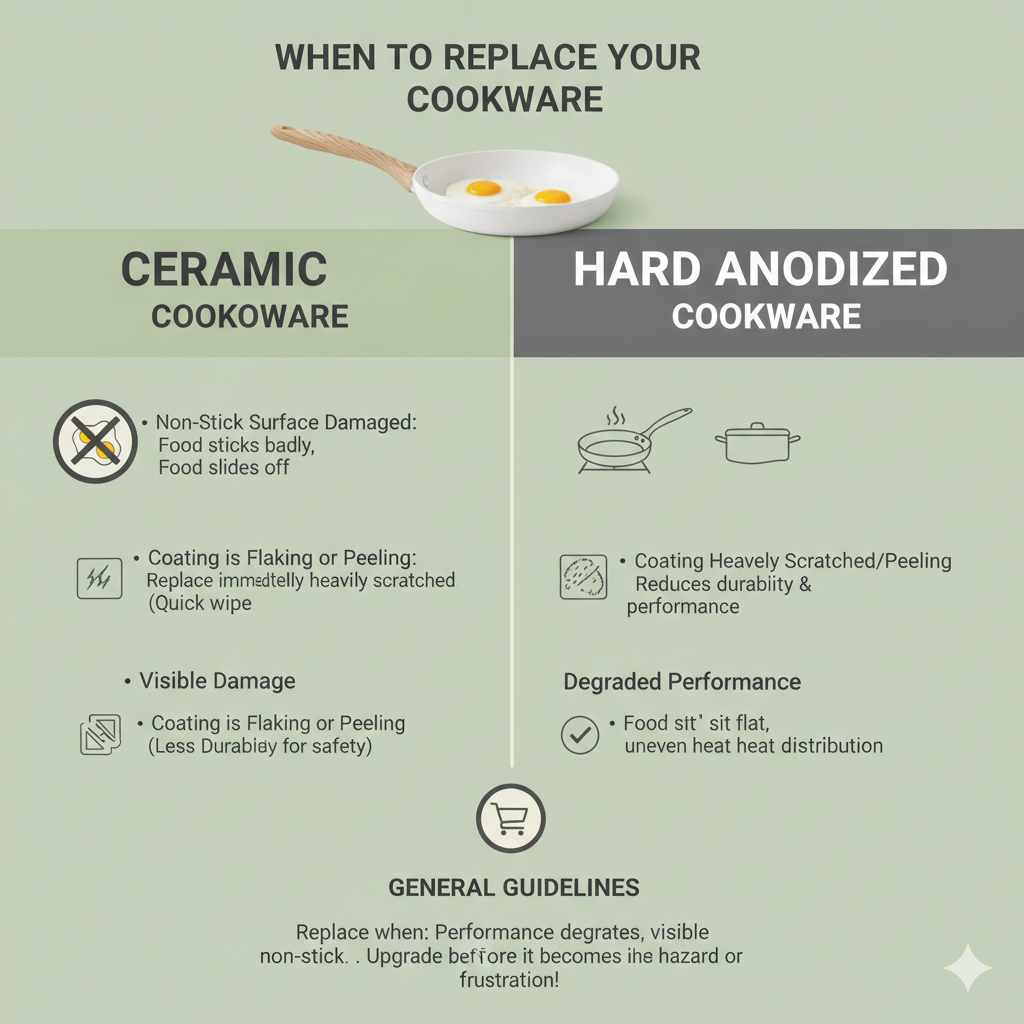
No cookware lasts forever. Knowing when to replace it is important. For ceramic, if the non-stick surface is significantly damaged, scratched, or food starts sticking badly, it’s time for a new one.
If the coating is flaking or peeling, definitely replace it immediately. This is for your health and safety.
With hard anodized cookware, look for signs of wear. If the coating is heavily scratched or peeling, replace it. If the pan is warped and no longer sits flat on the stovetop, it’s also time.
Warping affects heat distribution, leading to uneven cooking. Even very durable pans can eventually wear out, but it usually takes many years of heavy use.
Don’t wait until your pans are completely useless. If you notice cooking performance degrading, or see visible damage to the non-stick surface, it’s a good sign to start shopping. It’s better to replace a pan before it becomes a safety hazard or a source of constant cooking frustration.
Think of it as an upgrade, not a failure!
Frequently Asked Questions
Is ceramic cookware really healthier than non-stick?
Ceramic cookware is often considered healthier because its non-stick surface is typically made from natural minerals and does not contain PTFE or PFOA. These are chemicals that some people wish to avoid due to health concerns. However, modern non-stick coatings on other types of pans are also often PFOA-free.
Can I use metal utensils on hard anodized cookware?
Yes, generally you can use metal utensils on hard anodized cookware. The anodizing process makes the base material very hard and resistant to scratches. However, it’s still a good idea to use utensils with smooth edges.
Very sharp or rough metal utensils can still potentially damage the non-stick coating over time.
How long does ceramic cookware typically last?
The lifespan of ceramic cookware varies greatly. With very careful use and maintenance, some can last 3-5 years. However, the non-stick properties can degrade faster than other types.
Overheating, abrasive cleaning, or using metal utensils will significantly shorten its life. Many people find they need to replace ceramic pans more often than other types.
Is hard anodized cookware safe for high heat cooking?
Yes, hard anodized cookware is excellent for high heat cooking. The anodized aluminum is very durable and can withstand higher temperatures without warping. The non-stick coatings applied to it are also often designed to handle high heat.
This makes it ideal for searing meats and other high-temperature cooking methods.
Does ceramic cookware scratch easily?
Yes, the non-stick surface of ceramic cookware can scratch relatively easily compared to materials like hard anodized aluminum or stainless steel. It’s important to use wooden, silicone, or nylon utensils to protect the surface. Dropping the pan or placing heavy items on it can also cause damage.
Are all hard anodized pans non-stick?
Not all hard anodized pans are non-stick. Some brands offer hard anodized cookware with a bare, durable surface that is great for searing and developing fond, similar to stainless steel but with better heat distribution. However, many popular hard anodized pans do have a non-stick coating bonded to the surface for added convenience.
Conclusion
Choosing between ceramic and hard anodized cookware comes down to your cooking style and needs. Ceramic offers a gentle, non-stick surface that’s great for delicate foods and often preferred for health reasons. Hard anodized cookware provides superior durability, excellent heat distribution, and robustness for high-heat cooking.
Both have their place in a well-equipped kitchen. By understanding their differences, you can make an informed choice for your home.
Products related to this article
Sponsored / affiliate links. As an Amazon Associate I earn from qualifying purchases. I may earn additional commission from eligible campaigns.