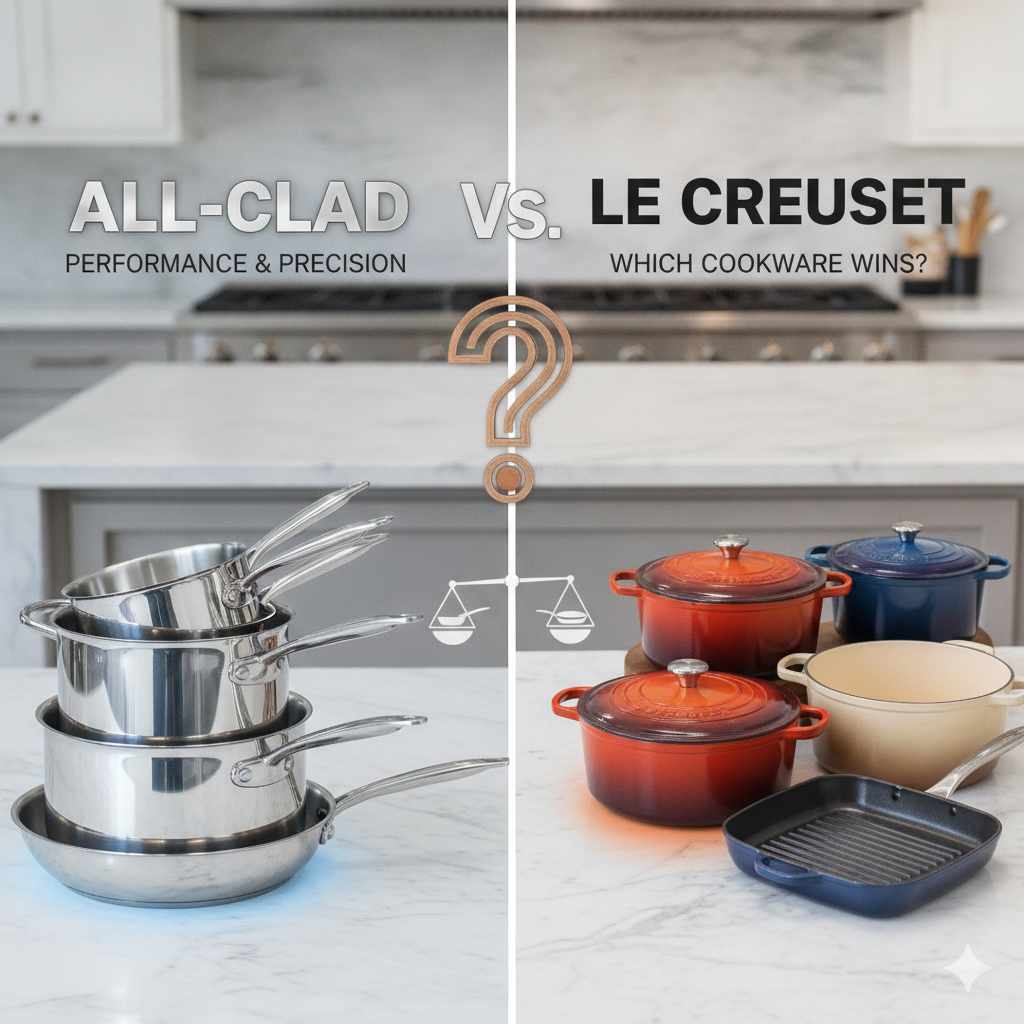
All-Clad Vs Le Creuset: Which Cookware Wins?
The choice between All-Clad and Le Creuset depends on your cooking needs. All-Clad excels in heat control and searing with its multi-ply stainless steel. Le Creuset shines in slow cooking and even heating with its enameled cast iron.
Understanding All-Clad Cookware
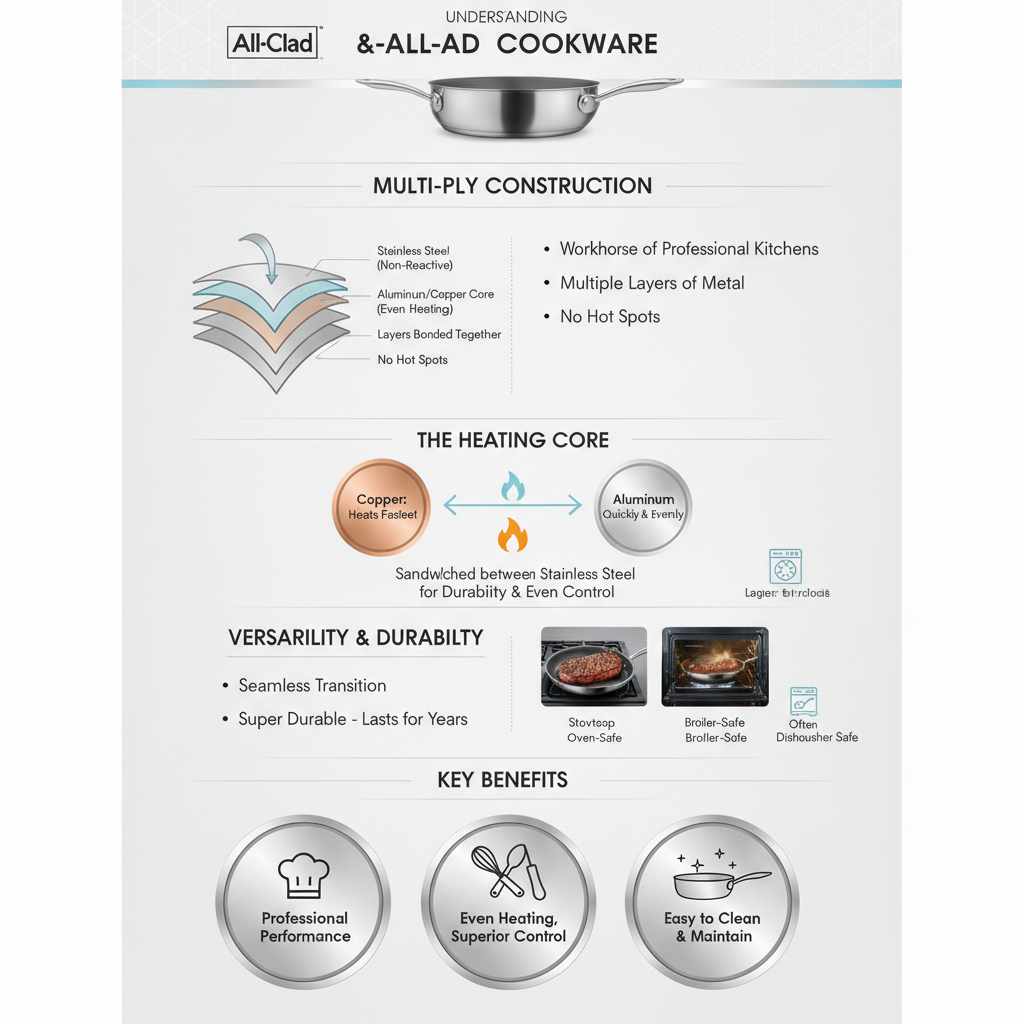
All-Clad is known for its signature stainless steel construction. Think of it as the workhorse of the professional kitchen, translated for your home. Their most popular lines feature multiple layers of metal bonded together.
This “multi-ply” construction is the secret to their performance. Usually, it’s a core of aluminum or copper sandwiched between layers of stainless steel. This design is all about even heating and superior heat control.
You get the durability of stainless steel without the hot spots that can ruin a dish.
The heating core is crucial. Aluminum heats up quickly and evenly. Copper does so even faster.
By layering these with stainless steel, All-Clad achieves a balance. The stainless steel is non-reactive, meaning it won’t change the taste of your food. It’s also super durable and looks great for years.
This makes All-Clad pots and pans ideal for everyday cooking. You can sear a steak, simmer a delicate sauce, or boil water with confidence.
Many home cooks love All-Clad because it’s versatile. You can take a pan from the stovetop straight into the oven. Most of their cookware is broiler-safe too.
This flexibility is a huge plus. It means fewer dishes and more efficient cooking. Plus, cleaning is generally straightforward.
While some stuck-on bits might need a little effort, a good soak or a specialized cleaner usually does the trick. They are also often dishwasher safe, which is a big convenience.
What Makes Le Creuset Special
Le Creuset is instantly recognizable by its bold colors and heavy, enameled cast iron. This cookware is built to last for generations. The cast iron itself is a fantastic heat retainer.
Once it heats up, it stays hot. This makes it perfect for slow cooking, braising, and stewing. The enamel coating serves two main purposes.
First, it protects the cast iron from rust. Second, it provides a smooth, non-stick-like cooking surface. This means you don’t need to worry about food sticking as much as with raw cast iron.
The enameled surface also makes cleaning much easier compared to traditional cast iron. You can typically wipe it clean with a sponge. For tougher messes, a bit of gentle scrubbing usually works.
The even heating of cast iron means your stews will simmer gently and uniformly. Your roasts will develop a beautiful, even crust. The heavy lid traps moisture and heat, making it ideal for dishes that require long, slow cooking.
This is where Le Creuset truly shines.
Le Creuset pieces are also beautiful. They come in a stunning array of colors. This means you can go from cooking on the stove to serving at the table without missing a beat.
Many people display their Le Creuset pieces when not in use. This aesthetic appeal is a big part of the brand’s charm. It’s cookware that is both functional and a statement piece in the kitchen.
A Personal Kitchen Story
I remember my first real splurge on cookware. It was about ten years ago. I had been using hand-me-down pots and pans that were… well, let’s just say they had seen better days.
A non-stick pan had lost its coating. A stainless steel pot had a warped bottom. I felt like I was fighting my food every time I cooked.
I decided it was time to invest in something better.
I was torn between the shiny elegance of All-Clad and the robust charm of Le Creuset. My friend, who is a fantastic cook, had both. She advised me to think about how I cooked most often.
I told her about my love for searing chicken thighs until they were crispy. I also mentioned my weekend project of braising short ribs until they fell off the bone. She smiled and said, “That’s your answer.”
She explained that for searing and quick stovetop cooking, the responsiveness of All-Clad was unbeatable. For slow, moist cooking like braises, the even, sustained heat of Le Creuset was king. That night, I went home and thought about it.
I realized I loved the idea of braising, but my stovetop searing was my daily bread. I felt a little anxious spending so much money, but I knew I had to make a choice. That’s when I decided to start with an All-Clad sauté pan.
It was a revelation. The way it seared, the way it browned, the way it heated evenly – it felt like magic. That pan became my most used kitchen tool.
It was a tangible step towards better cooking and more confidence in my own kitchen.
All-Clad vs Le Creuset: Key Differences at a Glance
Construction: All-Clad uses multi-ply bonded metal (usually stainless steel with aluminum or copper). Le Creuset uses enameled cast iron.
Best For: All-Clad is excellent for searing, sautéing, and quick stovetop cooking. Le Creuset is ideal for slow cooking, braising, and simmering.
Heat Distribution: All-Clad offers superior responsiveness and even heating across the surface. Le Creuset retains heat exceptionally well, providing consistent, even temperatures once heated.
Durability: Both are very durable. All-Clad is resistant to warping and scratching. Le Creuset is chip-resistant and built to last for decades.
Maintenance: All-Clad is generally dishwasher safe and easy to clean. Le Creuset is also easy to clean but requires a bit more care to avoid chipping the enamel.
Aesthetics: All-Clad has a classic, professional stainless steel look. Le Creuset offers vibrant colors and a more classic, homey feel.
How They Perform on the Stovetop
When you’re looking at stovetop performance, All-Clad truly shines. Its multi-ply construction means heat travels quickly and evenly through the pan. This is vital for tasks like searing.
You want a pan that gets hot all over, not just in the middle. With All-Clad, you get consistent browning on your chicken, fish, or vegetables. There are fewer cold spots.
This means your food cooks more uniformly. It also means less chance of burning in one area while another is still pale.
The responsiveness of All-Clad is another big win. If you need to quickly lower the heat to prevent something from burning, the pan will react fast. The aluminum or copper core allows heat to dissipate quickly when you turn down the burner.
This level of control is what many professional chefs value. It gives you the confidence to try more complex recipes. You can sauté delicate ingredients without fear of them overcooking instantly.
On the other hand, Le Creuset performs differently on the stovetop. Cast iron heats up more slowly. But once it’s hot, it stays hot for a long time.
This is great for maintaining a steady simmer. It’s perfect for dishes that need gentle, consistent heat. However, for quick searing, it can be a bit trickier.
You need to preheat the pan thoroughly. Even then, the heat retention means it might continue to cook food even after you’ve turned down the heat. This requires a more mindful approach to heat adjustment.
For tasks like boiling water, All-Clad is usually faster. The aluminum core heats up quickly. Le Creuset, being much heavier and denser, takes longer to come to a boil.
But once boiling, it will maintain that boil very steadily. So, for quick stovetop tasks, All-Clad has the edge. For long, slow cooking that requires stable heat, Le Creuset is the champion.
What About Oven Use and Broiling?
When it comes to oven use, both brands offer excellent performance, but with slightly different considerations. All-Clad cookware is typically oven-safe to very high temperatures. Many lines can go up to 600°F (315°C).
This is fantastic for dishes that need to finish cooking in the oven. You can sear a steak on the stovetop and then move the entire pan into a hot oven to finish cooking to perfection. The stainless steel handles are usually oven-safe as well, though they can get hot.
The broiler is also a friend to All-Clad. You can place an All-Clad pan under a hot broiler to get a beautiful crust on top of a gratin or to brown the surface of a dish. The even heating of the pan ensures that the heat from the broiler is distributed well, leading to consistent browning.
Le Creuset cookware is also oven-safe. The enameled cast iron can typically handle temperatures up to 500°F (260°C). This is more than sufficient for most roasting and baking needs.
Its excellent heat retention means that once it’s in the oven, it distributes heat very evenly. This is why it’s so good for braising and slow roasting. The heat surrounds the food gently and consistently.
However, there’s a key difference with the lid. Le Creuset lids often have phenolic knobs that are only oven-safe up to 375°F (190°C). If you need to go hotter than that, you’ll need to remove the knob or
Infographic Style: Cooking Method Match-Up
Searing
Sautéing
Quick Sauces
Boiling Water
Everyday Frying
Braising
Stewing
Soups
Slow Cooking
Roasting
The Cleaning and Maintenance Factor
When it comes to cleaning, both brands offer advantages, but they require different approaches. All-Clad stainless steel cookware is generally very easy to maintain. Most pieces are dishwasher safe.
This is a huge convenience for busy cooks. If you’re cooking something that might stick, like scrambled eggs or delicate fish, a little bit of oil or butter usually prevents issues. For tougher messes, like burnt-on food, you can use a non-abrasive scrub pad or a specialized stainless steel cleaner.
These cleaners can bring back the shine and remove stubborn stains.
A common concern with stainless steel is its tendency to show water spots or minor discoloration. This is purely cosmetic and doesn’t affect cooking performance. A quick polish with a microfiber cloth can keep it looking brand new.
The lack of a non-stick coating means you don’t have to worry about scratching it with metal utensils, which is a freedom many cooks appreciate. You can use spatulas and whisks without fear.
Le Creuset enameled cast iron also boasts easy cleaning, but it’s a different kind of easy. You generally shouldn’t put Le Creuset in the dishwasher, as it can dull the finish over time. Instead, hand washing with warm, soapy water and a soft sponge is recommended.
The enamel coating is quite forgiving. Even baked-on food can usually be removed with a gentle soak and a bit of scrubbing. For very stubborn spots, you can use a paste of baking soda and water, or a specialized cleaner for enameled cast iron.
The main thing to be careful with is chipping the enamel. While Le Creuset is quite durable, dropping a piece or hitting it hard against another surface can cause chips. These chips, especially on the interior, can expose the cast iron underneath.
While minor chips on the exterior are usually fine, interior chips can affect the non-stick properties and may even lead to rust if not cared for properly. Avoid using metal scouring pads or harsh detergents that could damage the enamel. Also, never put a hot Le Creuset pot on a cold surface, as extreme temperature changes can cause cracking.
Quick Comparison: Cleaning & Care
All-Clad:
- Dishwasher safe (most lines)
- Metal utensils okay
- Easy to scrub out tough spots
- Can show water spots (cosmetic)
Le Creuset:
- Hand wash recommended
- Avoid metal scourers
- Be careful of chipping enamel
- Great for preventing sticking with proper heat
Durability and Longevity: Which Lasts Longer?
Both All-Clad and Le Creuset are renowned for their durability and are considered long-term investments. They are built to last for many years, often decades, with proper care. The question of which lasts longer often comes down to how they are treated and what kind of wear and tear they experience.
All-Clad stainless steel cookware is virtually indestructible in terms of its core material. It won’t warp, crack, or pit under normal cooking conditions. The primary ways it might show wear are scratches on the cooking surface (which don’t affect performance) or damage to the handles if they are mishandled or exposed to extreme heat.
The bonded construction itself is incredibly strong. Many people inherit All-Clad pieces from parents or grandparents, attesting to their incredible longevity. It’s a workhorse that can withstand daily use and abuse.
Le Creuset enameled cast iron also has an impressive lifespan. Cast iron itself is incredibly durable and can last for centuries. The enamel coating is designed to be chip-resistant and to protect the cast iron.
However, the enamel is the component that is most susceptible to damage. Dropping a piece, hitting it hard, or exposing it to extreme temperature shocks can lead to chips or cracks. While these don’t always affect the cooking performance immediately, they can, over time, lead to rust if the cast iron is exposed.
With careful use, avoiding metal utensils on the interior and being mindful of temperature changes, a Le Creuset piece can easily last a lifetime and be passed down.
In terms of general robustness for everyday tasks, All-Clad might have a slight edge for resilience against accidental damage. You’re less likely to “ruin” an All-Clad pan with a minor mishap. However, for maintaining its pristine cooking surface, both require attention.
The key to longevity for both is understanding their materials and treating them with respect for their intended use.
Myth vs. Reality: Cookware Longevity
Stainless steel scratches easily and looks bad quickly.
Stainless steel can scratch, but it’s cosmetic. The cooking performance remains strong for decades. Specialized cleaners can restore shine.
Enamel chips easily and is fragile.
While enamel can chip if mistreated, it’s very durable for normal cooking. Avoid thermal shock and metal utensils for maximum lifespan.
Real-World Kitchen Scenarios
Let’s think about how these pans perform in everyday life. Imagine you’re making a quick weeknight dinner. You need to sauté some onions and garlic.
Then you’ll add chicken breasts to sear them. For this, the All-Clad pan is your best friend. It heats up quickly.
The onions and garlic cook evenly without burning. When you add the chicken, the pan gets hot enough to create a beautiful sear. You can easily adjust the heat if needed.
The even heating means the chicken cooks through without raw spots.
Now, picture a Sunday afternoon. You have a big cut of beef and want to make a pot roast. You want to sear the roast first for flavor and color.
Then, you’ll add vegetables and liquid and let it slow-cook for hours. This is where Le Creuset shines. You’d start by searing the roast in the Dutch oven.
It will get a good crust. Then, you add your liquid and vegetables. You put the heavy lid on and let it simmer gently on the stovetop, or you could transfer the whole pot to the oven.
The cast iron holds the heat beautifully. It ensures a slow, even cooking process that tenderizes the meat perfectly. The moisture stays trapped inside, creating a rich, flavorful sauce.
Consider making a delicate pan sauce after searing fish. You’ve removed the fish, and there are browned bits (fond) stuck to the bottom of the pan. With All-Clad, you can deglaze with wine or broth and quickly scrape up all those flavorful bits.
The pan’s responsiveness lets you control the simmer and reduce the sauce to the perfect consistency. With Le Creuset, the fond might stick a bit more, and the slower heat reaction means you need to be more patient as you reduce the sauce. However, the even heat ensures the sauce doesn’t scorch easily.
The Design Difference: What You See Matters
All-Clad:
- Look: Professional, sleek, brushed stainless steel.
- Handles: Often long and sturdy, designed for grip and oven use. Some find them less comfortable over time.
- Lids: Tight-fitting stainless steel.
Le Creuset:
- Look: Vibrant colors, iconic shape, smooth enamel finish.
- Handles: Shorter, loop-style handles. Easier to grip with oven mitts.
- Lids: Heavy, tight-fitting enamel lids designed to trap moisture.
What This Means for Your Cooking Style
Choosing between All-Clad and Le Creuset really comes down to understanding your personal cooking style. If you’re someone who loves to sear, sauté, and cook quickly on the stovetop, and you appreciate precise heat control, All-Clad is likely your perfect match. It’s fantastic for everyday meals, from quick stir-fries to pan-fried chicken and delicate sauces.
The versatility for oven use also makes it great if you frequently finish dishes in the oven.
If your culinary heart beats for slow-cooked meals, tender braises, hearty stews, and comforting soups, then Le Creuset will likely become your most treasured kitchen companion. Its ability to retain and distribute heat evenly makes it unparalleled for these types of dishes. The beautiful aesthetics also mean it’s cookware you’ll love to use for entertaining and serving directly from the stove or oven to the table.
It’s also important to consider your kitchen setup. Do you have a gas stovetop, electric, or induction? Both brands work well on most stovetops, including induction.
However, the dense cast iron of Le Creuset can sometimes be a bit heavy for some electric coil stovetops, and induction cooktops need to be compatible with magnetic cookware (both typically are). If you have limited storage space, think about how you’ll store these pieces. Le Creuset pieces are heavy and can be bulky.
All-Clad, while also substantial, might be easier to stack or store if you have a variety of pan sizes.
Think about what kind of cooking you do most often. If you’re a beginner cook, starting with a versatile piece like an All-Clad sauté pan or a Le Creuset Dutch oven can be a great introduction to quality cookware. You don’t need to buy a whole set at once.
Many cooks build their collections piece by piece, choosing items that best suit their needs. Investing in one or two high-quality pieces from either brand will significantly elevate your cooking experience.
Simple Checks: When to Worry, When to Relax
With any cookware, especially high-quality pieces, it’s good to know what’s normal and what might signal a problem. For All-Clad stainless steel:
- Normal: Minor scratches on the cooking surface. This is cosmetic and won’t affect performance.
- Normal: Slight discoloration or rainbow-like streaks after washing. This can be buffed out with a stainless steel cleaner or even a bit of vinegar.
- Normal: The pan getting hot. That’s its job!
- Worry: The pan warping significantly, so it wobbles on the stovetop. This might indicate a manufacturing defect or extreme stress.
- Worry: The handles becoming loose or wobbly. This might need tightening or repair.
- Worry: Holes or cracks appearing in the metal. This is rare but indicates a serious issue.
For Le Creuset enameled cast iron:
- Normal: The pot taking a while to heat up. Cast iron is dense and takes time.
- Normal: Slight imperfections in the enamel. This is common with hand-applied enamel and doesn’t affect function.
- Normal: A patina forming on the interior surface from cooking, especially with fatty foods. This can even enhance non-stick properties.
- Worry: Large chips or cracks in the enamel, especially on the interior cooking surface. This exposes the cast iron and can lead to rust or affect cooking.
- Worry: Rust spots appearing on the interior surface. This indicates the enamel has been compromised.
- Worry: The lid not fitting snugly. This can affect moisture retention during cooking.
- Worry: The phenolic knob melting or degrading if used in an oven hotter than its rating.
In essence, most signs of wear on both brands are cosmetic or related to normal use. True “worry” signs involve structural damage, significant warping, or compromised enamel. With a little care, both types of cookware can provide decades of reliable service.
Quick Tips for Better Cooking with Either Brand
Regardless of which brand you choose, here are some simple tips to get the most out of your investment.
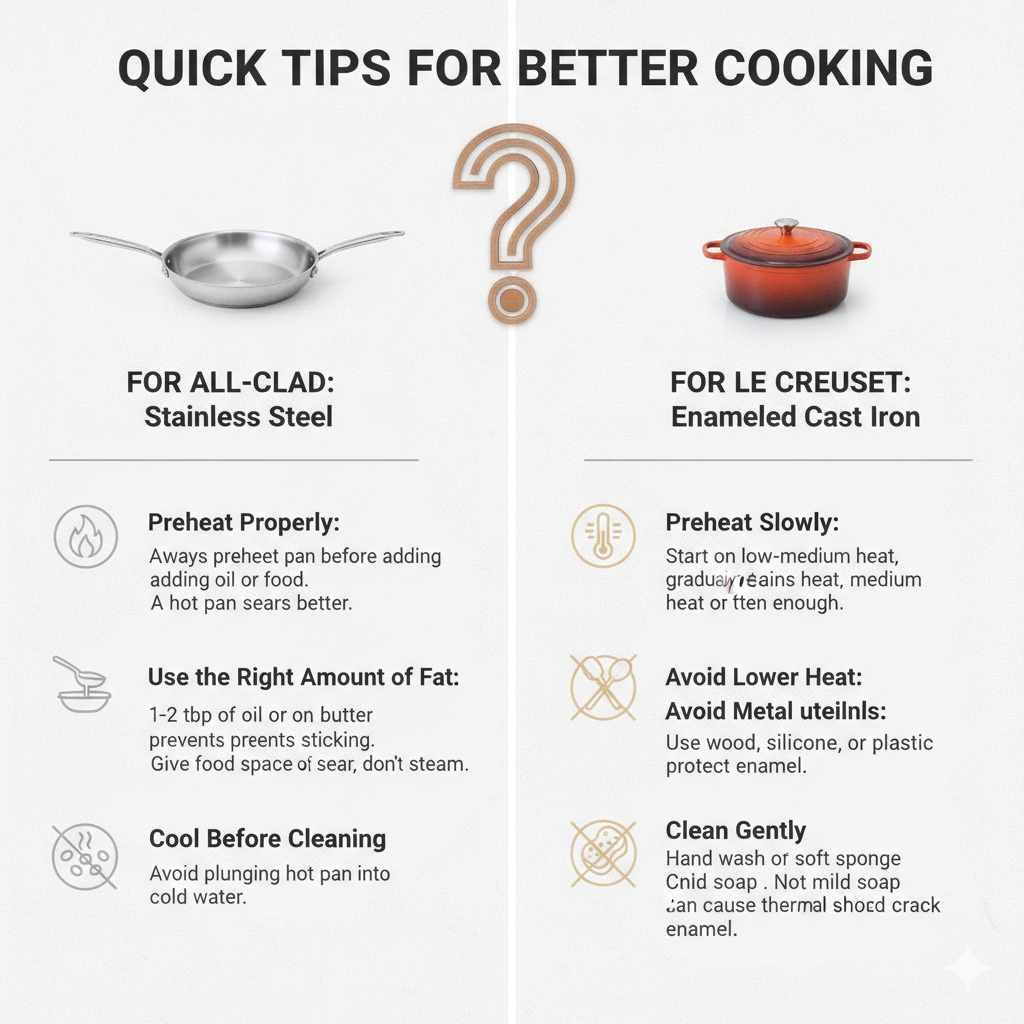
For All-Clad:
- Preheat properly: Always preheat your pan before adding oil or food. A hot pan sears better.
- Use the right amount of fat: A tablespoon or two of oil or butter is usually enough to prevent sticking in a well-preheated pan.
- Don’t overcrowd the pan: Give your food space. Overcrowding lowers the pan temperature and leads to steaming instead of searing.
- Let it cool slightly before cleaning: Avoid plunging a hot stainless steel pan into cold water, as extreme temperature changes can potentially warp it.
For Le Creuset:
- Preheat slowly: Start on low to medium heat and gradually increase. Cast iron doesn’t like sudden temperature changes.
- Use lower heat than you think: Because cast iron retains heat so well, medium heat often cooks food just as effectively as high heat on other pans.
- Avoid metal utensils on the interior: Use wood, silicone, or plastic to protect the enamel.
- Clean gently: Hand wash with a soft sponge and mild soap. Avoid abrasive scrubbers.
- Never put a hot pot on a cold surface: This can cause thermal shock and crack the enamel.
Common Questions Answered
Is All-Clad worth the high price?
Yes, many home cooks and professionals find All-Clad worth it due to its exceptional durability, superior heat control, and versatility. It’s an investment that lasts a lifetime, performing consistently for everyday cooking and special meals.
Can I use metal utensils with Le Creuset?
It’s best to avoid metal utensils on the interior of your Le Creuset cookware. While the enamel is durable, metal can scratch or chip it over time. Wood, silicone, or nylon utensils are recommended to preserve the finish.
Does Le Creuset work on induction cooktops?
Yes, Le Creuset enameled cast iron is magnetic and works perfectly on induction cooktops. Its dense material heats very efficiently with induction heat.
Can I put my All-Clad cookware in the dishwasher?
Most All-Clad stainless steel cookware lines are dishwasher safe. However, handwashing is often recommended to maintain the luster and prevent minor cosmetic issues like water spots over the long term.
What’s the difference between All-Clad D3 and D5?
All-Clad D3 features a three-ply construction with an aluminum core. D5 has a five-ply construction, adding an extra layer of stainless steel for even more even heating and responsiveness. Both are excellent, but D5 offers a slight edge in performance for some cooks.
Is a Le Creuset Dutch oven better than a stainless steel pot for stew?
For stews that require long, slow simmering and tenderizing, a Le Creuset Dutch oven is generally preferred. Its cast iron construction retains heat exceptionally well, providing gentle, even cooking. A stainless steel pot can work, but may require more attention to heat control to prevent scorching.
Making Your Choice
Ultimately, the battle of All-Clad vs Le Creuset isn’t about one being definitively “better” than the other. It’s about which cookware best fits your kitchen, your cooking habits, and your culinary dreams. If your kitchen routine involves a lot of quick stovetop action, searing, and precise temperature control, All-Clad is a stellar choice.
Its durability and responsiveness are hard to beat for everyday cooking.
If you find joy in slow, comforting meals, the rich flavors of braises, and the gentle simmer of soups, then Le Creuset will likely steal your heart. Its unmatched heat retention and even cooking make it the king of slow cooking. Plus, its beautiful colors add a touch of joy to any kitchen.
Many passionate home cooks even own pieces from both brands, recognizing that each excels in different areas. Consider your most frequent cooking tasks and invest in the cookware that will help you execute them flawlessly. Whichever you choose, you’re investing in quality that will serve you well for years to come.
Products related to this article
Sponsored / affiliate links. As an Amazon Associate I earn from qualifying purchases. I may earn additional commission from eligible campaigns.