How To Pack Pots And Pans For Moving Safely
Moving your kitchen can feel like a big puzzle. You have so many different items. Some are fragile, others are bulky. Pots and pans are common kitchen items. They can be tricky to pack. You want them to arrive in good shape. You don’t want scratches or dents. This guide will show you easy ways to pack them. You’ll learn how to protect your cookware.
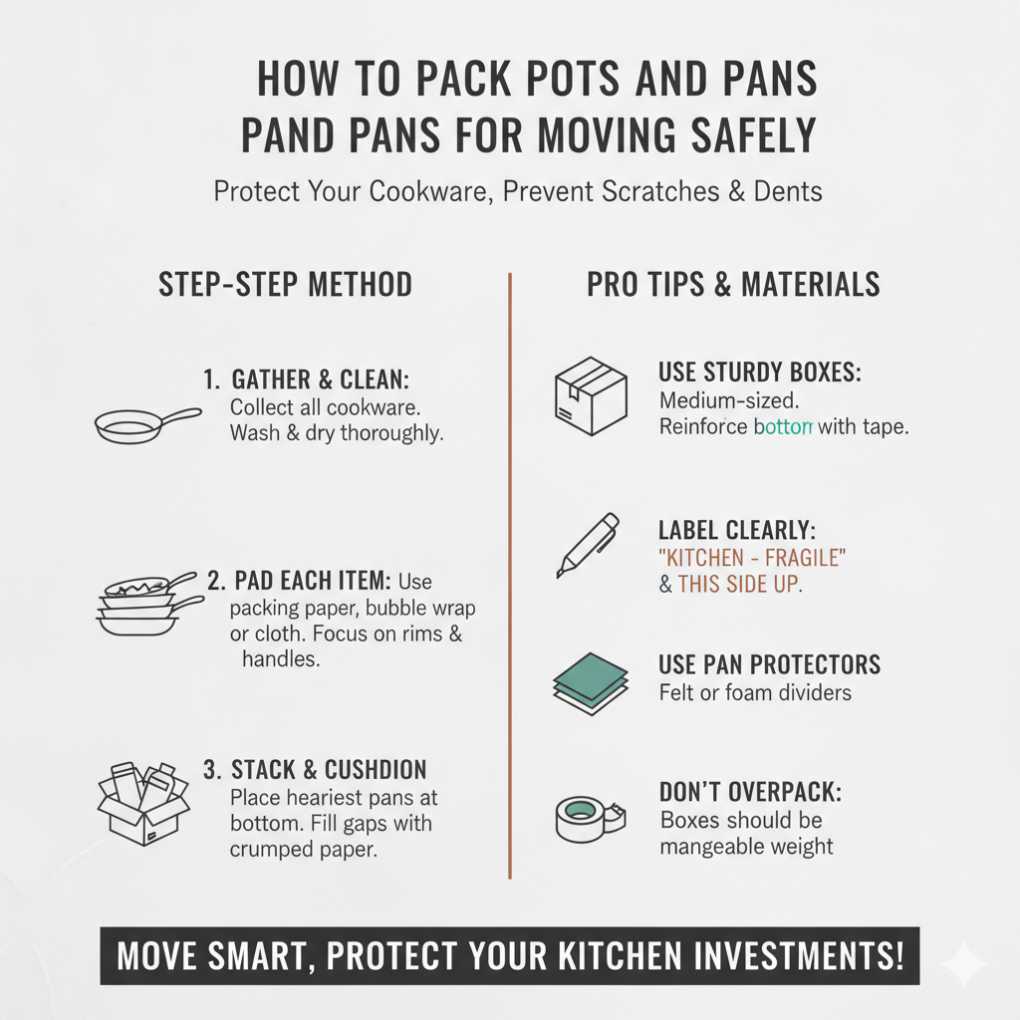
Packing pots and pans for a move involves protecting them from damage. Use soft materials like newspaper or towels to cushion them. Separate nested items with padding. Secure lids to prevent them from rattling or falling off. Pack them tightly but not too tightly in sturdy boxes.
Understanding Pot and Pan Packing Challenges
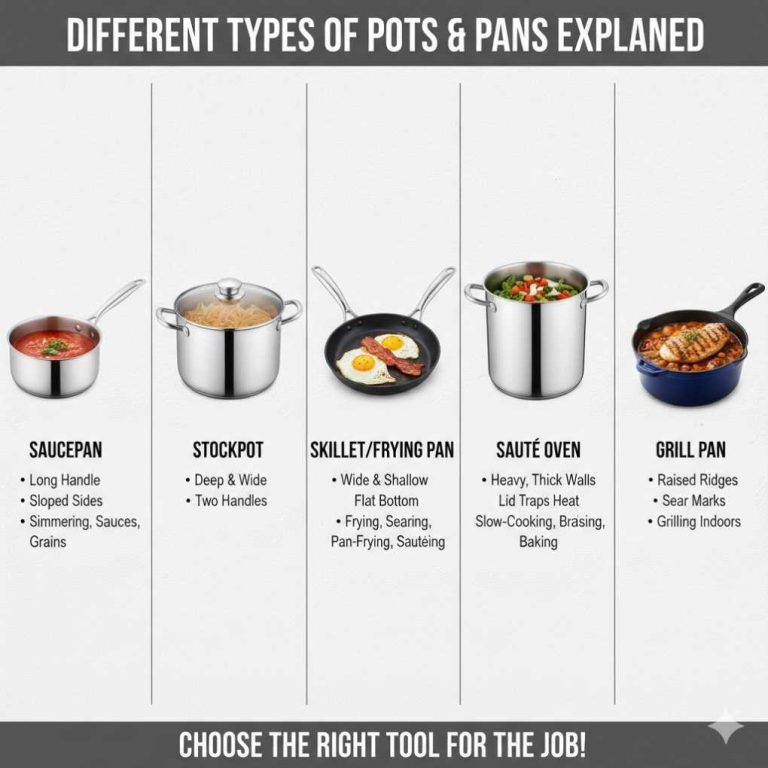
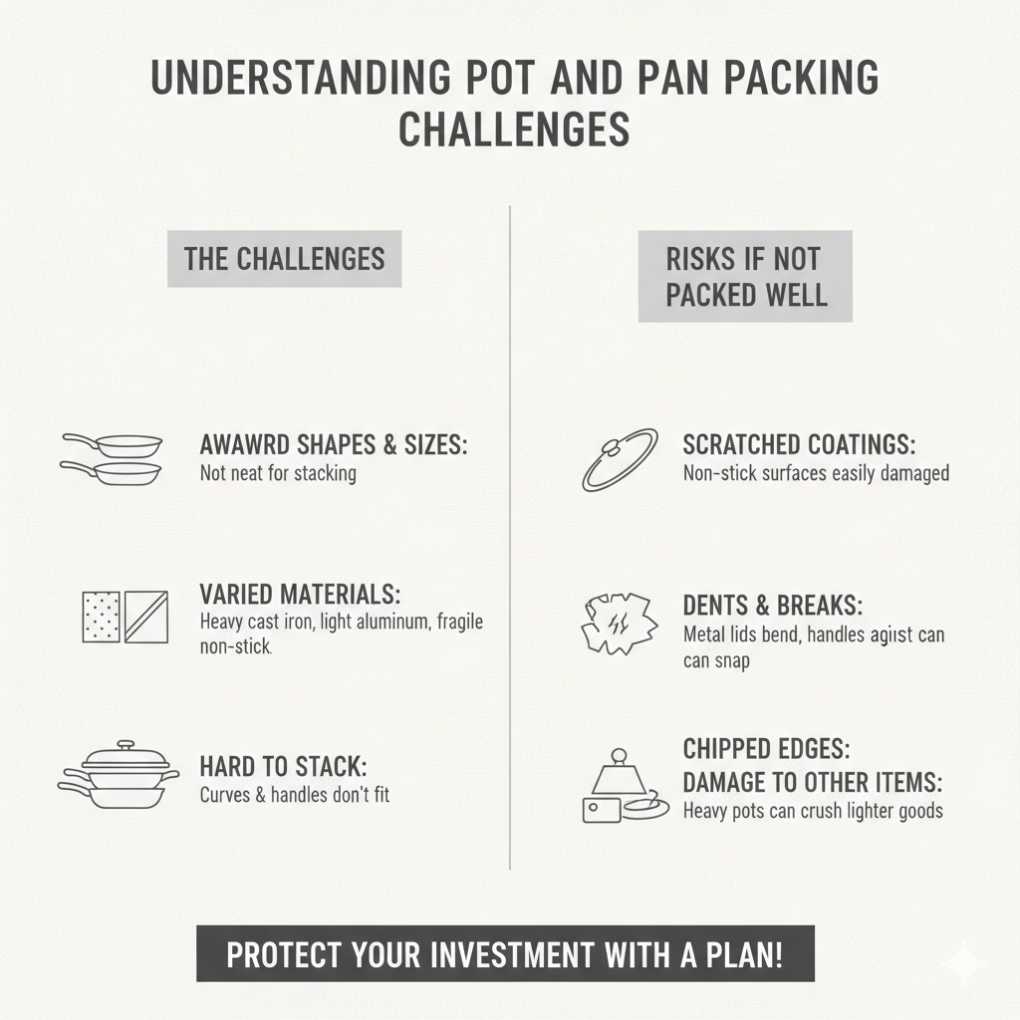
Pots and pans come in many shapes and sizes. They can be made of different materials. Some are heavy cast iron. Others are lighter aluminum. Many have non-stick coatings. These coatings are easily scratched. Metal lids can get bent. Handles can break off. Even heavy pots can damage lighter items if not packed well. They can bang against each other. This can cause dents. Or it can chip away coatings.
The biggest issue is usually their shape. Pots and pans are not neat squares or rectangles. They have curves and handles. This makes them hard to stack neatly. They don’t fit together like books. They can also be awkward to carry. Trying to just toss them into a box is a bad idea. That is how damage happens. You need a plan.
Your Kitchenware Moving Story
I remember my first big move. I thought packing my kitchen would be simple. I just threw things into boxes. My pots and pans were the worst. I stacked them inside each other. I put paper in between. But I didn’t secure the lids well. When the movers handled the boxes, I heard a loud clatter. Later, I opened a box and saw my favorite non-stick skillet had a big dent. The coating was scraped too. I felt so frustrated. It was a lesson learned. Now, I pack them with much more care.
Preparing Your Pots and Pans for Packing
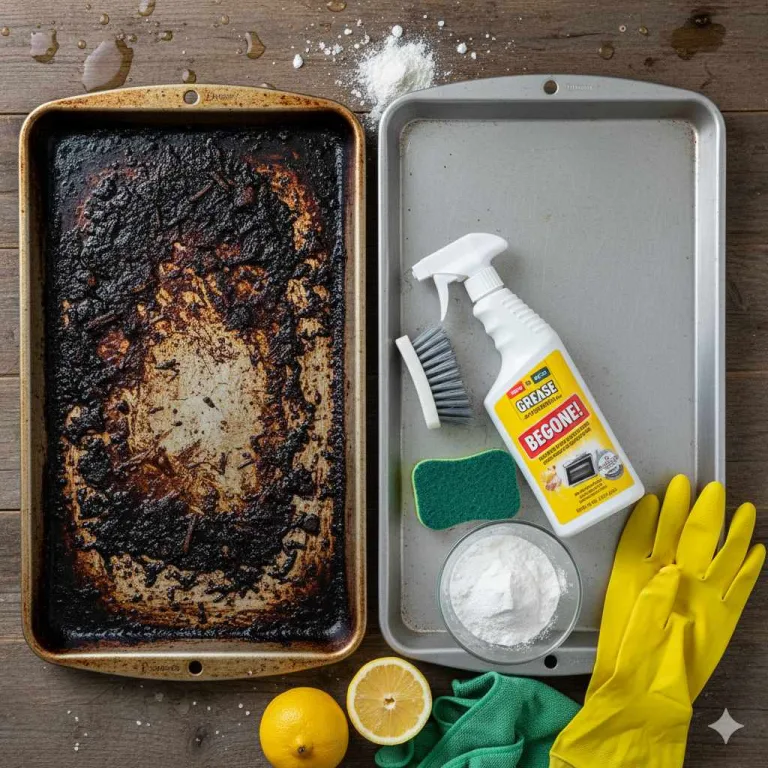
Before you start packing, clean everything. This is a good time to wash your pots and pans. Make sure they are completely dry. Water trapped inside can cause mold. Or it can rust some metals. It’s also easier to pack clean items. You don’t want to unpack dusty or greasy cookware.
Check for any loose handles or parts. If something is wobbly, consider if it’s worth moving. Sometimes, it’s better to replace very old or damaged items. You can also use this time to sort through your cookware. Do you use everything? Maybe it’s time to donate some items.
Best Packing Materials for Cookware
You need the right supplies. This is key to keeping your pots and pans safe.
Essential Packing Supplies
Paper: Lots of packing paper or newspaper is great. It cushions and fills gaps.
Bubble Wrap: Use this for delicate items or to add extra padding.
Towels and Linens: Old towels, dishcloths, or blankets work well. They offer soft protection.
Sturdy Boxes: Use strong, medium-sized boxes. Avoid old, flimsy ones. They might break.
Packing Tape: Good quality tape to seal boxes securely.
Markers: For labeling boxes clearly.
How to Pack Different Types of Cookware
Each type of pot or pan might need a slightly different approach.
Packing Sauce Pans and Skillets
These are the most common items. They can be nested together.
Step-by-Step: Saucepans & Skillets
1. Clean and Dry: Ensure they are spotless and bone dry.
2. Separate with Padding: Place a sheet of packing paper or a thin towel inside each pot or pan. If nesting, put a sheet between each one.
This stops metal-on-metal contact.
3. Secure Lids: This is important. Wrap lids separately in bubble wrap or paper.
Tape them so they don’t come undone. You can also tape them to the side of the pot if they fit snugly.
4. Nesting (Carefully): Place smaller pots and pans inside larger ones. Make sure they fit without forcing.
Add more paper or a towel at the bottom of the larger pot.
5. Box Them Up: Place nested pots and pans into sturdy boxes. Try to arrange them so they are snug.
Fill any empty spaces with more crumpled paper or towels. This stops them from shifting.
Packing Stock Pots and Dutch Ovens
These are often heavier and bulkier.
Packing Large, Heavy Pots
1. Line the Inside: Put a good amount of packing paper or a folded towel inside the pot. This protects the bottom surface.
2. Protect the Exterior: For cast iron or enameled pots, wrap the outside with a towel or blanket. This prevents scratches from other items or the box.
3. Lid Security: Wrap the lid well. Secure it with tape.
You might even want to place a small piece of cardboard over the handle if it sticks out.
4. Box Placement: These heavy items should go into smaller, strong boxes. Place them on the bottom of the box.
Pack them upright if possible. Fill all gaps with padding so they don’t move.
Packing Specialty Cookware (Woks, Griddles, etc.)
These items might have unusual shapes.
Handling Odd Shapes
1. Wrap Individually: For items like woks with sloped sides or flat griddles, wrapping them individually is best. Use plenty of bubble wrap or thick paper.
2. Protect Edges: Pay special attention to any thin edges or handles on these items. Add extra padding around them.
3. Flat Items: Griddles can be packed flat in boxes with other flat items. Ensure there’s padding on both sides.
Avoid placing heavy items on top of them.
4. Woks: You can sometimes nest smaller items inside a wok. If not, wrap it securely and place it in a box where it won’t be crushed.
The Art of Nesting Pots and Pans
Nesting cookware saves space. But it needs to be done carefully.
You want to put smaller pots and pans inside larger ones. Think of it like a set of Russian dolls. Always place a protective layer between each item. This is usually packing paper or a soft towel. Don’t force items together. If it feels like you’re bending or straining something, stop.
For lids, it’s often best to pack them separately. This gives you more control over their protection. You can wrap them in bubble wrap. Then you can place them in a box with other kitchen items. Or, if the pot is deep enough and the lid fits snugly, you can place the wrapped lid inside.
Securing Lids: A Common Pitfall
Loose lids are a recipe for disaster. They can get lost. They can get bent. They can fall off and get damaged. Or they can bang against the inside of the pot.
Always wrap lids. Use bubble wrap or several layers of packing paper. Secure the wrapping with tape. This keeps everything in place. If a lid has a knob that sticks up, wrap that knob extra well. Sometimes, I tape the wrapped lid to the outside of the pot it belongs to. This keeps them together.
Boxing Your Cookware Effectively
Choosing the right box is important.
Use medium-sized, strong cardboard boxes. Avoid large boxes for heavy items like cast iron. Heavy pots in big boxes can be hard to lift. They can also lead to boxes breaking.
Arrange your packed pots and pans in the box. Try to place heavier items at the bottom. Lighter items go on top. Fill all empty spaces. This is crucial. Crumpled paper, towels, or even blankets will stop things from rattling around. A tightly packed box is a safe box.
Label your boxes clearly. Write “Kitchenware” or “Pots and Pans.” Also, note which room they belong in. You can add “Fragile” if you feel it’s necessary, though careful packing should make it less needed.
Dealing with Special Materials
Some materials need extra care.
Non-Stick Cookware
The coating is the main concern. Scratches ruin non-stick pans. Always put paper or a towel between pans. Never stack them tightly without padding. Avoid using abrasive materials for cleaning before packing. Make sure the coating is completely dry.
Cast Iron Cookware
Cast iron is very durable. But it’s also very heavy. Protect the surface with oil if you season it. Wrap it in a towel or paper. Pack it in a strong, medium-sized box. Place it at the bottom of the box. Ensure it cannot shift.
Enameled Cast Iron (e.g., Le Creuset)
These are beautiful but can chip. Wrap them very well. Use a soft towel or bubble wrap. Pack them in sturdy boxes. Avoid packing them with heavy items on top. The enamel can chip if hit hard.
Tips for Moving Day and Unpacking
On moving day, make sure the boxes with pots and pans are handled with care. If you are using movers, point out these boxes. Tell them they are heavier than they look.
When you unpack, take your time. Unpack your kitchen essentials first. This includes a pot and pan so you can start cooking. Remove the padding gently. Check each item for any damage.
What If You Have Too Many Pots and Pans?
It’s common to accumulate cookware over the years. Before you pack, take stock.
Decluttering Your Cookware
Use it or Lose it: If you haven’t used a pan in over a year, consider donating it.
Duplicate Items: Do you need three large skillets? Keep the best one or two.
Damaged Goods: Heavily scratched non-stick pans or pots with loose handles might be beyond repair. It might be more cost-effective to replace them.
Gift or Sell: Good quality items you don’t need can be sold or given to friends.
Preventing Damage: Common Mistakes to Avoid
Let’s look at what often goes wrong.
Mistakes to Avoid
Not Padding Enough: Simply nesting pans without paper or towels between them.
Loose Lids: Not securing lids, leading to damage or loss.
Over-Packing Boxes: Putting too many heavy items in one box, making it too heavy or causing damage.
Using Weak Boxes: Flimsy boxes can break under the weight of cookware.
Forcing Items: Trying to jam pans or lids together can cause dents or scratches.
Ignoring Special Materials: Not giving extra care to non-stick or enameled surfaces.
The “Right” Way vs. “Fast” Way to Pack
When moving, time is often short. It’s tempting to rush. The “fast” way might be to just stack them. But this is where damage happens. The “right” way takes a little more effort. It involves thoughtful layering and securing.
I’ve learned that the extra few minutes per pot or pan are worth it. You save yourself the headache of dealing with damaged goods. You also save money by not having to replace items. Think of it as an investment in your kitchen’s future.
What to Do If a Pot or Pan Gets Damaged
Accidents can happen, even with the best packing.
If a pot or pan is dented, check if it still works. A small dent in a sturdy pot might not matter much. If the non-stick coating is scratched, however, it’s often time to replace it. Damaged non-stick surfaces can be unsafe. Tiny flakes of the coating can get into your food.
For chipped enamel, inspect it carefully. Small chips on the exterior might be cosmetic. Chips on the interior cooking surface are a concern. If the damage is severe, it’s best to discard the item.
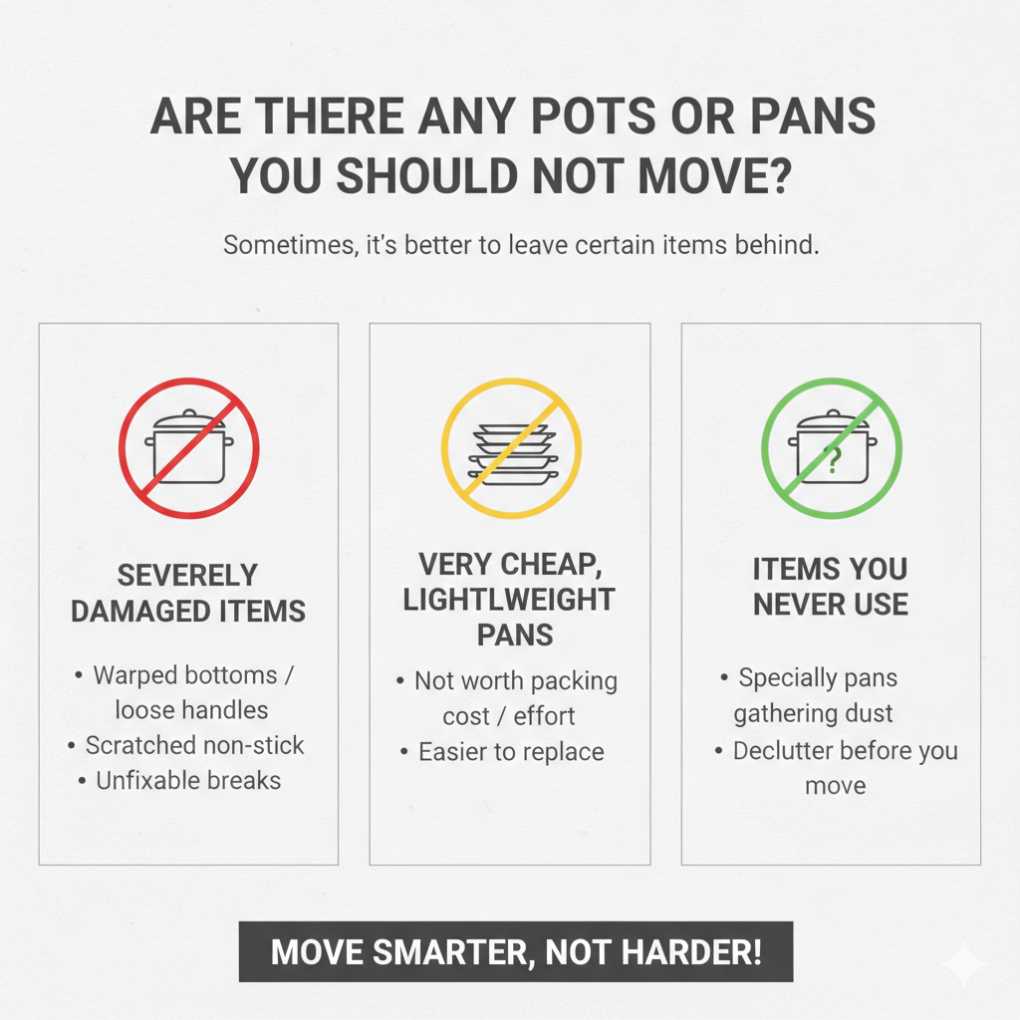
Are There Any Pots or Pans You Should Not Move?
Yes, sometimes it’s better to leave certain items behind.
Severely Damaged Items: Pots with warped bottoms, loose handles that can’t be fixed, or severely scratched non-stick pans.
Very Cheap, Lightweight Pans: Sometimes, the cost and effort of moving them aren’t worth it. You might be able to buy new ones for less than the cost of packing supplies and labor.
Items You Never Use: If you’ve had a specialty pan for years and never touched it, why move it?
Frequently Asked Questions About Packing Cookware
How do I protect non-stick pans during a move?
To protect non-stick pans, always place a layer of packing paper or a soft towel inside each pan. If nesting, put padding between each pan. Wrap lids separately and securely. Pack them in sturdy boxes, filling all empty space with more padding to prevent shifting.
Should I pack lids separately from pots and pans?
It’s often best to pack lids separately. Wrap each lid in bubble wrap or thick packing paper and secure it with tape. This allows you to protect them more thoroughly and prevents them from falling off or damaging the pot. You can then place them in boxes with other kitchen items.
Can I nest all my pots and pans together?
You can nest pots and pans, but always with protective padding between each item. Use packing paper or a thin towel. Don’t force them. Only nest items that fit comfortably together without bending or scraping.
What is the best way to pack heavy cast iron pans?
Pack heavy cast iron pans individually. Wrap them in a towel or thick packing paper. Place them in a sturdy, medium-sized box. Put them at the bottom of the box and fill all surrounding space with padding to prevent any movement.
Is it okay to use newspaper to pack pots and pans?
Yes, newspaper is a good option for padding pots and pans. It’s flexible and good for filling gaps. Just be aware that newspaper ink can sometimes transfer to lighter-colored cookware. Using plain packing paper or an old towel can avoid this if you are concerned.
How much padding should I use for my cookware?
Use enough padding to ensure items don’t touch each other and can’t move around in the box. For nesting, one layer of paper or a thin towel between each piece is usually good. For individual wrapping, use several layers of paper or bubble wrap. Fill box gaps generously.
Conclusion
Packing your pots and pans for a move doesn’t have to be a stressful task. By using the right materials and taking a few extra steps, you can ensure your cookware arrives safely. Remember to clean and dry everything first. Then, use protective layers between items. Secure all lids well. Pack them snugly in sturdy boxes. A little care now will save you worry and potential damage later. Happy moving!
Products related to this article
Sponsored / affiliate links. As an Amazon Associate I earn from qualifying purchases. I may earn additional commission from eligible campaigns.
 MouZie Heavy Duty Furniture Lifter & Moving Kit – Lift & Glide Couches, Beds, Appliances with Ease – 4 Roller Sliders (660 lbs Each), Adjustable Height Lifter, Carpet Adapters for All Floors
 Furniture Sliders 4 Pack, 3.5 Inch Heavy Duty Reusable Furniture Moving Sliders for Hardwood Floors and Carpet, Beige Floor Protection Pads for Chairs, Sofas, Tables and Home Moving