How To Organize Pots And Pans In Cabinets
Finding the right pot or pan when you need it can feel like a treasure hunt. It’s frustrating when you open a cabinet and a cascade of metal and handles tumbles out. You just want to cook a meal, not battle your cookware.
This guide will help you tame that cabinet chaos.
Organizing pots and pans in cabinets means using smart storage solutions. This helps you find what you need fast. It also keeps your kitchen looking neat and makes cooking easier.
This guide shows you how to achieve that.
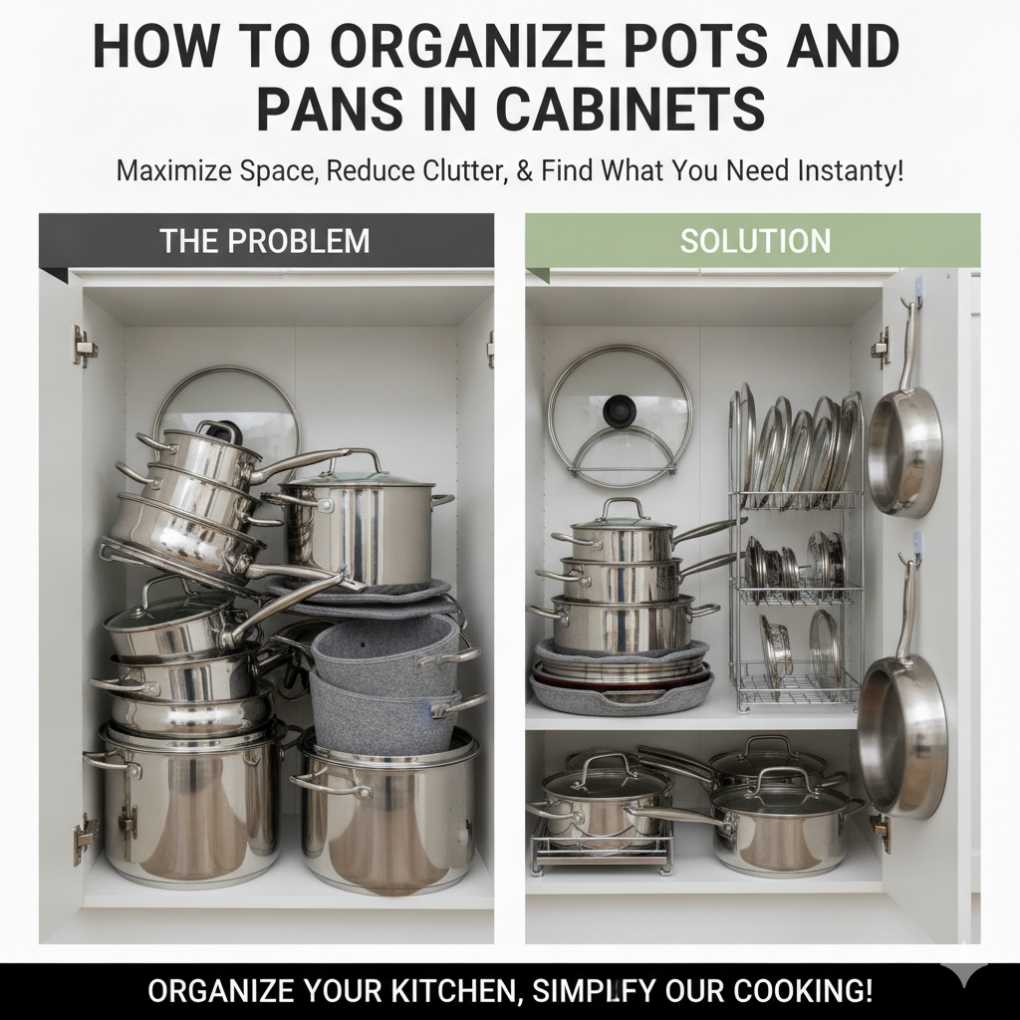
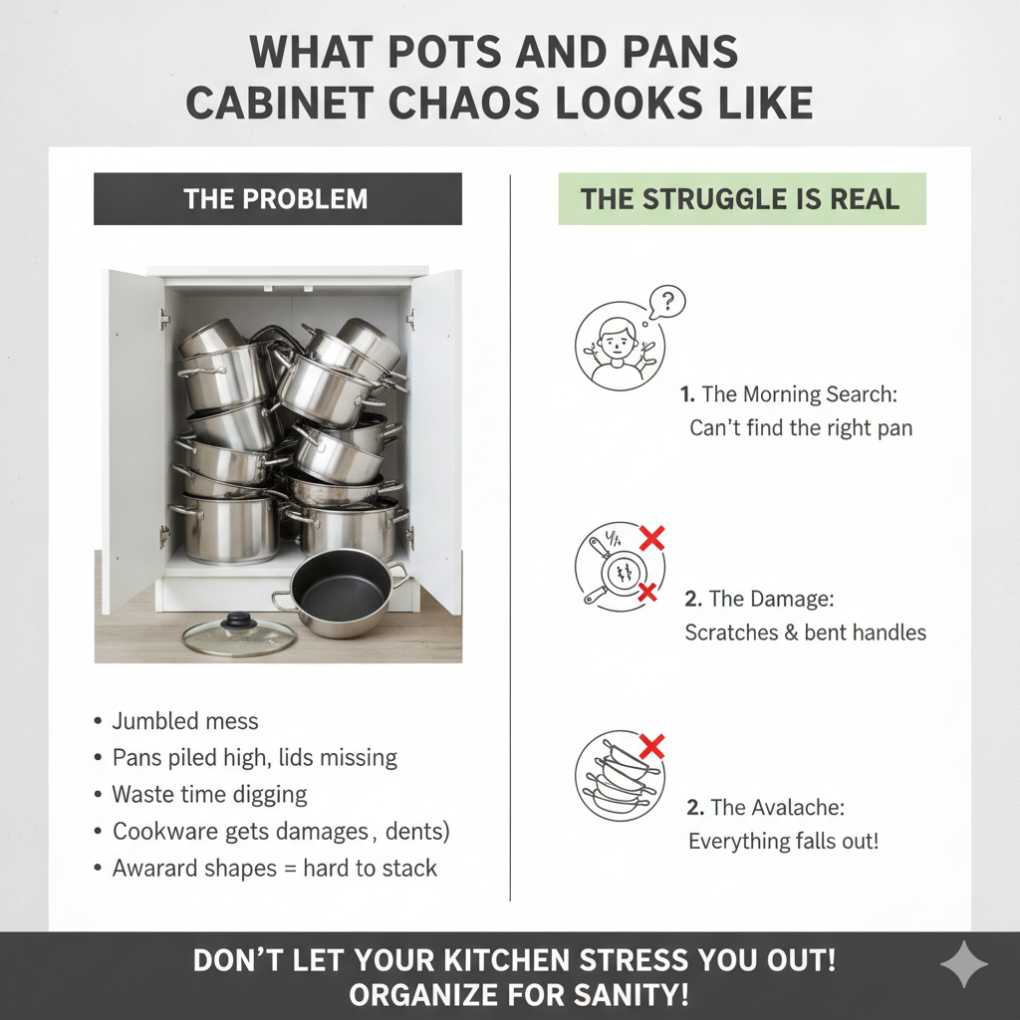
What Pots and Pans Cabinet Chaos Looks Like
You open the cabinet door. BANG! A stack of pots falls out.
Pans are piled high. Lids are nowhere to be found. It’s a jumbled mess.
This is what happens when pots and pans aren’t stored well.
Many kitchens face this problem. It’s not just about looks. It makes cooking harder.
You waste time digging. You might even damage your cookware. Think of scratches or bent handles.
It’s a common kitchen woe.
The core issue is space. Cabinets are often deep. Pots and pans come in many shapes and sizes.
They don’t always stack neatly. Without a plan, they just become a big pile.
My Own Pot and Pan Panic
I remember one evening, I was making a quick stir-fry. I needed my wok. I opened the cabinet where I kept all my cooking pots.
It was a disaster zone. Two large skillets had slid down. They trapped a small saucepan underneath.
I had to pull out half the stuff to get it. My floor was covered in metal. It took me ten minutes.
By then, my vegetables were already wilting. I felt so annoyed. It seemed like such a simple task.
Why was it so hard? That moment made me rethink my entire cabinet setup. I learned that a little bit of thought goes a long way for kitchen harmony.
Cabinet Chaos Clues
Pots tipping over: You pull one out, others follow.
Hard to find items: You can’t see what’s hidden.
Scratched surfaces: Cookware rubs against itself.
Wasted space: Cabinets look full but hold little.
Lid struggles: Lids don’t match pots or get lost.
Understanding Your Cookware Collection
Before you start organizing, look at what you have. What kinds of pots and pans do you own? Do you have many small saucepans?
Are your skillets big and heavy? Do you have special pots like a Dutch oven or a stockpot?
Think about how often you use each item. The things you use every day should be easy to reach. Less-used items can go in harder spots.
This is key to a smart kitchen.
Consider the materials. Cast iron pans are heavy. Non-stick pans need care.
Stainless steel is durable. Knowing your cookware helps you choose the best storage method.
Cookware Types and Needs
- Saucepans: Good for sauces, boiling water. Come in small to medium sizes.
- Skillets/Frying Pans: For searing, frying. Vary in depth and diameter.
- Stockpots: Large, deep pots for soups, stews, pasta.
- Dutch Ovens: Heavy, versatile. Great for braising, baking.
- Woks: Deep, rounded for stir-frying.
- Baking Sheets: Flat pans for baking cookies, roasting vegetables.
Smart Storage Solutions for Pots and Pans
Now let’s talk solutions. The goal is to make things accessible and safe. We want to use the cabinet space well.
Stacking Pots and Pans
Stacking is the most common method. But how you stack matters. Pots with nesting bases work best.
Place smaller pots inside larger ones. Put lids on separately or upside down on top.
To avoid scratches on non-stick pans, use pan protectors. These are soft pads that go between them. You can buy them or cut circles from felt or cardboard.
This simple step saves your pans.
Don’t stack too high. A stack of five or more pots can be unstable. If a stack is too heavy, it might fall.
Aim for stability.
Stacking Tips
- Nest similar shapes and sizes.
- Use pan protectors for non-stick surfaces.
- Keep stacks to a manageable height (3-4 pots max).
- Place lids nearby or on top carefully.
Using Cabinet Organizers
There are many organizers made just for this. They help keep things upright and separated.
Pan Racks: These racks have slots to hold pans vertically. You can slide a pan in and out easily. Some fit inside cabinets.
Others hang from the cabinet door or shelf.
Pot Lid Organizers: Lids are often the trickiest part. A lid organizer can hold them upright. This keeps them from getting lost.
Some have adjustable dividers.
Pull-Out Shelves/Drawers: If your cabinets allow, install pull-out shelves. You can store pots and pans on them. Pulling out the shelf brings everything into view.
This is great for heavy items like Dutch ovens.
Tiered Shelves: These are like mini-steps inside your cabinet. They help you stack pots or lids higher but keep them visible. You can fit more items this way.
Types of Organizers
Vertical Racks: Hold pans upright. Easy access.
Lid Holders: Keep lids tidy and visible.
Pull-Out Drawers: Glide out for easy reach.
Tiered Shelves: Create levels for stacking.
Vertical Storage for Pans
Storing pans on their sides, upright, is a game-changer. A vertical pan organizer is perfect for this. You slide each pan into its own slot.
This means you can grab the pan you need without moving others.
This is especially good for skillets. They have wide bases. Stacking them can make the pile wobbly.
Vertical storage keeps them stable. It also shows off your pans if you have nice ones.
You can find these organizers in metal or plastic. Measure your cabinet space first. Make sure the organizer will fit and that the pan handles won’t stick out too much.
Storing Lids Smartly
Lids are notorious for causing clutter. They are often awkward shapes. They don’t stack well with pots.
Here are a few ways to manage them:
- Lid Rack: As mentioned, a dedicated rack is best. These can stand on a shelf or mount to the cabinet door.
- Inside the Pot: For lids that fit snugly, you can store them inside the pot. This saves space, but it can make the pot heavier to lift.
- On a Shelf: If you have a deep shelf, you can store lids upright on their edges. Use a small tension rod or bookends to keep them from falling over.
- Drawer Storage: A kitchen drawer can be a good place for lids. Use dividers to keep them sorted.
Lid Management Secrets
Dedicated Lid Rack: Best for frequent use.
Inside Pots: For lids that fit perfectly.
Upright on Shelf: Use dividers to hold them.
Drawer Storage: Use a drawer with dividers.
Utilizing Cabinet Doors
Don’t forget the inside of your cabinet doors. They offer valuable storage space. You can mount small racks or hooks here.
Small racks are great for pot lids. Hooks can hold pot holders or even smaller utensils. Make sure the door can still close properly.
Also, ensure the items on the door won’t get in the way when you open it.
This is a clever way to add storage without taking up shelf space. It keeps things visible and easy to grab.
Real-World Cabinet Organization Scenarios
Let’s look at some common kitchen cabinet setups and how to organize them.
Scenario 1: Deep, Wide Cabinets
These cabinets can hold a lot but can also become black holes for cookware. For deep cabinets, pull-out shelves are ideal. If that’s not an option, use tiered shelving.
This allows you to stack pots and still see what’s on lower levels.
For wide cabinets, consider a large vertical pan organizer. This can hold multiple skillets and saucepans. You can also store Dutch ovens or stockpots on the bottom shelf.
Keep them accessible for easy lifting.
Deep Cabinet Strategy
Use pull-out shelves for easy access to heavy items.
Employ tiered shelves to stack pots but maintain visibility.
Store less-used items at the back.
Scenario 2: Narrow, Tall Cabinets
Tall cabinets are great for storing items vertically. A tall, narrow cabinet is perfect for a vertical pot rack. This lets you store many pans without them sliding around.
You can also use tension rods to create shelves within the tall cabinet. This is useful for storing lids or smaller pans upright. Group similar items together for better organization.
Tall Cabinet Strategy
Vertical pan racks are your best friend.
Use tension rods to create custom shelves for lids or small pans.
Store lids separately in a rack on the cabinet door.
Scenario 3: Under the Sink Cabinet
This area is often less ideal for cookware due to moisture and pipes. However, if it’s your only option, choose wisely. Use sturdy bins or containers to group items.
Keep essential items you use often out of this cabinet if possible.
Avoid storing delicate non-stick pans here. Opt for items you don’t mind being a bit jostled. Ensure good ventilation to prevent odors.
Under Sink Tips
Use bins to contain items.
Avoid storing delicate cookware here.
Ensure good ventilation.
DIY Pot and Pan Organization Ideas
You don’t always need to buy fancy organizers. You can make your own solutions.
- Cardboard Dividers: Cut sturdy cardboard to make dividers for pans or lids. This is a cheap way to keep things upright.
- Old Magazine Holders: These can work well as vertical pan holders. Place them on their side in the cabinet.
- Binder Clips: For lids that have a lip, you can use binder clips to hold them upright on a shelf.
- PVC Pipes: Cut PVC pipes into sections. These can be used as holders for lids or even small skillets.
DIY Organizer Ideas
Cardboard dividers for upright storage.
Magazine holders as pan slots.
Binder clips to prop up lids.
PVC pipe sections for custom holders.
What This Means for Your Kitchen Workflow
A well-organized pot and pan cabinet changes how you cook. You can find what you need instantly. This makes meal prep faster and less stressful.
When your cookware is organized, your kitchen feels calmer. You spend less time looking and more time creating. This can even inspire you to cook more often.
It also protects your investment. Good cookware can last for years. Proper storage prevents damage, keeping your pans in great shape.
Impact on Your Cooking
Faster meal prep: Find items quickly.
Reduced stress: No more cabinet digging.
Better kitchen flow: Easier movement and cooking.
Cookware longevity: Protects against damage.
When to Re-Evaluate Your System
Organizing isn’t a one-time event. Your cooking habits change. You might get new cookware.
Or maybe your old system just isn’t working anymore.
If you find yourself struggling to find things, it’s time to adjust. If cabinets are overflowing again, reassess. A good system adapts with you.
Don’t be afraid to try a new organizer or storage method. What works for one person might not work for another. Your kitchen is unique.
Signs You Need to Reorganize
- You can’t find what you need quickly.
- Pots and pans are falling out again.
- Your cookware is getting scratched or damaged.
- You’ve bought new pots and pans and have no space.
- The system feels overwhelming.
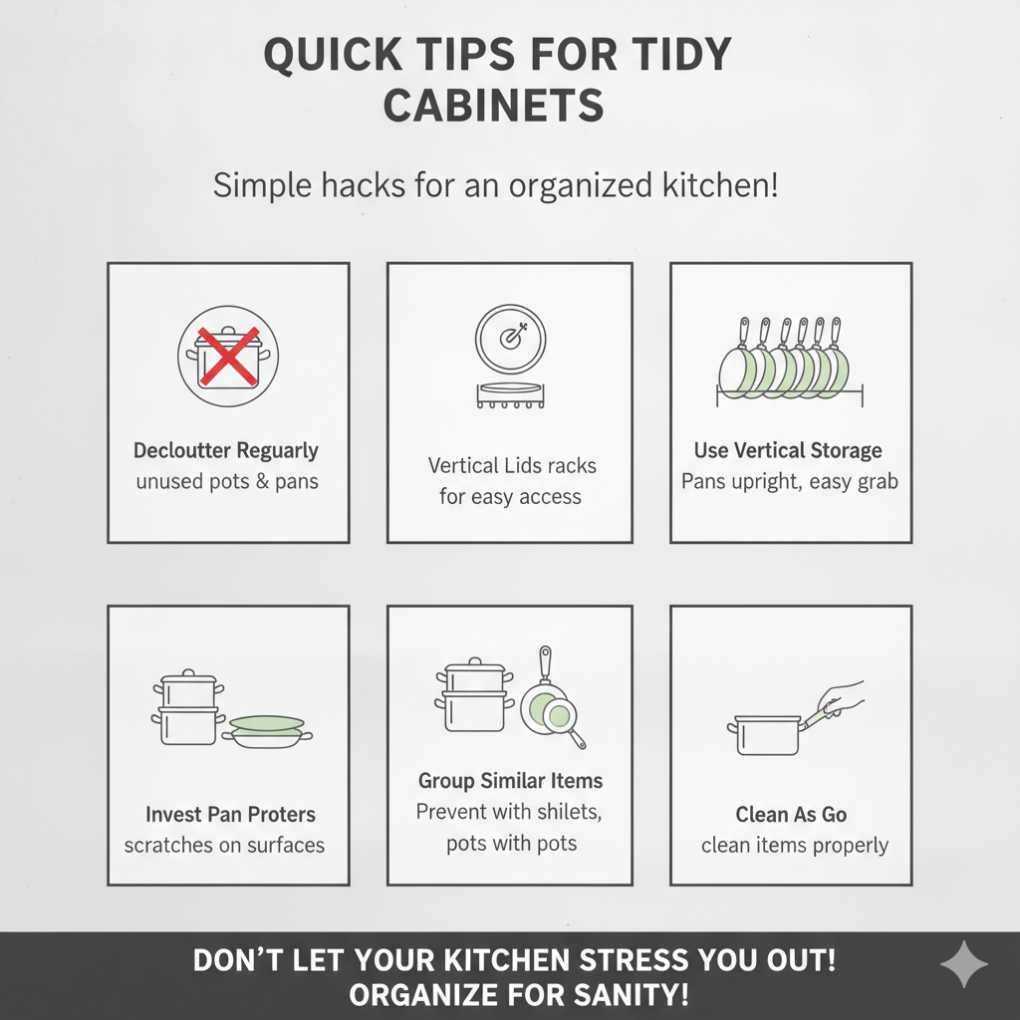
Quick Tips for Tidy Cabinets
Here are some easy tips to keep your pots and pans in order:
- Declutter regularly: Get rid of pots and pans you never use.
- Store lids separately: This is often the biggest win.
- Use vertical storage: Pans upright are easier to access.
- Invest in pan protectors: Especially for non-stick surfaces.
- Group similar items: Keep all your skillets together, all your saucepans together.
- Clean as you go: Put things away properly after washing.
Frequently Asked Questions About Organizing Pots and Pans
How can I store pots and pans without scratching them?
Use pan protectors made of felt or soft fabric between stacked pots and pans. You can also use paper towels or dishcloths as a barrier. For vertical storage, ensure the organizers have smooth edges.
What is the best way to store pot lids?
The best way is often in a dedicated lid organizer that holds them upright. Alternatively, store them in a drawer with dividers, or if they fit perfectly, inside the pot they belong to.
Should I stack my pots and pans in cabinets?
Yes, stacking is common. However, only stack similar shapes and sizes. Use pan protectors to prevent scratches.
Avoid stacking too many items to keep the stack stable and easy to manage.
How do I organize a cabinet with awkward pipes or obstructions?
Measure around the pipes carefully. Use tension rods to create custom shelves or hanging spaces. Bins and baskets can help contain items and work around obstacles.
Prioritize storing less-frequently used items in these tricky spots.
Can I use hanging pot racks for cabinet storage?
Some smaller, lightweight pot racks can be hung from cabinet shelves. Ensure they are securely attached and don’t overload them. For most cabinet interiors, vertical racks or shelf organizers are more practical.
What if I have limited cabinet space?
Get creative! Use the inside of cabinet doors for lid racks. Consider a tension rod shelf above your pots to store lids or smaller items.
Decluttering is also crucial when space is tight. Maybe a small countertop rack for frequently used pans?
Conclusion: Your Tidy Kitchen Awaits
Organizing your pots and pans might seem like a chore, but the payoff is huge. A tidy cabinet means a less chaotic kitchen. It makes cooking more enjoyable and efficient.
Try these tips, and find a system that works for you. Your future self will thank you!
Products related to this article
Sponsored / affiliate links. As an Amazon Associate I earn from qualifying purchases. I may earn additional commission from eligible campaigns.