Enameled Cast Iron vs Ceramic Cookware
Choose Enameled Cast Iron if you want higher thermal mass, broader heat tolerance, and lower failure risk; choose Ceramic Cookware only if you need lighter weight and mostly low-to-medium heat cooking. Pick wrong, and you can end up with chipping, warped pans, or surfaces that stop performing well sooner than expected. This guide compares heat retention, care demands, and common failure modes so you can choose the safer long-term fit for your cooking style.
| Decision factor | Enameled Cast Iron | Ceramic Cookware | Winner |
|---|---|---|---|
| Heat retention | High thermal mass from a cast iron core sealed under vitreous enamel | Lower mass; heats and cools more quickly | Enameled Cast Iron |
| Preheat speed | Slower | Faster, especially with ceramic-coated aluminum | Ceramic Cookware |
| Stovetop responsiveness | Less responsive; better for steady heat | More responsive for quick temperature changes | Ceramic Cookware |
| Acid safety | Non-reactive cooking surface | Non-reactive cooking surface | Tie |
| Oven range | Often high, but depends on lid and handle materials | Brand-specific examples are commonly reported in a range of about 350 degrees to 570 degrees. | Enameled Cast Iron |
| Induction compatibility | Often compatible because the iron core is magnetic | Varies by base; not all ceramic cookware works on induction | Enameled Cast Iron |
| Chip or wear risk | Enamel can chip if struck or dropped | Coating can wear and scratch over time | Tie |
| Cleaning effort | Usually simple, though hand-washing with a soft sponge helps keep the finish intact | Usually simple, though coatings vary by brand | Tie |
What is each cookware type?
Enameled cast iron construction
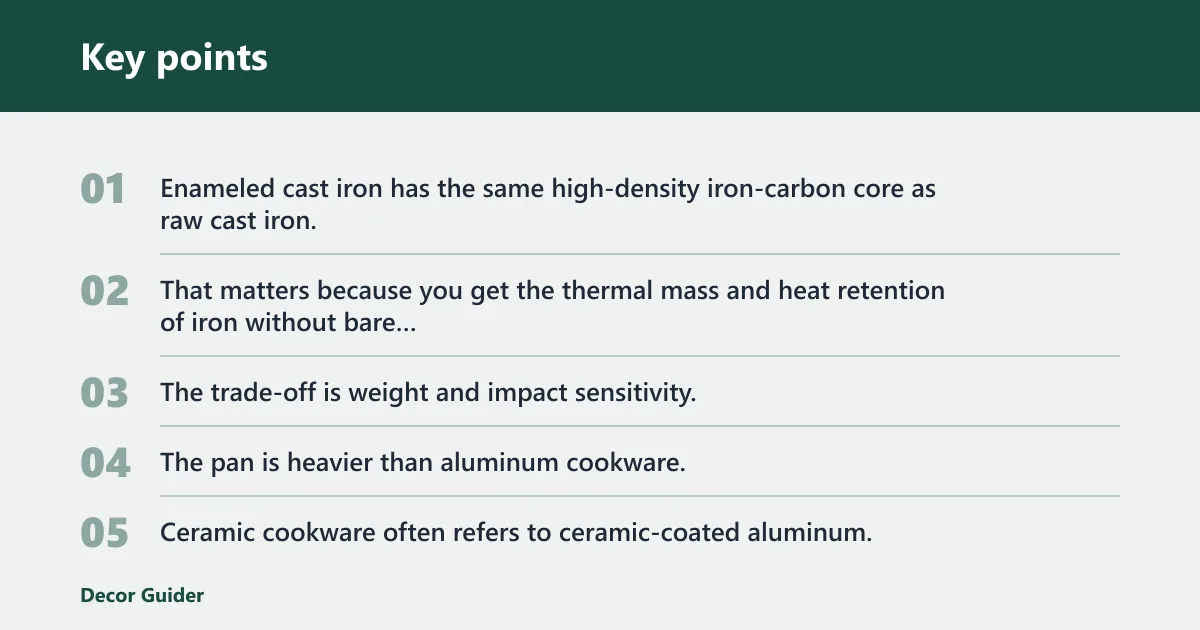
Enameled cast iron has the same high-density iron-carbon core as raw cast iron, but the cooking surface is sealed under a porcelain-glass glaze. That matters because you get the thermal mass and heat retention of iron without bare metal seasoning, and the enamel makes the surface non-reactive for acidic food.
The trade-off is weight and impact sensitivity. The pan is heavier than aluminum cookware, and the enamel can chip if it is knocked against a sink, rack, or another pan.
Ceramic cookware construction
Ceramic cookware often refers to ceramic-coated aluminum, though construction can vary by brand. The light weight is a major advantage, and the nonstick-style surface is often easier to move, tilt, and wash than heavy cast iron.
Because the base metal and coating differ by brand, performance is less uniform than with enameled cast iron. Oven-safe limits also vary, which is why one set may be rated for 350 degrees while another reaches 570 degrees.
Why the base material matters
The base determines thermal mass, responsiveness, and compatibility with your stove. Cast iron stores more heat and recovers better after you add cold food, while aluminum-based ceramic cookware changes temperature faster and feels easier to manage for quick jobs.
Say your weeknight routine is a 10-inch skillet meal with chopped vegetables and a thin sauce. Ceramic Cookware will usually feel quicker at the burner. If the same pan needs to go from stovetop to a long oven finish, Enameled Cast Iron is usually the steadier option.
Which heats faster?
Ceramic Cookware usually heats faster because ceramic-coated aluminum has lower thermal mass. Enameled cast iron tends to heat more slowly, but it is commonly reported to retain heat and hold temperature well once hot. That makes ceramic the quicker start, while enamel is the steadier finish.
Heat retention and heat recovery
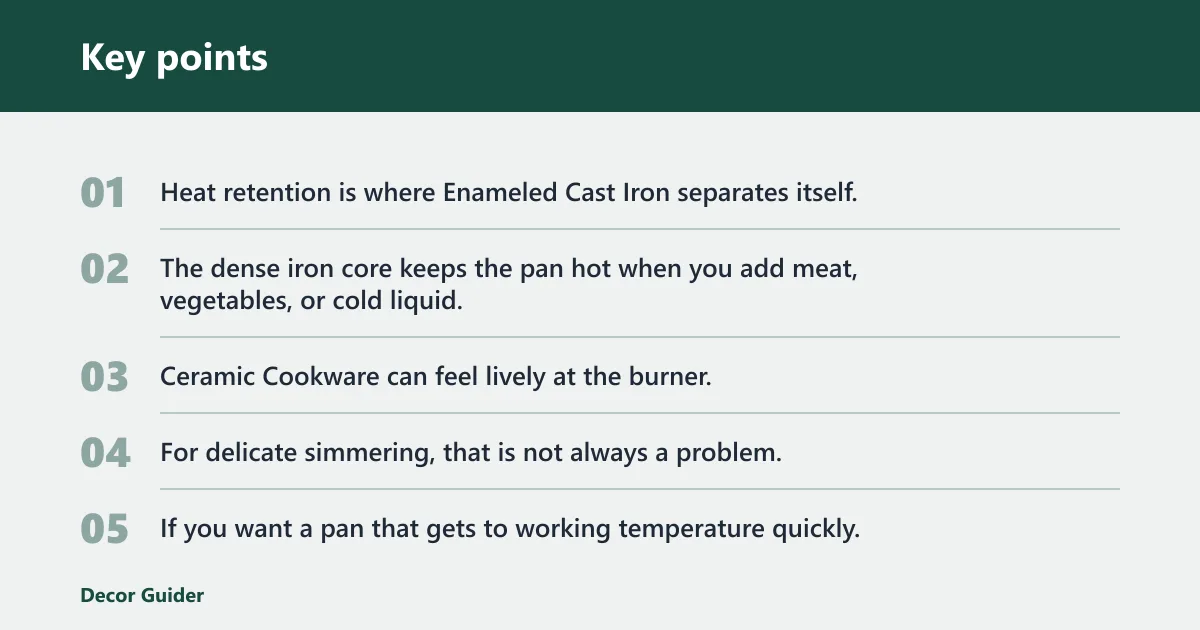
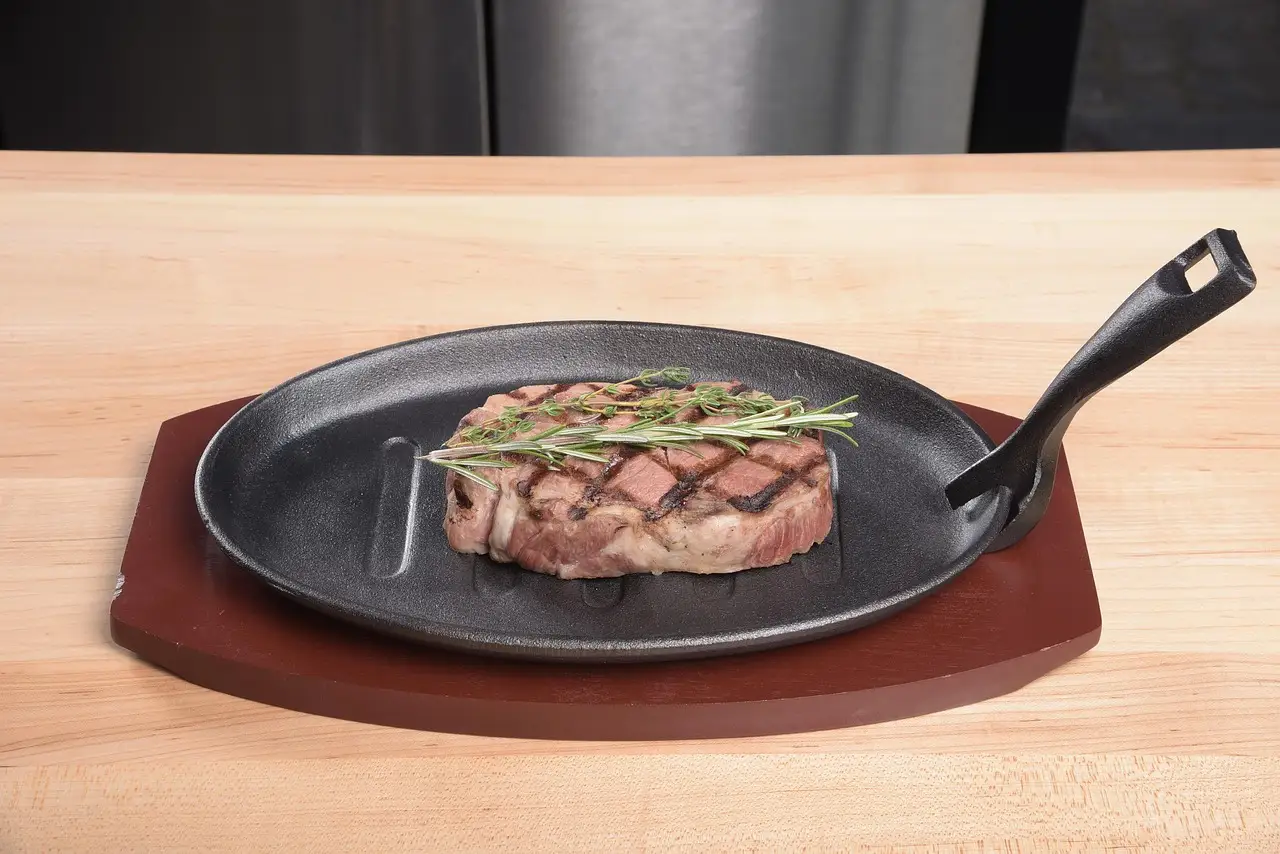
Heat retention is where Enameled Cast Iron separates itself. The dense iron core keeps the pan hot when you add meat, vegetables, or cold liquid, so the temperature drop is smaller and recovery is better for braises and searing.
Ceramic Cookware can feel lively at the burner, but that same lower mass means it is easier to cool down too fast when food hits the surface. For delicate simmering, that is not always a problem. For hard searing, it can be.
Preheat time and responsiveness
If you want a pan that gets to working temperature quickly, Ceramic Cookware usually has the edge. It also responds faster when you lower the flame, which helps when you want more control during eggs, thin sauces, or sautéing that needs frequent adjustment.
Enameled Cast Iron is slower to move but steadier once heated. That slower response is useful when you want a buffer against burner spikes, not when you need rapid changes in pan temperature.
Best fit for braising, searing, and sautéing
Enameled Cast Iron is the stronger pick for braising and for searing thicker cuts because it keeps heat better under load. Ceramic Cookware fits lighter sautéing, quick vegetable work, and meals where faster preheat matters more than deep thermal reserve.
A common first-timer mistake is treating an enameled cast iron braiser like a delicate ceramic sauté pan and cranking the heat too high. The sauce may reduce fine, but the pan may lose heat faster than expected once you add stock or cold ingredients. That is a thermal-mass issue, not a cleaning issue.
Are both safe for acidic foods?
Both cookware types are generally considered non-reactive for tomatoes, vinegar, and wine reductions, so they are usually suitable for acidic foods. The real difference is how the surface holds up after repeated use. Once enamel chips or a coating wears, food release and cleanup can change fast.
Non-reactive surfaces explained
Enameled Cast Iron uses a vitreous enamel barrier, so acidic liquids do not contact raw iron. Ceramic-coated aluminum is also not reactive to acidic foods, which is why both categories are commonly sold for tomato sauce, citrus, and pan sauces.
The practical difference is failure. Enameled Cast Iron depends on an intact glass-like finish, while Ceramic Cookware depends on a coating that can thin, lose slickness, and wear down with repeated heat and washing.
Tomatoes, vinegar, and wine reductions
For tomato sauce, a vinegar glaze, or a wine reduction, either cookware type can work if the finish is intact. Enameled Cast Iron is the safer long-term choice when the dish will simmer for a while or move into the oven, because the dense core holds temperature well during long cooking.
Ceramic Cookware can still handle acidic food well, but it is the better match when you value light weight and are cooking at low to medium heat. If the recipe depends on aggressive browning before the liquid goes in, the stronger heat reserve of enamel is usually more reliable.
Where finish damage changes performance
Once enamel chips, the exposed area can become a weak point for food release and cleaning, and severe damage can shorten the pan’s useful life. With ceramic cookware, wear often shows as declining slickness first, then more sticking and more scrubbing.
Thermal shock can speed both problems. A hot pan under cold water, or a pan pushed far past its intended oven limit, is more likely to fail earlier than one that is heated and cooled gradually.
Enameled cast iron and ceramic cookware decision matrix
This matrix turns the choice into a practical filter. Use it to match the pan to your stove type, cooking style, and how much finish care you are willing to manage.
| Criterion | Enameled Cast Iron | Ceramic Cookware | Score winner |
|---|---|---|---|
| Heat retention | 5/5 | 3/5 | Enameled Cast Iron |
| Preheat speed | 2/5 | 5/5 | Ceramic Cookware |
| Stovetop responsiveness | 2/5 | 4/5 | Ceramic Cookware |
| Acid safety | 5/5 | 5/5 | Tie |
| Oven range | 4/5 | 3/5 | Enameled Cast Iron |
| Induction compatibility | 4/5 | 2/5 | Enameled Cast Iron |
| Chip or wear risk | 3/5 | 3/5 | Tie |
| Cleaning effort | 4/5 | 4/5 | Tie |
Heat retention: Enameled Cast Iron wins because the cast iron core stores heat better and keeps a steadier cooking surface. That is useful for long braises, oven finishes, and browning after ingredients are added.
Preheat speed: Ceramic Cookware wins because aluminum-based construction is lighter and comes up to temperature faster. If you cook in short bursts, that speed is often more useful than deep heat reserve.
Stovetop responsiveness: Ceramic Cookware usually changes temperature faster when you adjust the burner. Enameled Cast Iron lags more, which is helpful for steadiness but less helpful when you want quick correction.
Acid safety: This is a tie because both are non-reactive when the finish is intact. The real difference is how much surface damage they tolerate over time, not whether they can handle acidic food.
Oven range: Enameled Cast Iron generally has the stronger ceiling, but the usable limit still depends on lid and handle materials. Ceramic Cookware varies more by brand, and examples in the market include 350 degrees and 570 degrees.
Induction compatibility: Enameled Cast Iron usually wins because a magnetic iron core works on induction cooktops. Ceramic Cookware may or may not work, since the base must be designed for induction use.
Chip or wear risk: This is a tie in different ways. Enameled Cast Iron can chip if dropped or struck, while Ceramic Cookware can wear down and lose slickness as the coating ages.
Cleaning effort: Both can be easy to wash, but the finish matters more than the label. Hand-washing with mild soap and a soft sponge helps preserve the finish longer, even when a brand says dishwasher safe.
Suppose you have a 12-inch skillet, an induction cooktop, and a habit of sliding pans into a crowded cabinet. Enameled Cast Iron gives you better stove compatibility, but the storage risk rises if pans bang into each other. If you cannot protect the finish, the lighter option may be less stressful to live with.
What fails first: chip risk or coating wear?
Neither material is failure-proof. Enameled cast iron usually fails by chipping, while ceramic cookware more often shows gradual coating wear. Ceramic Cookware more often fails by gradual coating wear, which shows up as more sticking, more scrubbing, and less even release.
Enameled cast iron chipping
Enamel chipping is often a physical damage problem. A hard edge against a sink, a utensil impact, or a fall can remove part of the finish, and that damage does not heal.
The best defense is careful handling and avoiding sudden temperature swings. Put the pan on a dry burner, preheat gradually, and let it cool before washing.
Ceramic coating wear
Ceramic coating wear is more gradual. Heat, repeated use, and abrasive cleaning can reduce the slick surface until food starts sticking more often than it used to.
That is why a brand’s coating chemistry matters as much as the label. Two ceramic pans can behave differently depending on the base metal, coating build, and oven limit.
Metal utensil scratches
Metal utensils are a risk for both categories if the finish is thin or already stressed. Scratches may not ruin a pan immediately, but they can shorten the life of the cooking surface and make cleanup less predictable.
If you prefer metal spatulas or whisks, Enameled Cast Iron with a protected finish usually tolerates normal use better than a worn ceramic coating, though neither should be treated like bare steel.
Thermal shock and overheating
Thermal shock matters because abrupt temperature changes can damage finishes. A hot pan blasted with cold water, or a cookware piece used above its listed oven limit, is more likely to fail early.
That is one reason the oven-safe rating is not a marketing detail. It is a use limit, and the lid or handle can be the part that lowers the real ceiling.
Choose Enameled Cast Iron if… / Choose Ceramic Cookware if…
Choose Enameled Cast Iron if you braise, sear, or simmer often, want better heat retention, and cook on induction. It is also the safer pick when you want one pan to move from stovetop to oven and you are willing to handle a heavier piece of kitchenware with more care.
Choose Ceramic Cookware if you mostly cook quick weeknight meals, want a lighter pan, and value faster preheat and easier lift-and-tilt handling. It fits best when you cook at low to medium heat, do not need a high oven limit every week, and are comfortable replacing a pan sooner if the coating wears.
Choose Enameled Cast Iron if storage space is limited but you want fewer compromises in heat control. Choose Ceramic Cookware if your stove is not induction, your wrists prefer lighter cookware, and your care tolerance is low enough that heavy cast iron will stay on the shelf.


Frequently asked questions
Enameled cast iron vs ceramic pan
Enameled cast iron is the better pick when you want heat retention, oven use, and induction compatibility. A ceramic pan is usually lighter and quicker to heat, so it suits faster cooking with less lifting. The better choice depends on whether thermal mass or convenience matters more.
Ceramic coated cookware vs enameled cast iron
Ceramic-coated cookware usually wins on weight and quick handling, while enameled cast iron wins on heat stability and broad cooking range. If you cook mostly short, moderate-heat meals, ceramic is practical. If you want searing, braising, or longer oven cooking, enamel has the edge.
What is the difference between enamel and ceramic cookware?
The main difference is the base and finish. Enameled cast iron has a cast iron core sealed under a porcelain-glass glaze. Ceramic cookware is commonly ceramic-coated aluminum, which is lighter and more responsive but usually less durable over many years of heavy use.
Which is better enamel or ceramic cookware?
Enameled cast iron is better for most long-term buyers because it offers stronger heat retention, wider oven use, and better induction odds. Ceramic cookware is better only if weight and speed matter more than long service life. The right answer follows your stove, storage, and cooking style.
Is enameled cast iron safer for acidic foods than ceramic?
Both are safe for acidic foods when the finish is intact, because both are non-reactive surfaces. Enameled cast iron has the advantage in long simmering and oven work, but ceramic cookware is also fine for tomatoes, vinegar, and wine reductions. Damage to the finish is what changes performance.
Which heats faster: ceramic-coated cookware or enameled cast iron?
Ceramic-coated cookware heats faster in most cases, especially when the base is aluminum. Enameled cast iron takes longer to preheat, but it holds heat much better and recovers more steadily after food goes in. Quick speed favors ceramic; steady control favors enamel.
Products related to this article
Sponsored / affiliate links. As an Amazon Associate I earn from qualifying purchases. I may earn additional commission from eligible campaigns.