Cast Iron Skillet Cost / Price / How Much
A decent new cast iron skillet usually costs about $20 to $50 for 10- to 12-inch pans. Buy carelessly and you can overpay for rough machining, a warped base, or a size that sits unused in your cabinet. This guide breaks down what each price tier buys you, including size, finish, upkeep, and resale value.
Typical cost range
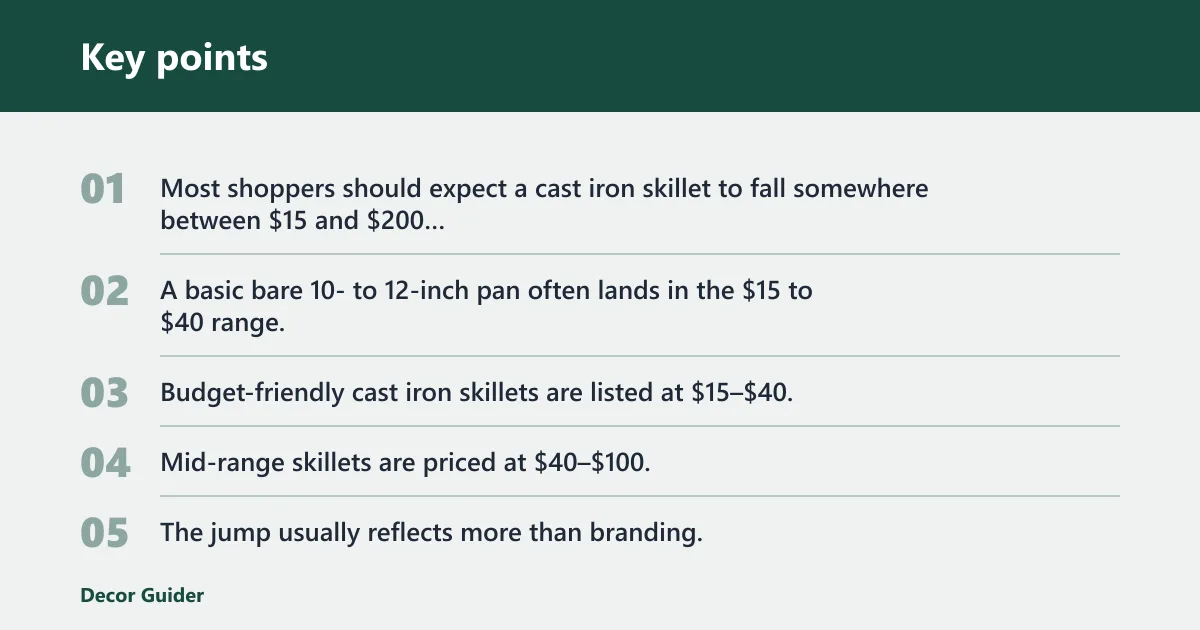


Most shoppers should expect a cast iron skillet to fall somewhere between $15 and $200 or more in the U.S. A basic bare 10- to 12-inch pan often lands in the $15 to $40 range, while enamel-coated models commonly cost $40 to $150 for the same general size. Premium pans with lids can climb higher.
Typical new price bands
Budget-friendly cast iron skillets are listed at $15–$40. Mid-range skillets are priced at $40–$100, and premium cast iron skillets are listed at $100–$300+. The jump usually reflects more than branding. Size, coating, fit and finish, and included accessories all change the final tag.
What a $20 skillet usually gets you
A $20 skillet usually means a basic bare pan in a common size, often 10 inches, with a plain finish and little more than the skillet itself. That is enough for many home cooks. It is not usually the right price for an enamel-coated pan, a lid bundle, or a highly refined surface.
Cast iron skillet buying price map
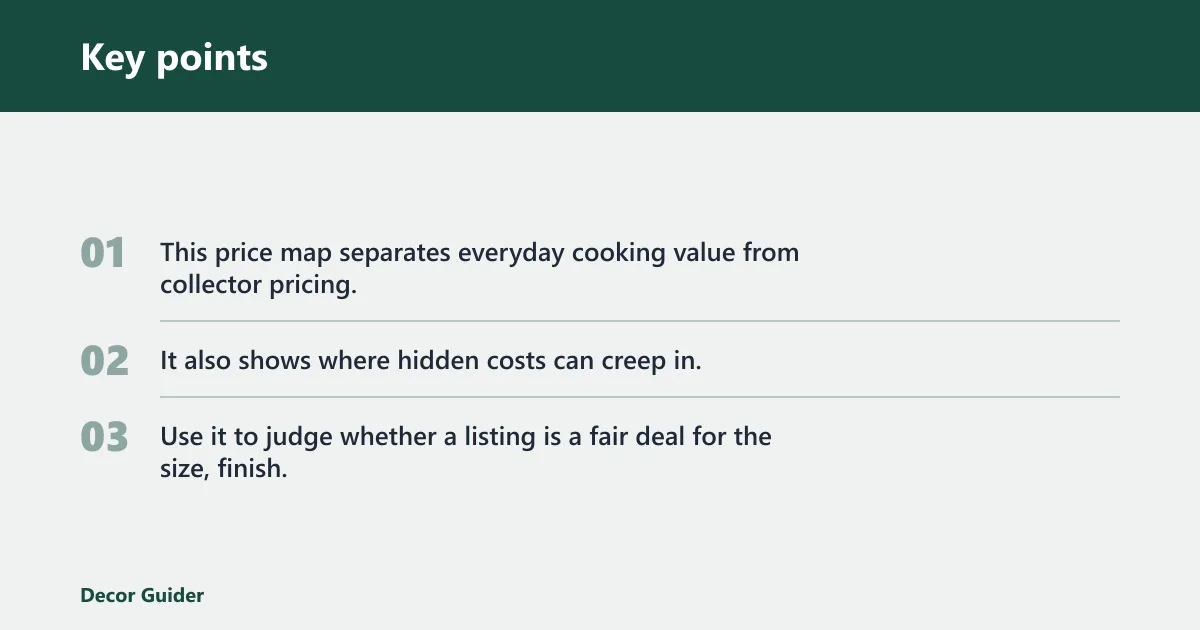
This price map separates everyday cooking value from collector pricing. It also shows where hidden costs can creep in. Use it to judge whether a listing is a fair deal for the size, finish, and condition you actually need.
| Size / type | Finish | Typical new price | Likely used or vintage range | Ideal buyer | Hidden add-on costs | Buy or skip |
|---|---|---|---|---|---|---|
| 8-inch bare | Plain cast iron | $15-$25 | $5-$15 | Single portions, eggs, small kitchens | Shipping, seasoning oil, handle cover | Buy if you want a small secondary pan. |
| 10-inch bare | Plain cast iron | $20-$40 | $10-$30 | Most solo cooks and couples | Lid, handle cover, tax, shipping | Buy as the safest first size. |
| 12-inch bare | Plain cast iron | $25-$60 | $15-$50 | Families, batch cooking, oven use | Lid, handle cover, reseasoning supplies | Buy if you have burner space. |
| 14-inch bare | Plain cast iron | $35-$60 | $25-$70 | Large households, campers, big roasts | Shipping, extra seasoning, storage space | Buy only if you truly need the size. |
| 10-inch pre-seasoned brand pan | Plain cast iron, factory seasoned | $20-$35 | $15-$45 | Beginners who want a ready-to-use pan | Care oil, optional lid | Buy for value and low setup effort. |
| 12-inch brand pan with smoother finish | Plain cast iron, refined surface | $40-$80 | $25-$70 | Frequent cooks who want a nicer feel | Handle cover, shipping | Buy if finish matters more than bare-bones price. |
| 10- to 12-inch enameled | Enameled cast iron | $40-$150 | $30-$120 | Buyers who want easier cleanup | Lid, shipping, replacement if chipped | Buy if low-maintenance cleanup is the priority. |
| 12- to 14-inch premium enameled | Enameled cast iron | $150-$200 | $100-$180 | Gift buyers, heavy users, long-term keepers | Lid, shipping, tax | Buy only if the coating and brand are worth it to you. |
| Lodge 10-inch benchmark | Plain cast iron | $24.90 sale, $29.95 regular | $15-$30 | Budget buyers wanting a known baseline | Handle cover, lid, shipping | Buy for dependable entry-level value. |
| Victoria 12-inch benchmark | Plain cast iron | $50-$70 | $35-$60 | Buyers who want a mid-range step up | Lid, shipping, seasoning oil | Buy if the price fits your budget. |
| Le Creuset 10- or 12-inch | Enameled cast iron | $150-$250 | $120-$220 | Premium buyers and gift shoppers | Lid, tax, shipping | Buy for enamel convenience, not for basic value. |
| Vintage collectible | Bare cast iron | N/A | $80-$150+ | Collectors and restoration hobbyists | Reseasoning, rust removal, shipping, restoration | Buy only after a careful inspection. |
What makes some skillets cost more?
The biggest price drivers are the maker, diameter, weight, surface treatment, factory seasoning, and any extras in the box. A larger skillet uses more iron and costs more to ship. A lid or handle cover adds material and packaging, and a known brand often commands a higher shelf price because buyers expect the same shape and finish each time.
Brand and manufacturing method
Brand reputation matters because it points to repeatable casting, service, and buyer demand on the resale market. Lodge is the entry-level benchmark, with a 10-inch skillet often retailing around $20 to $30 and classic cast iron listed at $24.90 sale and $29.95 regular. Victoria sits higher, with a 12-inch skillet often around $50 to $70.
Size, weight, and thickness
More metal usually means a higher ticket. A 12- to 14-inch bare pan often sits around $25-$60, while a similar skillet with a lid can reach $150-$200. Heavier pans also cost more to ship, which matters when comparing online listings with in-store shelf prices.
Finish, seasoning, and surface smoothness
Pre-seasoned pans cost a bit more because they are ready to use right away. That saves setup time, but it does not remove maintenance. Bare pans may need more seasoning effort at the start. Enameled skillets cost more because the coating adds material and manufacturing steps, while also making cleanup easier.
Accessories, shipping, and taxes
Hidden costs are easy to miss. Lids, handle covers, shipping, taxes, and reseasoning supplies can add up. A bargain pan with steep shipping can end up costing more than a better in-store deal. Restoration on a used piece can also erase the savings if it needs rust removal or a full reseasoning.
Bare cast iron vs enameled cast iron
Bare cast iron is usually the cheaper choice, with typical new pricing from about $15 to $60 depending on size. Enameled cast iron usually starts higher, with common new prices around $40 to $200. The enamel coating raises cost, but it also reduces cleanup effort and removes the need to season the cooking surface.
Who each type fits best
Bare cast iron fits buyers who want the lowest price and do not mind routine seasoning care. Enameled cast iron fits cooks who want easier cleanup and less upkeep, especially for braises and saucy dishes. For everyday searing and frying, a plain skillet often delivers the better cost-to-use ratio.
Suppose you want a 10-inch pan for burgers, fried eggs, and cornbread. A $25 to $30 bare skillet can be a smart buy if you are willing to dry it fully and oil it after washing. If you want the same size in enamel, expect to pay much more for the coating and easier cleanup.
Are expensive cast iron skillets worth it?
Sometimes yes, but not because expensive always cooks better. Premium pans make sense when you want a smoother surface, enamel coating, a tighter fit and finish, or collector appeal. For many home cooks, a $20 to $50 skillet does the job well enough without paying for status pricing.
When premium brands make sense
Le Creuset, Staub, and Finex sit in the premium tier for different reasons. Le Creuset enamel pans often run $150-$250 for a 10- or 12-inch pan. Staub is another higher-priced enameled option. Finex is known for small-batch craftsmanship and high pricing. These are worth it when the finish, gifting value, or brand appeal matters to you.
When a budget skillet is enough
A budget skillet is enough for most home cooks who want a pan for frying, searing, and oven work. If the pan is flat, sized correctly, and pre-seasoned, it can be excellent value. A $20 skillet is good enough when you want a dependable tool, not a collector piece or a display piece.
What collector value changes
Collector value is different from cooking value. A rare vintage skillet can sell for $80-$150+ because of condition, mark, or collectability, not because it fries better than a new pan. That matters if you want resale strength. It matters less if you only want a pan for dinner tonight.
What size cast iron skillet should you buy?
The right size depends on how many people you cook for, how much stove space you have, and whether your cooktop can handle the pan’s footprint. Most buyers should start with 10 inches. A 12-inch pan is the next best pick for families. A 14-inch pan is for bigger jobs and bigger burners.
8-inch, 10-inch, 12-inch, and 14-inch use cases
An 8-inch skillet works for single servings and side dishes. A 10-inch skillet is the safest all-purpose choice. A 12-inch skillet fits larger meals and oven cooking. A 14-inch skillet suits big batches, but it can feel bulky on small burners and may be awkward to store.
Stovetop space and oven fit
Before buying, check the diameter of your largest burner and the oven space around it. A large skillet can crowd neighboring burners and make stirring harder. It can also weigh more than expected once it is hot. That extra mass matters more than the price tag once cooking starts.
Cooktop compatibility checks
If you use an induction cooktop, confirm the skillet has a flat base that makes solid contact. For glass or ceramic tops, a warped pan is a bad buy. If you cook mostly on gas, you have more room for heavy pans, but a huge skillet still needs enough burner support.
A common first-timer mistake is buying a 12-inch pan because it sounds more useful, then discovering the skillet dominates a small electric cooktop. In that case, a 10-inch pan often fits the burner better and still covers most everyday tasks.
New, used, or vintage: which should you buy?
New pans give you the cleanest starting point and the clearest price. Used pans can save money, but condition changes everything. Vintage pans can be a bargain or a trap. If rust, warping, or damaged seasoning is present, the real cost rises after restoration supplies and labor.
How condition affects value
That spread is wide because condition matters so much. Light surface rust may be fixable. Deep pitting, a warped base, or cracked enamel can make a low price misleading.
What to inspect before buying used
- Check for a flat cooking surface.
- Look for cracks, deep rust, or enamel chips.
- Confirm the handle and helper handle are intact.
- Ask whether the pan has been reseasoned recently.
- Compare the used price with a new pan of the same size.
When restoration costs change the deal
Restoration can erase the savings if the pan needs rust removal, multiple seasoning cycles, or a replacement handle cover and lid. If the used price is close to new retail, the better buy is usually the new pan. The exception is a rare collectible that you actually want for its value, not just for cooking.
Say your local marketplace lists a 12-inch vintage skillet at $45. If it has light rust and no lid, that may still be a fair buy only if you are willing to spend more on cleaning and seasoning. If a new 12-inch bare pan is already near that price, the new option is simpler.
Where can you buy a cast iron skillet?
You can buy cast iron skillets at Walmart, Amazon, specialty kitchen stores, direct-from-brand shops, and used marketplaces. The cheapest channel depends on the type of skillet you want. Mass retailers usually win on basic bare pans. Specialty and brand-direct shops are better for premium enamel or specific finishes.
Walmart and other mass retailers
Mass retailers are often the best place to look for entry-level bare skillets and common sizes. A basic pan there may be priced near the low end of the market. If you want a simple 10-inch or 12-inch skillet fast, this is usually the easiest place to compare on-shelf options.
Amazon and online marketplaces
Online marketplaces can be convenient for price comparison, but shipping can change the total cost. That matters on heavy pans. Check whether the listing includes a lid, handle cover, or free shipping. A low sticker price is less useful if delivery adds enough to put it above store pricing.
Direct brand stores and specialty shops
Direct brand stores are useful when you want a specific model, finish, or color. Specialty shops often carry better premium options and can be the best path for enameled cast iron. This is where Le Creuset, Staub, and similar higher-priced pans are most likely to appear with full product details.
Used and vintage marketplaces
Used marketplaces are best for bargain hunters and collectors, not for buyers who want certainty. They can offer good value on bare cast iron, but you need to inspect condition closely. Rare pieces may command collector pricing, so a low price is not automatic proof of a deal.
Frequently asked questions
How much is a cast iron skillet?
A cast iron skillet in the U.S. typically ranges from about $15 to $200 or more. A basic bare 10- to 12-inch pan often costs $15-$40, while enameled models commonly cost $40-$150. Premium or collectible pieces can go well above that depending on size, brand, and condition.
How much are cast iron skillets worth?
Worth depends on whether you mean cooking value, resale value, or collectible value. A basic skillet may be worth $20 to a budget cook, while a rare vintage piece can bring $80-$150+ to a collector. Condition, brand, and restoration needs change the answer more than age alone.
Why are some cast iron skillets so expensive?
Higher prices usually come from enamel coating, heavier construction, better finishing, premium branding, or collectible status. A lid can also raise the total. Expensive skillets are not automatically better for everyday cooking, but they may offer easier cleanup, smoother surfaces, or stronger resale appeal.
Is a $20 cast iron skillet good enough?
Yes, for many buyers a $20 skillet is good enough. At that price, you are usually looking at a basic bare pan in a common size, often 10 inches. It is a solid buy if it is flat, pre-seasoned, and large enough for your stove and recipes.
Should I buy a new or vintage cast iron skillet?
Buy new if you want the simplest path and the clearest cost. Buy vintage only if you understand condition checks and possible restoration costs. Vintage pans can be excellent, but rust, warping, or enamel chips can make the “deal” more expensive than a new skillet.
Products related to this article
Sponsored / affiliate links. As an Amazon Associate I earn from qualifying purchases. I may earn additional commission from eligible campaigns.