Roasting Pan Handle Problems: Fixes and Safety
Treat roasting pan handle problems as a safety issue: if a handle wobbles, loosens, or cracks, stop using the pan until you tighten, resecure, or replace it; welded, damaged handles mean replacement. Ignoring it can spill a heavy, greasy pan and burn you. This guide helps you diagnose the failure mode and choose the right fix or workaround.
Handle problems overview
Separate comfort issues from safety issues before you lift anything heavy. A handle that feels awkward with oven mitts may still be structurally sound, while a loose rivet, cracked weld, bent sidewall, or handle that gets hot in normal roasting can make the pan unsafe for a turkey-weight load.
Riveted stainless-steel handles are often used on higher-end roasters because they usually stay secure under load, but the rivets or welds still need inspection. Loop handles are compact and storage-friendly, yet they can be harder to grasp with thick mitts. Wide helper handles give you two-hand control and suit heavy oven-to-counter transfers.
What makes a handle problem unsafe
The warning signs are mechanical, not cosmetic. Look for symmetry, solid attachment, and predictable lift behavior. If the handle shifts, tilts, or feels different on one side, treat that as a load-bearing problem first and a comfort problem second.
- Loose hardware. Rivets move, spin, or leave a visible gap.
- Weld failure. A weld line shows cracking, separation, or flaking metal.
- Sidewall bend. The handle itself may be fine while the pan wall bows.
- Heat transfer. The grip area becomes too hot for a mittened hand.
- Clearance loss. The handle or rack catches the oven wall, rack, or door.
Roasting pan handle problems matrix
Use this table to match the symptom to the likely failure mode before you decide on a repair, workaround, or replacement. The final column tells you whether the pan is still safe for turkey-weight loads.
| Symptom | Likely cause | Quick test | Safe temporary workaround | Repair or replace | Safe for turkey-weight loads? |
|---|---|---|---|---|---|
| Handle feels loose | Rivet wear, stripped fastener, or failed weld | Grip the handle and rock it side to side by hand; any visible play is a warning | Use only for very light food or dry ingredients, and keep both hands under the pan | Repair only if the maker offers a specific fastener replacement; otherwise replace | No, until attachment is confirmed secure |
| Handle gets too hot | Thin metal, exposed connection points, or handle material with poor insulation | Check after a normal roast cycle with mitts ready; if you cannot hold it briefly with mitts, it is too hot | Use extra-thick dry mitts or a dry towel as a short-term buffer; never bare-handed | Replace if the handle design routinely overheats at your roasting temperature | Only if the grip stays manageable with your mitts |
| Awkward grip with mitts | Loop handle too small, handle opening too narrow, or pan depth crowds the hand | Put on the mitts you actually use and try a dry lift with an empty pan | Use two hands and a stable transfer path from oven to counter | Keep if safe; replace only if the shape makes normal lifting unreliable | Yes, if the lift stays steady and the pan is otherwise sound |
| Handle wobbles under load | Handle attachment stress, bent sidewall, or weight beyond the pan’s practical capacity | Load the pan with water or another safe substitute close to cooking weight and lift a few inches | Reduce load and use two-person handling if the pan is only marginally stable | Replace if wobble appears at ordinary roasting weight | No, if wobble appears with a full roast or bird |
| Rack clearance issue | Rack insert adds lift height, or handle shape collides with oven wall or rack rails | Measure the pan with rack in place and check door and side clearance before preheating | Remove the rack if the recipe allows, or move to a lower oven rack position | Keep if clearance can be managed; replace if the setup cannot fit safely in your oven | Only if the full setup clears all sides and stays stable |
Why is my roasting pan handle loose?
A loose roasting pan handle usually points to rivet wear, a failed weld, or sidewall stress around the attachment point. The body of a tri-ply stainless steel roaster may still heat evenly and handle stovetop deglazing, but the handle connection can still fail and needs separate inspection before you trust it with a heavy bird.
Rivets, welds, and sidewall stress
Riveted stainless-steel handles are common on premium roasters because they can stay secure under repeated heavy lifting. Still, check each rivet for movement, dark staining around the joint, or a change in alignment between the handle and the pan wall. A cracked weld is not a tighten-and-forget problem.
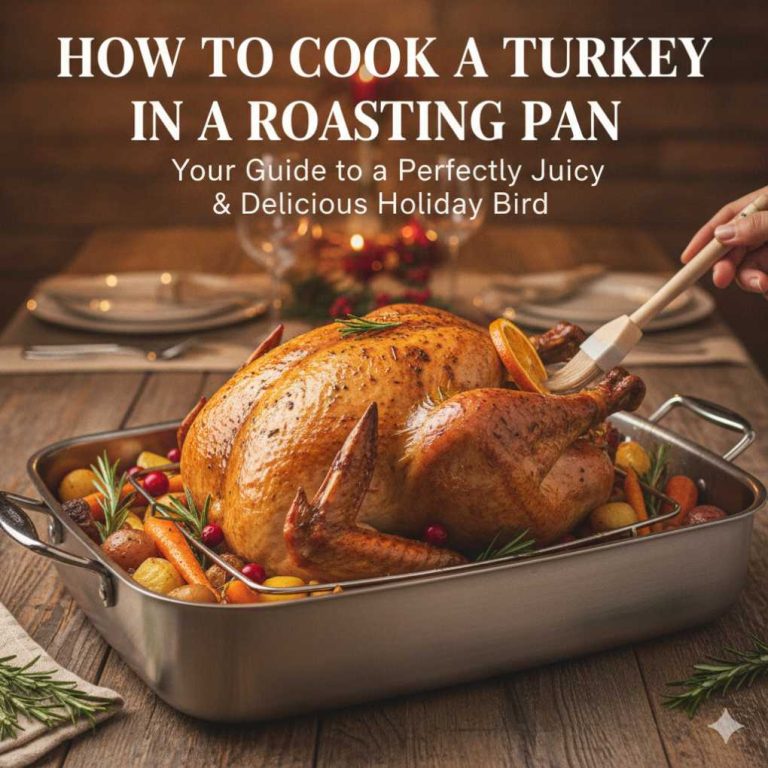
Picture an oval roasting pan loaded with a turkey and vegetables. If one helper handle shifts as you lift, the body may be overloading that sidewall or the attachment itself may be failing. Stop and empty it before the next lift.
When tightening is not a safe fix
- Empty the pan first. Remove the rack and all food before checking the handle. A loaded pan hides movement and adds injury risk if the fastener slips.
- Inspect the attachment points. Look for spinning rivets, cracked welds, bent metal, or a hole that has widened. Any of those means the handle is no longer doing its job.
- Test with a dry lift. Lift the empty pan a few inches with mitts on both hands. If the handle shifts before the pan leaves the counter, do not use it for a heavy roast.
Do not assume a loose rivet can always be tightened safely. Unless the maker specifies a repair, replacement is the safer call, especially for pans meant to carry poultry or large roasts.
Can I use a roasting pan with damaged handles?
Use a damaged handle only if the defect is minor, stable, and does not affect load-bearing. Cracks, wobble, bent sidewalls, and missing fasteners are different from cosmetic wear. For a full bird or heavy roast, the safer answer is usually no.
Damage that calls for immediate replacement
- Any crack in a weld or handle arm.
- A rivet that spins, backs out, or leaves a visible gap.
- A handle that twists when the pan is empty.
- A sidewall that bends outward when lifted.
- A handle that becomes dangerously hot at normal roasting temperature.
If the pan has a nonstick rack or a rack insert with upright pull handles, inspect those too. The rack can add lift height and change the balance point, which makes a marginal handle problem worse.
Temporary workarounds only for light loads
For a light casserole or small batch of vegetables, you may be able to keep the pan in service with careful two-hand support and a clear transfer path. That is a temporary workaround, not a repair. Do not use it for turkey-weight loads or anything greasy enough to slide if the pan tilts.
Which handle style is easiest with oven mitts?
Wide helper handles are often easiest to use with oven mitts because they give you more surface to catch and better two-hand control. Loop handles can be fine on smaller roasters, but thick mitts may crowd the opening. Riveted stainless-steel handles are often the most secure; they are not always the easiest to grip.
Loop handles
Loop handles are compact and easier to store, which can be useful on smaller roasters or rack inserts. The tradeoff is glove room. If the loop opening is tight, a bulky mitt can reduce control, especially when you are carrying a deep pan or working around a hot oven door.
Wide helper handles
Wide side handles are better when you need control for a heavy bird or a pan full of drippings. They are usually positioned on the sidewalls, so you can lift with both hands and keep the pan level. That makes them a strong choice for oven-to-counter transfers.
Riveted stainless-steel handles
Riveted stainless-steel handles are common on higher-performance roasters, including tri-ply clad stainless steel models that also support stovetop deglazing. Their advantage is security, not necessarily comfort. Check the rivets before every heavy lift, especially if the pan is rated for a large turkey.
A common first-timer mistake is grabbing a roasting pan with loop handles that sit too close to the oven rack, then discovering there is no safe grip when it comes out hot. A deep oval roaster can fit a longer cut of meat, but the extra depth can crowd your hand near the handle. If the grip feels cramped with your actual mitts, the pan is not a good fit.
Fit, weight, and clearance checks
Handle safety depends on pan size, rack height, and what you plan to cook. Larger pans can hold a turkey or multiple chickens, but they also create more force on the handles. Before a high-heat roast, confirm that the oven-safe temperature rating exceeds your target temperature and that the handles do not crowd the oven walls.
How to check pan size, oven fit, and practical weight capacity
Check the pan’s outer dimensions, not just the cook surface, because handles and rack hardware affect the fit. Measure the full setup with the rack installed, then confirm the pan can enter and exit the oven without scraping the walls or door. Practical weight capacity is the amount the handles can carry securely while you lift, not just the number printed on the box.
Pan size and turkey-weight loads
Wirecutter’s top pick is a 16-inch roasting pan with rack, and Wirecutter says it can handle a 20-pound turkey. That combination matters because weight and footprint drive handle stress. A pan that is large enough for the bird but too awkward to lift is still a poor match for safe handling.
Use two hands for any heavy load, even if the handles look sturdy. The pan, the rack, and the food all add to the lift. If the pan is full and the handles flex visibly, do not carry it across the kitchen without support.
Rack inserts and oven clearance
Rack inserts raise food for airflow and more even browning, but they also raise the center of gravity and can reduce handle clearance. Wirecutter’s top pick includes a rack, and Foodal notes that the Cuisinart roaster’s curved stainless rack has upright pull handles. Those pull handles can help, but they also add height.
- Measure the full setup. Check pan length, width, and total height with the rack in place before preheating. Foodal lists one Cuisinart roaster at 16.8 by 12.8 by 3.4 inches without the rack, with the setup weighing 6 pounds with the rack.
- Check oven clearances. Slide the empty pan into the intended rack position and open the door fully. Make sure the side handles, rack handles, and oven walls do not collide.
- Match the recipe to the setup. If the rack adds too much height or makes the pan awkward to lift, use a lower profile insert or skip the rack when the recipe allows.
Oval pan shape and handling room
Oval roasting pans are common for poultry and roasts because they fit longer cuts and often pair with side handles. Their rounded ends can make storage easier than a square pan, and the shape may be easier to maneuver through a doorway or around an oven lip. Shape still does not solve a weak handle.
Foodal highlights wide, easy-grip stainless steel handles on a roaster designed to transfer from oven to stovetop for deglazing. That stovetop step is useful only if the handles stay secure and the oven-safe temperature rating fits your cooking plan. Foodal notes one roaster rated to 500°F and another to 700°F, so verify the rating before high-heat roasting.
Frequently asked questions
Can I tighten riveted roasting pan handles?
Sometimes, but only if the maker provides a specific repair method and the rivet itself is designed for retightening. Many riveted handles are not meant for user repair. If the rivet spins, the hole has enlarged, or the weld has cracked, replacement is the safer choice.
Why do roasting pan handles get too hot in the oven?
Handles get hot when the material, thickness, and attachment points conduct heat quickly from the pan body. Thin metal and exposed metal joints can make the grip uncomfortable even with mitts. If a handle is too hot to manage safely at your normal roasting temperature, treat that as a design problem and replace the pan if needed.
What should I do if a roasting pan handle wobbles or pulls away?
Stop using the pan for heavy food right away. Wobble under load often means the attachment point or sidewall is failing, and a pull-away motion can become a full separation during lifting. Empty the pan, inspect the joint, and replace it if the movement is more than minor cosmetic play.
Are loop handles or wide side handles better for a roasting pan?
Wide side handles are usually better for heavy roasts because they give you more control and more room for two-hand lifting with oven mitts. Loop handles are fine on smaller roasters, but thick mitts can make them cramped. If the pan is meant for a turkey, wide handles are the safer choice.
How much weight should roasting pan handles support?
The handle should support the pan, rack, and food with a comfortable safety margin, not just the raw weight of the roast. A pan advertised for a 20-pound turkey still needs secure attachment and stable balance when lifted. If the handle flexes, the effective capacity is already too low for that load.
How can I tell if my roasting pan will fit my oven?
Measure the pan with the rack installed, then compare that full setup to the inside width, depth, and shelf position you plan to use. The pan should slide in and out without scraping the walls or the door. If the handles or rack hardware crowd the space, the fit is not safe for regular use.
Is a heavy roasting pan always better?
No. A heavier pan can feel more stable, but it also makes lifting harder and can amplify handle stress. The safer choice is the pan that balances sturdy attachment, manageable weight, and enough room for your mitts and oven clearance.
Products related to this article
Sponsored / affiliate links. As an Amazon Associate I earn from qualifying purchases. I may earn additional commission from eligible campaigns.