Roasting Pan Warping Problems / Troubleshooting
A roasting pan that rocks after heating is usually safe to keep using if the warp is minor and the pan still sits flat enough for even contact; replace it when it twists so much that it wobbles, spills fat, or won’t support a rack. Bad warping can lead to uneven browning, unstable loads, and drips or spillovers in the oven. This guide shows how to identify the cause, judge severity by material and thickness, and decide whether to keep using, repair, or replace the pan.
What you’ll need


- A flat countertop or table
- A straightedge or ruler
- A small flashlight
- An oven rack
- Heat-resistant gloves
- Paper towels
- A notepad for measurements
Why does a roasting pan warp?
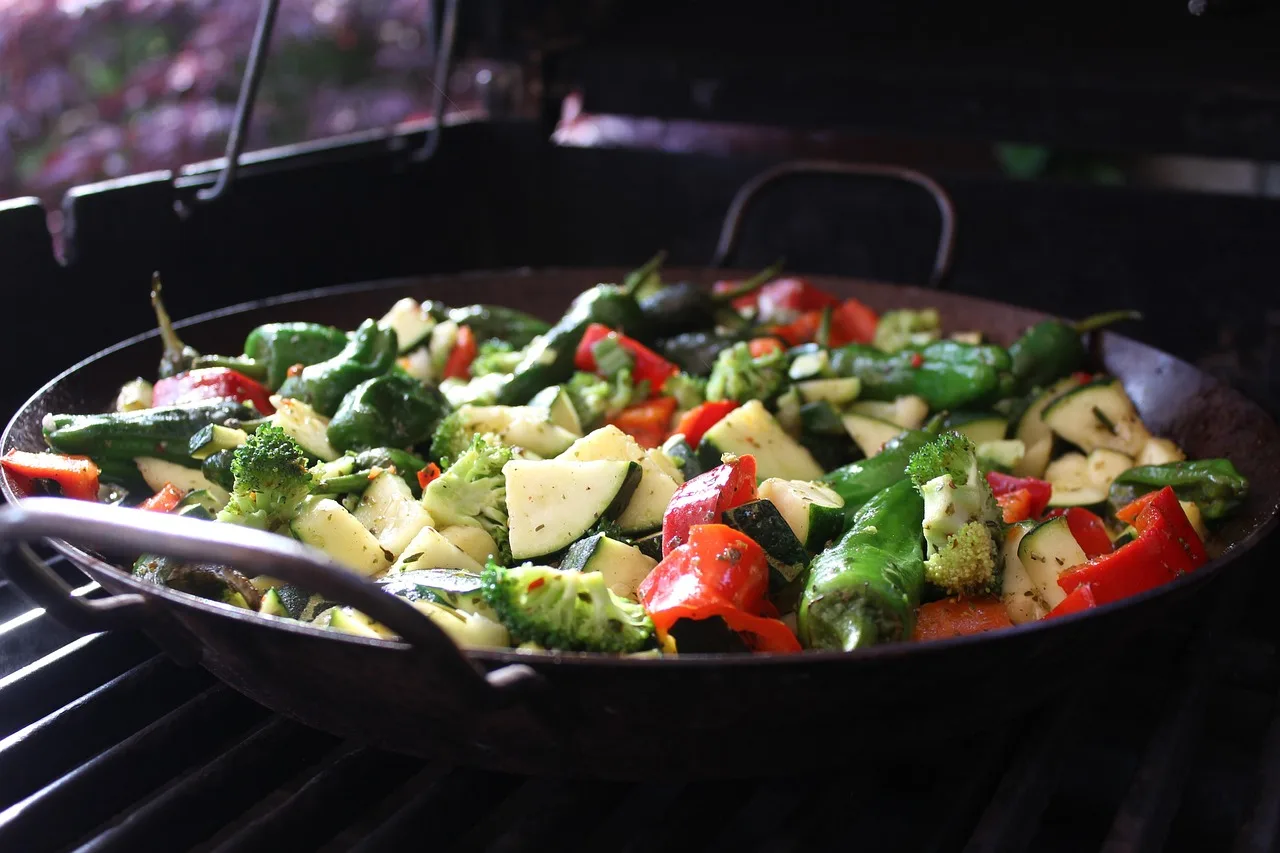
Roasting pans warp when heat reaches them unevenly or when hot metal cools too fast. Metal does not expand and contract at the same rate across the base, corners, and sidewalls, so the pan can bow, twist, or lift at one edge. That is different from a baking sheet, which often warps because it is thinner and more exposed.
Thermal shock and rapid cooling
Thermal shock is a rapid temperature change that causes uneven expansion and contraction. Rinsing a hot pan in cold water is the leading cause. It matters for oven roasting, stovetop searing, grill use, and washing, because all four can leave one area much hotter than another.
Overheating and uneven expansion
Overheating can drive the base out of shape, especially if the pan is empty or the heat is concentrated in one spot. A burner that is too small for the pan can create a hot center with cooler edges. That imbalance makes the metal move and stay bent after cooling.
Thickness, gauge, and material differences
Thin pans warp more easily than thick ones. Pans at least 2.5 mm thick are described as less likely to warp, and gauge matters for the same reason: heavier-gauge stock resists twist better. Aluminum cookware is more prone to warping than steel pans, while stainless steel cookware, especially multi-ply or fully clad construction such as tri-ply and 5-ply, is usually more resistant.
Burner size mismatch and heat concentration
Pan diameter should not be more than one inch longer than the burner. When the pan extends much farther than the heat source, the center heats first and the edges lag behind. That uneven heating can bow the base and make a flat-bottom pan lose stability.
How do you inspect a warped pan?
Check the pan on a truly flat surface, then check it again with the rack installed. You are looking for wobble, a base that no longer lies flat, rack contact problems, and sidewalls that lean or buckle. A slight lift at one corner is different from a pan that rocks under load or can no longer hold drippings safely.
- Set the pan on a flat counter. Press lightly at each corner and watch for rocking. If it moves, note where the lift starts and whether the base or sidewall is the problem.
- Check rack fit. Place the roasting rack inside the pan and make sure it sits level without tilting. Rack rocking can shift a turkey, chicken, or roast and put strain on the warped base.
- Measure the gap. Slide a ruler or straightedge under the lifted area and record the highest visible gap. A small gap may be usable; a large twist that affects contact, drainage, or stability is not.
- Inspect the sidewalls. Look for bulging, inward pinching, or a corner that pulls away from the body. Sidewall distortion matters because it can change handle alignment and rack fit.
- Compare heat history. Think through the last high-heat event: empty preheating, burner mismatch, or a hot-to-cold rinse. That often points to the cause and tells you whether the same damage can happen again.
Say a 13 x 9 roasting pan sits flat before roasting, but after a chicken dinner at about 425°F it rocks at one corner. If the rack still fits and the gap is minor, the pan may be serviceable. If the same pan also spills drippings toward one side, the warp has moved from cosmetic to functional.
Roasting pan warp diagnosis matrix
| Symptom | Likely cause | Severity | Safe to keep using | Repair option | Replacement trigger |
|---|---|---|---|---|---|
| Wobble on a flat counter | Base bowed from thermal shock or burner mismatch | Low to moderate if the wobble is slight; higher if it rocks under load | Yes, if the pan still sits level enough for even contact and the rack stays stable | None for serious twist; gentle manual straightening is rarely reliable | Replace if it rocks enough to spill fat or shift a rack |
| Uneven browning | Hot spots from uneven expansion, thin stock, or poor burner coverage | Moderate | Sometimes, if the food can be rotated and drippings still collect evenly | Use a different rack position or rotate the pan once during roasting | Replace if one side browns faster every time and heat contact is visibly poor |
| Rack rocking | Warped base or distorted side rails | Moderate to high | Only if the rack stays locked and the load does not shift | Try a different rack size if the pan was designed for one; otherwise none | Replace if the rack tips, slips, or tilts the roast |
| Pan bowing after washing | Thermal shock from hot-to-cold washing | Moderate | Usually not if the bow is new and obvious; inspect before reuse | Let it cool 10-15 minutes before washing on future uses | Replace if the base no longer returns to stable contact after cooling |
| Sidewall distortion after overheating | Excess heat, empty preheating, or a burner larger than the pan footprint | High | Usually no if the walls lean, buckle, or change handle alignment | None for a permanent bend that affects geometry | Replace if the wall shift changes rack fit, handle grip, or spill containment |
Can you fix it or should you replace it?
A minor bend can sometimes be tolerated, but a warped roasting pan is not always worth fixing. If the base still contacts the oven rack evenly, the rack stays level, and drippings stay contained, the pan may remain usable. If the warp affects fit, safety, or heat contact, replacement is the better choice.
When a bend is minor and safe to keep using
Keep the pan only if the wobble is slight, the rack does not rock, and the base still sits flat enough to catch drippings. Heavy-gauge roasting pans and multi-ply stainless pans are more likely to stay serviceable after minor stress than thin aluminum pans or disposable foil roasters.
When repair is impractical or unsafe
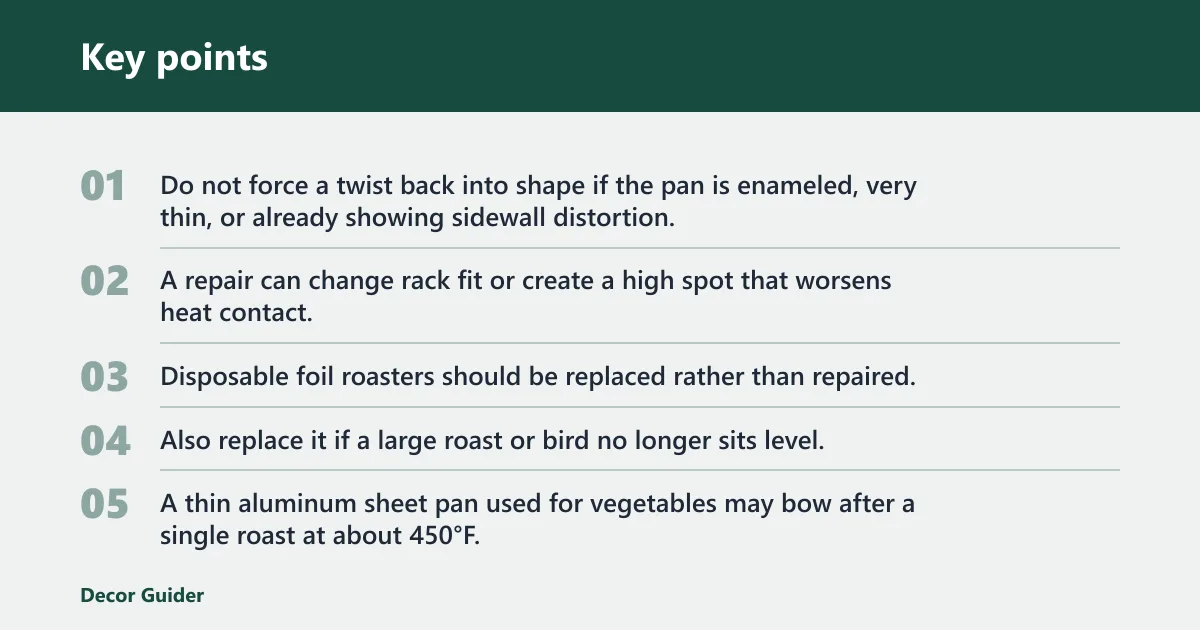
Do not force a twist back into shape if the pan is enameled, very thin, or already showing sidewall distortion. A repair can change rack fit or create a high spot that worsens heat contact. Disposable foil roasters should be replaced rather than repaired.
Replacement triggers for flatness, rack fit, or sidewall distortion
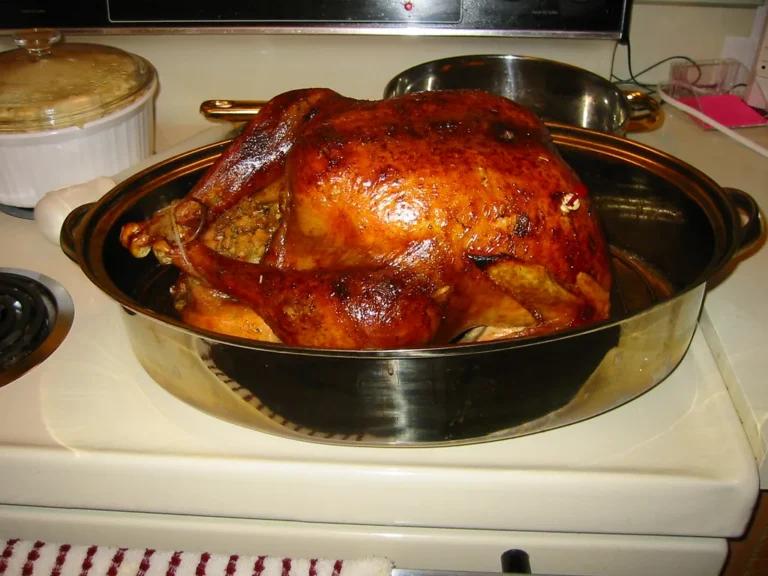
Replace the pan if the base no longer lies flat, the rack rocks, or the sidewalls lean enough to affect handle alignment. Also replace it if a large roast or bird no longer sits level. Wirecutter’s top roasting-pan pick is tri-ply, fully clad construction and handled a 20-pound turkey, which gives a useful benchmark for sturdier build quality.
A thin aluminum sheet pan used for vegetables may bow after a single roast at about 450°F. If the vegetables were spread unevenly, that can add stress and worsen local heating. The fix is not to bend the pan back repeatedly; the better step is to move to a thicker sheet or reduce load on the pan’s center.
How do I keep a roasting pan from warping?
Use heat and cleaning habits that avoid rapid expansion changes, and pick a pan that matches the job. Aluminum pans are lighter and highly conductive, but they are more prone to warping than steel. Stainless steel cookware, especially multi-ply construction, is less likely to warp than single-ply cookware.
- Match the heat source. Keep the pan diameter within one inch of the burner diameter when using it on a stovetop. That limits uneven heat concentration.
- Let it cool first. Wait 10-15 minutes before washing a hot pan. That reduces thermal shock and helps the metal cool more evenly.
- Spread food evenly. On baking sheets, distribute vegetables or other food across the surface instead of piling them in the center. Uneven loading can create uneven heating and stress the metal.
- Choose thicker construction. Look for a pan at least 2.5 mm thick, or a heavier-gauge roasting pan with a flat bottom. That helps preserve stability during roasting and deglazing.
Pan type matters
Roasting pans differ from baking sheets in useful ways. A roasting pan is usually deeper, with a flat bottom and higher sides for collecting drippings, making gravy, and stovetop deglazing. A baking sheet, including half-sheet and full-sheet sizes, is more often used for vegetables and sheet-pan meals, and its lighter build can make it more warp-prone.
Clad stainless roasting pans tend to resist warp better than plain aluminum, while hard-anodized aluminum sits in the middle: durable and affordable, but still more warp-prone than steel. Enameled steel can hold shape well, but chips and impact damage are separate concerns. Disposable foil roasters are generally among the most fragile and are often treated as single-use cookware.
Common mistakes
Most warping problems start with habits that seem harmless. The fix is to stop treating every pan the same and to match care to the material and build.
- Rinsing a hot pan with cold water.
- Using a burner much smaller than the pan.
- Ignoring rack rocking because the warp looks minor.
- Trying to flatten a thin pan repeatedly by hand.
- Loading a baking sheet unevenly, especially near one edge.
- Assuming aluminum and steel fail the same way.
Frequently asked questions
Why is my roasting pan warping?
Most warping starts with uneven heating or cooling. The pan expands and contracts at different rates, which bends the base or sidewalls. Thin aluminum pans, single-ply cookware, and pans used on burners that are too small are more likely to show the problem first.
Can a warped roasting pan be fixed?
Sometimes, but only if the bend is minor and the pan still sits safely. A pan that rocks, leaks drippings, or distorts the rack should usually be replaced. Forced straightening can make the fit worse, especially in thin or enameled cookware.
Does thermal shock cause roasting pan warping?
Yes. Rapid temperature change can make the metal expand and contract unevenly, which bends the pan. Avoid washing a hot pan right away; wait 10-15 minutes before cleaning so the temperature drops more gradually.
Are aluminum roasting pans more likely to warp?
Yes. Aluminum pans are more prone to warping than steel pans, even though they are durable and affordable. If you want better stability, look for stainless steel, especially tri-ply or 5-ply fully clad construction, or choose a heavier-gauge aluminum design.
How do I know if I should replace a warped roasting pan?
Replace it if the pan no longer sits flat, the rack rocks, the walls bend inward or outward, or drippings move to one side. A pan that cannot keep a roast level or safely contain fat has crossed from nuisance to practical failure.
Products related to this article
Sponsored / affiliate links. As an Amazon Associate I earn from qualifying purchases. I may earn additional commission from eligible campaigns.