Roaster Oven vs Roasting Pan: Which Tool Fits Best?
Choose a countertop roaster oven when your main oven is full and you need a second heated space for a turkey, casserole, or stew. Choose a roasting pan when you want stronger browning, more drippings for gravy, and a tool that works inside a standard oven. Pick the wrong one, and you can end up with pale skin, crowded racks, or a side-dish schedule that slips. This guide compares roaster oven vs roasting pan by cooking scenario, capacity, browning, cleanup, and best uses.
| Decision factor | Roaster Oven | Roasting Pan | Winner |
|---|---|---|---|
| Oven-space savings | Countertop appliance; frees the main oven | Uses the main oven | Roaster Oven |
| Browning on meat skin | More moisture retention, so browning can be softer | Dry oven heat and open pan exposure support stronger browning | Roasting Pan |
| Drippings and gravy building | Collects juices, but the setup is less flexible for stovetop finishing | Rack and pan drippings are easy to manage in the oven workflow | Roasting Pan |
| Batch size and holiday overflow | Better when you need a second cooking chamber | Good for one standard-oven batch | Roaster Oven |
| Stovetop compatibility | Not a stovetop tool | Depends on material and construction | Roasting Pan |
| Cleanup and storage | One large insert and lid to wash and store | Usually simpler to store; rack may need scrubbing | Roasting Pan |
Roaster oven vs roasting pan
A roaster oven is a countertop appliance that works like a traditional oven, while a roasting pan is oven-safe cookware, usually rectangular with low sides and often a removable rack. The real difference is whether you need a second heat source or better results inside your main oven.
Oven space versus oven performance
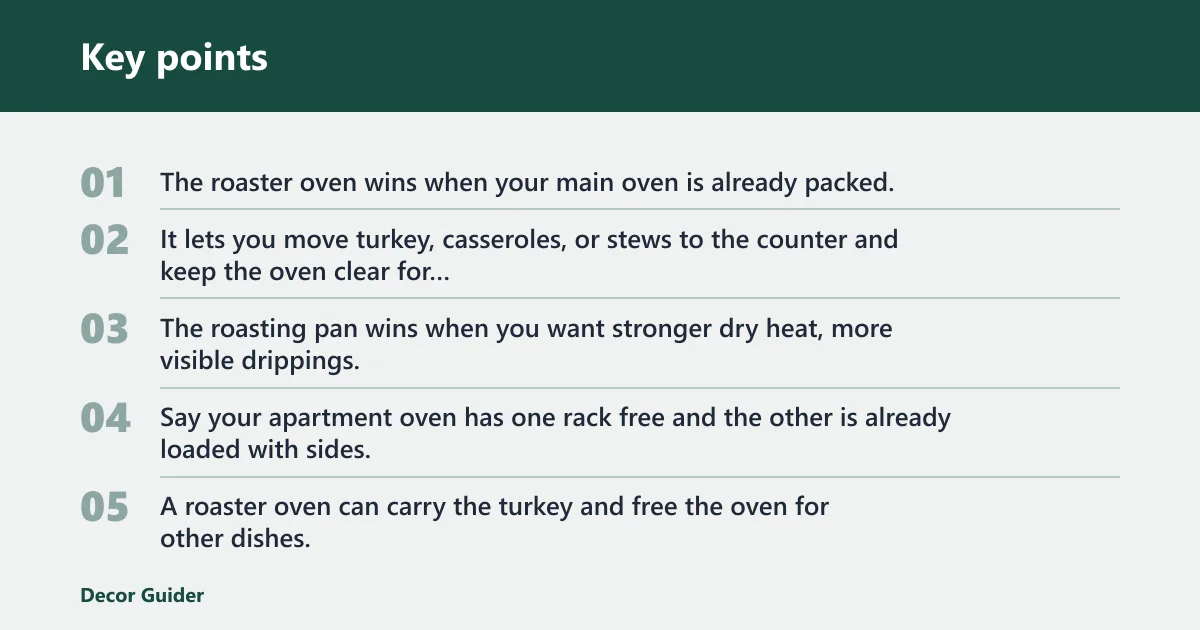
The roaster oven wins when your main oven is already packed. It lets you move turkey, casseroles, or stews to the counter and keep the oven clear for rolls, vegetables, or pies. The roasting pan wins when you want stronger dry heat, more visible drippings, and easier sauce-making in the same oven cycle.
Say your apartment oven has one rack free and the other is already loaded with sides. A roaster oven can carry the turkey and free the oven for other dishes. If the menu is only a single chicken and roasted carrots, a roasting pan is usually the simpler tool.
Capacity and heat behavior
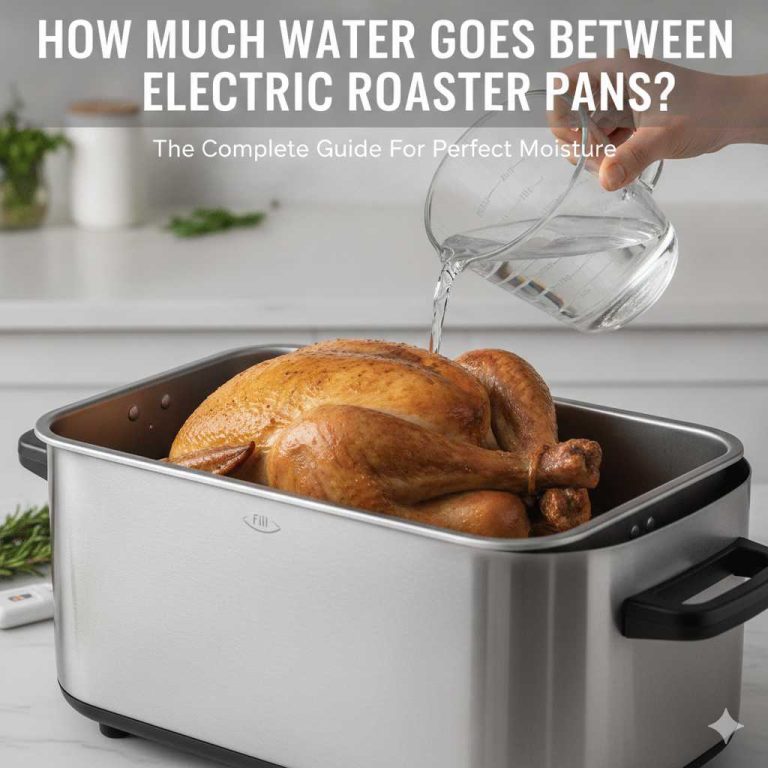
Capacity matters more than category. One roaster oven example has a 22-quart capacity, and another has a 6-quart capacity with six temperature settings from 200 to 450 degrees Fahrenheit. High sides and a closed lid hold moisture, which helps braises and stews but can soften crusts if you want very dry heat.
A roasting pan is built for temperatures of 350 degrees and above and is meant to sit in a conventional oven. Its open top and lower profile let hotter air reach the food surface, which is why it usually browns better than a lidded countertop roaster.
Cleanup and maintenance
Cleanup depends on drippings and rack design. A roasting pan with a removable rack is easy to work with, but the rack can stain and the pan may need scrubbing after a fatty roast. A roaster oven shifts cleanup to a larger insert and lid, which can be more awkward to wash and store.
Which browns food better?
A roasting pan is often said to brown food better because the oven air reaches the surface more directly. The rack lifts the food above drippings, and that airflow helps render skin and build color. A roaster oven can still cook well, but the covered environment holds more moisture, so browning often takes extra finishing time.
How a rack changes airflow
A removable rack does two jobs: it keeps food out of the drippings and lets hot air move underneath. That matters for turkey skin, chicken thighs, and even vegetables that need some edge crisping. Without a rack, the underside sits in liquid and browns more slowly.
How high sides affect moisture
High sides help contain juices, though they can also trap some steam. They also trap steam. That is good for stewing and braising, but it is the wrong setup if your main goal is a dry, deeply browned exterior.
When a roaster oven still works well
A roaster oven can work well for turkey or chicken if the priority is keeping the main oven free and serving a large batch on schedule. It is also useful for casseroles and stews, where moisture retention is a benefit rather than a drawback. If the skin needs more color, finish briefly in the main oven.
Can you use a roasting pan instead of a roaster oven?
Yes, in many cases you can use a roasting pan instead of a roaster oven, as long as you have enough oven space and a pan sized for the food. For turkey, chicken, vegetables, and many casseroles, a roasting pan handles the job well. The trade-off is that you give up the extra countertop cooking capacity.
Turkey and other large meats
For a whole turkey or large roast, a roasting pan is often the more direct choice if the main oven is available. It supports a rack, collects drippings for gravy, and gives the surface more dry heat. A roaster oven becomes more appealing when the oven is already committed to sides or desserts.
Casseroles and side dishes
A roaster oven can do more than roast. It can also handle casseroles, stews, and some baking tasks when you need volume without using the oven. A roasting pan is more flexible inside the oven, but it is still only one cavity among several competing dishes.
Apartment and shared-kitchen planning
Shared kitchens make timing harder than recipe writing does. If you share one oven, a roaster oven can act as a second cooking chamber for a holiday meal. If the whole meal fits into one oven cycle, the roasting pan is easier to store and easier to slot into everyday use.
Roaster oven capacity and temperature range
Capacity should match the meal, not the marketing copy. A 22-quart roaster oven is a family-size unit, and the 6-quart example is better for smaller batches or side dishes. The same 200 to 450 degrees Fahrenheit range gives you enough flexibility for slow warming, roasting, and many baked dishes.
What capacity means for holiday meals
Use capacity as a planning tool. A larger roaster oven can take over one major dish while the main oven handles everything else. A smaller 6-quart model is more useful for weeknight meals or a dish that needs steady heat without taking over the kitchen.
- 22-quart roaster oven: best when you need one large main dish and oven-space relief.
- 6-quart roaster oven: better for smaller family-size cooking and compact counters.
- 200 to 450 degrees Fahrenheit: broad enough for low, steady heat and hotter roasting tasks.
Roasting pan materials and rack design
Roasting pans are usually made of stainless steel or aluminum, and some are made from cast iron or other oven-safe materials. Many include a removable rack. Material matters because it affects heat response, weight, and whether the pan can move from oven to stovetop for sauce work.
Stainless steel and aluminum
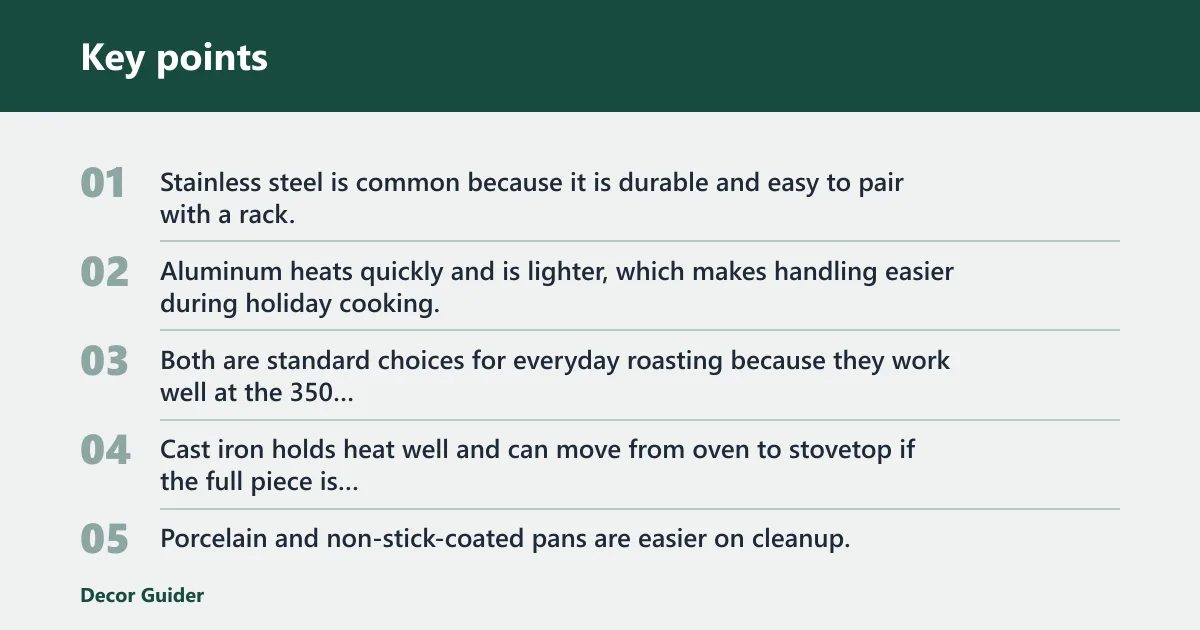
Stainless steel is common because it is durable and easy to pair with a rack. Aluminum heats quickly and is lighter, which makes handling easier during holiday cooking. Both are standard choices for everyday roasting because they work well at the 350 degrees and above range these pans are built for.
Cast iron, porcelain, and non-stick coatings
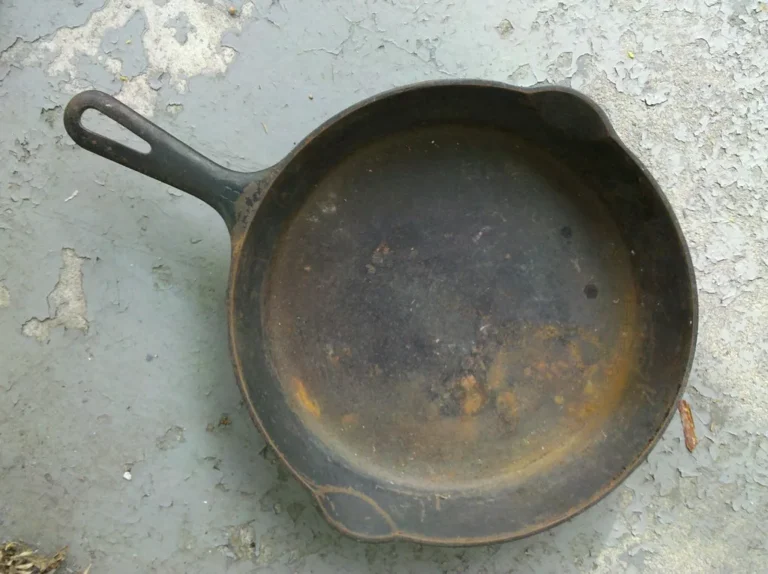
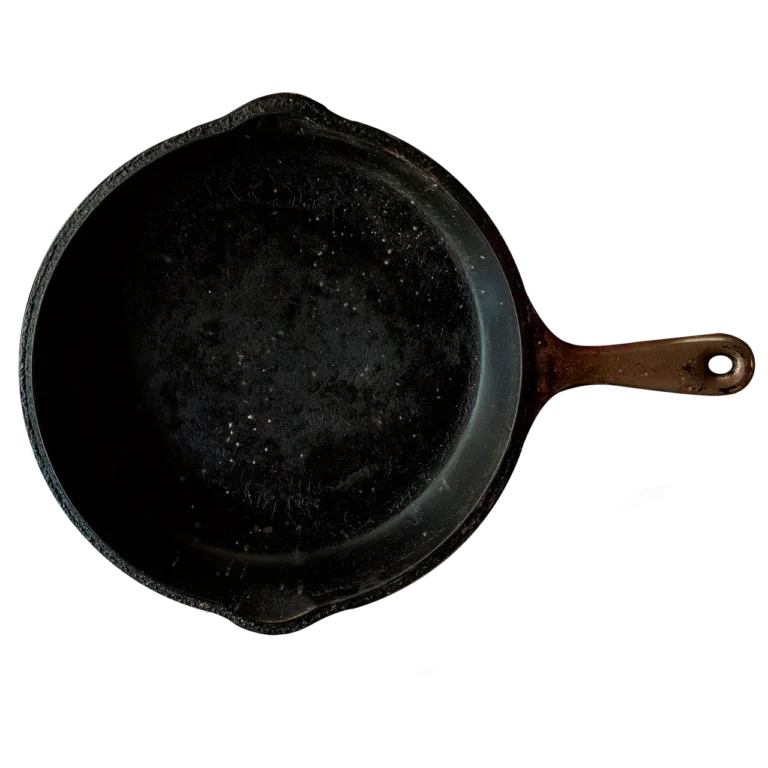
Cast iron holds heat well and can move from oven to stovetop if the full piece is designed for that use. Porcelain and non-stick-coated pans are easier on cleanup, though non-stick coatings can be less tolerant of very high heat and abrasive tools. Check the maker’s instructions before putting any coated pan over direct flame.
Low sides, high sides, and stovetop limits
Low sides favor browning and easy basting. Higher sides help contain splatter and juices, especially for large cuts or saucy roasts. Stovetop use depends on construction: stainless steel and cast iron are the most plausible candidates, while many aluminum or non-stick pans are intended only for oven use unless the label says otherwise.
Choose Roaster Oven if… / Choose Roasting Pan if…
Choose Roaster Oven if you need a second cooking chamber, you are managing a holiday menu with oven overflow, or you want a hands-off way to keep a turkey, chicken, casserole, or stew warm and contained. Choose Roasting Pan if you want stronger browning, easier drippings management, and a tool that fits naturally into everyday oven cooking.

- Choose Roaster Oven if… your main oven is already full, you cook for a crowd, or you want one appliance that can roast, bake, slow cook, and braise without tying up the oven.
- Choose Roasting Pan if… you want the best browning, plan to make gravy from drippings, or need a pan that can move between meat, vegetables, and baked goods in a standard oven.


Frequently asked questions
What is the difference between a roaster oven and a roasting pan?
A roaster oven is a countertop appliance that works like a traditional oven, while a roasting pan is oven-safe cookware with a rectangular shape and usually a rack. The roaster oven saves oven space. The roasting pan usually gives better browning and easier drippings management inside a standard oven.
Can a roasting pan be used on the stove?
Sometimes, but only if the material and construction allow it. Stainless steel and cast iron are the most likely to tolerate stovetop use, while many aluminum, porcelain, and non-stick pans are oven-only. Check the label before you place any roasting pan over direct heat.
How do you use a roaster pan or roaster oven?
Use a rack when you want airflow and browning, and keep the food above the drippings. In a roaster oven, set the temperature within its listed range and use it for roasting, baking, slow cooking, braising, or stewing. In a roasting pan, use the main oven and monitor color more closely.
Which is better for turkey: roaster oven or roasting pan?
A roasting pan is usually better for browning and gravy if the oven is available. A roaster oven is better when the turkey has to cook alongside many other dishes or when you need to free the main oven. For a holiday menu with many parts, the space-saving advantage matters more.
What size roaster oven do I need for a turkey?
Size depends on the bird and the meal plan. A 22-quart roaster oven is a family-size example and is the more practical choice for a full turkey. A 6-quart roaster oven is generally better suited to smaller batches or side dishes than to a large holiday bird.
Can you roast vegetables in a roaster oven?
Yes, but the result depends on moisture and spacing. Vegetables roast best when they are spread out and not crowded, because overcrowding traps steam and softens edges. A roaster oven can handle vegetables well for volume cooking, though a roasting pan usually gives drier, crisper browning.
Products related to this article
Sponsored / affiliate links. As an Amazon Associate I earn from qualifying purchases. I may earn additional commission from eligible campaigns.