Roasting Pan vs Baking Dish
Use a roasting pan when you want browning, airflow, and drippings; use a baking dish when you want liquid to stay put, gentler heat, and even baking. Pick the wrong one and you can get pale meat, soggy edges, or a dry, overcooked bake. This guide explains how shape, depth, and material affect moisture control so you can match the vessel to the recipe.
This guide is part of our Cooking with skillets, griddles, and roasting pans series.
| Factor | Roasting Pan | Baking Dish | Winner |
|---|---|---|---|
| Moisture control | Tall walls and often a rack let air move around the food while drippings collect below. | Lower walls hold sauces and custards closer to the food, which keeps the environment wetter. | Roasting Pan |
| Browning | Better for dry heat, crisp skin, and deeper surface color. | More likely to soften edges when liquid covers or surrounds the food. | Roasting Pan |
| Liquid retention | Less suited to dishes that need sauce or a lot of pooled liquid. | Better at keeping sauce, cheese, or custard in place. | Baking Dish |
| Stovetop use | Some stainless steel, aluminum, cast iron, and enamelware pans can go directly on the stove for gravy or deglazing, depending on the pan. | Glass and ceramic are generally poor choices for direct stovetop heat. | Roasting Pan |
| Best-fit recipes | Turkey, roast chicken, vegetables, and pan gravy. | Lasagna, casseroles, baked pasta, and storage-friendly bakes. | Tie |
Roasting pan vs baking dish
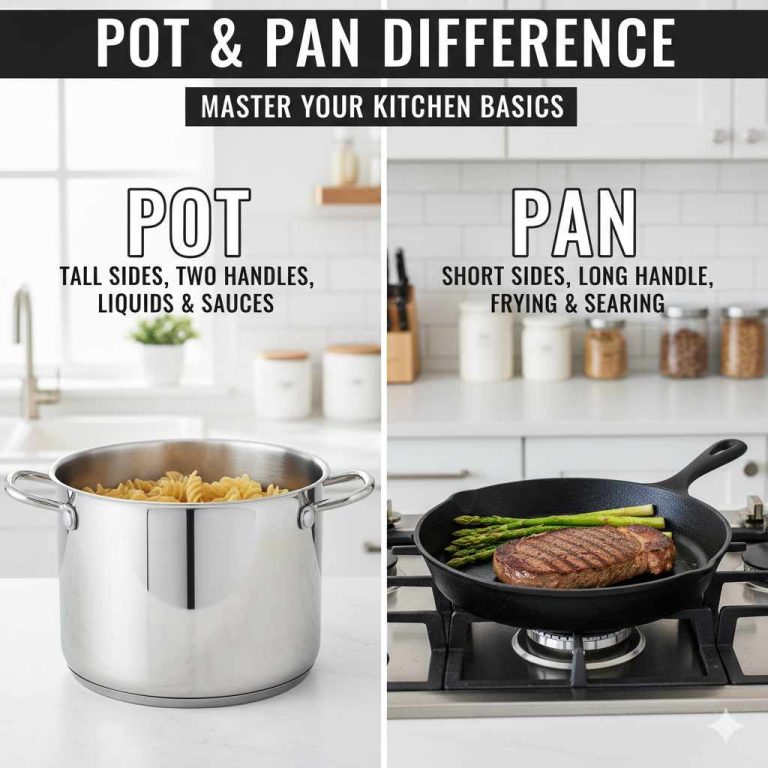
The main difference is moisture control. A roasting pan typically has taller walls and often a rack; a baking dish usually has lower walls and is often glass or ceramic. That shape changes airflow, drip capture, and steam. Use the drier vessel when you want browning; use the deeper, gentler vessel when you want liquid to stay put.
Fast rule for moisture and browning
If the recipe benefits from escaping steam, choose the roasting pan. If the recipe depends on sauce, cheese, or custard staying contained, choose the baking dish.
Roasting pan decision table
| Dish type | Moisture level | Target result | Best vessel | Acceptable substitute | Avoid if |
|---|---|---|---|---|---|
| Turkey | Low to medium, with drippings | Browned skin and collected juices for gravy | Roasting Pan | Rimmed baking sheet with a rack | A deep baking dish that traps steam and crowds the bird |
| Roast chicken | Low | Crisp skin and even browning | Roasting Pan | Rimmed baking sheet with a rack | A glass baking dish that holds too much moisture around the bird |
| Vegetables | Low | Caramelized edges and dry roasting | Roasting Pan | Baking sheet | A crowded baking dish filled too deeply |
| Lasagna / casseroles | Medium to high | Even baking and liquid retention | Baking Dish | Roasting Pan if the recipe is large and saucy | A shallow pan that lets sauce bubble over |
| Pan gravy | High, then reduced | Easy deglazing and enough drippings to build flavor | Roasting Pan | Sturdy metal baking pan | Glass or ceramic if you need stovetop deglazing |
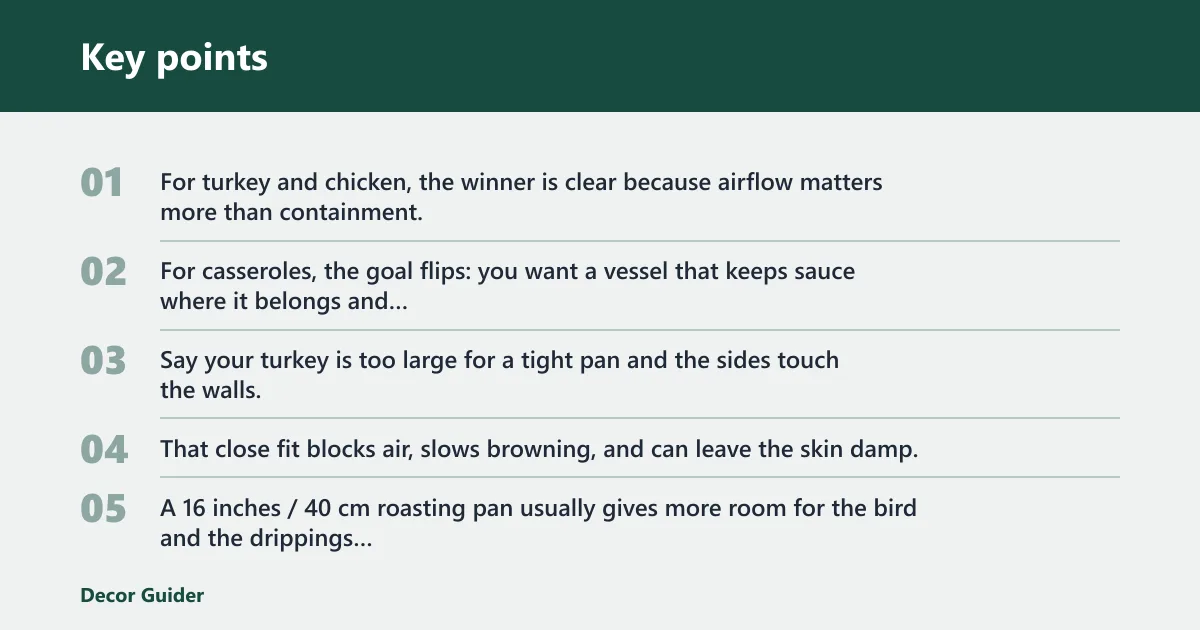
For turkey and chicken, the winner is clear because airflow matters more than containment. For casseroles, the goal flips: you want a vessel that keeps sauce where it belongs and heats the dish gently.
Say your turkey is too large for a tight pan and the sides touch the walls. That close fit blocks air, slows browning, and can leave the skin damp. A 16 inches / 40 cm roasting pan usually gives more room for the bird and the drippings than many baking dishes do.
Turkey
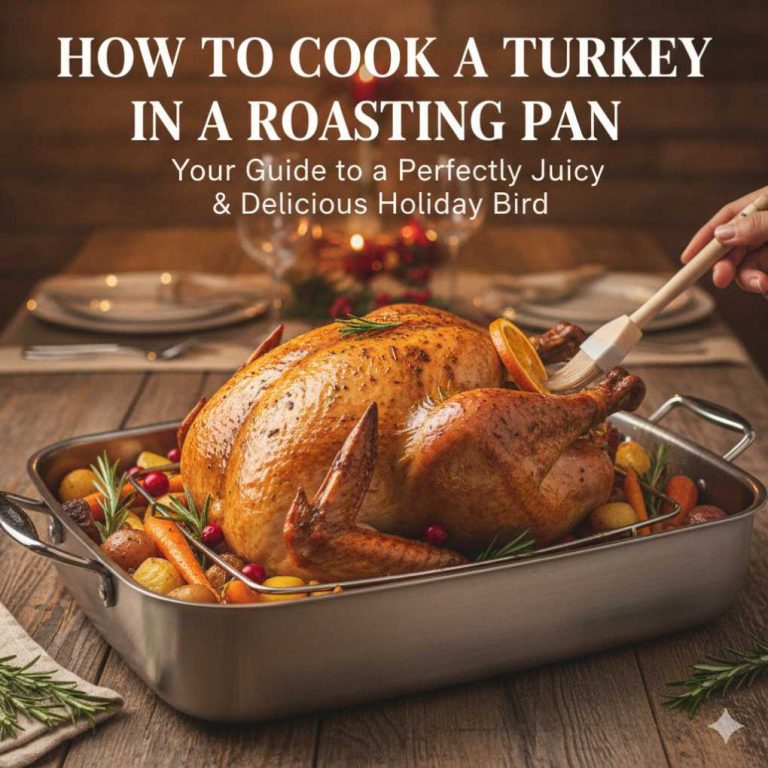
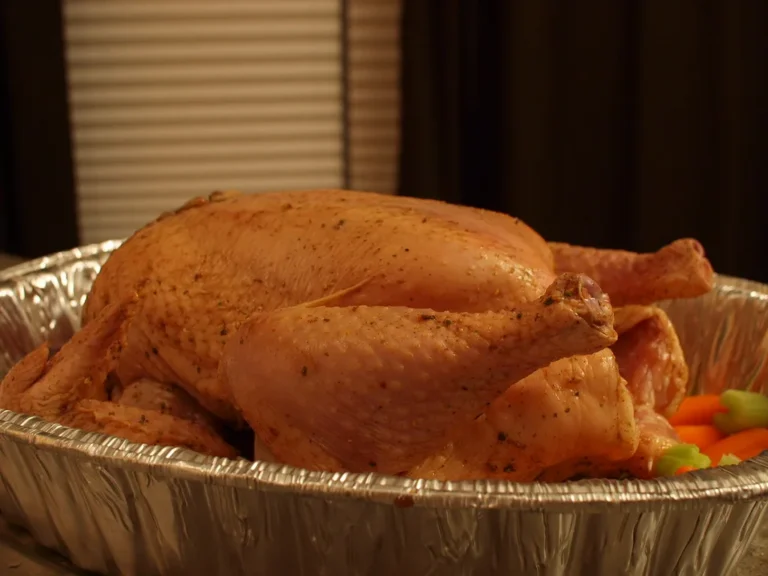
A roasting pan is the safer choice for turkey because it handles large cuts, catches drippings, and leaves room for hot air. Tall walls also reduce spill risk when the bird releases fat and juices. If you need gravy, the collected drippings are part of the plan.
Roast chicken
Roast chicken benefits from exposed heat and a dry surface, so a roasting pan or a rimmed baking sheet works better than a deep baking dish. A rack helps the skin stay out of the liquid. If you only have a baking dish, keep it shallow enough that the chicken is not sitting in pooled juices.
Vegetables
Vegetables brown best when steam can escape. A roasting pan or baking sheet gives more surface contact and less trapped moisture than a deep dish. If you pile vegetables into a baking dish, they are more likely to soften before they color.
Lasagna and casseroles
Lasagna and casseroles need a vessel that supports sauce and layered fillings, so a baking dish is usually the better choice. Glass or ceramic works well here because the goal is steady baking, not aggressive browning. A roasting pan can work for a larger casserole, but it is less convenient for serving and storage.
Pan gravy
Pan gravy favors a roasting pan because tall walls capture drippings and give you room to deglaze. If the pan can go on the stove, you can loosen browned bits directly. That is much harder to do in glass or ceramic, which are not suited to direct stovetop heat.
Why wall height changes results
Tall walls change the oven environment. They catch splatter and drippings, but they also hold more moisture around the food if the pan is crowded or the roast releases a lot of liquid. Lower walls expose more surface area to dry heat, which helps browning but gives less spill protection.
High walls and drip control
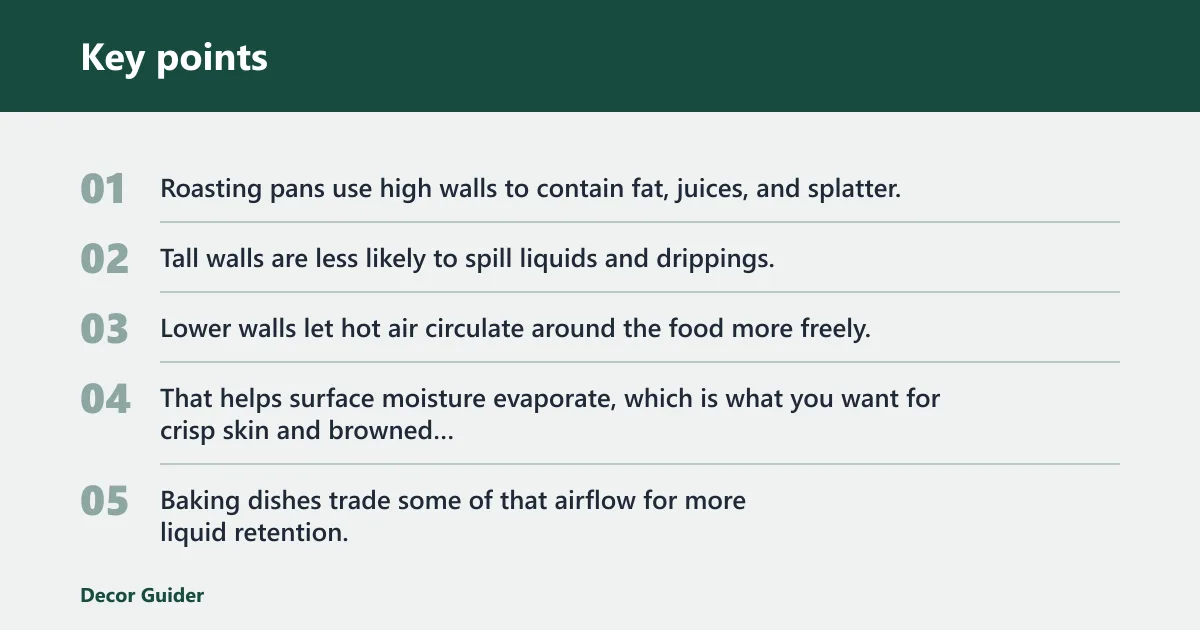
Roasting pans use high walls to contain fat, juices, and splatter. That is useful for poultry and large cuts. Tall walls are less likely to spill liquids and drippings, which matters when you move a heavy pan out of the oven.
Low walls and airflow
Lower walls let hot air circulate around the food more freely. That helps surface moisture evaporate, which is what you want for crisp skin and browned vegetables. Baking dishes trade some of that airflow for more liquid retention.
Steam risk when liquid pools
When a vessel is deep and the food releases a lot of liquid, the trapped moisture can steam the surface instead of roasting it. That is why a deep baking dish can make roasted food turn soft at the edges. The issue is not the material alone; it is also how the walls and depth manage steam.
Which material should you choose?
Material affects heat tolerance, stovetop use, and how fast the vessel moves from oven to counter. Stainless steel, aluminum, cast iron, and coated enamelware are common roasting-pan materials. Baking pans and dishes are also made of glass and ceramic, but those materials are generally less suited to direct stove heat and often have lower heat tolerance than metal roasting pans.
Stainless steel and aluminum
These are common roasting-pan materials because they heat efficiently and can often be used on the stove for deglazing. A metal pan is also easier to use if you want to reduce drippings into gravy after roasting. Weight varies by build, but metal is usually the better choice for a multi-step roast-and-sauce workflow.
Cast iron and enamelware
Cast iron holds heat well and can support strong browning. Enamelware can offer similar oven use with a coated surface, though the exact heat tolerance depends on the piece. Both are more suitable for roasting than for recipes that need a lightweight dish you can move often.
Glass and ceramic limits
Glass and ceramic baking dishes are useful for casseroles and storage, but they are not the best stand-ins for high-heat roasting or stovetop deglazing. They are usually lighter than a roasting pan, which makes them easier to handle. They are also commonly smaller and thinner than roasting pans, which changes how much food they can hold.
Do you need a rack?
A rack is not required for every recipe, but it changes how heat moves around the food. By lifting meat above the drippings, a rack improves air circulation and helps skin crisp. If you want roasted food to brown on all sides, the rack earns its place.
What a rack changes
Without a rack, the underside of meat sits closer to the liquid that collects in the pan. That can soften the bottom surface. With a rack, air can move under the food, and the drippings remain below the roast.
Flat rack vs V-shaped rack
A flat rack works for broad cuts and poultry that need a stable base. A V-shaped rack helps hold a bird in place and can channel drippings underneath. Both types serve the same main function: they keep the food elevated above the pan juices.
When you can skip it
You can skip the rack when the recipe is meant to sit in sauce or braising liquid, or when the goal is a casserole-style bake. You can also skip it for some vegetables if you want more contact with the pan for better browning. For meat and poultry, though, the rack usually gives a better result.
Can you substitute a baking sheet or tray?
Yes, a rimmed baking sheet can stand in for a roasting pan when you need drier roasting and do not need much liquid control. It is shallower, lighter, and easier to move. That makes it a strong substitute for vegetables, smaller poultry, and some cuts of meat.
When a rimmed baking sheet works
A baking sheet works when the food is not going to release much liquid and you want the edges exposed. Pair it with a rack if you are roasting chicken or another cut that benefits from lift. That setup can brown well and is often cheaper than a roasting pan plus rack.
When it falls short
A baking sheet falls short when you need to collect drippings for gravy or keep juices from spilling. It also gives less wall height, so large birds or saucy foods can wander toward the edge. For a turkey, that can be the difference between contained drippings and a messy oven floor.
Best uses for drier roasting
Use a baking sheet for vegetables, skin-on chicken pieces, and other foods that do best with exposed heat. A rack on top gives you a setup that behaves more like a roasting pan without the extra depth. It is a practical substitute when the recipe does not need a deep vessel.
Choose Roasting Pan if… / Choose Baking Dish if…
Choose the roasting pan when the recipe needs airflow, browned surfaces, and drippings you can turn into gravy. Choose the baking dish when the recipe needs liquid retention, gentler heat, and a vessel that can move from oven to table with sauce intact. If you own only one, match it to the moisture level of the dish, not to the name in the recipe.
Choose Roasting Pan if…
- You are roasting turkey, chicken, or large cuts of meat.
- You want crisp skin, browned edges, and easier drip collection.
- You plan to deglaze the pan on the stove for gravy.
- You need high walls to reduce spill risk.
Choose baking dish if…
- You are making lasagna, casseroles, baked pasta, or saucy vegetables.
- You want the dish to hold liquid instead of letting it run off.
- You need a lighter pan that is easier to carry.
- You are baking a recipe that does not need direct stovetop deglazing.
If you own only one vessel
- If you only have a roasting pan, use it for casseroles only when the recipe is large and saucy enough to justify the depth.
- If you only have a baking dish, use it for roasting only when the food is small, the dish is sturdy, and you can avoid crowding.
- If you have a rimmed baking sheet, use it for drier roasting and add a rack when you want more browning.
- Skip glass or ceramic for direct stovetop deglazing.
Suppose you are roasting a chicken in a glass baking dish at 425°F. The skin may color more slowly because the dish holds more moisture around the bird. Swap in a rack over a metal pan, and the same chicken is more likely to brown instead of steam.

- Tempered glass withstands thermal shock
- Includes BPA-free plastic lid
- Microwave, freezer, and oven safe
Frequently asked questions
What is the difference between a roasting pan and a baking dish?
A roasting pan has taller walls, often includes a rack, and is built to promote airflow, browning, and drippings. A baking dish usually has lower walls, is often glass or ceramic, and is better for holding sauce or casserole fillings. The difference is mainly about moisture control.
Is a roasting pan the same as a baking dish?
No. They can overlap in some recipes, but they are not the same tool. A roasting pan is better for meat, poultry, and vegetables that need dry heat and drip collection. A baking dish is better for casseroles, lasagna, and other dishes that need liquid retention.
Can I use a glass baking dish instead of a roasting pan?
Only for certain recipes. A glass baking dish is fine for casserole-style cooking, but it is a poor stand-in for high-heat roasting or stovetop deglazing. It holds moisture well, which can slow browning and leave roasted food softer than you want.
Roasting pan vs baking sheet: which is better for meat?
For most meat, a roasting pan is better if you need drippings and a deeper catch for fat and juices. A rimmed baking sheet can be better if you want more exposed surface area and drier roasting, especially for smaller cuts or when you use a rack. The deciding factor is moisture management.
Which pan is better for gravy and drippings?
A roasting pan is better because its tall walls collect more drippings and make deglazing easier. Some metal roasting pans can go directly on the stove, which helps you loosen browned bits without changing pans. Glass and ceramic baking dishes are not the right choice for that step.
What size roasting pan do I need for a turkey?
A common roasting pan size is 16 inches / 40 cm long, which suits many turkeys and leaves room for drippings. The important point is enough space around the bird so air can move and the pan does not overflow. If the turkey crowds the walls, browning and handling both suffer.
Products related to this article
Sponsored / affiliate links. As an Amazon Associate I earn from qualifying purchases. I may earn additional commission from eligible campaigns.