Roaster Oven Size Chart: Quarts, Turkey Fit, Dimensions
A 18-quart roaster oven fits many 14- to 20-pound turkeys, but you should check bird height, rack clearance, and lid space before buying. Pick the wrong size, and the lid may not close, the skin may touch the top, or heat may move unevenly. This guide gives a roaster oven size chart by quart capacity, plus fit checks for turkey shape, ham, pan depth, and real-use clearance.
What a roaster oven size chart should tell you

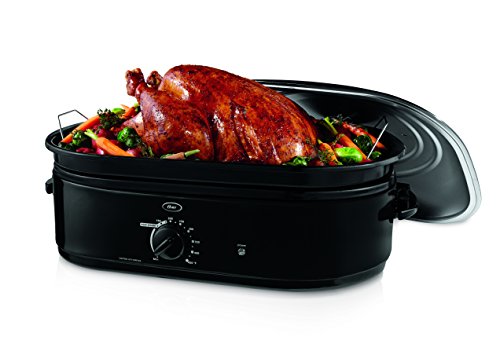

A useful roaster oven size chart should do more than match quarts to bird weight. It should tell you what fits inside after the rack is installed, how much room the lid needs to close, and whether the outside size will crowd your counter or storage cabinet.
Why quart capacity alone can mislead
Quart capacity measures cookwell volume, not exterior size. Two 22-quart roasters can have very different footprints, and a tall turkey can fail to fit even when the weight limit looks right on paper. That is why fit has to include height, not just volume.
Quart numbers also do not tell you how much usable space remains once the rack, insert, or drip pan is inside. A removable rack lifts meat out of drippings, but it also changes the vertical room available for a bird with a high breast or a thick trussing job.
How bird shape and rack height change fit
Turkey weight is only part of the decision. A long, low bird may fit where a shorter but taller one will not. Stuffing, a raised breast, or a rack with a high profile can eat into the clearance under the lid.
That is why fit should be checked with the actual bird shape in mind. If the lid touches the top of the breast or the legs, sealing can be compromised and heat flow may be less even.
What the chart should help you compare before buying
The chart below compares the numbers that matter in a real kitchen: cookwell capacity, a typical outside footprint, a practical turkey range, whether side dishes fit underneath, and whether the model needs a clearance check before purchase. Use it to choose a size, then verify the exact model’s dimensions.
Roaster oven fit matrix
| Capacity | Typical external footprint | Max practical turkey weight | Sides fit underneath? | Pre-purchase clearance check |
|---|---|---|---|---|
| 6 qt | Compact countertop unit; much smaller than holiday sizes | Small roasts, not a holiday turkey size | No | Check shallow lid height and rack position; this size is for compact cooking |
| 16 qt | Small footprint choice | Up to about an 18-pound turkey | Limited | Measure the bird with the rack installed; allow about 1 inch above the highest point |
| 18 qt | Small-to-medium footprint | Up to about a 22-pound bird | Sometimes, if the bird is smaller | Check breast height and lid closure; fit depends on bird shape as much as weight |
| 22 qt | Typical medium footprint around 17 x 14 x 11 inches | Up to about a 26-pound turkey | Yes, for many mixed-use meals | Confirm countertop depth, lid clearance, and rack height before ordering |
| 28 qt | Typical large footprint around 19 x 16 x 14 inches | Up to about a 28-pound turkey | Yes, but it may be oversized for small meals | Verify storage space and counter space; check whether the extra volume is actually useful |
Common retail filters run from 8 qt to 28 qt, so the market spans from compact cookers to full holiday roasters. A 22-quart roaster is often listed for birds up to about 28 pounds, and 28-quart models are often the largest consumer size people shop for.
For side dishes, a 16-quart roaster is often the smallest footprint choice, while medium sizes around 22 to 26 quarts give more flexibility. Bigger is not always better. If you cook a smaller bird, a very large roaster can waste counter space and take longer to recover heat after the lid opens.
How big is a roaster oven?
Roaster oven size is usually discussed in quarts, but the outside footprint matters just as much. Many medium models are around 17 x 14 x 11 inches, while large models can be around 19 x 16 x 14 inches. Those extra inches matter on a crowded counter.
Capacity versus external footprint
Capacity tells you how much the cookwell can hold. Footprint tells you whether the appliance will fit beside a backsplash, under a cabinet, or on a pantry shelf. Some models feel much larger than their quart rating suggests because the housing, handles, and lid add bulk.
Typical medium-size dimensions and what they mean on a counter
A medium roaster around 17 x 14 x 11 inches needs more than the listed size. You need room for the lid to open, for the power cord, and for safe handling when hot. A narrow counter can make a moderate-size unit awkward even when the cookwell itself is not huge.
Why some models feel much larger than their quart rating
Exterior size can grow faster than capacity when the walls are thick or the lid is tall. That is why two 22-quart models may not behave the same way in storage. One may tuck under a cabinet, while another feels bulky enough to demand a dedicated shelf.
What size is a turkey in a roaster oven?
The common guide is to match quart size to approximate turkey weight, then confirm height. An 18-quart roaster is often cited for up to a 22-pound bird, a 22-quart roaster for up to a 26-pound bird, and a 28-quart roaster for up to a 28-pound bird.
Approximate turkey weight by common roaster size
- 16 qt: up to about an 18-pound turkey
- 18 qt: up to about a 22-pound turkey
- 20 qt: often listed for a 24-pound turkey
- 22 qt: up to about a 26-pound turkey
- 28 qt: up to about a 28-pound turkey
These numbers are guides, not guarantees. This Old House notes a 22-quart roaster can hold a 28-pound chicken or turkey, which shows how much the exact shape and setup can change the result. A bird with a tall breast or a thick rack arrangement can use more vertical space than its weight suggests.
When a bird should be treated as too tall, not just too heavy
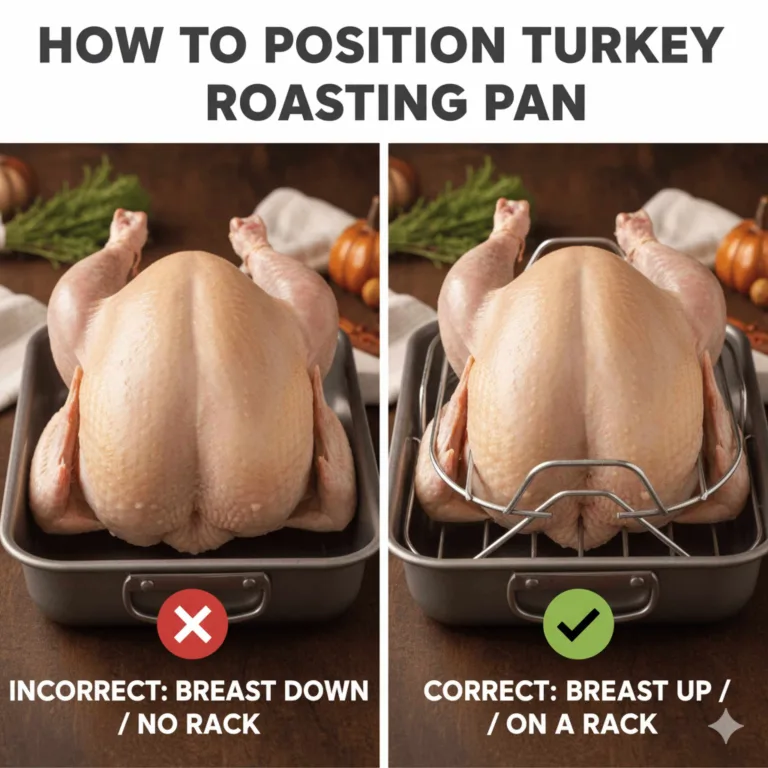
A turkey can miss the fit test even when the weight is within range. If the breast hits the lid, the roaster is too short for that bird. If the rack raises the meat high enough that the top of the breast sits near the lid, the issue is height, not capacity.
Picture a 22-pound turkey in an 18-quart roaster with the rack installed. If the breast nearly touches the lid before the cooker even preheats, the setup is too tight. The fix is a larger roaster or a lower-profile bird, not a stronger setting.
How to check lid clearance and interior height
Leave about 1 inch of clearance above the highest point of the bird so the lid can close and seal properly. That space helps protect the skin from contact and gives steam and hot air room to circulate. If the lid touches the food, the fit is too tight.
- Place the rack and insert in the roaster.
- Set the bird in the same orientation you plan to cook it.
- Measure from the cookwell bottom or rack surface to the highest point of the bird.
- Compare that height with the inside depth under the closed lid.
- Confirm that the lid closes without pressure on the food.
Removable racks change usable interior height, so they should be part of the measurement. A rack that works well for a flat roast may not leave enough room for a stuffed turkey or a high-domed ham. Check the setup you actually plan to cook with.
A common first-timer mistake is choosing a roaster by its stated quart capacity alone, then discovering the casserole dish won’t fit once the handles and rack are inside. The fix is simple: test the height with the rack in place before the cooking day, not after the roaster is already crowded.
What features matter beyond size?
Size decides whether the bird fits. Features decide how well the cooker handles heat, moisture, and day-of use. Look for a self-basting lid, a removable rack, a useful temperature range, and enough wattage for the size you choose.
Self-basting lids and moisture return
A self-basting lid returns condensation to the food, which reduces the need for manual basting. That is especially common on larger electric roasters, where the lid shape is part of the moisture management system. It can help keep the top from drying out during a long roast.
Removable racks and usable interior height
A removable rack helps lift food out of drippings, which improves handling and can help with browning. It also changes usable interior height, so it is part of the fit decision. If the rack is tall, the top of the bird sits closer to the lid.
Wattage, preheat time, and temperature recovery
Common roaster ovens are often around 1,000 to 1,500+ watts. Higher wattage can shorten preheat time and help the cooker recover heat after the lid is opened. That matters more in larger models, where more air and metal need to come back up to temperature.
Temperature ranges around 200 to 450°F
Many models are commonly reported to span about 200 to 450°F. Variable temperature control improves versatility because you can roast, bake, and warm in the same appliance. A wider range is useful if you want one unit to handle a turkey, a casserole, and holding food for service.
What size works for side dishes?
For side dishes, size depends on whether you want a turkey-only appliance or a mixed-use cooker. A smaller roaster can be a good fit for casseroles, stuffing, and warming pans. A larger model gives you more flexibility if you want to cook the main dish and sides in the same unit.
When a small roaster is better for casseroles or warming
A small or mid-size roaster is easier to store and less likely to waste energy on a small dish. If you mostly need warming space or one-pan casseroles, a 16-quart or 18-quart unit can be enough. That is often the better choice for lighter holiday use.
When a larger model gives more flexibility
A 22-quart or 28-quart roaster gives you room for mixed use, taller dishes, and larger birds. If the plan includes turkey plus sides, the extra volume can be useful. But if the meal is usually smaller, the added size may cost you counter space without adding much value.
Suppose you cook an 18-pound turkey once a year and mostly warm rolls and gravy. A 28-quart roaster may fit the bird, but it can be more appliance than you need. A 16-quart or 18-quart model may suit the menu better and leave more room in storage.
How to decide between turkey-only cooking and mixed holiday use
Choose the smallest size that fits your biggest bird with room to spare. If the roaster will also hold side dishes, look at the outside footprint, not just the cookwell volume. That keeps you from paying for space you will not use.
Frequently asked questions
What is the standard oven size?
There is no single standard oven size that fits every kitchen. Built-in wall ovens, ranges, and countertop roasters all vary. For a roaster oven, capacity and exterior footprint matter more than a standard label, because your counter and storage space determine whether it is practical.
Are oven sizes standard?
Oven sizes are only partly standardized. Built-in units follow common cabinet and cutout conventions, but countertop appliances do not. Roaster ovens especially vary in outside shape, lid height, and handle clearance, so the listed quart number should not be treated as a standard outside dimension.
What is a roaster oven?
A roaster oven is a countertop appliance used for roasting, baking, and warming. It is meant to hold food in a heated cookwell, often with a rack or insert. Many models include adjustable temperature controls, a self-basting lid, and a removable rack for easier handling.
How do you measure for oven size?
Measure the space where the appliance will sit, then compare it with the product’s length, width, and height. Leave room for the lid to open, for the cord, and for safe handling around heat. For a roaster oven, also measure the inside height with the rack installed.
What is the largest roaster oven?
Among common consumer sizes, 28 quarts is often treated as the largest roaster oven size. Some retail ranges extend higher, but 28 quarts is a common upper end in mainstream shopping. Even then, the biggest unit is not always the best fit for smaller birds or tight counters.
Products related to this article
Sponsored / affiliate links. As an Amazon Associate I earn from qualifying purchases. I may earn additional commission from eligible campaigns.