Roaster Oven Cost / Price / How Much
Roaster ovens usually cost around $30 to $150; smaller basic models are often near $30 to $60, while larger 20-quart-plus or buffet-style units can run about $70 to $150 or more. If you shop by sticker price alone, you may end up with too little capacity, narrow temperature control, or harder cleanup right when you need the oven most. This guide breaks down roaster oven prices by size, features, and common cooking uses so you can match your budget to the meals you actually plan to cook.
Typical cost range

A typical roaster oven is often in the $30 to $150 range, with basic small units at the low end and larger, feature-heavy models at the high end. The biggest price jumps usually come from capacity, a wider temperature range, a self-basting lid, and a removable pan and rack.
Think about cost by what the unit does for you. A compact model can handle side dishes, casseroles, and small roasts. A larger one suits holiday turkey, big stews, or family-size batch cooking, and that extra capacity usually costs more.
What drives the low end versus the high end
At the low end, you are usually paying for a basic manual temperature dial, a smaller capacity, and simpler materials. At the high end, you are paying for more quart capacity, stronger build materials, better cleanup parts, and convenience features that matter for larger meals.
Best 5 List says a good roaster oven typically costs between $50 and $200, with basic models under $50 and premium roaster ovens over $300. Those numbers fit the broad market well, but the real buying question is whether your meals need extra space or extra controls.
What size roaster oven fits your budget?
Smaller roaster ovens are usually the cheapest, and the price climbs as capacity grows. A 6-quart model is generally budget-friendly, while 18-quart, 22-quart, and 28-quart units are aimed at bigger meals and tend to cost more because they hold more food and need more materials.
If you cook for one or two people, a compact size can be enough. If you plan to roast a turkey or cook for a holiday table, larger capacities make more sense even when the sticker price is higher.
6-quart to 10-quart models
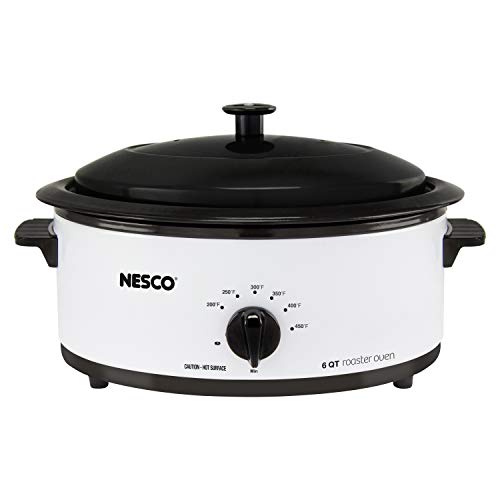
These are the most budget-friendly choices. Best 5 List says a 6-quart model might cost around $30 to $60, and the Nesco Classic shown in one roundup has a 6-quart capacity with six temperature settings ranging from 200 to 450 degrees Fahrenheit.
That size works well for side dishes, small casseroles, reheating, and small cuts of meat. It is a practical pick if you want a roaster oven mainly for weekday use rather than holiday cooking.
12-quart to 18-quart models
This is the middle ground for buyers who want more flexibility without jumping to a very large unit. Best 5 List says an 18-quart model will likely be in the $70 to $150 range, which reflects the jump in cooking space and often a better feature set.
An 18-quart roaster oven is large enough for bigger casseroles, stews, and many holiday meals. It is also the point where price starts to reflect whether you want a plain warming box or a more capable cooking tool.
22-quart to 28-quart models
These are the large-capacity choices for turkey-sized meals and bigger gatherings. The Hamilton Beach roaster oven has a 22-quart capacity and can hold a 28-pound chicken or turkey, while the Good Mother Project also includes a 28 Quart Electric Roaster Oven in its picks.
Expect these to cost more because the larger body, stronger rack setup, and added convenience features push the price up. They are useful if you regularly cook for a crowd, but they are not the best value if you only need a small roast or a few side dishes.
Roaster oven price to capacity matrix
This matrix shows how price, capacity, and features usually line up. Use it to match the quart size to your actual cooking jobs instead of paying for space you will not use.
| Capacity | Typical street price range | Common features | Best-fit cooking jobs | Pay more only if |
|---|---|---|---|---|
| 6-quart | $30 to $60 | Manual temperature dial, basic lid, removable pan on some models | Side dishes, small casseroles, small roasts, reheating | You need more than one temperature zone or easier cleanup |
| 8-quart | $35 to $70 | Manual controls, keep-warm setting on some units | Small family meals, stews, baked dishes | You cook often enough to want a keep-warm setting |
| 10-quart | $40 to $85 | Adjustable temperature settings, removable pan | Batch cooking, casseroles, braises | You want cleaner serving and a wider temperature range |
| 12-quart | $50 to $100 | More temperature settings, some self-basting lids | Family meals, larger roasts, stews | You need better moisture retention for long cooking |
| 14-quart | $60 to $120 | Keep-warm setting, removable pan and rack | Casseroles, holiday sides, medium roasts | You want easier serving and cleanup after large meals |
| 18-quart | $70 to $150 | Self-basting lid, wider temperature range, rack | Turkey-sized meals, big stews, crowd cooking | You need a turkey-capable size or more even moisture control |
| 22-quart | $80 to $180 | Keep-warm setting, removable pan and rack, heavier build | Large holiday meals, multiple side dishes | You regularly cook for a crowd and want convenience features |
| 28-quart | $100 to over $300 | Premium materials, self-basting lid, stronger temperature controls | Big turkey, buffet-style serving, large-batch cooking | You need buffet capacity or the extra control is worth the jump |
What makes a roaster oven cost more?
Features matter as much as size. A manual temperature dial is usually the cheapest control setup, while more temperature settings, a keep-warm setting, a self-basting lid, and a removable pan and rack all tend to add cost because they improve convenience or cooking control.
Temperature controls and settings
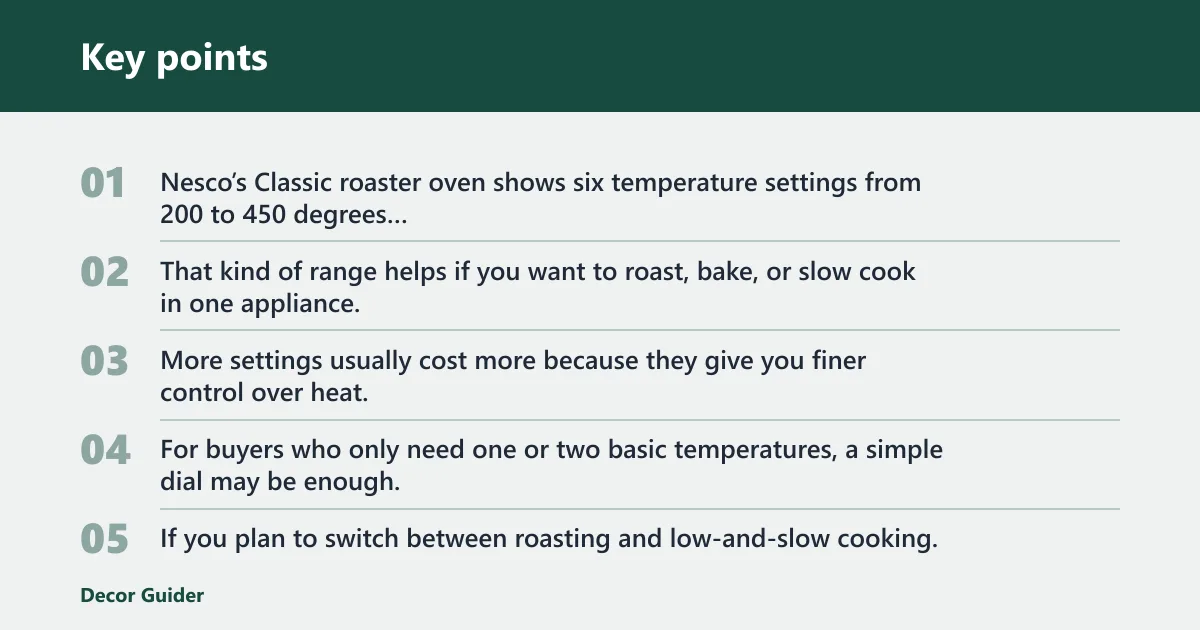
Nesco’s Classic roaster oven shows six temperature settings from 200 to 450 degrees Fahrenheit. That kind of range helps if you want to roast, bake, or slow cook in one appliance. More settings usually cost more because they give you finer control over heat.
For buyers who only need one or two basic temperatures, a simple dial may be enough. If you plan to switch between roasting and low-and-slow cooking, the extra settings are worth paying for.
Self-basting lids
A self-basting lid is a moisture-retention feature that appears in mid-range and premium models. It can raise price versus a basic lid, but it is not required for every buyer. It matters most if you cook long roasts, poultry, or dishes that benefit from keeping moisture inside the pot.
Removable pan and rack
A removable pan and rack make cleanup easier and are common in larger electric roaster ovens. They often come bundled with higher-feature models, so the price increase may reflect both the size and the cleanup convenience.
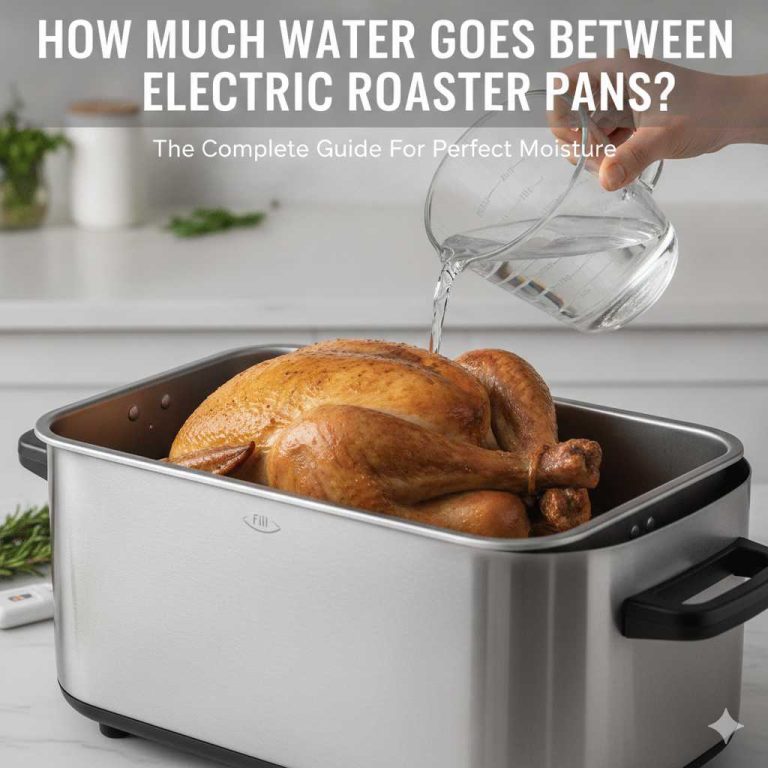
Say your main job is a 24-lb. turkey at Thanksgiving. A larger model with a self-basting lid and removable rack is easier to justify than a plain budget unit, because those features help with both cooking results and cleanup.
Materials and build choices
Stainless steel, porcelain, enamel, and cast aluminum can all show up in roaster ovens, but not at the same price point. Heavier or more durable materials usually cost more because they add weight, finish quality, or heat-management advantages.
Build quality matters most when you want long-term use and steadier performance. A plain finish may be enough for occasional use, while a heavier body and better-fitted parts make more sense for frequent holiday cooking.
Is a roaster oven cheaper than a regular oven?
Yes on upfront price, usually. A roaster oven is a small countertop appliance, so even a higher-end model normally costs far less to buy than a full kitchen oven. That said, it is not a direct replacement for a built-in oven, and you should not judge it that way.
When a roaster oven is the wrong buy
It is a bad buy if you need one appliance for everything and already have a working oven. It is also poor value if you only want to reheat a few servings and a smaller countertop appliance would do the same job with less space and less cost.
Picture a buyer who wants to heat a tray of leftovers once a week. A 22-quart roaster oven is too much appliance for that job, especially if a smaller countertop oven or a simple stovetop pot would cover the need.
When it makes more sense than a slow cooker or countertop oven
A roaster oven makes more sense when you want more capacity than a slow cooker and do not want to tie up your main oven. It also works well for holiday sides, large stews, and roasted meats when oven space is already limited.
It is less compelling if you only cook low-and-slow meals. In that case, a slow cooker may be the cheaper and better-targeted buy. If you mainly bake small batches, a countertop oven may fit better.
Are self-basting roaster ovens worth it?
Sometimes. A self-basting lid can help hold moisture during longer cooks, but the value depends on what you make and how often you cook large cuts of meat. For turkey, chicken, and other long roasts, it can justify a modest price bump.
For everyday casseroles, side dishes, or short cooking sessions, a basic lid is often enough. Paying extra for self-basting only makes sense if you regularly cook foods that dry out easily or benefit from longer covered roasting.
A common first-timer mistake is paying for a premium lid on a 6-quart model that mostly cooks vegetables and baked dishes. In that case, temperature control and cleanup parts matter more than a moisture feature that rarely changes the result.
Frequently asked questions
What is the average price of a roaster oven?
The average price sits around the middle of the category, with many shoppers landing between $50 and $200. That range covers basic small models on the low end and larger, more feature-rich units on the high end. Sales can push those prices down, especially around holiday cooking periods.
Which roaster oven sizes are cheapest?
Six-quart and other smaller models are usually the cheapest because they use less material and often have simpler controls. Best 5 List says a 6-quart unit might cost around $30 to $60. Those sizes are best for side dishes, small roasts, and everyday cooking.
Do bigger roaster ovens cost more?
Yes. Bigger roaster ovens usually cost more because capacity is one of the clearest price drivers. An 18-quart model generally costs more than a 6-quart model, and 22-quart or 28-quart units target larger meals, which pushes price up further.
What features make a roaster oven more expensive?
More temperature settings, a keep-warm setting, a self-basting lid, and a removable pan and rack all tend to raise price. Better materials can also add cost. These features matter most when you cook large meals often or want easier cleanup after a crowd.
What should I expect to pay for an 18-quart roaster oven?
Best 5 List says an 18-quart model will likely be in the $70 to $150 range. That is a reasonable target if you want enough room for larger casseroles, stews, or holiday mains without moving into the largest and most expensive size tier.
Are self-basting roaster ovens worth the extra cost?
They are worth it when you cook poultry or long roasts often and want better moisture retention without extra attention. They are less valuable for simple reheating or short side dishes. If your meals are basic, a standard lid and solid temperature control are often the better spend.
How much does a roast cost?
The roaster oven is only one part of that cost. The price of the roast itself depends on cut, weight, and store pricing, so appliance cost and food cost should stay separate. A larger roaster oven can hold a bigger roast, but it does not change the meat price.
Products related to this article
Sponsored / affiliate links. As an Amazon Associate I earn from qualifying purchases. I may earn additional commission from eligible campaigns.