Roasting Pan Sticking Problems: How to Fix Them
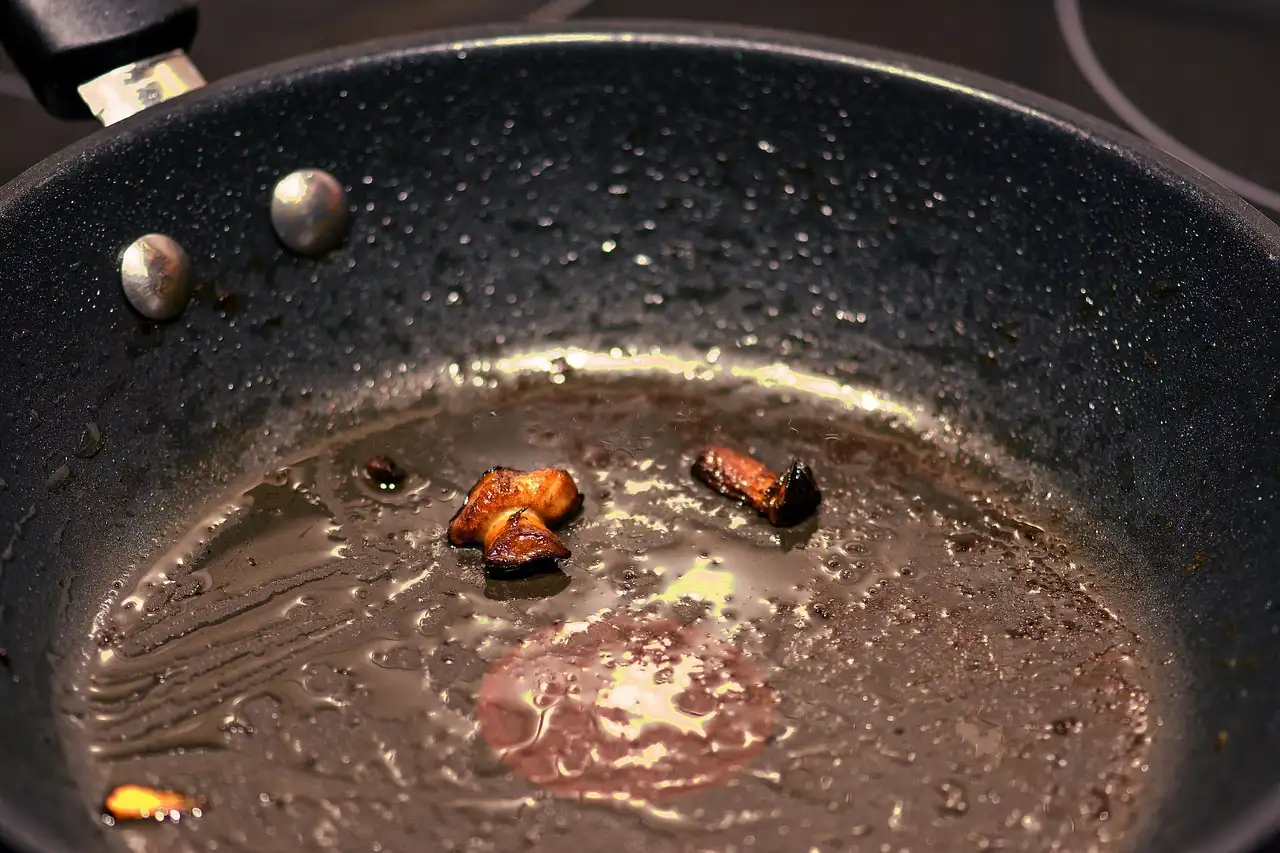
Roasting pan sticking usually comes from low moisture, too-high heat, rack contact, a damaged nonstick coating, or poor deglazing. Fix the cause, not the scrape marks. If you ignore it, you get burnt drippings, torn meat skin, and a pan that is hard to clean. This guide helps you diagnose each cause and apply the right fix for roasting, cleaning, and deglazing.
Why does food stick to roasting pans?
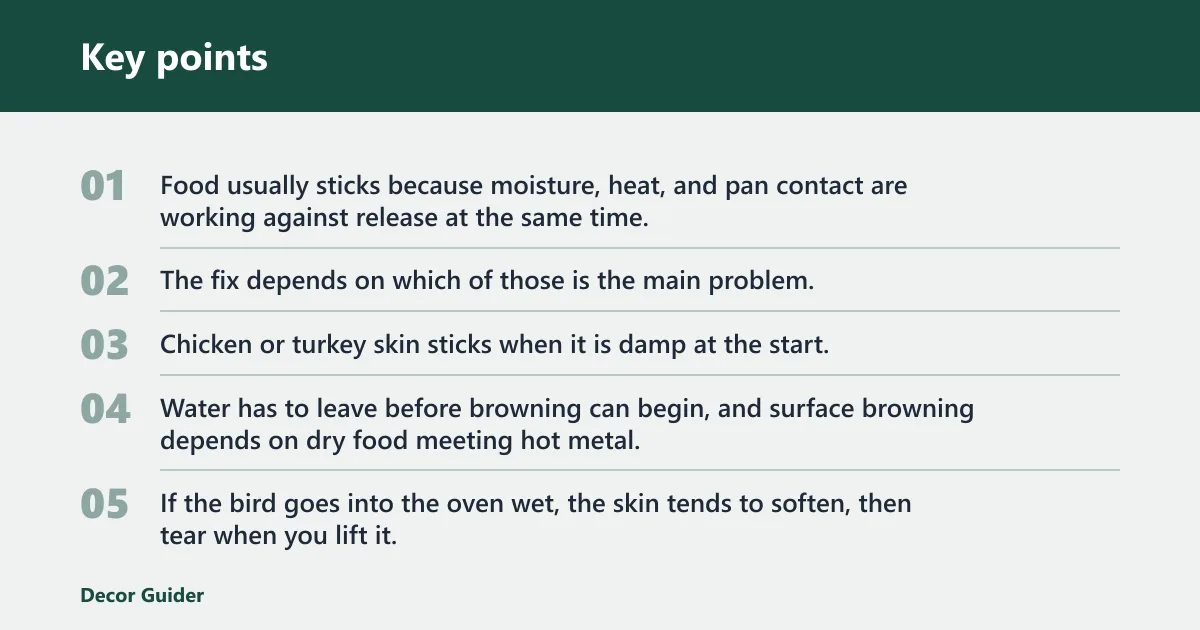


Food usually sticks because moisture, heat, and pan contact are working against release at the same time. Wet skin steams before it browns, sugary drips can harden fast, and a crowded or rough pan surface gives the roast more places to bond. The fix depends on which of those is the main problem.
Wet skin and steam
Chicken or turkey skin sticks when it is damp at the start. Water has to leave before browning can begin, and surface browning depends on dry food meeting hot metal. If the bird goes into the oven wet, the skin tends to soften, then tear when you lift it.
Sugar-heavy glazes and drips
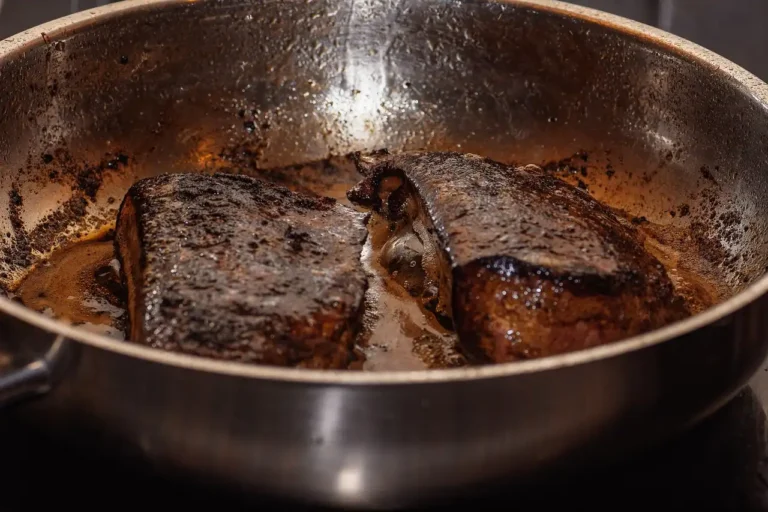
Honey, maple, brown sugar, and sweet barbecue glazes can harden where they drip onto the pan. Those sugars brown and burn sooner than plain meat juices, so the roast may look fine while the pan turns sticky and dark. If the drippings char before the meat finishes, the next fix is usually temperature or glazing timing, not more scrubbing.
Undersized pans and cramped airflow
An undersized pan blocks airflow and lets steam pool around the roast. That makes browning patchy and raises the chance that the food bonds to the rack or pan in one spot. A 16-inch class pan is a common fit for whole poultry and large roasts, but the right fit depends on the bird, the rack, and the oven interior.
Which roasting pan sticking problem do you have?
This matrix separates the problem by symptom. Match what you see to the likely cause, then use the fastest fix that fits the pan and the roast. If the coating is failing or the base is badly warped, cleaning alone will not solve it.
| Scenario | Likely cause | Fastest fix | Ideal pan material | Rack setup | What not to do next | When replacement is smarter than repair | Still safe to use? |
|---|---|---|---|---|---|---|---|
| Wet turkey skin | Surface moisture and steam | Pat dry, chill uncovered, roast on a preheated pan | Stainless steel | Stainless rack, raised fully off the base | Do not cover the bird tightly or keep opening the oven | Replace if the rack bends, rusts, or no longer sits flat | Yes |
| Sugary glaze | Sugar burns before the roast finishes | Apply glaze late, add 1 tablespoon water to the pan if needed | Stainless steel or enameled cast iron | Rack with wide openings | Do not start with a heavy glaze or raise the heat to chase color | Replace if the coating is damaged and releases burnt residue after every use | Yes |
| Undersized pan | Cramped airflow and pooled drippings | Move to a larger pan with room around the meat | Tri-ply stainless steel | Rack centered, not touching walls | Do not wedge the roast between the handles or pan sides | Replace if the current pan is too small for the roasts you make most often | Yes |
| Warped base | Poor contact on the stovetop and uneven heat | Use only in the oven, then replace for stovetop deglazing | Stainless steel or cast iron | Rack optional | Do not force the pan onto a burner if it rocks | Replace if the bottom no longer sits flat on a burner or heats evenly | No for stove use |
| Stuck gravy fond | Fond bonded to a dry or overheated pan | Add stock or wine in 2-tablespoon additions and whisk | Stainless steel | Rack is not the issue | Do not flood the pan at once or scrape with metal tools | Replace if the base warps or scorches in the same spots every time | Yes |
| Worn nonstick coating | Coating loss exposes rougher metal | Retire for high-heat roasting and use a new pan for delicate drippings | Stainless steel | Nonstick rack if the pan still works | Do not keep using high heat once the surface looks scratched or uneven | Replace when release is unreliable or the coating is visibly worn | No for reliable release |
| Fish fillet or delicate poultry pieces | Fragile surface and thin protein layers | Use a light oil film and a nonstick pan within the coating’s heat limit | Nonstick or anodized aluminum | Fine-wire rack | Do not use a rough rack or exceed the coating’s oven limit | Replace if the coating chips or the pan starts to release unevenly | Yes if coating is intact |
| Bone-in chicken thighs | Skin renders onto the rack | Oil the rack and preheat the oven fully | Stainless steel | Stainless rack with wider bars | Do not put the thighs on a dry rack and expect clean release | Replace if the rack has bent bars or dark buildup that will not scrub off | Yes |
| Vegetables with oil and herbs | Starch and sugar caramelize on contact | Toss evenly and spread in a single layer | Anodized aluminum or stainless steel | No rack needed | Do not heap vegetables in a mound or crowd the pan | Replace if the pan is thin enough to scorch one side repeatedly | Yes |
| Whole fish on a rack | Delicate skin and little surface fat | Use parchment only for oven roasting, not for stovetop sauce making | Nonstick or stainless steel | Nonstick rack if the fish is fragile | Do not try to deglaze through parchment or pull the fish too soon | Replace if the rack tears skin or the surface sticks at normal heat | Yes if heat limit is respected |
| Acidic pan juices | Reactive metal can tint or pit | Choose nonreactive stainless steel or enameled cast iron | Stainless steel, enameled cast iron | Rack optional | Do not hold acidic juices in a reactive pan for long | Replace if the surface is pitted or no longer cleans normally | Yes |
| Thin pan with hot spots | Uneven conduction and scorching | Replace with fully clad or tri-ply construction | Stainless steel | Any stable rack | Do not keep roasting in a pan that scorches in the same places | Replace when warping, hot spots, or burning become routine | No for consistent roasting |
What do you need to fix sticking in a roasting pan?
- Stainless steel roasting pan with a flat, even base
- Roasting rack, stainless steel or nonstick
- Paper towels for drying skin and wiping fat
- Neutral oil or melted fat for light coating
- Wooden spoon or flat whisk for deglazing
- Measuring spoon for adding stock or wine in increments
- Instant-read thermometer for doneness and carryover timing
How do you fix a sticking roasting pan?
Start with the food, then the setup, then the pan. That order solves the most common sticking problems without hiding a damaged pan or forcing more heat than the coating can handle. The best fix is usually a small change in moisture, rack contact, or glaze timing rather than a full recipe rewrite.
- Dry the surface first. Pat poultry skin or meat dry with paper towels, then salt it ahead of time if you can. A dry surface browns faster and releases better than damp skin.
- Preheat the pan and oven. Put the empty pan in the oven while it heats to a moderate roasting temperature, then transfer the food only after the oven reaches temperature.
- Oil only the contact points. Brush a thin film of oil on the rack or the pan where the food sits. Use enough to reduce adhesion, not enough to fry the drippings.
- Keep glaze for later. Add sugary glaze during the final stretch, not at the start. That limits burnt drips and keeps the bottom from turning into hard candy.
- Move to the right pan. If the roast crowds the sides, switch to a larger pan with room for airflow. The exact fit matters more than a generic size rule.
- Rest before lifting. Let the roast rest after removing it from the oven. Carryover cooking finishes the center, and the surface usually releases more cleanly after a short rest.
Say your turkey skin is dry at the start, but the bottom still tears when you lift it. The likely problem is rack contact, not the whole pan. A light oil film on the rack and a stainless steel rack with wider bars usually helps more than changing the oven temperature.
Suppose a roast with maple glaze burns on the bottom while the top looks fine. That points to sugar-heavy drips, not a bad pan. Delay the glaze, lower the oven heat slightly if needed, and use a larger pan so the drippings do not sit directly under the meat.
Does pan material change sticking?
Yes. Material changes heat flow, cleanup, and whether you can deglaze on the stove. Stainless steel is the most flexible choice for sticky drippings because it can handle stovetop deglazing, while nonstick gives the easiest release for delicate foods but has tighter heat limits.
Stainless steel vs nonstick
A stainless steel roasting pan, especially fully clad or tri-ply construction, distributes heat more evenly and is usually stovetop-safe for deglazing. It is nonreactive for most cooking and handles high oven heat better than nonstick. A nonstick roasting pan is often easier to clean and can help delicate drippings release, but it usually tops out at a lower oven limit depending on the coating.
Cast iron, carbon steel, and enameled cast iron
Cast iron holds heat well and can sear hard, but it is heavy and less forgiving if the base gets too hot on a burner. Carbon steel heats quickly, while enameled cast iron gives a nonreactive surface that helps with acidic juices and long roasts.
Anodized aluminum for lighter roasting pans
Anodized aluminum pans are lighter and heat quickly, so they can work well for vegetables and smaller roasts. They are usually better for oven roasting than for stovetop deglazing, and they may show hot spots sooner than a heavier stainless pan. If sticking comes from uneven heat, a thicker stainless pan is usually the safer fix.
How should you set up the rack and pan?
Rack height and pan shape affect airflow under the roast, which changes browning and cleanup. A good rack lifts the food so rendered fat can drain away, but a bad fit can create its own sticking by trapping juices or letting the meat sit too close to the metal. The goal is stable support, open airflow, and easy lifting.
Rack height and airflow
Use a rack that keeps the roast above the pan bottom without touching the juices. Stainless steel racks handle high heat well, and nonstick racks can help with delicate drippings. Better airflow under the meat means less steaming and more even browning.
Pan shape and oven fit
Oval roasters fit whole poultry well, while rectangular pans are easier for sauce making and oven-to-stovetop transfer. Some larger covered roasters are useful for big birds, though not every model is suitable on the stove. Measure the interior of your oven too, especially if the pan has wide handles.
When a rack causes its own sticking
A rack can stick if it is dry, narrow, or coated with burnt fat. Clean it fully, then brush on a thin oil film before the next roast. If the bars are bent or the rack slides into the pan juices, replace it instead of chasing one more cleanup cycle.
Can you deglaze a stuck roasting pan on the stove?
Yes, if the pan has a flat bottom, a stable base, and material that can handle burner heat. Stovetop deglazing works best in stainless steel pans with even contact, because hot spots, channels, and buckling make the fond scorch before it releases. The key is gentle heat and gradual liquid addition.
Flat-bottom pans and stovetop safety
Choose a pan with a flat bottom and even heat spread if you plan to make gravy on the stove. A good roaster should transfer from oven to stovetop for deglazing or sauce making, and it needs to distribute heat evenly and avoid hot spots. A warped pan should stay out of the burner path.
How to loosen fond without scorching it
- Move the pan to low heat. Set the burner to low or medium-low and place the pan squarely on the burner. If the pan rocks, stop and do not force it.
- Add liquid in 2-tablespoon amounts. Add stock, water, or wine in about 2-tablespoon additions, whisking after each addition. That keeps the fond from flooding or scorching.
- Scrape only the browned bits. Use a wooden spoon or flat whisk to lift the stuck drippings. Stop if the liquid starts turning bitter or black.
When a warped pan should stay off the burner
If the base buckles, the pan will not sit evenly on the heat source and the drippings will burn in patches. That is a safety and quality problem. Use that pan in the oven only, and replace it if you need regular stovetop deglazing.
What are the most common mistakes with sticking roasting pans?
These errors cause most repeat sticking problems. Fixing them usually matters more than switching brands. The biggest pattern is mismatch: too much heat, too little airflow, or a pan that is not suited to the way you are cooking.
- Putting wet poultry into the oven and expecting clean release
- Roasting sugary glazes from the start instead of adding them late
- Using parchment when you need pan drippings for gravy
- Choosing a thin pan that develops hot spots or warps
- Using a nonstick pan above its heat limit
- Trying to deglaze a warped pan on the stove
- Letting a rack sit dry and uncoated before a roast
Common first-timer mistake: a 12-pound chicken in a tight pan with a rack that touches the walls. The roast browns unevenly, the drippings burn at the edges, and the skin tears at the thighs. Moving to a larger pan with open airflow fixes more than adding extra oil ever will.
Why does food stick to my roasting pan?
It usually means one of five things: the food was too wet, the heat was too high, the rack was dry, the coating has worn down, or the pan was not suited to stovetop deglazing. Start with the symptom you see, then match it to the cause instead of scrubbing harder.
How do I stop chicken or turkey from sticking to a roasting pan?
Dry the skin, oil the rack lightly, and roast in a preheated oven at a moderate roasting temperature. For thicker birds or pieces, a slightly hotter setting can help if the pan still has enough airflow. A stainless steel roasting pan with a rack is usually the safest all-around choice for release and gravy making.
Can I use a roasting pan on the stovetop without sticking?
Yes, if it is flat-bottomed, even-heating, and stovetop-safe. Fully clad or tri-ply stainless steel is the most practical choice for deglazing because it handles burner heat and spreads it better than a thin pan. If the base rocks or buckles, do not use it on the stove.
Is my roasting pan too thin if food burns and sticks?
Often, yes. Thin pans are more likely to develop hot spots, which scorch drippings before the roast is done. A heavier stainless steel pan or a well-made cast iron option gives more even contact and is less likely to create burned patches.
Do I need oil, rack, or parchment to prevent sticking in a roasting pan?
Use oil on the rack or contact points first. A rack matters more than parchment for airflow and browning under the roast. Skip parchment when you want stovetop gravy, because it blocks direct contact with the browned bits and limits deglazing.
How do I deglaze a stuck roasting pan without ruining the fond?
Keep the burner low, add stock or wine gradually, and whisk as soon as the liquid loosens the browned bits. If the fond turns black or bitter, the pan was too hot. Stainless steel handles this best, while nonstick and warped pans are poor choices for that job.
Products related to this article
Sponsored / affiliate links. As an Amazon Associate I earn from qualifying purchases. I may earn additional commission from eligible campaigns.